Elisabeth Braw

Elisabeth Braw is a senior fellow at the Atlantic Council, and the author of Goodbye Globalisation.

Spectator Out Loud: Freddy Gray, Michael Simmons, Elisabeth Braw & Angus Colwell

From our UK edition

23 min listen

On this week’s Spectator Out Loud: Freddy Gray delves into how a smooth-talking Democrat could win the Michigan mid-terms; Michael Simmons explores where the billionaires who leave Britain actually go; Elisabeth Braw explains how we will soon be in a battle for the sea bed; and Angus Colwell reflects on the food on offer at Reform conference. Produced and presented by Abigail Brierley.


Freddy Gray, Michael Simmons, Elisabeth Braw & Angus Colwell

Is the West ready for the undersea war?

Last spring, a Chinese icebreaker turned up in the tropical waters of Palau. That was after Chinese research vessels arrived uninvited in the waters off Taiwan, Vietnam and the Philippines. Here in Europe, Russian research vessels and navy ships turn up uninvited too. The ships reveal nothing about the nature of their visits, but create fears of impending cable sabotage. These days, Russia and China are also building lots more submarines, and they’re impressive. Western countries, too, are building submarines, and all the while they’re trying to defend their cables and pipelines. Just this week, the UK’s 12-metre Excalibur drone submarine used a testing range off the coast of Scotland to fire a torpedo.

Does a stray drone constitute an attack?

From our UK edition

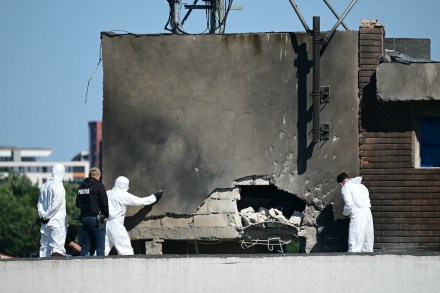
NATO’s mission is to defend every inch of its members’ territory, the alliance’s mantra goes. Then, on 29 May, a Russian drone hit a Romanian block of flats, injuring two people. Now Nato faces a dilemma: if it doesn’t react, it signals that adversaries can hit Nato with impunity as long the harm is, in the scheme of things, insignificant. If it does hit back, it risks full-scale war. This dilemma is precisely why Russia is so cavalier about minor incursions. In the early hours of 29 May, a Russian drone whizzed through Ukrainian airspace and entered Romanian territory, where it hit a block of flats in the port city of Galati. A mother and child were injured in their home.

Military service would ready Britons for our unstable world

From our UK edition

To serve or not to serve? Pat McFadden, the chancellor of the Duchy of Lancaster, has declared that the UK government has no plans to introduce conscription. Meanwhile, the President of Latvia, which recently resuscitated conscription, has suggested many other European countries should do as they do. Given the state of the world, the UK would do well to reconsider its position. Every few months or so, someone proposes that the UK should bring military service back. And each time, this undertaking is supposed to perform different functions: teach teenagers to become adults; keep teenagers out of trouble; magically solve the armed forces’ recruitment woes.

The West must prepare for world war three

From our UK edition

Russia’s full-scale invasion of Ukraine is demonstrating in no uncertain terms that world war three is possible. Ukraine’s ambassador to the UK, who is also his country’s former top commander, has suggested that other countries can prepare by learning from what is happening in Ukraine. They certainly can. Better yet, by swiftly preparing their societies for a war like the one now raging in Ukraine, western countries can help prevent another world war. Had institutions, companies and citizens not been so agile, Ukraine would be facing not just a brutal Russian invader but a collapsing society too ‘Is humanity ready to calmly accept the next war in terms of the scale of suffering? This time the Third World War?

Sunak is right, Britain needs national service

From our UK edition

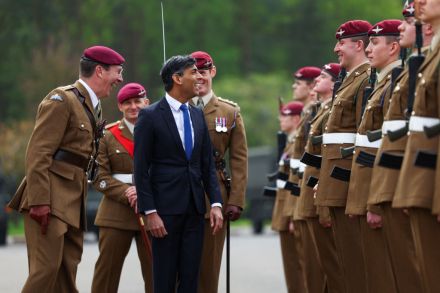
The Tories have announced that, if re-elected, they will introduce national service. And it won’t be the miserable existence imposed on all young men in conscription years past. Instead, the Tories will invite 18-year-olds to compete for selective 12-month spots in areas including cyber security, logistics and civil response. That’s the model Norway has successfully been operating for over three decades. In addition, young people will be asked to volunteer on a monthly basis with the NHS, the fire service or charities looking after elderly and lonely people. Such service is a win-win: it’s beneficial for the young people involved in it, and even more importantly it helps make our country safer and more resilient.

We need to talk about war

From our UK edition

‘Don’t mention the war!’ Remember that? Today, war seems nearly all that European leaders want to talk about. The prospect of conflict with Russia is real, and a confrontation seems increasingly likely. That’s why Europe’s political leaders are beginning to discuss, in frank and sometimes alarming tones, the ways their countries should prepare to fight. Estonia’s prime minister, Poland’s head of national security and the Danish defence minister all say Russia could have the soldiers and equipment to launch an attack in three years. Emmanuel Macron last week met his German and Polish counterparts in Berlin to discuss Europe’s military support for Ukraine, after refusing to rule out – again – deploying French troops onto Ukrainian soil.