Eliot Wilson

Eliot Wilson

Eliot Wilson was a House of Commons clerk, including on the Defence Committee and Counter-Terrorism Sub-Committee. He is contributing editor at Defence On The Brink and senior fellow for national security at the Coalition for Global Prosperity

Starmer will struggle to keep both the EU and US happy

From our UK edition

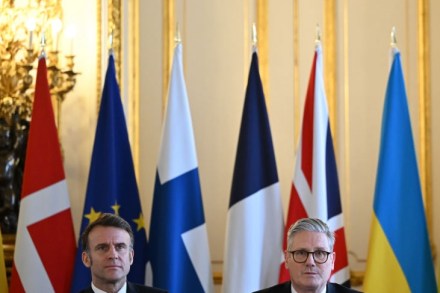
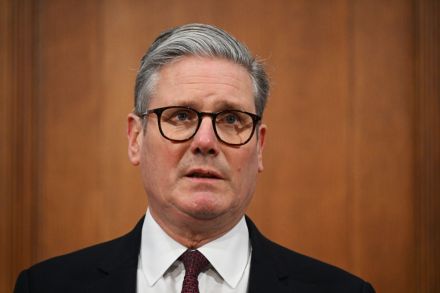
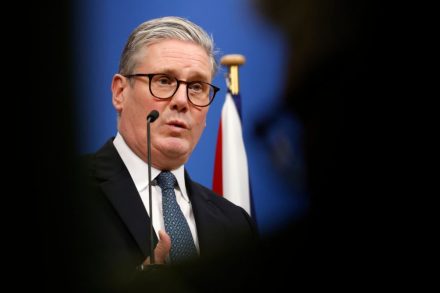
We do not have to make a choice between our alliance with the United States and closer relations with the European Union: that was the message of the Prime Minister’s traditional annual speech to the Lord Mayor’s Banquet at the Guildhall. Sir Keir Starmer called the supposed binary 'plain wrong', and prayed in aid some of his most illustrious predecessors. I reject it utterly. Attlee did not choose between allies. Churchill did not choose. The national interest demands that we work with both.

Will Wormald actually help Starmer change the civil service?

From our UK edition

Downing Street has announced that the 14th secretary to the cabinet and head of the civil service will be Sir Chris Wormald. He will succeed Simon Case when the latter stands down after four years on 16 December. Wormald, 56, has been permanent secretary at the Department of Health and Social Care for eight and a half years, before which he was the top official at the Department for Education for four years – a true Whitehall veteran. There is no doubt that Wormald is experienced. He is likeable and highly rated, though his department has hardly stood out for excellence over the past decade and he sometimes struggled under questioning at the Covid-19 inquiry.

Starmer’s anti-spiking law is a needless stunt

From our UK edition

Keir Starmer has announced that he will introduce new legislation to make the spiking of drinks a specific criminal offence. The legal changes sound harmless, but it is entirely unnecessary.  Drink spiking is clearly illegal under section 61 of the Sexual Offences Act 2003: someone commits an offence ‘if he intentionally administers a substance to, or causes a substance to be taken by, another person’ without consent, ‘with the intention of stupefying or overpowering’ them ‘to enable any person to engage in a sexual activity’ with the victim. The offence can lead to a ten-year prison sentence, or a longer custodial term if other crimes like robbery or sexual assault are involved.

Russia’s rumoured ICBM launch is raising the stakes in Ukraine

From our UK edition

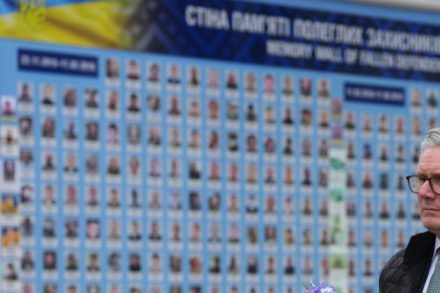
A Russian attack on the city of Dnipro earlier today included the use of an intercontinental ballistic missile, according to the Ukrainian Air Force. The RS-26 Rubezh was reportedly launched from Astrakhan Oblast on the Caspian Sea, although some analysts remain sceptical. Russia has made no official comment, but it would be the first use of an ICBM in the conflict in Ukraine, representing a deliberate raising of the stakes and a clear signal to Kyiv’s allies. Using an intercontinental ballistic missile to strike Ukraine is performative overkill On Tuesday, which marked the 1,000th day of the war, Ukrainian forces launched American-supplied MGM-140 ATACMS tactical ballistic missiles at an ammunition depot near Karachev in Bryansk Oblast, 70 miles inside Russia.

Labour’s cuts are going to hurt our armed forces

From our UK edition

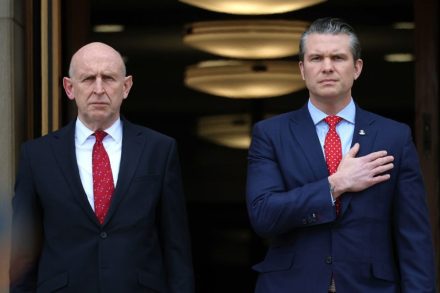
Defence Secretary John Healey has announced more changes to the armed forces, detailing several capabilities to be cut to achieve savings of £500 million over the next five years. The Royal Navy’s two amphibious assault ships, HMS Bulwark and HMS Albion, will be retired at the end of the year, while HMS Northumberland, a Type 23 frigate, will be decommissioned because her structural damage is ‘uneconomical to repair’. The retirement of the amphibious assault ships has profound implications for the future role of the Royal Marines The Royal Fleet Auxiliary’s two Wave-class fast fleet tankers, RFA Wave Knight and RFA Wave Ruler, will also be retired.

What can we expect from Trump’s defence pick?

From our UK edition

As President-elect Donald Trump’s nominations to executive positions gradually emerge, it is difficult to know what to expect next. Elon Musk is set to run the ‘Department of Government Efficiency’. Governor Kristi Noem of South Dakota, who organised a drugs awareness campaign under the slogan, ‘Meth. We’re on it’ and wrote in her autobiography of shooting dead her badly behaved wire-haired pointer puppy, is tapped for Secretary of Homeland Security. Trump’s choice for the critical role of Secretary of Defence is typically atypical. Pete Hegseth, a 44-year-old Minnesotan educated at Princeton and Harvard, is a presenter and commentator for Fox News.

RAF chief puts pressure on Starmer over Storm Shadows

From our UK edition

I don’t know what the Ukrainian for ‘Well, duh’ is, but it might well have been heard in Kyiv yesterday. Speaking at the Royal United Services Institute, the Chief of the Air Staff, Air Chief Marshal Sir Richard Knighton, observed that Ukrainian forces resisting the Russian invaders needed to be able to strike at their enemies well behind the border. ‘Ukraine cannot put up a shield to protect themselves against the 30,000 glide bombs lobbed into the Kursk oblast. Instead, what they need – and what we would need – is the ability to strike the aircraft launching these bombs on the ground.’  When he was asked to respond, the prime minister was shockingly complacent and dismissive Everyone could read between the lines.

Nato should be worried about Donald Trump

From our UK edition

When it comes to Donald Trump’s relationship with Nato, there are two principal schools of thought. The first, articulated by Trump’s own former national security advisor, John Bolton, is that the president-elect is hostile to the alliance at an elemental and instinctive level. The second, proposed by those who are favourable to him, argues that Trump’s inflammatory language about Nato’s failures is a performance, which in the past goaded fellow member states into increasing their defence spending. Look not, they say, at what he says, but at the results. It is indisputable that the financial commitments of member states to Nato now are much higher than when Trump first assumed the presidency in 2017.

Labour’s £2.9bn defence boost doesn’t go nearly far enough

From our UK edition

Anyone who is serious about the condition of the armed forces and Britain’s defence policy will not look a gift horse in the mouth. Rachel Reeves’s announcement in yesterday’s Budget that the government will spend an additional £2.9 billion on defence next year is welcome and desperately needed. But while it's headline-grabbing, in reality it will make little difference to our national security and strategic posture. It is acknowledged across the political spectrum that we need to spend more on defence It is hard to think of a time, certainly since the end of the Cold War, when the international situation was so tense and challenging in so many areas.

What’s the point of the ‘gay ban’ veteran compensation?

From our UK edition

Veterans who were dismissed from the armed forces because of their sexuality have criticised the government for the inadequacy of its compensation scheme. With a fund capped at £50 million and potentially as many as 4,000 eligible to seek redress, the average payment would be only £12,500. Military charities have dismissed this as 'inadequate and unacceptably low', lacking 'the sense of justice these veterans deserve'. This is not an issue from the distant past. When I was young, it was taken as read that openly gay people did not serve in the military. That was not to say we thought the armed forces were 100 per cent heterosexual – the first gay kiss on British television, in BBC Two’s 1974 drama Girl, was between Alison Steadman and Myra Frances playing female soldiers.

Why do Britain and Germany need their own defence pact?

From our UK edition

It is a standard feature of modern politics that government announcements are preceded by announcements of announcements. The ground must always be prepared. Accordingly, the media has been briefed that this week the United Kingdom and Germany will sign a defence cooperation agreement, part of the government’s stated desire to strengthen its relationship on security with the European Union. We should not expect a revolution so much as an eager scattering of glitter on what is actually relatively humdrum. John Healey, the defence secretary, visited Berlin in July and agreed a joint declaration on defence with his German counterpart Boris Pistorius.

Britain shouldn’t take part in joint EU defence missions

From our UK edition

Sir Keir Starmer has vowed to 'reset' the United Kingdom’s relations with the European Union. But at what cost? The EU has reportedly set out part of the price the UK might have to pay to be allowed back into its good books: Brussels wants Britain to contribute to the EU's defence missions. Foreign Secretary David Lammy travelled to Luxembourg this week to a meeting of the EU Foreign Affairs Council to address the issue of security – an important element of Starmer's intended 'reset'. In Monday's meeting, the EU reportedly pressed the Foreign Secretary for UK participation in its peacekeeping and conflict prevention missions, of which there are currently more than a dozen.

Even the BBC’s critics should want to protect the World Service

From our UK edition

When Tim Davie, the director-general of the BBC, addresses the Future Resilience Forum in London this afternoon, he has a clear mission: to fight for the BBC World Service's future. Davie will warn that 'when the World Service retreats, state-funded media operators move in to take advantage.' Whether you love or loathe the BBC, Davie is right: the World Service is needed more than ever. The Beeb has had a torrid few years.

Should the MoD be using AI for our defence strategy?

From our UK edition

Eyebrows have been raised, to put it mildly, at the news that the Ministry of Defence is using an artificial intelligence programme to assess submissions to the current review of Britain’s armed forces. The Strategic Defence Review was launched in July, and the following month a call for evidence was issued, inviting ‘serving military, veterans, MPs of all parties, industry, and academia’ to submit responses to a series of propositions through an online portal. The closing date was 30 September, and the responses would ‘help’ the review team led by former Nato secretary general Lord Robertson of Port Ellen.

Labour’s House of Lords peerage reform is just hot air

From our UK edition

Labour's crackdown on the House of Lords continues apace. In an effort to reform the upper house, parties could soon be made to provide written justification for peerage nominations they put forward. Under the proposal they would have to submit a citation explaining why the candidate is being proposed and what contribution to public life he or she has made. On its own, this idea is inoffensive. It is, admittedly, transparent in capitalising on the ongoing rumblings over Boris Johnson’s nominations in his 2023 resignation honours: 32-year-old Lord Ross Kempsell, former political director of the Conservative party, and Baroness Charlotte Owen of Alderley Edge (31), a Downing Street special adviser.

Britain’s half-hearted support for Israel helps no one

From our UK edition

When Iran launched almost 200 ballistic missiles at targets across Israel on Tuesday, there were fears that it would ignite a wider regional conflict. That a wider war has not (yet) erupted is partly due to the fact that most of the missiles were intercepted by Israel and what the Israeli Defense Forces' (IDF) spokesman called 'a defensive coalition led by the United States'. The United Kingdom was part of that coalition. But what role did the UK really play on Tuesday night? And how does that support square with the Labour government's hostility towards Israel?

Robert Jenrick may come to regret his ECHR killing claim

From our UK edition

We have all found ourselves making a point and seeing the argument run away from us unexpectedly. Perhaps that was Robert Jenrick’s feeling when he was challenged on a claim that the European Convention on Human Rights (ECHR) was giving British soldiers no option but to murder terrorist suspects. 'Our special forces are killing rather than capturing terrorists because our lawyers tell us that if they’re caught, the European court will set them free,' he claimed. When asked on BBC Radio 4’s Today programme to provide evidence for this allegation, he temporised somewhat, pointing to claims former defence secretary Sir Ben Wallace had made in an interview with the Daily Telegraph last September.

Why couldn’t Labour save Harland and Wolff?

From our UK edition

As expected, Harland and Wolff, the legendary Belfast shipyard which built the Titanic, has formally entered administration. This comes as a surprise to no-one: last year, the firm lost £43 million, on top of a £70 million loss in 2022, and it had become reliant on a high-interest loan from US investment managers Riverstone. Harland and Wolff’s management had hoped to restructure its borrowing with a loan guarantee from the government, and had spent months negotiating with UK Export Finance, which deals with export credit guarantees.

Evacuating Lebanon would test Starmer’s mettle

From our UK edition

As the security situation in Lebanon deteriorates, the British government is accelerating plans to evacuate its civilians. The Foreign, Commonwealth and Development Office has advised British nationals in the country to leave while commercial flights were still operating. It also said that British nationals should have an evacuation plan, and warned that they should ‘not rely on FCDO being able to evacuate you in an emergency’. It is believed there may still be 10,000 British nationals in Lebanon. As things stand, most major airlines have now cancelled or suspended services to Beirut-Rafic Hariri International Airport, and many of the remaining flights have sold out. Sir Keir Starmer has said bluntly: ‘Now is the time to leave… leave immediately’.

What is the point of Sue Gray?

From our UK edition

Keir Starmer takes centre stage at Labour's conference in Liverpool today, but whatever the Prime Minister has to say, the truth is that the event has been overshadowed. The Prime Minister must have hoped this would be a triumphant gathering bathed in the glow of a landslide election victory less than 12 weeks ago. Instead he will be disappointed: the decision to cut winter fuel payments has sparked fury and there is deep unease at the row over ministers accepting gifts from wealthy donors. The discovery that Sue Gray, the prime minister’s chief of staff, is paid more than her boss also continues to cause tension – not least because many of the missteps made by the Prime Minister should have been dealt with more effectively by a competent chief of staff.