Edward Howell

Edward Howell is a politics lecturer at Oxford. He was involved in launching the BBC World Service in North Korea.

South Korea’s political chaos is far from over

From our UK edition

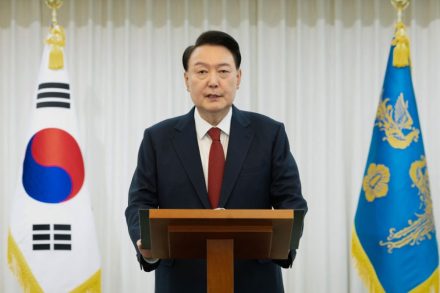
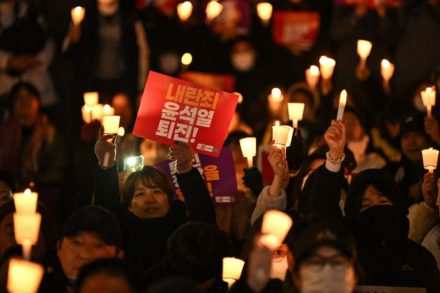
Had you have taken a direct flight from London to Seoul yesterday afternoon, by the time you would have landed you might have been none the wiser that anything had happened at all. At near midnight South Korean time, President Yoon Suk Yeol imposed martial law across the so-called 'land of the morning calm'. Only six hours later it was subsequently, and pointedly, revoked. As South Korean citizens continue with their daily lives, the political establishment has once again entered a period of precarity. Yoon has scored a significant own goal; its implications do not end there. It is no understatement to say that the decision by President Yoon to impose martial law in an unannounced television broadcast late yesterday evening caught the South Korean people and the world unawares.

South Korea’s balloon barrage has hit a nerve in the North

From our UK edition

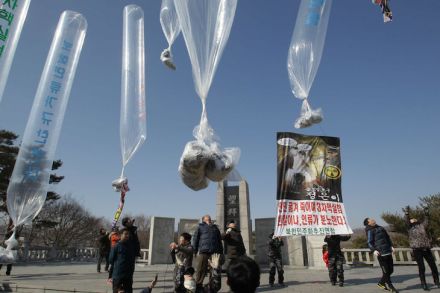
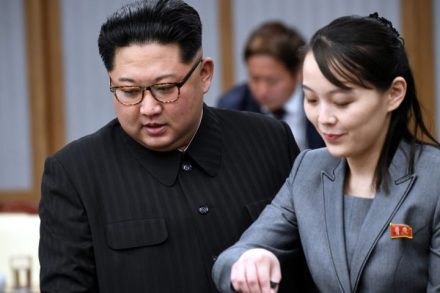
Kim Yo Jong, the younger sister of North Korean leader Kim Jong Un, has long been confined to her brother's not-insignificant shadow. But, in recent weeks, Yo Jong has shown that she is far more than just her brother’s ashtray-carrying secretary. She has launched a series of fiery rhetorical attacks against South Korea, accusing “South Korean scum” of “polluting the inviolable territory” of the North by distributing “political and conspiratorial” material. The target of her ire is leaflets denouncing her brother’s regime, which have been distributed using balloons across the Korean border. Yo Jong's way with words shows that she is a chip off the old block.

North Korea isn’t scared of the UN

From our UK edition

It surely comes as no surprise to hear that North Korea does not like the United Nations. The hermit kingdom has long derided the organisation as espousing 'double standards' in what Pyongyang has believed to be an unfair demonisation of its 'sovereign rights' to test missiles, conduct satellite launches – a euphemism for testing ballistic missile technology – or blow up roads and railways linking the communist North with the capitalist South. So when North Korea’s sharp-tongued ambassador to the UN, Kim Song, announced yesterday that the country would accelerate its nuclear and missile development the timing was anything but random. The reasoning, he said, was the 'nuclear threat of [the] United States' against North Korea'.

What’s upset Kim Jong-un?

From our UK edition

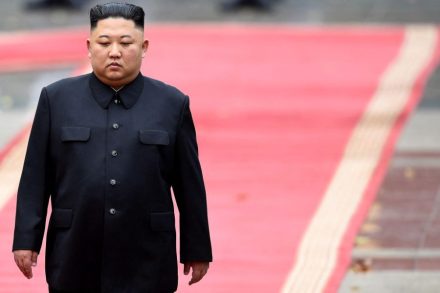
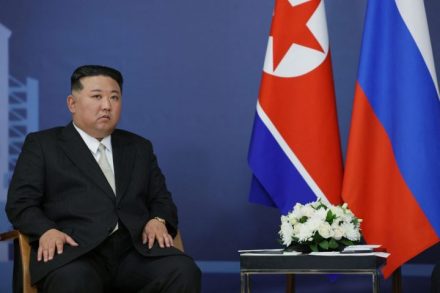
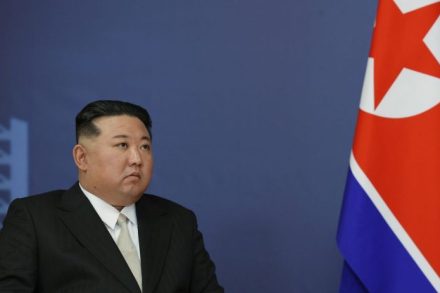
When Kim Jong-un does not get what he wants, he makes his displeasure known far and wide. Over the past few weeks, one would have thought that Kim would be reasonably content. In return for sending artillery shells, ballistic missiles, and most recently, troops to Russia, North Korea has been receiving food, cash, and most likely, technological assistance, the latter which is what Kim craves the most. But instead of calming down, Kim has responded in the way that he knows best – by launching yet another intercontinental ballistic missile (ICBM) designed to hit the US mainland.

David Lammy can’t afford to let down South Korea

From our UK edition

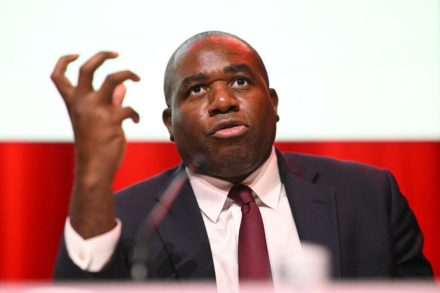
Labour’s first 100 days in power have been nothing short of a disaster. Whether the beneath contemptible decision to shelve the Higher Education Freedom of Speech Act, or the disgrace that was the handover of the Chagos Islands to Mauritius, the stage has already been set for five long years for domestic and foreign policy blunders. David Lammy's first few months as Foreign Secretary have faired little better. For Lammy, risible speeches to the United Nations have been combined with absurd claims from his boss, calling for the expansion of the institution’s sclerotic Security Council. Quantity does not equal quality.

North Korean soldiers will become Putin’s cannon fodder

From our UK edition

Hermit kingdoms usually keep themselves to themselves, but now, North Korea is reinventing the moniker by which it has long been known. The country may have the world’s fourth largest military, numbering nearly 1.5 million – out of a population of 26 million – but when the first tanks invaded Ukraine on 24 February 2022, few observers would have anticipated North Korea’s actual involvement in the ensuing war. It is not only Ukrainian intelligence reports which, this week, raised the possibility that over 12,000 North Korean soldiers have been deployed to aid Russia’s war effort. Only a few hours ago, South Korea’s intelligence agency has confirmed this grim reality – troops have now arrived.

Why North Korea is cutting off all roads to the South

From our UK edition

If you visit South Korea, you may be startled at the presence of road signs pointing towards Kaesong and Pyongyang: two destinations that many of Seoul’s visitors will rarely have frequented. The latter – informally known as 'Pyonghattan' for its high-rise buildings – needs no explanation. The former was once the capital of dynastic Korea from the 10th to 14th centuries. One millennium later, it would become a special industrial region of North Korea, and home to the infamous Kaesong Industrial Complex, a now-closed joint economic development with South Korea. Yet soon, the roads and railways linking the democratic South to the authoritarian North will be no more.

Kim Jong Un will take no blame for North Korea’s floods

From our UK edition

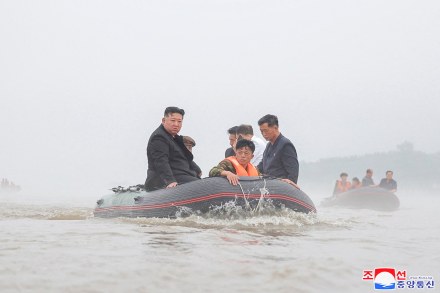
The sight of a grimacing Kim Jong Un on board an inflatable rubber dinghy is not what one would expect from the leader of a country which has repeatedly threatened to ‘annihilate’ the United States. As floods ravage across provinces along North Korea’s border with China, the North Korean leader has leapt upon the occasion to berate his officials for mismanagement, reinforce state ideology, and emphasise that under the protection of the Supreme Leader, all will – eventually – be well.  While the devastating flash floods of July and early August primarily affected areas in the northern part of the country, the consequences have been felt across the hermit kingdom.

Will North Korea send troops to Ukraine?

From our UK edition

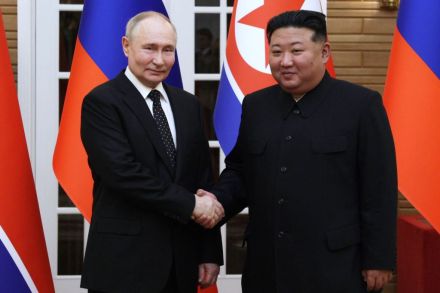
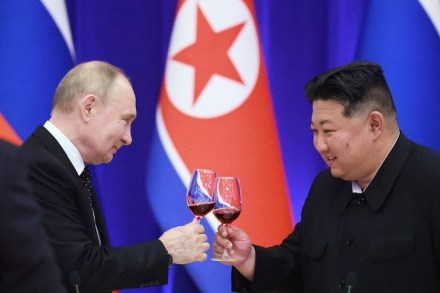
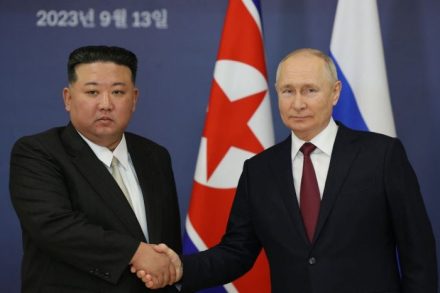
When dealing with North Korea, it’s important not just to look at what the regime says about its present and future policies. Arguably more important is what the regime doesn’t say. Sometimes we might need to read between the lines.  The two meetings between Kim Jong Un and Vladimir Putin within the space of a year indicate that the pair’s bromance is more than just for show. Russia’s relations with North Korea look to be on an upward trajectory after the signing of a ‘comprehensive strategic partnership’ between Kim and Putin. The mutual defence pact, where each side agreed to assist the other in the event of any external aggression, went far beyond a mere affirmation of ideological solidarity.

Why Kim Jong Un is rolling out the red carpet for Vladimir Putin

From our UK edition

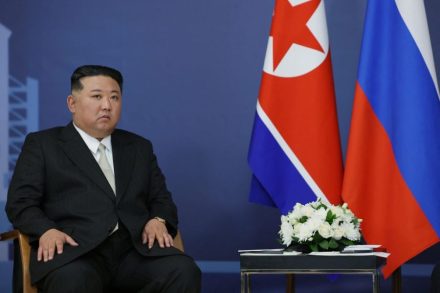
When Vladimir Putin lands in Pyongyang today on his first visit to North Korea in 24 years, it will be the second time he has met his fellow dictator, Kim Jong Un, in under a year. Even if the summit simply brings more bright lights and signatures, it would be a mistake to dismiss the trip as mere showmanship. The message from the two leaders will be clear: an anti-Western coalition is not merely a fiction, but a worrying reality. Back in 2000, North Korea was six years away from conducting its first – albeit far from successful – nuclear test and struggling to recover from a devastating self-induced famine. Pyongyang was also feeling betrayed following the end of the Cold War in 1991.

North Korea’s dirty protest

From our UK edition

North Korea has long been known for its rhetorical braggadocio. Most of the time, the regime’s bluster needs to be taken with a pinch of salt. But on occasion, we should be less quick to dismiss the threats emanating from it and its state-controlled media mouthpieces.  Earlier this week, North Korea launched over 250 balloons carrying bags of faeces, used bottles, and other waste across the inter-Korean border, subsequently dumping them on South Korean territory. In the words of Kim Yo Jong, the vitriolic sister of Kim Jong Un, the balloons were ‘gifts of sincerity’ to the South.

Kim Jong Un’s catchy propaganda revamp

From our UK edition

Think of North Korean propaganda and you might think of old-fashioned revolutionary marches praising the Supreme Leader, denouncing the United States, and intercontinental ballistic missiles ready to be launched. The sight of cheering military officials using computers, donning a pair of Sony headphones, may not immediately come to mind. Even more unimaginable, however, is the thought that a North Korean propaganda video would go viral, not least, ironically, on platforms that the North Korean population cannot even access. Yet, North Korea’s latest propagandistic video, entitled ‘Friendly Father’, has done just that.

How North Korea uses cartoons to evade sanctions

From our UK edition

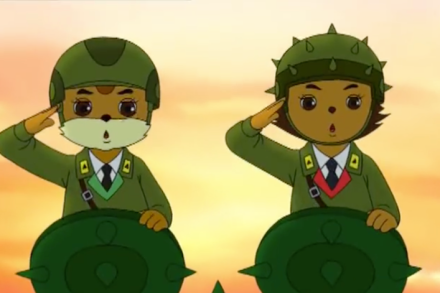
Recently, it was reported that North Korean animators may have been working on cartoon projects for western firms, including Amazon and HBO. Data found on a North Korean computer server suggests they worked on programmes such as Amazon’s Invincible, without western studios knowing. To those more used to North Korea’s frequent warnings about crushing the West and unleashing nuclear weapons on the world, it might seem surprising that the country also has a sideline in animation. But despite being one of the world’s most isolated states, North Korea has a long history of producing cartoons. Most of the animations the country makes are meant for a domestic audience.

Is North Korea developing biological weapons?

From our UK edition

The threat North Korea’s nuclear weapons programme poses to the world is well known. But as the hermit kingdom actively expands its weapons arsenal, and international institutions struggle to contain it, we shouldn’t ignore its development of chemical and biological weapons either. A recent report from the United States State Department asserts that North Korea has a ‘dedicated’ biological weapons programme, which it could use against the militarily-superior US and South Korea. Concerningly, the report highlights North Korea’s ability to produce bacteria, viruses, and other toxins which could be used as biological weapons agents. We have already seen evidence of Pyongyang’s unabashed usage of chemical weapons, especially in highly public places.

Why North Korea hates Alan Titchmarsh’s jeans

From our UK edition

Alan Titchmarsh presumably did not expect to see his programme Garden Secrets, filmed in 2010, air on North Korean state television this week. He would perhaps have been even more surprised to see the network blur out his blue jeans for viewers. In the mid-to-late 1990s, under the rule of Kim Jong Il the anti-jeans rhetoric heightened Why did the higher ups in North Korea decide that the public needed protecting from Titchmarsh’s denim? The reason has nothing to do with diplomatic relations between the hermit and United Kingdom. Nor is Pyongyang particularly interested in the topiary and 17th century gardens featured in the episode.

North Korea won’t build bridges with Japan any time soon

From our UK edition

Kim Yo Jong, the sister of North Korea's Supreme Leader, is back. This time, though, Kim Jong Un’s sister doesn’t seem her usual vitriolic self – at least at first glance. Earlier this week, Japanese Prime Minister Fumio Kishida offered an olive branch to the North Korean leader, outlining his willingness to engage in talks with him to resolve an issue that has plagued relations between the two countries for several decades. Given North Korea’s lack of desire to engage in talks, apart from with Russia or China, it was surprising that Kim Yo Jong reciprocated with an offer of her own. Highlighting the possibility for Japan and North Korea to 'open a new future', the sister even raised the possibility of a visit by the Japanese prime minister to Pyongyang.

Kim Jong-un is in no mood to calm down

From our UK edition

South Korean voters will be among the more than four billion people going to the polls this year. With a huge potential range of outcomes, North Korea will be watching closely. The annual new year fireworks and pop concert in Pyongyang’s Kim Il-sung Square concluded five days of high-level meetings of Kim Jong-un’s Workers’ Party of Korea. The leader’s message was severe. Kim made clear how dialogue with Washington and Pyongyang was off the table, and the North would seek to ‘crush’ what it has long-termed the ‘hostile power’ of the United States.

Why Kim Jong-un keeps crying

From our UK edition

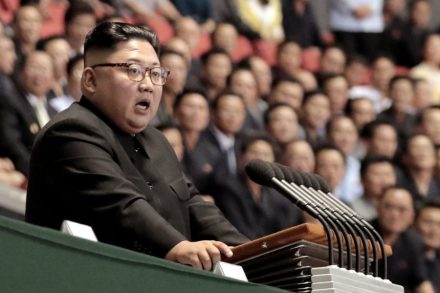
Crying in public is something we tend to associate with the North Korean people rather than their rulers ­– who are often described as having a near god-like status. Who can forget, following the death of Kim Jong-il in 2011, how the streets of Pyongyang were lined with weeping mourners? So perhaps it was surprising to see Kim Jong-un crying in public this week, in a televised announcement to the mothers of North Korea. But while this may seem perplexing, the Supreme Leader’s message was as clear as ever: that loyalty to the Kim regime is paramount. Kim was speaking at North Korea’s National Conference of Mothers.

Is opposition to Kim Jong Un growing in North Korea?

From our UK edition

North Korea is hardly the first country that comes to mind when you think of elections. Yet since the inception of the Democratic People’s Republic of Korea in 1948, parliamentary and local polls have, in fact, taken place. The former occur every four to five years and elect members of the Supreme People’s Assembly, the country’s rubber-stamp parliament and highest body of state authority. Since 1999, local elections have also been held, responsible for electing governors, mayors, and local assemblies at municipal, county, and provincial levels. Predictably for a totalitarian regime, local elections – much like the Supreme People’s Assembly – are little more than a mere formality, with voter turnout usually at or around 100 per cent.

How North Korea is supporting Hamas

From our UK edition

First, it was Russia’s war with Ukraine. Then, it was Hamas’s terrorist attacks against Israel. Both of these events, in gross violation of international law, have certainly not escaped the watchful eyes of that infamous state sponsor of terrorism, North Korea. Earlier this week, a Hamas official said North Korea is ‘part of [Hamas's] alliance’, and he intimidated Israel and the United States with the words that: ‘the day may come when North Korea intervenes’ by unleashing a direct strike against the United States. Recent events have clearly demonstrated that Hamas does not just want to destroy the lives of Israeli civilians, but the very existence of the Israeli state. Similarly, Israel is a state that North Korea does not recognise.