Edward Howell

Edward Howell is a politics lecturer at Oxford. He was involved in launching the BBC World Service in North Korea.

Japan’s Shigeru Ishiba is losing power, fast

From our UK edition

For the country known as the ‘Land of the Rising Sun’, the sun is only just still shining on the prime ministership of Shigeru Ishiba. When will it set? The recent legislative elections will go down in history for all the wrong reasons, marking the first time in 70 years that Japan’s ruling Liberal Democratic Party (LDP) has lost control of both chambers of the legislature. Ishiba’s crisis of popularity comes at a precarious moment for Japan, as it continues to be engulfed by an unholy trinity of domestic economic woes, threats of tariffs from Washington, and ongoing security challenges across East Asia.

South Korea’s pensioner time bomb is about to go off

From our UK edition

Think of South Korea and K-pop, Korean cuisine, films, and perhaps even skincare products spring to mind. The fact that anything preceded by a ‘K’ immediately invokes something Korean is testament to the success of South Korea’s global soft power. But behind the sentimental love stories and bright lights, Asia’s fourth-largest economy is at a precarious juncture. As well as the ongoing geopolitical tensions on the Korean peninsula, the country known as the ‘land of the morning calm’ is facing acute demographic crises. Beyond the low birth rate, its ageing population and age-based employment policies only highlight how for South Korea to become a truly global state, change must also happen from within.

Nato should not ignore Russia’s ‘coalition of murderers’

From our UK edition

This week’s Nato summit could not come at a more pivotal moment. As recent months have shown, the challenges to contemporary global security are no longer limited to the individual threats posed by Moscow, Tehran, or Pyongyang. What makes the current situation even more concerning for the West is the multiple threats posed by the heightened bilateral and trilateral collaborations between these actors, alongside those with Beijing. Whilst the so-called CRINK (China, Russia, Iran, and North Korea) does not yet constitute any formal strategic alliance, it would be naïve and dangerous to dismiss their ties as merely superficial.

Is South Korea’s firebrand president up to the job?

From our UK edition

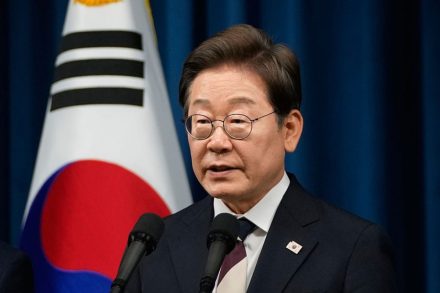
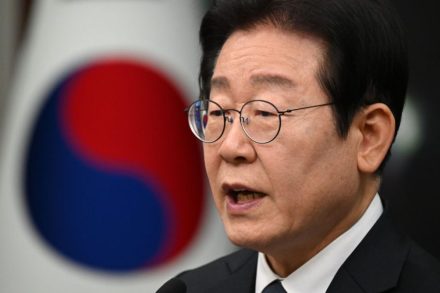
Much akin to Britain on 4 July last year, South Korea is now veering leftwards. Seoul only had a protracted two-and-a-half, and not fourteen, years of conservative rule by a leader who declared martial law on a cold winter evening last December. But at a time when security in East Asia is increasingly precarious, the election of Lee Jae-myung as South Korea’s fourteenth president does not bode well for the future if the firebrand’s past statements are anything to go by. For a man who had ambitions to be as ‘successful as Bernie Sanders’ – a comparison which is hardly a point of pride – it was third time lucky. His failed presidential bids in 2017 and 2022 are now confined to the history books.

Kim Jong Un is mad about a boat

From our UK edition

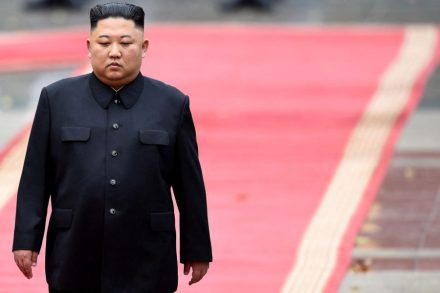
Kim Jong Un is not a happy man. Only a month after he unveiled North Korea’s first 5,000-ton destroyer, another similar warship was seriously damaged as it was launched yesterday. North Korean state media issued an unusually lengthy report following the destroyer’s failed launch, mentioning how the ship’s hull had been damaged, the ‘launch slide of the stern detached’, and damage to the warship’s bottom had ‘destroyed the [vessel’s] balance’. The exact causes of the accident remain unknown, but the warship would have required expertise to launch successfully.

The North Korean saboteurs funding Pyongyang’s nuclear programme

From our UK edition

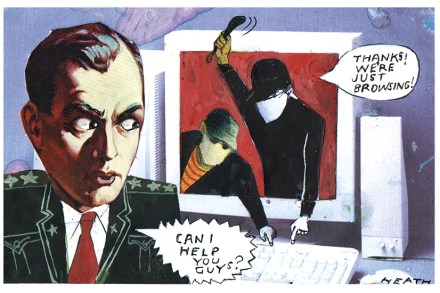
If you think that it is only Chinese infiltrators roaming across the West, including on our very shores, then think again. For all the ever-expanding scope of ballistic missiles, frigates, and drones in North Korea’s arsenal, the hermit kingdom has been adding another body of weaponry to its toolkit: cyberwarfare capabilities. It is yet another example of the North Korean regime denying its people one thing but providing its confidantes with another. Whilst the North Korean people are forbidden from accessing the worldwide web, the Kim regime has long been cultivating a network of state-sponsored computer scientists and hackers to fulfil one of the country’s core goals, namely, making money to fund its nuclear programme.

What has Putin given North Korea for its help in Ukraine?

From our UK edition

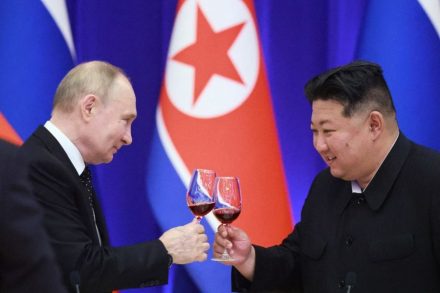
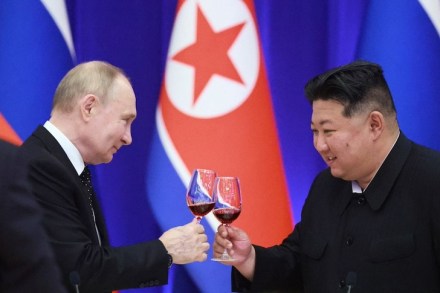
We knew it was happening all along, but it was only a matter of time before both Russia and North Korea confirmed to the world the inevitable fact that their relationship is more than rhetoric. Six months after the first North Korean soldiers were deployed to the Kursk region, the Kim regime has finally admitted that the country’s armed forces have 'participated in the operations for liberating' the area, in what marked 'a new chapter of history' in relation to the 'firm militant friendship between the two countries of the DPRK and Russia'. Only days earlier, the Chief of the General Staff of the Russian armed forces, Valery Gerasimov, lauded the 'heroism and fortitude' of the North Korean troops.

North Korea will never give up its nuclear ambitions

From our UK edition

Earlier this week, Kim Yo Jong proclaimed that North Korea has no intention of abandoning its nuclear weapons. 'If the US and its vassal forces continue to insist on anachronistic denuclearisation… it will only give unlimited justness and justification to the advance of the DPRK aspiring after the building of the strongest nuclear force for self-defence,' she said, adding that North Korea’s nuclear status could 'never be reversed by any physical strength or sly artifice'. This may have been stating the obvious, but this declaration by Kim Jong Un's vitriolic sister dashed any optimistic hopes that the arrival of a new administration in Washington could lead to Pyongyang treading one step along the path towards denuclearisation.

South Korea must pick its next president wisely

From our UK edition

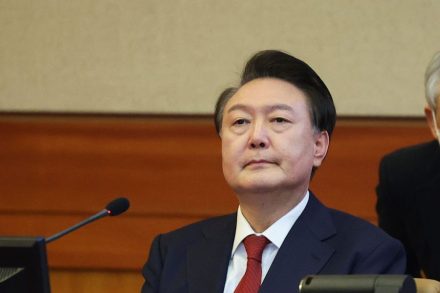
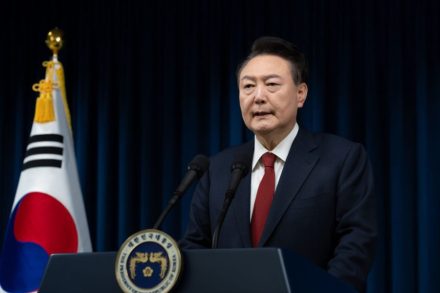
Over 100 days since his impeachment trial commenced, South Korea’s President Yoon Suk Yeol was unanimously voted out by the country's constitutional court earlier today. This is the man whose presidency will be remembered for his infamous declaration of martial law on 3 December last year. For his detractors, today is a jubilant occasion and a day of celebration. For Yoon's supporters, however, the court’s verdict predictably was a moment of melancholy. The clock is now ticking, as the country has 60 days to call a general election. Not only is South Korea’s political polarisation anything but ebbing, but voters must carefully consider just how beneficial a pivot in political direction will be at a time of global geopolitical change.

South Korea is more polarised than ever

From our UK edition

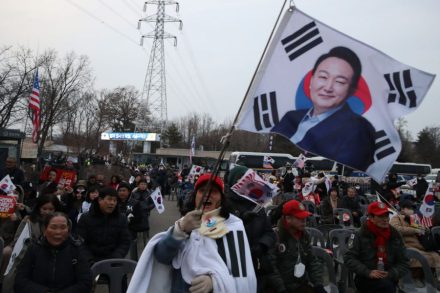
This past week, eagle-eyed observers of South Korean politics – not to mention the South Korean public – were supposed to have been put out of their respective miseries. The fate of the embattled South Korean President, Yoon Suk Yeol, would be made known, and South Korea could regroup and plan its next steps at a time of regional and global instability. Instead, we are still waiting for the country’s constitutional court to decide the President’s destiny. Swiftness has certainly not been a priority for the eight judges. As protests in support of and against Yoon continue to line the streets of Seoul, one thing can be said with certainty: whatever the outcome, the political polarisation within South Korean society isn’t going away anytime soon.

President Yoon’s trial is tearing South Korea apart

From our UK edition

It is now only a matter of days before the 52 million-strong population in South Korea will know the fate of their suspended president, Yoon Suk Yeol. Since his first impeachment hearing at the end of 2024, after which he was arrested and indicted on charges of insurrection, the President has continued to defend his initial decision to impose martial law on the evening of 3 December. But with less than a week to go before the country’s constitutional court rules on his destiny, a central court in Seoul today ordered Yoon’s release from jail, a month after his initial detention. While this is a small victory for Yoon and his team, time will tell whether the cost was worth it.

Can South Korea fix its birth rate woes?

From our UK edition

Month after month, it just kept plummeting. The South Korean birth rate last year earned the not-so-holy prize for being the lowest in the world. The demographic crisis faced by South Korea seems hardly the hallmark of the country’s self-proclaimed status as a ‘global pivotal state’. That said, the country’s fertility rate rose incrementally to a high of 0.75 births per woman in 2024, marking the first time in nine years that any such uptick has been seen. It is too early to say whether the tide is turning. Nevertheless, South Korea faces an unholy combination of an ageing population (with the over 65 year-olds accounting for 20 per cent of the country’s nearly-52 million people) coupled with a catastrophically low birthrate.

How North Korea will use its $1.5 billion of stolen crypto

From our UK edition

For a country that is notorious for its lack of connection to the outside world, North Korea is one of the world experts in cyberwarfare. Only this week, North Korean hackers managed to steal $1.5 billion from the cryptocurrency exchange Bybit, in what is the largest cryptocurrency hack on record. The fact that the stolen money is just over 5 per cent of the country’s GDP does not mean the profits will be going to the North Korean people or economy though. After all, nuclear weapons and missiles hardly come cheap. There has been a deluge of North Korean cyberattacks in the 21st century.

Does a ‘new golden age’ beckon for the US and Japan?

From our UK edition

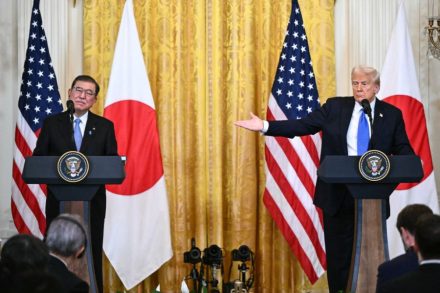
Perhaps the first thing on everyone’s minds was just how low Ishiba Shigeru, Japan’s Prime Minister (who prefers warships to golf clubs) could go on a round at the Trump International Golf Club. After all, following Trump’s victory last November, Ishiba’s South Korean counterpart, Yoon Suk Yeol, was seen sharpening up his golf swing in preparation for 18 holes. But what Ishiba’s speedy one-day sojourn to Washington on Friday makes clear is that no matter how transactional leaders may be, in international relations, alliances matter – particularly during a time of ‘polycrisis’. Relations between Tokyo and Washington have not always been hurdle-free.

Kim Jong Un’s North Korean culture war

From our UK edition

If there’s one thing that a despot wants, it is to stay in power. North Korea’s totalitarian Supreme Leader, Kim Jong Un, is no exception. Not only does he seek to maintain the survival of his ruling regime, but Kim also yearns for North Korea to be recognised as a de facto nuclear-armed state. But whilst revolutions are rare in the nuclear-armed hermit kingdom, Kim wants to ensure that even the slightest seeds of dissent fail to be sown. Whether military elites or the North Korean youth, everyone must be kept in check. And how better to do so than by drafting a 300,000-strong youth ‘shock brigade’ to reconstruct flood-damaged areas.

President Yoon’s arrest brings more turmoil to South Korea

From our UK edition

This year has commenced in an historic fashion for South Korea – albeit for all the wrong reasons. Earlier today, South Korean authorities arrested the suspended – but still sitting – president, Yoon Suk Yeol, on charges of corruption and inciting insurrection, after several weeks of the embattled leader evading this outcome. Today marks the first time in history that a sitting South Korean president had been arrested, plunging South Korea once again into unchartered waters. Domestic politics in Asia’s fourth-largest economy looks like it will only get messier. It has been a tempestuous month in South Korean politics.

Kim Jong Un isn’t going away

From our UK edition

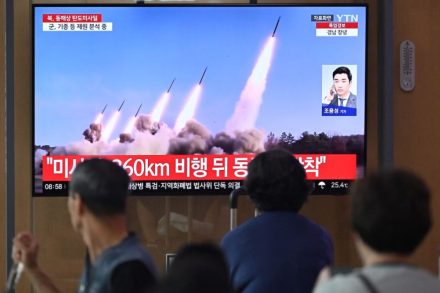
It was only a matter of time before North Korea lit things up again. As US Secretary of State Antony Blinken embarked on a five-day sojourn to Seoul, the hermit kingdom welcomed the US official in the way it knows best – by testing another ballistic missile.  North Korean state media proudly announced that Monday’s missile launch was of its latest hypersonic intermediate-range ballistic missile system. For Kim Jong Un, now entering his 14th year in power, the test of the ‘strategic weapon’ – which flew 1,100 kilometres with an altitude of close to 100 kilometres – would ‘contain any rivals in the Pacific’ and demonstrate to its ‘enemies’ that it would be ‘fully ready to use any means to defend our legitimate interests’.

The Jeju Air crash ends a terrible year for South Korea

From our UK edition

This year will go down in history as an annus horribilis for South Korea. December alone has seen a series of crises. The month started with the then-President Yoon Suk Yeol’s invocation of martial law. Just over two weeks and two (acting) presidents later, the month has ended in tragedy. The fatal crash of a Jeju Air flight from Bangkok at Muan International Airport (in the south of the country), killing 179 out of 181 passengers, will go down as one of the deadliest aviation incidents in South Korean history.  The Jeju Air plane crash is a massive shock for a country with such a strong aviation safety record.

Yoon’s impeachment won’t end South Korea’s political chaos

From our UK edition

For those who loathed him, it was second time lucky – but only just. With South Korea’s national assembly passing the motion to impeach President Yoon Suk Yeol today (with 204 votes in favour and 85 against), the stage is set for the country’s constitutional court to determine the president’s fate: whether to oust him from office or restore his powers. The streets of Seoul are filled with scenes of jubilation accompanied by fireworks and K-pop songs. But these same streets are also occupied by pro-Yoon protesters, outraged at his impeachment. The road ahead is long. And whilst in the wake of the result, Yoon announced that he would be 'temporarily stopping [his] journey', the future of South Korean politics looks to be anything but calm.

Pyongyang is keeping strangely silent on South Korea’s turmoil

From our UK edition

North Korea has long been infamous for its hyperbolic rhetoric. While there are some subjects – such as the locations of its nuclear facilities – that it has so far managed to keep quiet on, the ongoing calls to oust South Korean President, Yoon Suk Yeol, following his botched attempt to impose martial law last week has proved too irresistible for Pyongyang to hold back on for long. After all, in North Korea’s eyes, any attempt to delegitimise South Korea is one worth taking. North Korea’s week-long silence following Yoon's bizarre invocation and revocation of martial law in the South last week was unusual. Pyongyang did not even conduct any missile launches.