Ed Husain

Ed Husain is a senior fellow at the Council on Foreign Relations and professor of international and public affairs at Columbia University. He is the author of Among the Mosques and The House of Islam.

In defence of Dubai

As the Islamist regime in Iran attacks Dubai, Abu Dhabi, Riyadh, Bahrain and Kuwait with drones and missiles, some in Britain are quietly happy to see the Gulf’s skyscrapers lose their shine. ‘Dubai has no culture or history,’ say the armchair critics. Is this British bitterness caused by contempt of a former colonial power? When it comes to measures of wealth preservation, attracting millionaires, rule of law, social safety, artificial intelligence adaption and combating Islamist radicalism, the UAE comes out far ahead of the UK. But being British, we can’t acknowledge this, so we insinuate our snootiness is about culture, history, risks and future stability. The snobs are wrong.

How Britain can take on the Islamist threat 

From our UK edition

I am writing this article from abroad because I do not currently feel safe in Britain, the country of my birth and where I grew up. Why? Because I have written books and articles exposing and warning about the danger of Islamism in the UK. I am not alone in feeling threatened. Many of our media organisations, universities, charities, government departments and judges live in fear of offending an extremist underworld, which has been strengthened by the disaster of the Israel-Gaza war. The Bondi beach attack is only its latest manifestation. Ten years ago, the Conservative government was willing to confront Islamist extremism when it commissioned a review into the Muslim Brotherhood.

Britain should not turn its back on MBS and the Saudis

From our UK edition

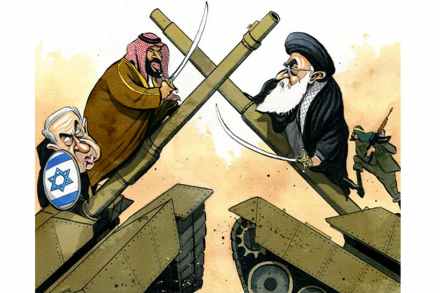
For more than a decade, I have been a public critic of Saudi Arabia. I should, therefore, be applauding recent global efforts to cast the Kingdom into pariah status and punish the Saudi Crown Prince, Mohammed bin Salman (MBS). But I fear that such calculations are flawed, short sighted and will weaken the West. Instead, Britain should be the voice of sanity and take a longer view. Such a move would be warmly welcomed by our Arab allies. Across the Middle East, there are daily skirmishes and battles, but there is a much larger war underway for the future of Islam and the type of region that will emerge in three or four decades. A regional war of ideas is being fought now and the winners will shape the lives and attitudes of 1.8 billion Muslims around the world.

Don’t outlaw ‘Islamophobia’

From our UK edition

‘One of the things that’s coming up over and over again is Islamophobia,’ says Keir Starmer in a campaign video, talking to Sadiq Khan. ‘We need to say over and over again that Islamophobia is intolerable… and I think there’s more we can do in government. There’s certainly stuff online that needs tackling much more robustly than it is at the moment.’ The video shows the London mayor nodding in agreement. He tells Starmer: ‘Your experience as a prosecutor means you’ll be thinking about the strategy we can use.’ But it’s not the strategy they should be worrying about so much as the unintended consequences. Outlawing ‘Islamophobia’ – as Starmer, with a massive majority, could easily do – makes no sense.

How Joe Biden can woo the Saudis

From our UK edition

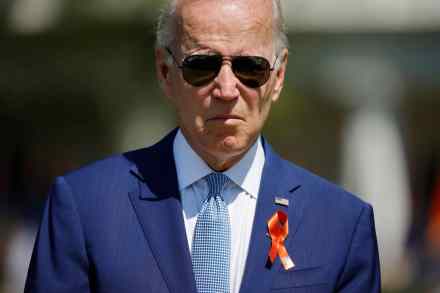
‘You can always count on the Americans to do the right thing,’ said Winston Churchill, ‘after they have tried everything else.’ After much American talk of a ‘pivot to Asia’ and hence ‘withdrawal from the Middle East’, president Biden and his top team are visiting Israel today. From there, they will head to the heart of the Arab and Muslim worlds: Saudi Arabia. Biden is coming from a White House full of young political staffers, most of whom have little respect for age and wisdom. In the Middle East, as with most Muslim-majority nations, a culture of veneration for the elderly still holds. Leaders, families, tribes, faiths, traditions and, with it, shame and honour resonate.

The Lady of Heaven protestors don’t represent British Muslims

From our UK edition

The protests against the film The Lady of Heaven reminded me of a demonstration I attended as a child. My father had taken me to Hyde Park to stand with thousands of other British Muslims to oppose Salman Rushdie’s The Satanic Verses. Ban the book, the cries went up. Some began to burn copies. Others started to chant ‘Death to Rushdie’. My father quickly grabbed my hand and turned away. ‘We are not a people who burn books or kill authors,’ he said later. He never joined a protest again. Last week, angry young Muslim men surrounded shopping malls and cinemas in Leeds, Bolton, Sheffield, Birmingham and London to demand the banning of The Lady of Heaven. Cineworld, caught off-guard, backed down and accepted the mobs’ demands.

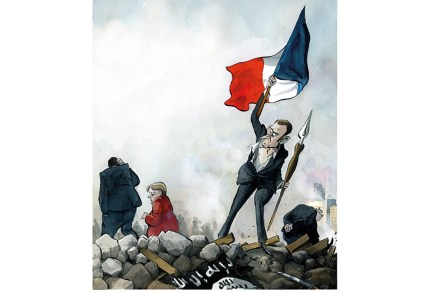
Macron alone: where are France’s allies in the fight against Islamism?

From our UK edition

36 min listen

First, France has been shaken by a series of gruesome terror attack – yet western leaders seem remarkably reluctant to support President Emannuel Macron. (01:04) Lara speaks to The Spectator's associate editor Douglas Murray and writer Ed Husain. Next, this year's US election was truly remarkable – but what was it like to report on it? Lara is joined by the editor of The Spectator's US edition Freddy Gray and Washington editor Amber Athey. (17:31) And finally, the British pub has historically been remarkably adept at circumventing restrictions on drinking – but how has it dealt with lockdown? Lara talks to journalist John Sturgis and Spectator writer Mark Mason. (27:21) Presented by Lara Prendergast. Produced by Gus Carter and Matthew Taylor.

Macron is preparing for intellectual battle against Islamism

From our UK edition

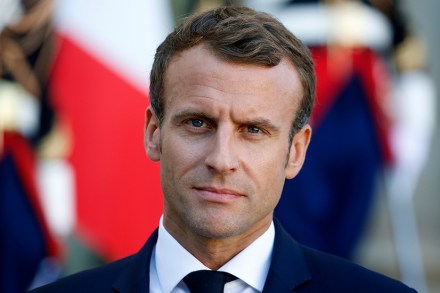
It’s easy to see why so few western leaders have come to Emmanuel Macron’s defence: when they scrutinise extremists, they are accused of being ‘Islamophobes’. Since the French President’s speech last month about Islam in the West, he has been accused — by populist Muslim politicians such as Recep Tayyip Erdogan and Imran Khan, as well as publications that should know better, such as the New York Times — of being anti-Muslim. Yes, he was frank about the dangers of Islamism, but his speech was also a defence of what he called the ‘Islam of the Enlightenment’. Rarely for a political leader, he was able to point not just to the problem but to the alternative too. He understands that Muslims have faced these internal enemies before and won.

Europe’s cities are becoming a refuge for Islamist extremists

From our UK edition

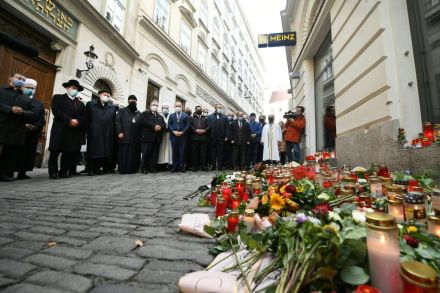
Britain’s terror threat level has been upgraded to ‘severe’ this week, following jihadist attacks in both France and Austria. Raising a terror alert is not enough though to stop more attacks. The government’s security and bureaucratic response to terror is always playing catch-up and constantly on the defensive. And unless we take the time to understand the enemy, we cannot force it into retreat and defeat. We must first of all be honest. Our country and compatriots depend on us getting this right. The threat we currently face is not about racism – which is why Christian Nigerians or Hindu Indians do not become terrorists in the West.

Bassam Tibi’s 40-year fight against Islamic fundamentalism

From our UK edition

When al-Qaeda destroyed the Twin Towers almost exactly 19 years ago, the aims of the terrorists were not fully understood by many in the western media. Osama bin Laden intended not just to wage war against the non-Muslim world but to present himself — and his jihadi narrative — as the new voice of Islam. He was fighting a war of ideas, as well as one of terror. One of the best ways to understand and combat the ideological side of the jihadi movement is to read the works of the philosopher Bassam Tibi, who has been fighting fundamentalist ideas for the past four decades. His work — speeches, essays and more than 40 books — tracks the methods by which Islamists operate.

A new world is taking shape and Britain is nowhere to be seen

From our UK edition

Britain cannot afford for its place in the world to be limited by those stuck in the thinking and guilt of the last century. Beyond Covid-19 and Brexit, a new world is taking shape. Three of our closest allies – the United States of America, Israel, and the United Arab Emirates – negotiated a brave and historic peace accord and we were nowhere to be seen, heard or even thought about. Why?  The Middle East is on the cusp of more peace accords – triggered by the vision of the Emirates and Israelis – with trade deals and security alliances to follow. Understandably, Boris Johnson has been busy dealing with Covid and the growing conflict with China; a new international dispute is never far away, that’s why alliances and influence matters.

Islam’s reformation: an Arab-Israeli alliance is taking shape in the Middle East

From our UK edition

When Benjamin Netanyahu visited Oman in 2018 in a gesture of goodwill to Israel’s neighbours, the welcome was not universal. For an Israeli Prime Minister to be warmly greeted in a proud Arab state was, for some, far too much. The Omani foreign minister, Yusuf bin Alawi bin Abdullah, was asked on Al Jazeera why the visit had been allowed. The reply went viral: ‘Why not? Is it forbidden to us? Israel is a nation among the nations of the Middle East. We should embark on a new journey for the future.’ A new narrative is emerging in the Middle East. New maps of the Muslim mind are being drawn and old hatreds are on the run. The anti-Semitic craze to destroy Israel was powerful in the 1960s, uniting Egypt’s President Nasser with his fellow Arabs.

The Tories are right to reject the flawed definition of ‘Islamophobia’

From our UK edition

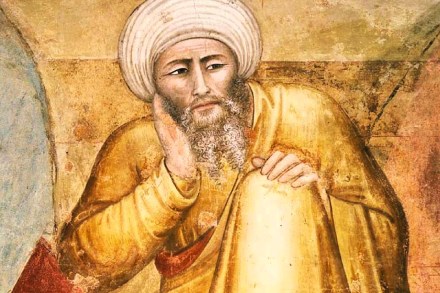
As a Muslim, I find the term ‘Islamophobia’ an etymological fallacy. Islam, by the definition of its founder the Prophet Mohammed and its greatest philosophers (al-Farabi, Ibn Tufayl, Averroes), is considered to be a ‘natural way’.  Humans cannot have a phobia against nature. It is the height of moral insanity for an intelligent Muslim to place the word ‘Islam’ and the word ‘phobia’ together in a single phrase. The term ‘Islamophobia’ was lifted from discrimination against homosexuals: homophobia. The parallels do not stand up to serious scrutiny between Islam as an idea, a faith, a civilisation, a motivator for behaviour and homosexuality as a private practice of consenting adults that had led to punishment and killings.

Roger Scruton is a friend, not a foe, of Islam

From our UK edition

I am not a right-winger. I am ashamed to say that I discovered Sir Roger Scruton only four years ago when an argument in a Washington DC think-tank led to a search for contemporary philosophers who took a long view of civilisation, history, ideas, and implications of philosophy.  It happened when I was an advisor to Tony Blair and visited Washington DC for a think-tank meeting representing Tony. There, left-wing Muslim activists, who put their community’s interests before their country, accused me of being a ‘neoconservative’ because I argued that the national security of our countries and peoples mattered more than any Muslim community identity. A safer country, logically, meant a safer Muslim community.

No matter what terrorists say, Islam and the West are not at war

From our UK edition

‘Kill Angela Merkel. Kill Erdogan. Kill Sadiq Khan’ were the demands of the white supremacist terrorist who killed 49 innocent worshippers at a mosque in New Zealand. France’s President Macron, he wrote, was ‘an ex-banker’ who was a ‘globalist’ and ‘anti-white people’. Make no mistake: the Australian man who gunned down innocent worshippers had political objectives. He wanted to stop the West from being a home to Muslims and others who were not ‘European in blood and race’. Hitler’s Nazi grandchildren are in our midst again.  Meanwhile, Islamist terrorists for decades have tried to assassinate Her Majesty, Tony Blair, and even plotted to bomb Downing Street and behead our prime minister.

The true face of Islam

From our UK edition

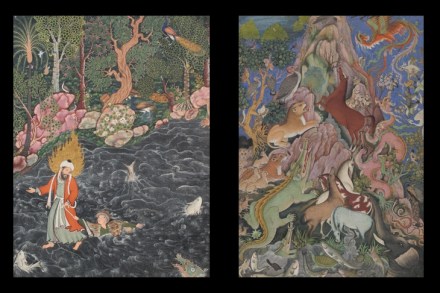
In Britain today, Islam in its original essence is not to be found in mosques or Muslim schools, but on the first floor of the British Museum. There, the Albukhary Islamic gallery, newly opened to the public, dazzles visitors and defies every certainty promoted by today’s hardline Muslim activists. This spectacular exhibition of objects from across continents and centuries shows us a history of continuity of civilisations, coexistence of communities. It offers a compelling corrective to current popular notions of Islam as an idea and a civilisation. Too often, we assume that Islam’s arrival on the world stage involved some violent break with the past that brought forth a new Muslim civilisation.

Putting our House in order

From our UK edition

My earliest memory of a mosque is being with my father in London’s Brick Lane Mosque. He was a member of its management committee and that gave me, an infant, the right to roam freely the four floors — including its vast basement — as I waited for him to finish meetings. I remember seeing Hebrew writing on a plaque on the top floor. There were mezuzahs on doors, respectfully preserved by the Muslim elders. I played with my brother on the second floor amid the dusty ebony pews left over from the mosque’s days as a French Huguenot church. European Judaism, Christianity and Islam were woven into the historical fabric of Brick Lane Mosque. At weekends, I learned how to recite the Quran in Brick Lane.

The real special relationship

From our UK edition

In all the agonising about Islamism, and what to do about it, it would be a mistake to forget a very useful fact: that Britain has a special relationship with Islam and has done for centuries. The friendship with Islam is unique. Spain was home to Andalusia, a Muslim empire for 700 years. The Germans, Poles and Austrians saw off Turkish Muslim invaders in the Siege of Vienna in 1529 and then again at the Battle of Vienna in 1683. The French lived in the shadow of 732 and the Battle of Poitiers. Britain alone, cut off from Catholic Europe, forged a relationship with Muslims built on trade, the rule of law, mutual respect and an exchange of ideas and cultures. It would be a terrible shame to forget this friendship now.

Down with la laïcité — to beat Islamism, we need a secularism that encourages religion

From our UK edition

'We are avenging the Prophet Muhammad' shouts the jihadi murderer as he escapes, having killed 12 at Charlie Hebdo. In Syria, an American fighting for al-Qaeda says: 'I want to rest in the afterlife, in heaven. There is nothing here'. There are thousands of young men and women in our midst who share these sentiments. They believe that their cause is worth dying for – and they want to have that honour, confident in the reward that they will get for their actions. They are disillusioned, not disenfranchised. Many are well-educated, with a good family life. But they seek a value that they can fight for – a cause for which they can die. There is the sense that in the west – to quote Jimmy Porter – there 'aren’t any good, brave causes left'.