Dylan O’Sullivan

Trainspotting at thirty: an interview with Irvine Welsh

A lot of new books grow old fast. It isn’t even the fault of their material, necessarily, but their milieu. Hour by hour, the means of cultural production are accelerating at an evaporative rate. Today more than ever before, irrelevancy looms large over the shoulder of the novelist. It’s an environment within which thirty days of relevance is a feat, but thirty years? A fiction in and of itself. Yet, throughout three decades of cultural churn, the words of Irvine Welsh have remained steadfast; as culturally relevant and artistically avant-garde as the day they first hit the shelves.

Irvine Welsh

The Oirish Question

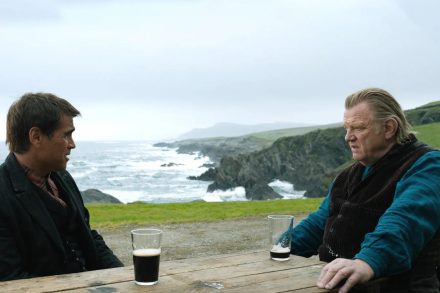
Sweeping down and around the Aran Islands, The Banshees of Inisherin begins as any Irish film would. The official trailer had given little away, besides a couple of strong-sounding accents and weak-looking Guinness. Very Irish; too Irish, perhaps. Despite my respect for Martin McDonagh and reverence for In Bruges, even I felt trepidatious. My father, too, had an air of skepticism about him. The line between Irish and Oirish is so fine — so easily and often overstepped — that when the film opened on gray cliffs and green fields, you could be forgiven for fearing the worst. For despite the accelerated evolution of contemporary Irish cinema, Hollywood still speaks fluent Oirish.

inisherin