Dr Nick Summerton

There is more to lung-cancer diagnosis than a chest X-ray

From our UK edition

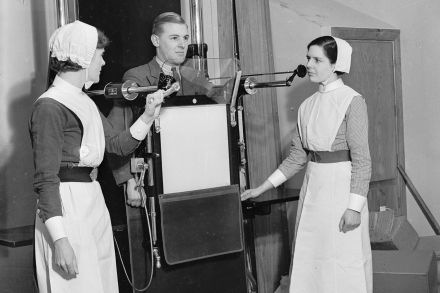
Chest x-rays have been around for 100 years and are still widely used in health care. According to the government’s ongoing National Awareness and Early Diagnosis Initiative (NAEDI) a chest X-ray might be suggested for individuals with possible symptoms of lung cancer. The NAEDI website also states: `This is a standard procedure and nothing to worry about.` But I do worry about advocating the chest x-ray as a tool to diagnose lung cancer. Over the last 50 years a number of studies have highlighted the inadequacies of the simple chest X-ray as a way to spot lung cancer earlier enough to effect a cure.
To statin or not to statin: a new test could help decide

From our UK edition

In the context of the ongoing and increasingly sterile debate about the pros and cons of statins to lower cholesterol, it is refreshing to hear something new. At a recent meeting in Quebec, researchers made the case that it might be more sensible to better identify individuals at heightened risk of heart attacks and strokes by using a more accurate screening test. Advice and interventions to reduce risks could then be more precisely targeted. Hardening or furring of the arteries, also known as atherosclerosis, is due to the accumulation of calcium and cholesterol in plaques on artery walls. There are two broad categories of atherosclerotic plaques: stable and unstable (also known as vulnerable).

China’s public health crisis

From our UK edition

During a recent visit to China I knew I was being watched. My family were also frequently photographed and videoed. But I don't believe there was anything sinister about the surveillance – it was just that we were clearly behaving in a way seen as unusual or old fashioned withinmodern China. Rather than jumping on the bus or taking a taxi we cycled, in travelling down a river we opted for kayaks as opposed to a seat on a large pleasure boat and we also walked and made use of public transport (including both 'hard' and 'soft' sleepers) to move around the country. For our meals we did not immediately head to one of the growing number of westernised fast food establishments that can now be found in most reasonably sized Chinese towns.

How self-testing can help beat cervical cancer

From our UK edition

Self-testing is now available to any individual wishing to rule out conditions such as diabetes, pregnancy and bowel cancer. Traditionally, however, screening for cervical cancer has required women to attend a GP surgery in order to have a small sample of cells scraped from the surface of their cervix by a doctor or a nurse. The sample is then sent to a laboratory to assess the cervical cells for any abnormalities (cytology testing) and/or to test for human papilloma virus (HPV) DNA.  Some types of HPV may cause cervical abnormalities that can subsequently go on to develop into cervical cancer. Several studies over the past decade have also demonstrated the superiority of HPV DNA testing over cytology.

Time for a new, patient-driven approach to cancer screening?

From our UK edition

No screening test for cancer is 100 per cent accurate. While some individuals might benefit from having an early cancer spotted, many more will have abnormalities detected that, although suggestive of a cancer, turn out after further investigations to be completely innocuous. Such false-positives have led to concerns that cancer screening can result in psychological and physical harm to patients. Nowadays, although routine NHS screening is available for certain cancers such as breast, cervix and bowel, the worry about false positives has been a key argument limiting access to CA125 testing for ovarian cancer and CA19-9 testing for pancreatic cancer. Lung cancer screening is now advocated for certain groups of patients in the USA.

Your finger nails could hold the answer to your health problems

From our UK edition

Eighteen hundred years ago, Romano-Britons with a variety of medical conditions would have visited the healing temple at Lydney Park in Gloucestershire, with some of them drinking the iron-rich waters found there. One person left behind a small offering – perhaps in appreciation of a successful cure – in the form of a model forearm. Interestingly the fingernails on the hand are spoon-shaped – a feature that is associated with severe iron deficiency anaemia. Examining an individual's finger nails can still be very helpful in alerting doctors to a range of heart and lung problems in addition to anaemia, thyroid disease and some skin conditions. In addition we occasionally send off nail clippings to try and diagnose fungal infections.

Let’s call time on the unpleasant ritual of vaginal examinations

From our UK edition

An internal examination is an unpleasant and uncomfortable experience for many women. The process involves a doctor inserting two gloved lubricated fingers into the vagina while using the other hand to feel for abnormalities in the uterus or ovaries. Traditionally the vaginal examination has been promoted as a way to screen for diseases in non-pregnant adult women who do not have any symptoms. A number of private health screening companies also continue to advocate the internal examination as a way to spot serious conditions such as cancer of the womb and ovarian cancer. But an article published this month by a group from the American College of Physicians casts significant doubt on the benefits of the vaginal examination.

The miracle supplement? Vitamin D helps you live longer — so take it

From our UK edition

The traditional view of Vitamin D is that it is essential for bone health. Vitamin D deficiency is linked to rickets in children; and osteomalacia in adults. These two conditions can lead to bone deformities with an increased risk of fractures. Beyond the focus on bone health the evidence for other health effects of Vitamin D has been inconsistent and controversial. Claims have been made about the possible benefits of Vitamin D supplementation in reducing the risk of cancer, heart disease and strokes. Enhancements to the immune system have also been postulated with potential impacts on infections and conditions such as multiple sclerosis.

H.Pylori is the deadliest thing you’ve never heard of — here’s why you should be screened for it

From our UK edition

Most people won't know about Helicobacter Pylori (H.Pylori), a common bacterial infection of the lining of the stomach. Yet it affects around half of adults in the UK and virtually everyone by the age of seventy. Unfortunately H. Pylori often causes no symptoms but is associated with a number of significant conditions such as stomach cancer. It is estimated that 2500 new cases of stomach cancer occurring within the UK each year are linked to the presence of H.Pylori infection. Research from the University of Leeds published in the British Medical Journal last week demonstrated that screening for H.Pylori – perhaps as part of a full health check or health assessment – can reduce the risk of developing stomach cancer by one-third.