Douglas Murray

Douglas Murray

Douglas Murray is associate editor of The Spectator and author of The War on the West: How to Prevail in the Age of Unreason, among other books.

Labour’s age of miracles

From our UK edition

I am not yet eligible for the winter fuel allowance. Nor am I especially in favour of it, regarding it as one of those times when the government bribes the public with the public’s own money and expects gratitude for doing so. Like anyone who pays taxes, I rather resent a government of any stripe using my earnings to make themselves look good. I’d go so far as to say it irks me. Still, I have watched Labour’s abolition of the scheme with something like awe. I know pensioners who appreciate the couple of hundred quid that the government lobs their way each winter. But last month the Chancellor of the Exchequer, Rachel Reeves, simply scrapped the universal winter fuel payment. Some ten million pensioners will no longer be receiving the cash.

Shattering the myth of the ‘glass ceiling’

From our UK edition

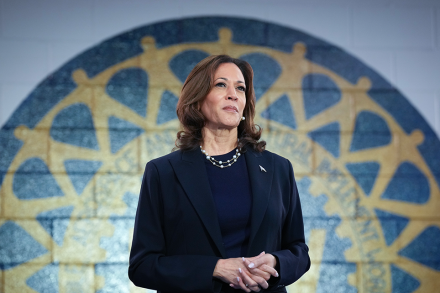
What a thrilling number of glass ceilings have been broken this century – with more still to come, apparently. In 2008 America elected its first black president. In 2012 Barack Obama was re-elected and so became the first black president to win re-election. In 2016 America had a chance to elect its first female president but the public blew it and failed to elect Hillary Clinton. Fortunately they somewhat made up for this in 2020 by voting in the first female vice president. A vote that was made sweeter by the fact that, on that occasion, the public had a two-for-one offer and were also able to vote in the first black vice president. Now the public have a further chance to improve themselves by voting for the first black female president.

The persecution of ‘the plebs’

From our UK edition

Not so long ago we went to politicians for politics and comedians for comedy. Today, like many others, I watch politicians for amusement and listen to comedians for their political insights. Whenever I want cheering up, I watch Kamala Harris riffing on a theme of her choice, or sometimes a Labour politician trying to explain why a woman can have a penis. By contrast Joe Rogan analyses political questions better than any of them, as does Noam Dworman, of New York’s Comedy Cellar. So it was that when the question of free speech returned again recently, I did not turn to the hilarious Justice Secretary Shabana Mahmood, but instead to the sombre and sage Rowan Atkinson.

The unfashionable truth about the riots

From our UK edition

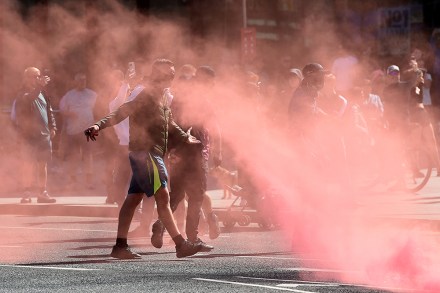
As the days slip by, the likelihood that anything will be learned from the recent rioting looks ever more remote. And with that suspicion comes the inevitable sense of déjà-vu. Because we have indeed been here before. In 2011 England was engulfed by riots, originating in London but leading to copycat violence across the north of England. The ostensible cause that time was the shooting by police of Mark Duggan, a charming young drug dealer who was in possession of a gun. The initial unrest in Tottenham may well have started as a result of claims that police had shot an innocent man – and an innocent black man at that. But by the time Birmingham, Manchester and Liverpool were going at it, the proximate cause for the violence seemed to have been forgotten.

Will we always have Paris?

From our UK edition

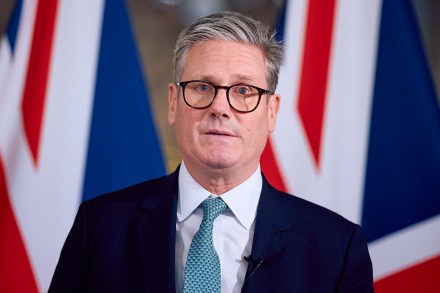
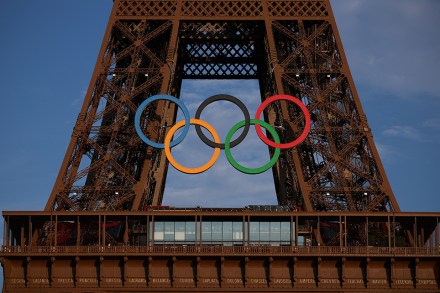
There are times when you might be fooled into believing all is well. I had a moment of such weakness the other day when I saw our new Prime Minister welcoming his European counterparts to a summit at Blenheim Palace. When Keir Starmer came down the steps to greet King Charles, he even did a pretty good job of pretending he wasn’t just Airbnb-ing the place for a few days. At such points our country can look at peace. The English baroque architecture stood out against a blue sky and everything in England seemed to go on as it should. If the Olympics go off safely it will be because of months of preparation by every arm of law enforcement Of course, at the same time people in Leeds were turning over police cars and burning the place down.

David Lammy’s Trump problem

From our UK edition

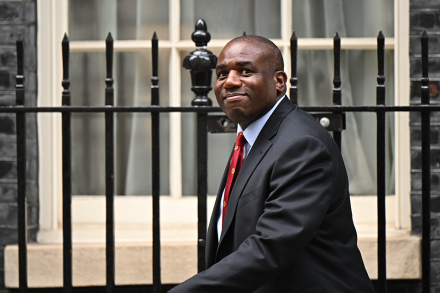
There’s no shortage of people who have spent recent years comparing Donald Trump with Adolf Hitler. Among other places, the comparison has been made on magazine covers from America to Germany. Neither is it uncommon for people to say that Trump is planning to usher in an authoritarian state and is a Nazi, neo-Nazi or similar. After the attempted assassination of Trump last Saturday the people who went in for this sort of thing are in a certain bind. On the one hand they seem to sense that urging on the assassination of a political opponent is not a good look. On the other they can’t just reverse course and declare: ‘Of course it was just hyperbole.

The new dark age

From our UK edition

We have entered a new dark age. I’m not just referring to the situation in Britain since last week. Though if I were, that too would seem irrefutable. I mean in a far broader sense – that the world has entered a new dark age. The first dark age was characterised by a lack of information. For centuries almost nobody – even the most privileged people of the day – had access to any knowledge. The second dark age, by contrast, is characterised by a surfeit of information. Indeed there is so much information around us that nobody has a chance of absorbing even a calculable portion of it. A number of our wonderfully informed MPs joined the throngs passing the Lancet’s figure around Never mind the millions of books published each year, or the billions of podcasts.

The Tories have only themselves to blame

From our UK edition

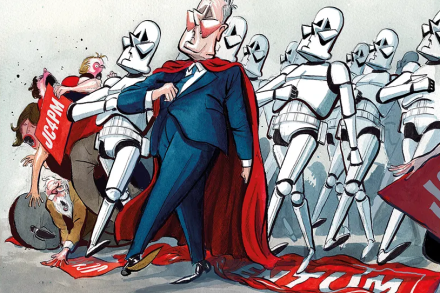
I was amused the other week to read George Osborne’s Diary in this magazine. In it the man now in charge of giving away the British Museum’s collection recalled something John Major said to him in 1997. This was that the Conservative party ‘will never win while we remain in thrall to the hard right of our party’. It is news that the Conservative party ever was. Really this was a warning from Osborne that the centre-left tendencies of the Conservative party must be adhered to. Though it should be noted that there is a flaw at the source: citing John Major on electoral advice is like quoting a bankrupt on financial planning.

David Tennant’s pride and prejudice

From our UK edition

As all non-bigoted readers will know, this is the holy and most ancient month of Pride. The time of year when – like our ancestors of yore – we bedeck our banks, supermarkets and public buildings with the latest variant of the rainbow flag. For a while now, the flag has kept coming with added details, such as circles, triangles, squares and other ways to provoke epilepsy, all because some people felt the old ‘inclusive’ flag was not inclusive enough. Each year something happens that confirms the entire thing has got wildly out of hand So it had these extra bits added to celebrate everyone from gay men to asexuals and anything in between.

Cowards vs culture 

From our UK edition

For some while I have marvelled at the way in which artworks seem to have become the focus of hatred for people wanting to say something banal. If you wish to make a point about politics, the climate or anything else, there are a range of ways to do it. But the least effective must surely be to glue yourself to a painting, throw soup on it or attack it with a knife. Nonetheless, artworks have become the means to communicate certain rote-like messages – with the violence stepping up a notch each time. It is two years since a couple of morons from Just Stop Oil decided to throw a tin of soup at Van Gogh’s ‘Sunflowers’ in the National Gallery. A glass cover protected the painting.

The trouble with calling everyone ‘far right’

From our UK edition

There is a favourite Fleet Street story about the legendary Sun editor Kelvin MacKenzie. While editing the paper, he discovered that his horoscope writer was recycling copy. He decided to dispense with her services in a letter that opened: ‘As you will no doubt have foreseen…’ You do not have to hold claims to being a mystic to predict certain things. The results of last week’s EU elections were easily predictable, as was the response from much of the British media. As I uncannily prophesied in last week’s column, the BBC’s Europe editor, Katya Adler, went with: ‘The far right is on the march.’ Elsewhere, she offered the claim that people across the continent often say: ‘This feels like the Europe of the 1930s.

Britain is an anachronism as the world goes right

From our UK edition

Some of us have vindictively long memories. I am one such person. So let me summon up just two stories from the not-so-distant past that have some bearing on our unhappy present. In 2009 the Dutch politician Geert Wilders was barred by Jacqui Smith, the then Labour home secretary, from entering the UK. In a letter explaining her decision, Smith (or rather her Home Office lawyers) wrote that Wilders’s ‘statements about Muslims and their beliefs would threaten community harmony and therefore public safety in the UK’. Perhaps Smith was partly influenced by the possibility that if Wilders came to the Houses of Parliament and gave his speech (in which he was expected to show his film Fitna) thousands of angry Islamists might decide to take to the streets in Westminster.

The right must unite

From our UK edition

I mentioned here recently that to my mind Boris Johnson bears a fairish similarity to Dr Faustus, as Christopher Marlowe portrayed him: selling his soul only to then waste his time in futile and silly gestures. The Conservative party is one of the only political parties whose leader seems to rather dislike its own voters Perhaps I can now add Rishi Sunak as another possible stand-in for that role. As Sunak announced a general election in the drenching rain last week, I was forced to ask again: ‘What was the point of all this? What was the point of rising up the ladder, of knifing his predecessor, of working, campaigning and scheming, only to leave in such a manner? Why seek the highest political office only to have no idea what to do with it once there?

My message for Columbia’s protesting students

From our UK edition

There are several frustrating things about American college campuses, just one of which is the sheer volume of column inches they take up. Whenever an American campus has an ‘occupation’ because the students want veto powers over foreign wars, the world media study their actions with great interest. Whenever a group of farmers or truckers complain about the loss of their livelihoods, whatever media attention does arrive comes from people eager to dismiss the protestors as know-nothings who are on to nothing. I told them that while they may know something, the chances are that people older than them know more Still, in recent months Columbia University in New York has distinguished itself with especially unpleasant scenes.

Why is it so hard to be a Christian in public life?

From our UK edition

Is it any longer acceptable to be a Christian? News reaches me of a strange case involving the Liberal Democrat party. Ordinarily, I would pay no more attention to happenings within the Liberal Democrat party than I would to a golf tournament. But this case is a telling one. It involves somebody called David Campanale, who has been deselected from the Lib Dems’ parliamentary candidate list. You would have thought that is quite a difficult thing to do. First because it is extraordinary that anyone would want to join the Lib Dems – the party is hardly bursting with talent. Secondly, since the party and its predecessor have traditionally been led by alcoholics and dog-murderers, I should have thought selection is a tricky thing to fail.

We need to talk about Kevin Spacey

From our UK edition

I am looking for a way to get £80,000. The sum would come in handy. I could put it towards buying a cottage on Saint Helena, a seat in the House of Lords or dinner in central London. The problem is that I’m stumped for ways to get it. Happily, this week’s news brings inspiration and I now realise that in order to make the necessary sum I will need someone – perhaps a dedicated reader? – to sing a Victoria Wood song at me in a suggestive, if not lewd, fashion. When you remove the baggage with the male-to-female power dynamic, other dynamics come into view For anyone who has not kept up with global events lately, I am referring to the case of Sam Nunns, who last week successfully sued his former employer, the manager of the Windermere Manor Hotel.

Do many women want to be train drivers?

From our UK edition

Hold your wine glass steady: the BBC has news for you. This week it splashed the news that train drivers in the UK are ‘overwhelmingly middle-aged white men’. The story was accompanied by a picture of a black woman driving a train – under the supervision of a white man, it might be noted – as though to signal that this glass ceiling too can be smashed. Personally I would expect train drivers to be overwhelmingly middle-aged, white and indeed male. Most of the UK is white and half of the UK is male. And the male half of the species tends to be more train-oriented. You don’t see many single women standing at the end of Reading station noting down train numbers in a little book. There may be hardwired reasons for this.

Douglas Murray, Lionel Shriver, Mark Mason and Graeme Thomson

From our UK edition

29 min listen

On this week’s Spectator Out Loud: reporting from St Helena, Douglas Murray reflects on the inhabitants he has met and the history of the British Overseas Territory (1:12); Lionel Shriver opines on the debate around transgender care (9:08); following a boyhood dream to visit the country to watch cricket, Mark Mason reads his letter from India as he travels with his son (17:54); and, Graeme Thomson reviews Taylor Swift’s new album (22:41). Produced and presented by Patrick Gibbons.

The Xi files: how China spies

From our UK edition

38 min listen

This week: The Xi files: China’s global spy network. A Tory parliamentary aide and an academic were arrested this week for allegedly passing ‘prejudicial information’ to China. In his cover piece Nigel Inkster, MI6’s former director of operations and intelligence, explains the nature of this global spy network: hacking, bribery, manhunts for targets and more. To discuss, Ian Williams, author of Fire of the Dragon - China's New Cold War, and historian and Guardian columnist Simon Jenkins joined the podcast.. (02:05) Next: Lara and Gus take us through some of their favourite pieces in the magazine, including Douglas Murray’s column and Gus’s interview with the philosopher Daniel Dennett.