Douglas Murray

Douglas Murray

Douglas Murray is associate editor of The Spectator and author of The War on the West: How to Prevail in the Age of Unreason, among other books.

Breivik and the right | 28 July 2011

From our UK edition

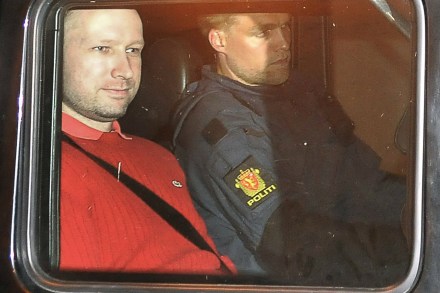
There's plenty to sate your thirst for politics in this week's issue of The Spectator (out today, you can buy it here, etc.), not least Tim Montgomerie's forceful cover article on how the Tory leadership has become detached from the wisdom of ordinary Conservatives. Here, though, is Douglas Murray's essay on the psychosis of Anders Behring Breivik, and whether the right has a case to answer for his crimes: Anders Behring Breivik believed himself a Knight Templar and awarded himself various military ranks accordingly. He also believed that he and other self-described racists had common cause with jihadis and that the USA has a Jewish problem.

Diary – 28 July 2007

From our UK edition

I am registered as a voter in Ealing-Southall and have a problem. Though a member of the party, I could not vote Conservative. The candidate put up by ‘David Cameron’s Conservatives’ had been a Conservative for a matter of hours and been parachuted in over any number of dedicated, and equally ethnic, party workers. I might have reined in my objections if it hadn’t been for the earlier elevation of Sayeeda Warsi to the shadow Cabinet and the Lords. After a recent run-in with her on the BBC’s Question Time she attacked me for referring to Islamic terrorists. I thought she only minded me identifying terrorists with Islam, but — like the new Home Secretary — it turned out she minded me identifying terrorists with terrorism.

Diary – 16 April 2011

From our UK edition

‘I’m told you’re the one to watch,’ Julian Assange says when I introduce myself in the Green Room. ‘Likewise,’ I reply. We’re backstage at Kensington Town Hall on a sunny Saturday afternoon to debate the ethics of whistleblowing. The seats sold out in minutes and the audience, almost all young, female or both, are clearly here for him. One of my colleagues tries conversation. Government comes up. ‘Companies are the new government,’ Assange says. He expands on his theme. The room is becoming blurry. I’m zoning out. It’s not just the sixth-form politics but the sheer anti-charisma of the man. I start to worry about the debate. What will I do if he numbs my brain on stage? Assange’s conversation is aural Rohypnol.

Jihad against justice

From our UK edition

For a jihadi, Britain is one of the very best places in the world. In Afghanistan, Pakistan and Yemen, overhead drones kill terrorists on a regular basis. In most democratic countries, politicians try to limit their enemies’ ability to operate — so one runs the risk of being thrown into prison, if caught mid-jihad. But not in Britain. Here, the Islamist insurgents have found that there are a hundred ways to run rings around our police and justice system. Nothing demonstrates this more spectacularly than the control orders farce.

Costs in space

From our UK edition

‘Hello. Is that the European Union? This is Earth.’ It’s a conversation that could have happened at any time in recent years, but if the EU’s planned global satellite system ever actually takes off it might yet become reality. The plans for ‘Project Galileo’ were dreamt up in the late 1990s. They are intended as a rival to the Global Positioning System satellites, or GPS, used by almost all of today’s satnav devices. GPS worked well — but it was owned by the United States. This did not please Jacques Chirac, then French president, who thought a rival satnav project would make a fine grand projet. Lift-off for Galileo has taken a while, with hopes for a speedy launch repeatedly thwarted.

Blackballed by Cameron

From our UK edition

David Cameron’s Conservative party has several uniquely destructive traits. But perhaps foremost is that it believes the lies of its enemies. And even when it doesn’t, it panders to them. A perfect example arose three years ago when the shadow minister of homeland security, Patrick Mercer, gave a newspaper interview in which he mentioned the fact that he had heard racist comments while he was in the army. Even a cursory glance at the interview showed that Mercer was reporting — and deploring — these comments. But Cameron didn’t bother with a glance. Here was an opportunity to show the new Conservative party.

Why can’t anyone take a joke any more?

From our UK edition

Most people reading this will at some point have had the misfortune to meet one of those piggy-faced people who at a certain point in the conversation says, ‘Excuse me, but I find that offensive.’ Often it is someone who isn’t actually offended themselves. They have claimed offence for a group in absentia. ‘Excuse me, but I find that offensive on behalf of an absent third-party.’ Unfortunately this horrible behavioural tick is extending its reach. It is realising its power and getting organised. You often hear the phrase ‘Why does no one ever say “X” in the media?’, or ‘Why do you never hear “Y”?

We’ll never know the truth of Bloody Sunday

From our UK edition

On 30 January 1972, a 41-year- old man named Barney McGuigan stepped out from behind a block of flats in Londonderry. Some witnesses saw a white handkerchief in his hand, others remember his hands being empty. Across the road, a soldier from the 1st Battalion of the Parachute regiment was seen by another soldier going down on one knee to a firing pos-ition. A bullet entered McGuigan’s head from the back. The head exploded, as one witness told the judge, ‘like a tomato’. Thirty years after this incident the soldier accused of firing that shot, Soldier ‘F’, testified in London. In the humming air-conditioned room, a mortuary photo of McGuigan’s head was shown to him at the request of the family’s lawyer.

‘A liberal mugged by reality’

From our UK edition

Irving Kristol didn’t coin the term ‘neoconservative’ but he was the first person to run with it. Although it was originally intended as an insult towards those alleged to have abandoned their initial ‘liberalism’, Kristol wasn’t bothered with quibbling. ‘It usually makes no sense... to argue over nomenclature,’ he once said. ‘If you can, you take what people call you and run with it.’ Besides, ‘having been named Irving, I am relatively indifferent to baptismal caprice’. Some of the best qualities of Kristol — who died last week — can be gleaned from such casual phrases.

Studying Islam has made me an atheist

From our UK edition

Douglas Murray says that he stopped being an Anglican after analysing Muslim texts and deciding that no book — of any religion — could claim infallibility Just over a year ago I told a lie. In print. In this magazine. I was one of those asked by The Spectator last Christmas whether I believed in the virgin birth. Since it had always seemed to me that if you believed in God a ‘pick and mix’ approach to the central tenets of the faith was pointless, I said ‘yes’. But in fact I felt ‘no’. It wasn’t that I had been wrestling over the doctrine of the incarnation, I simply felt that if I didn’t believe in the virgin birth, I would not believe in God. The truth is I didn’t and don’t. The guilt has been lingering since.

America is still the nation whose eyes say ‘yes’

From our UK edition

Douglas Murray tours a country despondent about its presidential race and increasingly uncertain about Barack Obama. Yet the world still needs America’s strengths In front of me at the University of Chicago, and several times my height, is a stone carving of a half-human deity from the Assyrian empire. All round this exhibition on ancient Iraq are towering artefacts from lost cities and faded empires. The whole is overshadowed by a room featuring the Baghdad looting of 2003. Beside me, a father tries to answer a question from his son: ‘What happened to Babylon?’ The father attempts to explain how empires ebb and flow — how armies rise and fall.

A film-maker who lives in the shadow of a fatwa

From our UK edition

Debate about Geert Wilders and his anti-Koran film Fitna is everywhere in Holland. Newspapers, television shows and private conversations are awash with apprehension. Since the murders of Pim Fortuyn and Theo van Gogh, and the hounding into exile of Ayaan Hirsi Ali, Wilders is the most prominent critic of Islam in Holland. With his shock of blond hair and startlingly frank language, the MP and leader of the Dutch Party for Freedom is instantly recognisable. But what about Fitna — the movie that no one has seen, but everyone, including the Dutch government, has already condemned for being likely to kick off the next round in the violent confrontation between radical Islam and European liberalism?

A scholar who dares to look terror in the face

From our UK edition

Michael Burleigh is riding a career high. The author of the 2000 bestseller The Third Reich: A New History has just published the last of a gargantuan trilogy of books on religion and politics in Europe since the French revolution. Earthly Powers and Sacred Causes took us up to the war on terror. Now, with Blood and Rage: A Cultural History of Terrorism, Burleigh comes right up to date. Not that Blood and Rage is only about Islamic fundamentalism. As the 52-year-old former academic tells me when we meet at his home in south London, the new book is about terrorism as a culture — as a way of life, and death.

A thoughtful man at the eye of the storm

From our UK edition

Tom DeLay has a slightly deflated air about him in the London club in which we meet. It might be the financial accusations and personal attacks made on him for 11 years before his indictment and consequent stand-down from Congress last year. ‘I was pretty much burnt out, exhausted,’ he admits. Or it could be the inevitable attitude of a former Republican majority leader observing Washington once more in the grip of the Democratic party — he is over here to speak at the Oxford Union, opposing the motion ‘This house looks forward to seeing a Democrat in the White House’ in a debate with the Rev’d Al Sharpton. But even observing Nancy Pelosi, Dennis Kucinich and co. jollying off to Damascus, Tom DeLay cannot get that enraged any more.

I am not afraid to say the West’s values are better

From our UK edition

Before sidling off into history last month, the Commission for Racial Equality published a final report. Decades of multiculturalism, it revealed, had left Britain a fractured and unequal nation at risk of splitting up. The Commission’s chairman Trevor Phillips stated several years ago that multiculturalism had failed. His commission waited till its final hours to admit as much. It was impossible not to feel saddened by this confession. Even as left-wing experiments go, multiculturalism was an especially costly failure. Principally it blighted the lives of immigrants who escaped their own countries only to be told not to integrate into ours. But its victims also included those who refused to remain silent before their era’s craze.

Neither short nor sharp nor shocking

From our UK edition

To be fair to him, George C. Schoolfield, of Yale University, does admit in his opening sentence that ‘movement’ may be too strong a word to describe the collection of writers on whom his Baedeker focuses. So, I think, may ‘fashion’. Links between authors in these 23 cross-global chapters are certainly thin — here an admiring letter, there a nabbed theme — and with some it is hard to see any link other than date and drivel. Each country has a chapter, and for that chapter they are allowed usually no more than one representative entry. Thus we get chapters on the decadent movement of Wales (entry: Arthur Machen) as well as that of Australia (Henry Handel Richardson). Other entries are justified: Huysmans is here, as are Strindberg and Rilke.