Douglas Murray

Douglas Murray

Douglas Murray is associate editor of The Spectator and author of The War on the West: How to Prevail in the Age of Unreason, among other books.

Syrian massacres expose Britain’s pretence

From our UK edition

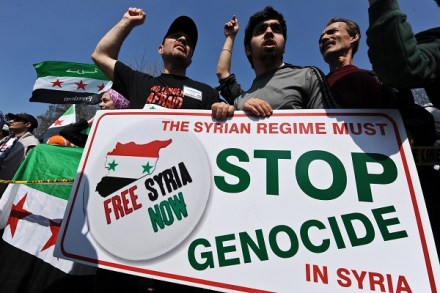
More than a week on from the massacre at Houla, another hundred or so men, women and children have been slaughtered in Hama, Syria. They were apparently stabbed to death and some of their bodies then burned. David Cameron has responded to this by describing the killings as ‘brutal and sickening’. William Hague had previously described the Houla massacre as ‘deeply disturbing.’ So what is Britain going to do about it? The Prime Minister has a suggestion: ‘I think that lots of different countries in the world — countries that sit around the UN Security Council table — have got to sit down today and discuss this issue.

The Arab Winter, continued

From our UK edition

Back in November I wrote a cover story for The Spectator arguing that the trend in North Africa for those countries which had thrown off their dictators appeared to be more in the direction of Winter than that of Spring. Since then there have been many developments, including the first round of the Egyptian Presidential elections where the field is led by the Muslim Brotherhood candidate.  And now, in a new development reported by Raymond Ibrahim over at the Gatestone Institute, we learn about the first beheading of an ‘apostate’ convert to Christianity over in Tunisia   I recommend you don’t watch the video that he links to in his blog. His summary is enough:-   ‘A young man appears held down by masked men.

Let’s talk about this

From our UK edition

What a strange place Britain has become. You sometimes need some time away to realise quite how strange. Take yesterday’s main story: the latest paedophile rape-gang case from the north of England. The judge in the trial told the men, during sentencing, that they had selected their victims ‘because they were not part of your community or religion’. But that is the sort of fact which causes the most terrible contortions in modern Britain. The perpetrators were all Muslim men of Pakistani origin and the victims all underage, white girls. We know exactly how we should think, how loud would be our proclamations and our desire to analyse the ‘root-causes’ were this situation reversed. But this way round? Gulp.

Sarkozy shows extremists the door

From our UK edition

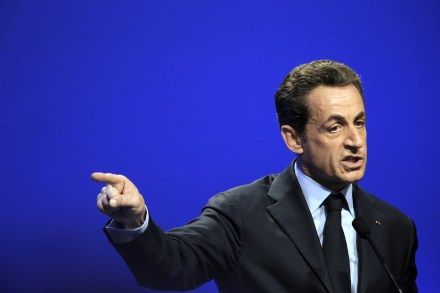
Who on earth does Nicolas Sarkozy think he is? The answer, of course, is President of the French Republic. And from that position — and propelled by the Toulouse shootings and doubtless by the imminent election — he has chosen to expel a number of people from the Republic whose views, actions and teachings are deemed inimical to the State. Sarkozy gave the order yesterday and a couple of hours later the men were on planes back to their countries of origin. As the Times reports, the Algerian Islamist Ali Belhadad was flown back to Algiers and Almany Baradji, an imam, was sent back to Mali. The French Interior Ministry explains that Baradji ‘preached anti-Semitism and the rejection of the West’. Neither man was given any time to appeal.

Behind Galloway’s grin

From our UK edition

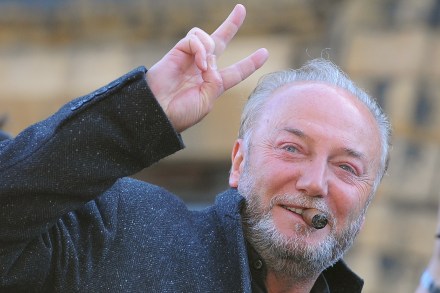
George Galloway has tragically demonstrated that sectarian politics are now alive and well in Britain.  The other week Ken Livingstone appeared at a London mosque and promised to make London a ‘beacon of Islam’ and last week went on to dismiss Jews as unlikely to vote Labour because they are ‘rich’. Now we see Galloway flying in to one of the country’s most divided areas to sweep the Labour party aside in what he has termed ‘a Bradford spring.’ Much can — and should — be said about this depressing, and predictable, turn of events.  But for now I’d just like to make two quick observations. The first regards the ‘Bradford spring’ phrase.  This cannot be allowed to go uncommented upon.

Apostle of doubt

From our UK edition

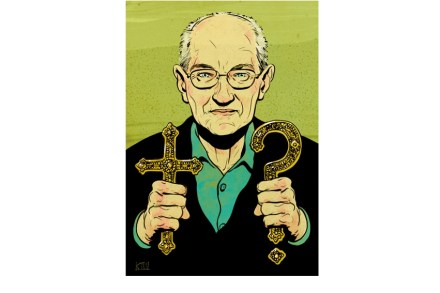
One staple of our national comedy is that someone must always fill the role of ‘Barmy Bishop’. While at Durham David Jenkins occupied the position, as perhaps in recent years has Rowan Williams. Certainly Richard Holloway recalls the morning while Bishop of Edinburgh when he woke to discover he had become the incumbent. His liberal views on women priests and gay rights, as well as vocal doubts over the literal claims of Christianity (culminating in his 1999 book Godless Morality) caused derision in the press and eventually made his position as a Bishop and Primus of the Scottish Episcopal Church untenable. He stepped down in 2000 and now, approaching his eighties, has published an unsparing and moving memoir of his life to that date, Leaving Alexandria.

How do you solve a problem like Baroness Ashton?

From our UK edition

Baroness Ashton has managed a return to diplomatic form by comparing the murder yesterday of three children and a Rabbi at a Jewish school in Toulouse with ‘what is happening in Gaza.’ Plenty of people have already deplored her comments. But they present an opportunity to address one of the underlying and too infrequently asked questions of our time: if you do not think Ashton is a very good politician, what can you do about it? Ordinarily if a politician says or does something you do not like we, the electorate, are at some point given the opportunity to vote them out. There used to be considerable pride in this arrangement.

The conservative case for equal marriage

From our UK edition

With some right-wing voices — including Catholic Cardinal Keith O'Brien, Tory MP Peter Bone and the Daily Telegraph — speaking out against same-sex marriage, here’s a piece Douglas Murray wrote for The Spectator in October arguing that conservatives should instead be welcoming it: In America a new generation of Republicans is challenging the traditional consensus of their party on gay marriage. They — as well as some of the GOP old guard like Dick Cheney — are coming out in favour. In Britain the subject is also back on the agenda with the coalition government, at the insistence of the Prime Minister apparently, planning a ‘public consultation’ on the matter.

The forgotten victims of the Troubles

From our UK edition

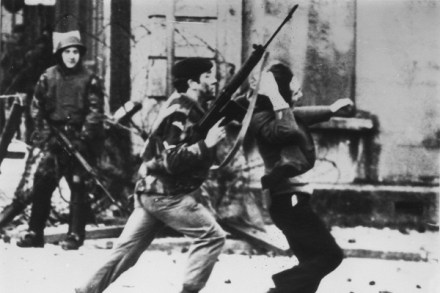
This post, marking the 40th anniversary of the Aldershot bombing, was published earlier on the Biteback website. But as its author, Douglas Murray, is a regular here on Coffee House, and as its subject matter is so important, we thought we'd re-post it here: The 30th January this year was the 40th anniversary of Bloody Sunday, the day when members of the British Parachute regiment shot dead fourteen civilians on the streets of a British city. The constant commemoration of that day by families of the dead and injured was one of the things that kept its memory alive and eventually led to the British government setting up the Saville Inquiry.

Why Baroness Warsi has it wrong

From our UK edition

For someone who has profited so well from her religion, it is particularly striking that Baroness Warsi should claim today that our societies are suffering because of ‘a militant secularisation’ which she claims is ‘taking hold.’ And worse, she says, that ‘one of the most worrying aspects about this militant secularisation is that at its core and in its instincts it is deeply intolerant. It demonstrates similar traits to totalitarian regimes.’ Not merely ‘militant’ and ‘worrying’, but ‘similar traits’ to those of ‘totalitarian regimes.’ Before addressing the numerous ways in which Warsi is wrong, I should note the one point on which I think she is right.

Livingstone will get away with it, of course — because he’s on the ‘left’

From our UK edition

When is a homophobic comment not a homophobic comment?  When it is spoken by somebody on the ‘left’ of course. Ken Livingstone has just reminded us of a prevailing rule in British politics. His comment that the Conservative party is ‘riddled’ with homosexuals ‘like everywhere else’ would have earned him a sacking if the parties had been reversed and a Conservative politician had talked of the Labour party in this fashion. In the same way, if a Conservative had made the kind of smearing racial generalisation that Diane Abbott recently twittered, they would have found themselves sent beneath the bottom rung of the political ladder.

Ignore the European Court and deport Abu Qatada tonight

From our UK edition

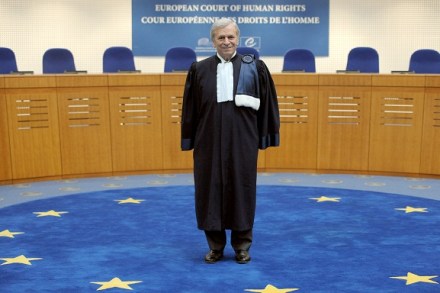
The Al-Qaeda preacher Abu Qatada is a Jordanian national who is in the UK illegally (having come here in 1993 on a forged United Arab Emirates passport). The headache he has caused successive UK governments looks like finally reaching a peak. But there is a simple solution to the problem he poses. Last month, not only for the first time in the decade-long Qatada process, but for the first time ever in an extradition case, the European Court of Human Rights cited Article 6 ‘rights to fair trial’ to ensure that Abu Qatada could not be returned to Jordan. The Court had previously played around in the Qatada case only with Articles 2, 3 and 5.

Push off now, Press TV, and take your conspiracy theories with you

From our UK edition

A week that began with an insane decision from the European Court of Human Rights has come to an end with a sensible decision from Ofcom. The Iranian government’s propaganda channel in London, Press TV, has just had its license to broadcast revoked. Insomniac Islamists will no longer be able to enjoy their weekly dose of programmes presented by the likes of Lauren Booth, Tariq Ramadan or Derek Conway. And of course they will now forever miss The Real Deal with George Galloway. On that show you could see such treats as Galloway interviewing ‘President’ Ahmadinejad.

Hague’s misplaced optimism

From our UK edition

William Hague has an article in the Times today arguing against what he refers to as the ‘pessimism’ of those who have expressed concerns about the direction of the ‘Arab Spring’. As somebody who cannot see the virtue of either optimism or pessimism as policy, and preferring facts to moods, I think the Foreign Secretary’s central points should be answered. Particularly as he chose so injudicious a day to publish his piece. Mr Hague’s argument against pessimism is that ‘such pessimism misses the extraordinary opportunities that popular demand for freedom and dignity bring’. Certainly the government of which Mr Hague is a part is not missing any opportunities.

How democracy fared in 2011

From our UK edition

Even before we were a month in, 2011 was an historic year. Principally because in a region of the world where governments shift through military coup or foreign intervention, dictators fell — and others tottered — thanks to local popular uprisings. Whatever the outcome of those events (and I have expressed my fears elsewhere, here) they remain a landmark worth observing. Whether or not the coming years are any good at all for them, 2011 was a great year for democrats in the Middle East. In the older democracies of the West, however, 2011 was more disconcerting.   If anyone doubts this, consider the following experiment. It is the beginning of any year other than this one over the last two decades.

Remembering Christopher Hitchens

From our UK edition

Just one of Christopher Hitchens’ talents would have been enough for most people. In him those talents — like his passions — all melded into each other: as speaker, writer and thinker. Yet he was more than the sum even of these considerable parts, for he possessed another talent that was even rarer — a talent for making us, his readers, want to be better people. He used his abilities not to close down questions and ideas, but to open them up. In the process he made you, the reader, aware that you needed to do more, engage more, think more and know more. Writers often feel a need to impress their readers. Christopher made his readers want to impress the writer. I remember the exact moment I first heard his name. It was the summer of 2000.

After spring, winter

From our UK edition

Spring was a long time coming in the dictatorships of the Middle East and North Africa. But when it arrived it was unhesitatingly welcomed by western leaders. William Hague declared the Arab Spring more important than 9/11 and the financial crisis. Barack Obama delivered one of his most mellifluous speeches on the subject. Everyone hoped for the best. But hope, we were reminded, is not quite enough. The shooting of protestors in Tahrir Square by the Egyptian army is the latest sign of something the West seems in no mood to admit: the Arab Spring is giving way to an Arab winter. In the last year we saw uprisings topple regimes in Tunisia, Egypt and Libya. But it is far, far too early to celebrate.

The worst form of censorship

From our UK edition

A week ago, the offices of the French satirical paper Charlie Hebdo were burned down. This attack came after it advertised the founder of Islam, Muhammad, as 'editor-in-chief' of the new issue. The move was a light-hearted response to the very serious matter of the election of an Islamist party (the Ennahda party) as the leading party in Tunisia (a result which, incidentally, appears not to have greatly bothered most European media). As the staff of Charlie Hebdo contemplated the ruins of their magazine, a much grander and richer magazine, Time, ran one of those pieces which have become familiar whenever there is an Islamist assault against free speech.

The paucity of the “99 per cent”

From our UK edition

A week may be a long time in politics, but it is no time at all in protest. As the inhabitants of Parliament Square have demonstrated, even a decade is as nothing so long as you have a constantly morphing cause, a council with no balls, and a small but steady stream of acolytes. Last weekend I watched a bridal party sneak in through the side entrance of St Paul's Cathedral. This weekend I went back, curious to see whether the protest that had kept them from entering through the main door had located a point yet. Walking up from Fleet Street the first sight that greets the visitor is a large banner saying 'root out usury.' A surge of Presbyterian nostalgia powered through me. Perhaps I could identify with this protest after all?

The End of a Delusion

From our UK edition

The sight of Colonel Muammar Gaddafi blood-stained and bewildered, pulled around by a crowd in the final moments of his life is not a sight that will cause much pity. For more than four decades he had none for those Libyans whom he repressed and killed — anymore than he had for the victims on Pan Am Flight 103, his other multiple acts of terrorism, or his pointless and bloody interventions across Africa. Yet there is something pitiful about it: perhaps most obviously because watching his end is to watch the end of a delusion. Even more than Saddam Hussein crawling out of a hole in the ground and saying that he wanted to negotiate, the sight of Gaddafi coming out of a soil-pipe armed with a golden gun seems the perfect example of reality catching up with the autocrat.