Douglas Murray

Douglas Murray

Douglas Murray is associate editor of The Spectator and author of The War on the West: How to Prevail in the Age of Unreason, among other books.

The importance of truth

From our UK edition

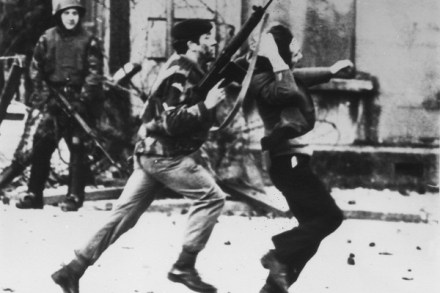
The words ‘Saville’ and ‘Inquiry’ have taken on a somewhat different meaning in recent weeks. But this is just to tell interested readers that my book on the original Saville Inquiry, Bloody Sunday: Truths, Lies and the Saville Inquiry is out now in paperback. If you can still find a bookshop then you might find it there. Otherwise it is of course available on Amazon etc. Priced at £12.99, it includes updated material on the recently-announced police investigation. The book has been described by the Spectator magazine, no less, as ‘a real-life whodunit’, by the New Statesman as ‘compelling’, by the Literary Review as ‘indispensable’, by the Irish Independent as ‘riveting’, by Kevin Myers as ‘superb’.

Beyond a joke

From our UK edition

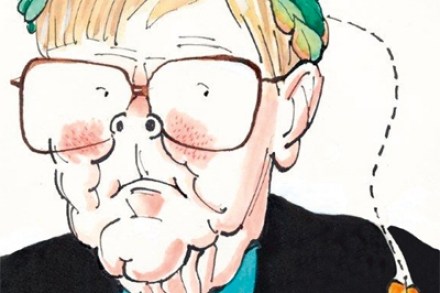
This week the National Theatre opened another new play — its seventh — by Alan Bennett. For those who know only his earlier work, Bennett remains the Queen Mother of British literature, a national treasure adored by all for his cosy charm and twinkly-eyed naughtiness. But anyone who holds this view has clearly not seen, or is blind to the failings of, his recent work. For me, sitting through new Alan Bennett plays has increasingly become like discovering that in old age the Queen Mother developed a sideline as a flasher. Of course, the quality of all writers’ work varies. But few have fallen off so steeply or horribly as Bennett. At one point this original member of the Beyond the Fringe quartet appeared to have real creative longevity.

Why I would vote for Mitt Romney

From our UK edition

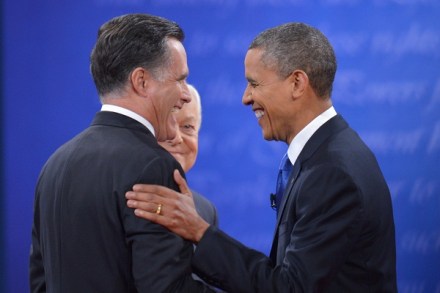
What is the role of a commentator in an election in which he or she cannot vote? And how would I vote tomorrow if I could? The response of many British journalists to the American elections is to do one of several things. These include becoming either a mystical seer or a partisan hack. The former have been doing particularly well in this election. People with no notable back catalogue of work on the US keep popping up writing, ‘Why Romney cannot win unless he does X’ pieces, or ‘Why Obama has it in the bag if he does Y’, etc. Few of these seers know what they are talking about. Most are just churning out the received wisdom of their political ‘side’ and will carry on regardless even after repeatedly being proved wrong.

Sandy exposes another difference between the US and the UK

From our UK edition

Differences between the US and the UK are often commented upon. But the storm ‘Sandy’ this week has highlighted one in particular. It is no criticism of either President Obama or Governor Romney to say that it seems strange to me to see them hugging and otherwise comforting people who have lost their homes and in some cases all their possessions. I keep testing – and then mentally blocking – the images of a similar thing happening here. I am trying to imagine my mental state had my house and few possessions been washed away only to see, emerging from the mist, the figure of Gordon Brown. He would be surrounded by legions of cameras and reporters, of course, otherwise there would be no point in him being there.

The politics of poppies

From our UK edition

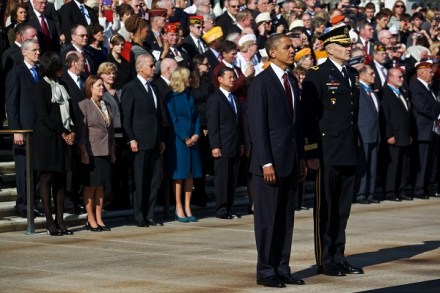
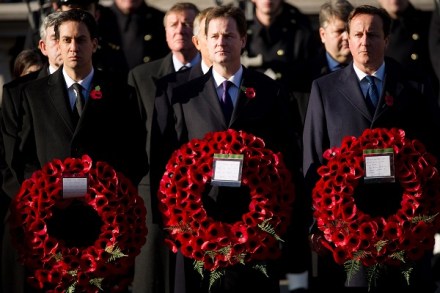
The politics of poppy-wearing shift slightly each year. The unofficial rule used to be that poppy-wearing began at the start of November. In recent years this has crept forward further and further into October, largely, I think, because of politicians and the BBC. The BBC lives in terror of someone appearing on one of its programmes without a poppy and thus sparking a round of ‘BBC presenter in poppy snub’ stories in the papers. If you appear on the BBC during this period you will find people on hand to pin a poppy on anyone not already sporting one. To my mind this slightly misses the charitable, not to mention voluntary, purpose of the exercise. But politicians have also fuelled this poppy mission-creep. Each year they begin to wear their poppies earlier.

The UK pays salaries to terrorists

From our UK edition

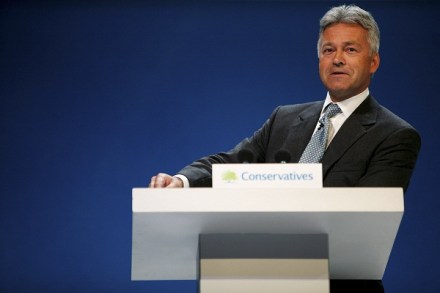
Why are UK taxpayers paying salaries to terrorists? The answer, as I explain in this morning’s Wall Street Journal, is Alan Duncan. The International Development Minister has been told repeatedly that money provided by the UK taxpayer to the Palestinian Authority’s and its ‘general budget’ is being used to pay salaries to Palestinian terrorists in Israeli jails. As I explain in the piece, Alan Duncan appears to have remained smugly unbothered about these payments of up to £2,000 a month to the worst murderers. That is more than the average income across most of Britain. Duncan’s claims that this was not happening have now been thoroughly refuted. Andrew Mitchell resigned for swearing at a policeman.

Jimmy Savile and the dangers of received wisdom

From our UK edition

What does the Jimmy Savile case tell us about received wisdom? Over the last few weeks it has become clear that one of the most famous people in Britain was known by very many people to be an active, abusive paedophile. Many other people in broadcasting knew it. People in charities he was associated with knew it. People in hospitals he was associated with warned child patients about how to get around it. The person who founded Childline, no less, had heard about it. But nobody said or did anything. We are told that there were various reasons for this. Savile himself is said to have threatened that there would be some funding shortfall for Stoke Mandeville hospital should claims about his rape of children be made public.

The government kicks the Sharia debate into the long grass

From our UK edition

Because our Parliament discusses little of significance anymore, most of the public tend to ignore it. The perception that the weekly silliness of Prime Minister’s Questions constitutes Parliamentary business is enough to put any normal person off.  And apart from that weekly bun-fight, even the media barely bothers to report on the work of either House any longer. Occasionally something still happens in the Commons or the Lords that is worthy of serious attention but because of its form elsewhere, such occasions fail to get the attention they deserve. Such is the Bill proposed by Baroness Cox, which had its second reading in the Lords on Friday.

The fall of Barack Obama

From our UK edition

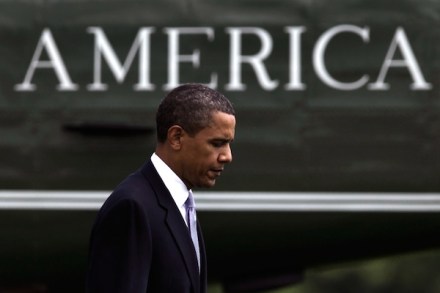
I have a piece in this week’s magazine on the fall of Barack Obama. I’m not saying he may not still win, just that even if he does he will be a diminished President. It’s available online here.

Even if he wins, Obama will be diminished

From our UK edition

If a US presidential election has the potential to wear down foreign observers, let alone the American public, imagine what it must do to the candidates. The challenger must spend years campaigning for the endorsement of their own party — fighting rebellions and pandering to diehards — while the incumbent has to work equally hard just to keep in play, while also keeping up the presidential day-job. Perhaps the effects this can have only really sunk in for the President’s supporters as they watched the first debate. His friends have for a while recounted tales of a Commander-in-Chief increasingly disengaged, mooching around the White House as the limitations of the world’s most powerful office sink in.

A protest beyond parody

From our UK edition

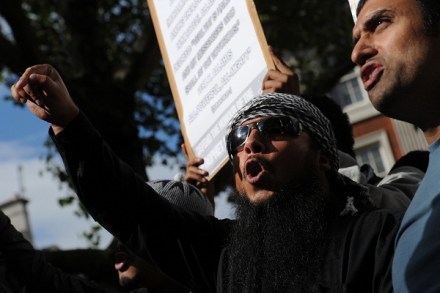
Yesterday 10,000 Muslims travelled from across Britain to the London offices of Google to demonstrate that they do not understand anything about the country they live in. The protest was one of a number planned against a film uploaded onto Youtube some months back. One of the organisers, Sheikh Masoud Alam, described the film thus: 'This is not freedom of expression, there is a limit for that. This insult of the Prophet will not be allowed.' Sadly, for him, the Sheikh is wrong.  What he terms ‘insult’ of a historical figure is most certainly allowed and judging by the quality of their argument, it seems unlikely Mr Alam and friends will persuade anyone of the contrary anytime soon.

As the West titters, Islamists are bedding in

From our UK edition

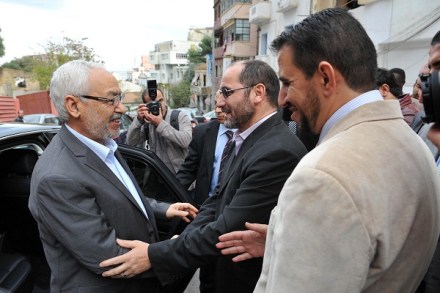
I am starting to believe that this country is no longer interested in news, only gossip. Sometimes the gossip is about a celebrity, sometimes a celebrity politician. Twenty-four hour news-channels suggest that the removal of a dead entertainer’s gravestone constitutes ‘breaking news’. We have just had three party conferences so empty and insular that the outside world did not intrude meaningfully on one of them. But whilst we sink tittering beneath the waves the rest of the world is going about its business as usual. Rachid Ghannouchi was allowed to live in this country for years. He used his time preparing for an Islamist takeover of his home-country of Tunisia. After the ousting of Presiden Ben Ali he duly came to power.

Chorley teenager imprisoned for Facebook jokes

From our UK edition

I suppose we should not be surprised that the Tweet-police (formerly the British police) have now extended their remit to become the Facebook Police. Today, getting caught for an actual crime is very rare in Britain. As anybody who has ever been robbed will know, most thefts are not even investigated by the police. It is even rarer for criminals – on the few occasions they are caught – to get sent to prison. How strange then that a 19-year old has just been sent to prison for three months for posting unpleasant jokes on his Facebook page. The unemployed man from Chorley, Lancashire admitted to posting offensive jokes relating to the missing schoolgirls April Jones and Madeleine McCann.

Better elected Islamists than dictators?

From our UK edition

If readers have a couple of hours to spare can I recommend watching a debate which took place in America last week? Not the predictably unenlightening Presidential one, but a discussion of one of the most important and complex dilemmas of our time. Organised by the excellent Intelligence Squared US, the motion is: ‘Better Elected Islamists than Dictators’. It includes three excellent speakers, Zuhdi Jasser, Daniel Pipes and Reuel Marc Gerecht. The discussion is interesting in part because the side arguing for the motion do not like Islamists and the side against the motion do not like dictators. As Daniel Pipes pithily sums up at one point, ‘nobody likes anybody’. The question, though, is what we do about it.

The Pineapple of Hate

From our UK edition

We have had the dreaded cartoons, films, teddy-bear and more. But I bet that until now nobody imagined we would ever see a (cue dreaded music) ‘Pineapple of Hate’.  Yet despite the now familiar feeling that this is all some terrible spoof, the fruit has joined the growing list of household items which can be legitimately regarded as ‘blasphemous’. As Student Rights reports, the crime-scene was the recent freshers’ fair at the University of Reading. For it was there that the Atheist, Humanist and Secular Society stall included a pineapple with the word ‘Mohammed’ on it. I always doubted that the Danish or French cartoons looked much like the prophet of Islam.

A great historian with fascist tendencies has died

From our UK edition

A great historian has died. He joined the Nazi party in the 1930s, spurred by a fear of the communism which was then spreading through Europe. Although he survived for many decades to see the consequences of the ideology, he nevertheless remained nostalgic for, and loyal to, fascism. He also retained an active interest in the Conservative party and acted as a guru for a time to John Major, though he subsequently expressed disappointment at the direction of his leadership. In a statement the current leader of the Conservative party, David Cameron described the historian as: ‘An extraordinary historian, a man passionate about his politics and a great friend of my family’.

Party conferences: a vapid kind of hell

From our UK edition

As I may have intimated last week, political conference season is a particular kind of hell. Most of us just are not diverted by faked class warfare or efforts by Ed Balls to be more ‘butch’ than David Cameron. Anyhow – whilst the few remaining members of political parties come together to remind the rest of us why we want nothing to do with them, here are some things that are actually happening. 1).

Keep up the good work, Simon Hughes

From our UK edition

As a rider to my earlier blog I wish to put in the following as evidence. It became plain to me some years ago that people who have absolutely no political point tend to revert disproportionately to grandiose claims regarding their opponents (both real and imaginary). It gives them a passing sensation of importance which helps them through their daily routine of futility. For a brief moment they feel there might be a point to it all – and themselves. We recently saw Nick Clegg seek to conceal his extreme want of meaning by branding those who disagree with him as ‘bigots’. Thus Nick transforms himself in his own eyes from a man with no point at all to a man of meaning – fighting against ‘bigots’ everywhere, or at least somewhere.

Lib Dems in Brighton: the prattling of the pointless

From our UK edition

Are there any words in the English language more soporific or depressing than: ‘Liberal Democrat Party Conference’? My paucity of blogs in the last few days can be put down solely to this fact. Even the many fascinating and disturbing things occurring in the world are somehow made damp by the knowledge that this annual general meeting of the bogus is going on. I suppose it comes down to one thing in particular. There is simply no purpose in the Liberal Democrats. There never has been. It is just a collection of people who for various reasons – understandable dislike of the other parties, hilarious opportunism or simple ignorance – wandered into a party and then tried to agree on what the people they find themselves among could be said to agree on or believe in.

Freedom betrayed

From our UK edition

I have a piece in the magazine this week on the disgraceful behaviour of Hillary Clinton and other US officials in the latest round of cartoon wars. During the last week the US Secretary of State turned into a film critic, the Chairman of the Joint Chiefs of Staff – head of the most powerful and expensive military in history – relegated himself to a telephone-salesman offering up his country’s founding principles at a knock-down price, and White House Press Secretary Jay Carney decided that his job included condemning the work of amateur directors. But it gets worse. The same Jay Carney has now decided that his remit extends to commenting on what French journalists should or should not publish.