Douglas Murray

Douglas Murray

Douglas Murray is associate editor of The Spectator and author of The War on the West: How to Prevail in the Age of Unreason, among other books.

Islamophobia is a government priority. What about Islamism?

From our UK edition

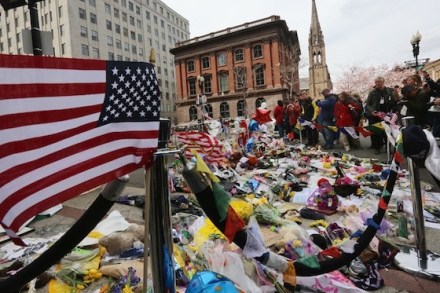
According to one of his family members Tamerlan Tsarnaev was, among other things, ‘angry that the world pictures Islam as a violent religion.’ His efforts to refute this charge included planting bombs in the middle of a family sports event in Boston, killing - among others - an eight year old boy. The case brings to mind that of Muzzammil Hassan from western New York. Hassan was the founder of Bridges TV in the US – a station set up to help ‘non-Muslims overcome the negative images they may have of both Muslims and Islam.’ Mr Hassan was subsequently convicted and sent to prison for beheading his wife. Certainly this is not a good week for the ‘nothing to see here’ crowd.

America, like Europe, is dishonest about Islamic extremism

From our UK edition

I have been in the US over recent weeks, during the period of the Boston bombings and the hunt for the perpetrators. It may surprise some British readers to know that although American public debate is undoubtedly wider and more robust than in Britain, even America displays denial and deflection when it turns out that the culprits are radical Islamists. I think of this as ‘Toulouse syndrome.’ Much of the reaction to Boston is very reminiscent of what we saw last year after the shooting of seven people in France. From the first attacks on French soldiers until after the third shootings at a Jewish school, both national and international news focussed on the possibility that the lone gunman had been a far-right extremist.

The Philpott case should prompt debate about Britain’s underclass

From our UK edition

The Philpott case has already turned into a row about media reporting. You can see why. It is so much easier to argue about a newspaper front-page than to talk about the terrible underclass this country has created. In a nutshell our problem is this. For hard-working couples, having children in 21st century Britain is unbelievably costly. Having been taxed at every turn of their lives they have to think extremely carefully about whether they can afford to have a child. Many will decide they cannot. Others will decide that they can but will spend endless nights worrying over how they are going to support the child they have brought into the world. If they find they can afford that first child they will still think very hard about whether they can afford a second, let alone a third.

Surely Katie Price demeans marriage more than gay marriage ever could?

From our UK edition

The right of gays to have a civil marriage in a non-religious service is once again an issue. There have been large and slightly violent protests in Paris as well as on-going judicial contortions in the US. I know my support for gay marriage appears to put me in a minority among conservatives. But perhaps I could ask a question of my opponents? One of the things that opponents of gay civil marriage always say is that gay marriage would ‘undermine’, ‘distort’ or otherwise ‘demean’ existing marriage. Many people – continuing to mix up civil and religious marriage – claim that the ‘sanctity’ of religious heterosexual marriage will be undermined by a civil, non-religious, homosexual marriage.

Trenton Oldfield makes about as much sense as the entrails of a chicken

From our UK edition

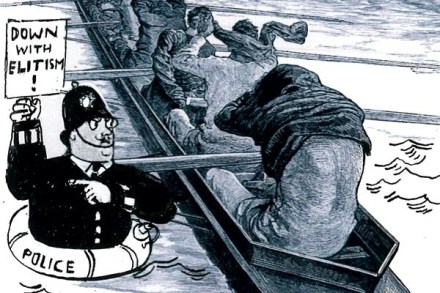
I trust everybody enjoyed the boat race this weekend  Last week the editors of this magazine made me go through the purgatory of speaking with the person who disrupted last year's race. Listeners may come away with the idea that, contrary to reports, Trenton Oldfield was coshed most terribly upon the head by last years' varsity oars. This would be a mistake. As a graduate of the London School of Economics, he has simply imbibed each and every one of the stupidities which the modern university has it in its power to bestow.

The British Prime Minister’s insignificance

From our UK edition

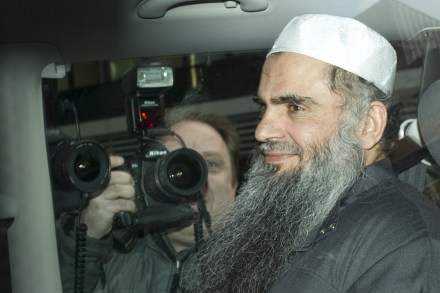
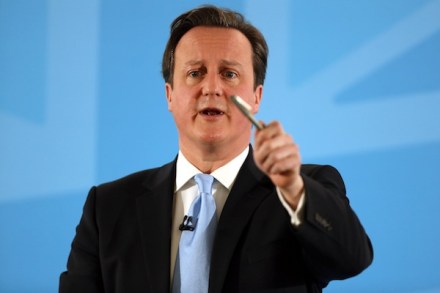
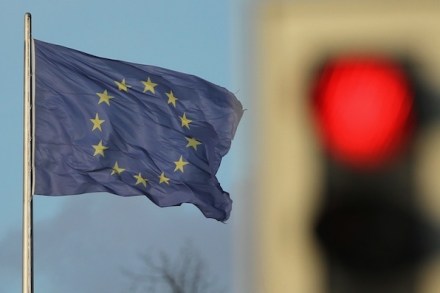
Here is David Cameron’s problem in a nutshell. During his immigration speech on Monday he said: ‘Put simply when it comes to illegal migrants, we’re rolling up that red carpet and showing them the door.’ Just two days later it was once again made clear that the red carpet is firmly in place and no such door in sight. Abu Qatada came to the UK illegally on a forged passport in 1993. He is wanted in Jordan to face terrorism charges. Abu Qatada is an illegal migrant. Yet he ‘cannot’ be shown the door. The government needs to realise one thing: that as long as we remain a signatory of the European Convention on Human Rights, words like those spoken on Monday only show the British Prime Minister to be a wholly insignificant figure.

Julie Burchill, trannies and the free press

From our UK edition

If anybody doubts that free speech would be in danger after Leveson it is worth remembering what it is already like in this country. A couple of months back Julie Burchill wrote a column in the Observer about transsexuals. It was a response to complaints by transsexuals about a piece by a friend of Burchill’s, Suzanne Moore. In a glorious broadside of a column Burchill referred to the complainants as, among much else, ‘dicks in chicks' clothing’ and ‘a bunch of bed-wetters in bad wigs’. The results were endless further complaints and a junior government minister – Lynne Featherstone – calling publicly for Burchill and the editor of the Observer to lose their jobs over the column.

Despite the fanfare, David Cameron still isn’t doing anything on immigration

From our UK edition

Well, it was right not to expect much. The full text of David Cameron’s speech on immigration is here but it can be summarised in one sentence: ‘mass migration has brought some good things, but it has also brought problems so here is some tinkering we propose.’ There are so many problems when our politicians speak on this subject. Not least is that they expect to be congratulated for saying the utterly obvious. For instance, most British people worked out a long time ago that those of us who already live here ought to have priority in housing over people who have just arrived. We also worked out some time back that an NHS which provides for the whole world is unsustainable and that if people haven’t paid into the system then the system shouldn’t pay out.

Europe should shut the door on immigration

From our UK edition

The Prime Minister is giving a speech about immigration on Monday.  I am sure we can all guess the content.  If anybody is interested in a break from this — or indeed if the PM's speech-writers are curious — perhaps I could humbly recommend this debate I took part in a couple of weeks ago in Athens. The motion was 'Europe should shut the door on immigration'.  I used my speech and time in Q&A to explain why although we should not slam the door, let alone lock it, Europe urgently needs to wean ourselves off the habit of mass immigration and, at the very least, to give the door of mass immigration a firm but gentle push.

Dreaming of systems so perfect that no one will need to be good

From our UK edition

I have a piece in this morning's Wall Street Journal (Europe) on our new press regulations titled 'We have the newspapers we deserve': 'I have just finished studying a diagram aimed at explaining Britain's new press laws. After having a lie-down, one single line keeps running through my head. Oddly enough it isn't 'recognition appointments panels,' 'regulatory appointments panels' or even 'standards and compliance arms,' memorable though all these are. 'The line is from T.S. Eliot, who almost eight decades ago derided those people who spend their days 'dreaming of systems so perfect that no one will need to be good.'' The whole piece is here.

Somehow, I’m agreeing with Mehdi Hasan

From our UK edition

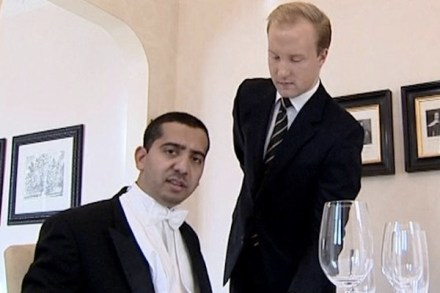
I won’t often say this, but there is a must-read article at the Huffington Post today. Titled ‘The Sorry Truth Is That the Virus of Anti-Semitism Has Infected the British Muslim Community’ it is a reflection on the recent anti-Semitic outburst by Lord Ahmed of Rotherham. It an admirably honest piece of writing the author says: ‘It pains me to have to admit this but anti-Semitism isn't just tolerated in some sections of the British Muslim community; it's routine and commonplace Sounds like the writing of some terrible ‘Islamophobe’ doesn’t it?

Is that a ‘no’ then, Owen?

From our UK edition

To my simple suggestion that Owen Jones apologise for claiming that an 11-month old child killed by a Hamas rocket was in fact killed by an Israeli ‘so-called targeted strike’, Owen appears to have answered ‘no’. He starts his reply: ‘In the last couple of years I've learned one thing: the right don't like me very much, and expend a sizeable amount of energy attacking me personally rather than my writing.’ In saying that he has learned even ‘one thing’ I fear Owen exaggerates. He begins his next paragraph: ‘Hard right pseudo-intellectual [Douglas] Murray…’ Nothing worse than attacking a person rather than their writing is there?

Will Owen Jones apologise?

From our UK edition

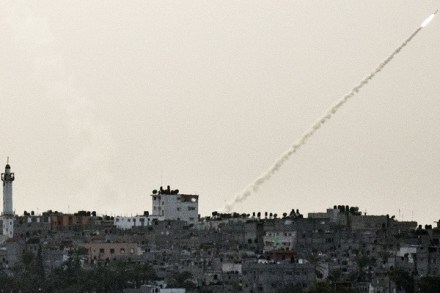
Last November, during another exchange between Israel and Hamas in the Gaza, the left-wing columnist Owen Jones appeared on BBC Question Time. Invited to comment on recent events, what he read out (or so it appears from the tape) was a catalogue of errors about Israel. Among them were big, sweeping incorrect allegations – such as the claim that Israel is enforcing ‘a siege which stops basic supplies’ getting into Gaza. But there were also some new and more specific errors. Take his striking and emotive claim that Israel’s ‘onslaught’ included ‘targeted strikes’ which killed children. Here is one of the things he said: ‘I don’t want to just throw statistics around – I’ll give you one example of one of those children.

A great honour in memory of a remarkable man

From our UK edition

I am delighted to say that my latest book, Bloody Sunday: truths, lies and the Saville Inquiry, has been jointly awarded the Christopher Ewart-Biggs memorial prize at a ceremony in Dublin. My co-winner is Julieann Campbell, author of Setting the Truth Free: the inside story of the Bloody Sunday justice campaign. The literary prize is named after the former British Ambassador to Ireland. Christopher Ewart-Biggs was educated at Wellington and Oxford and served with the Royal Kent Regiment during World War II. He lost his right eye at the Battle of el-Alamein. After Foreign Office postings to numerous countries, including Algeria, he arrived in Dublin in July 1976. Twelve days after his arrival he was murdered by the IRA in a landmine attack on his car. His killers were never found.

At last. Some right thinking on Iran

From our UK edition

At last some leadership on Iran. And from the Conservative benches. After last week’s appalling Jack Straw piece in the Telegraph, the Conservative MP James Morris has a brilliant and blistering response in the same paper. 'It is vital that we continue to pressure the Iranian regime through tough and sustained sanctions – and leave the possibility of a military option firmly on the table. The Iranian regime must be under no illusions about our determination and resolve in preventing them from achieving their objective of developing a nuclear weapons capability. Those of us who understand the grave danger a nuclear Iran would pose – and there are many – should not hesitate to make these sentiments absolutely explicit.

Drones save lives

From our UK edition

‘Drones save lives’ is the title of my piece in this morning’s Wall Street Journal. President Obama is currently receiving criticism from left and right for his policy of targeted assassination by unmanned drones. I think among a range of bad options drones are the least bad option for dealing with the threat, and explain this further in the piece which is available here. Along the same lines readers might be interested in a debate I did last week on the same subject for Google and Intelligence Squared. The motion was ‘America’s drone campaign is both moral and effective’. I was lucky in having David Aaronovitch on my side. The other side included Clive Stafford-Smith.

Death of a dictator

From our UK edition

‘In the ranking of dictators, Hugo Chávez is in the welterweight class’ this magazine said just a few weeks ago. Now the Venezuelan President has gone to that final meeting place of dictators great and small. And after the remnants of the international left have concluded their inevitable period of eulogy and mourning, it will be this magazine’s epitaph that will ring most true. Chavez was not the worst dictator in history. At times he even carried off a good impersonation of a somewhat slow-learning democrat. But his instincts always remained what they first were: authoritarian. From first to last his grabs at power both at home and abroad were propelled not by a desire to persuade but by military coup, constitution-gerrymandering and classic demagoguery.

How much will Britain change in the next 10 years?

From our UK edition

In the latest issue of Standpoint magazine I have a longish piece on the census for England and Wales. The story made the news for a couple of days at the end of last year, but I thought the census results deserved to be dwelt upon a little longer. I hope readers find it interesting: ‘Imagine yourself back in 2002. The census for England and Wales, compiled the previous year, has just come out, showing the extent to which the country has changed. You decide to extrapolate from the findings and speculate about what the next decade might bring. "The Muslim population of Britain will double in the next ten years," you conclude. "White Britons will become a minority in their own capital city by the end of this decade." How would those statements by your younger self have been greeted?

Jack Straw’s parting gift

From our UK edition

Jack Straw cropped up in the Telegraph yesterday claiming that even if Iran does acquire nuclear weapons it wouldn’t be worth going to war over. This, it will be remembered, is the same man who as Foreign Secretary argued for full-scale military intervention in Iraq to disarm that country of Weapons of Mass Destruction which it turned out not to have. Happily, putting Straw's advice to the test, this morning’s Telegraph contains information about Iran’s ‘Plan B’ effort to gain nuclear weaponry right under the nose of the international inspections professionals. So it looks like Jack Straw’s best advice may yet work out. And what a legacy that would leave.

Cardinal Keith O’Brien’s prayers

From our UK edition

As the late Christopher Hitchens used to say of the most vociferous, gay-obsessed clergy: ‘I have a rule of thumb for such clerics and have never known it to fail: Set your watch and sit back, and pretty soon they will be found sprawling lustily on the floor of the men's room.’ In Cardinal Keith O’Brien’s case it was not on the floor of the men’s room but – if the stories of several former young novices are true – in late-night prayer sessions that His Eminence brought himself low. This is allegedly the same Keith O’Brien who was the author of last year’s tumescent comparison of civil marriage equality for gays with the introduction of slavery.