Douglas Murray

Douglas Murray

Douglas Murray is associate editor of The Spectator and author of The War on the West: How to Prevail in the Age of Unreason, among other books.

Life would be better if the Lib Dems ceased to exist

From our UK edition

Steerpike’s photos from the Lib Dem conference make the affair look far more interesting than it could possibly have been. As I have written here before, the terms ‘Liberal Democrat’ and ‘party conference’, when put together, constitute probably the most soporific words in the English language. There are few ways to adequately summarise the pointlessness of this annual fandango of positioning and lies. Granted the other party conferences aren’t much better. But at least people broadly know — largely for historical reasons — why the Conservative and Labour parties exist. There is simply no point in the Lib Dems. They may once have been a useful outlet for a protest vote; now we have UKIP and the Greens for that.

A refreshing attempt to renew conservatism, boycotted by the Tory leadership

From our UK edition

Apropos of the current issue’s excellent cover story (‘The End of the Party’) about the hollowed husks that are today’s party conferences, I spent Saturday at the 2nd Conservative Renewal conference in Windsor. It was an interesting day, not least because what was intended to be a genuinely open meeting, though dominated by Conservative party activists, was boycotted by the Conservative party’s own leadership. Organised by Adam Afriyie and the Windsor Conservative Association and sponsored by the Conservative Home website, the keynote speaker was the former President of the Czech Republic, Vacláv Klaus.

Richard Dawkins interview: ‘I have a certain love for the Anglican tradition’

From our UK edition

‘You owe me an apology,’ Richard Dawkins informs me. It is a bright Oxford morning and we are sitting in his home. His wife has just made me coffee and I have met their new puppies. I am here to discuss a new book of his, but he is smarting from a disobliging reference to him in a recent one of mine. That, and an earlier encounter I wrote about here, have clearly rankled. I try a very limited apology. But it does strike me that Dawkins is more easily bruised than one might have imagined. I wonder if it has anything to do with the deluge of criticism he attracts, provokes and possibly unwisely takes notice of on social media. ‘Do you feel beleaguered?’ I ask. ‘Do you?’ he fires straight back.

The worrying ‘hyper-inflation’ of human rights

From our UK edition

There is a term which ought to be in better use – ‘human rights inflation'. This is the means by which the currency of ‘human rights’ – which used to mean things like ‘the right to life’ – becomes, thanks to the addition of endless spurious additional demands, severely undermined. The latest example of this trend has come to light this morning thanks to a Brazilian far-leftist who claims to be working as a rapporteur for the United Nations. As listeners to the Today programme will know (about 2 hours 37 minutes in here) according to Raquel Rolnik the latest inalienable human right is apparently the ‘right to a spare bedroom.

The BBC Trust is a classic New Labour horlicks

From our UK edition

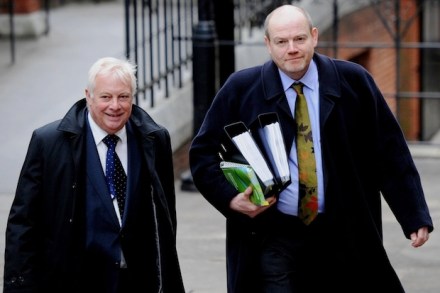
Nobody is ever 'invited' to appear before Margaret Hodge and the Commons public accounts committee. They are always 'hauled' before her. Thus it was with a whole phalanx of BBC executives, past and present, this afternoon. There are really two things which came out of the appearance of Lord (Chris) Patten, Mark Thompson et al. The first is the obvious reminder that the BBC has become a strangely upside-down organisation of late. Rich in senior management, it has spent recent years farming out major portions of news and other programme-making, apparently so that it could concentrate on the really important task of management. Of course the BBC is not the only public body to have suffered this upside-down-itis.

The Syrian paradox

From our UK edition

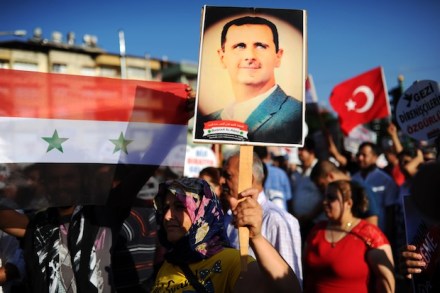
Readers may be interested to know that I have a piece in this morning's Wall Street Journal on the House of Commons vote last week on Syria. David Davis MP has a piece in the same edition making some broadly similar points. For me the conundrum of Syria now comes down to one particular problem. That is one which the House of Commons stumbled over last week and which the US Congress is likely to stumble over in the week ahead. The West has now given ample warning to President Assad of its intention to strike at some point. President Obama has famously drawn a red-line over the use of chemical weapons. The problem then is this.

David Cameron’s wars: How the PM learned to love precision bombing

From our UK edition

What is the one consolation for an MP who has beaten all their colleagues to the top job? It can hardly be the luxury of having your life, circle and income open to alternate snorts of envy and derision. Nor can it be the quagmire into which nearly all attempts to solve the nation’s domestic problems now fall.  Only one thing allows prime ministers of a country such as Britain to feel they have power. That is exercising it. And nothing exercises power more than deciding which wars to fight. In opposition, David Cameron did not much like the idea of war, and derided his colleagues for their admiration of Tony Blair. Yet in office — as Syria is revealing — he is treading a very similar path.

Who cares if Wagner’s 200? The plague of the anniversary

From our UK edition

Back in the 1960s, the producers of the Tonight programme had a running joke for linking the show’s segments. They would use lines like: ‘And that item commemorated the 23rd anniversary of….’ Or: ‘On Tuesday Mr Jones would have been 73.’ There is something about anniversaries, however audaciously crowbarred in, that always gives the illusion of order amid the chaos and relevance among the accidental. But today anniversary-itis has not only stopped being a gag. It has become a bore. What are, after all, merely accidents of the calendar have in some places become the dominant factors in our national life. Sometimes it is anniversaries of major world events, at others a coincidence of an individual birth, marriage or death.

The reaction to David Miranda’s detention is completely ridiculous

From our UK edition

It may not have been the smartest move to detain David Miranda, the Brazilian partner of Guardian ‘journalist’ Glenn Greenwald, under the Terrorism Act.  But the explosion of righteous anger over the episode is ridiculous. Starting with the outraged claim that Miranda was arrested only because of his connection with Greenwald. Wrong. Greenwald himself has previously told journalists that his partner assists him in his work. That present ‘work’ consists of engineering the leak of massive amounts of classified intelligence from a source – Edward Snowden – currently granted asylum in Moscow.

Freeing terrorists for peace?

From our UK edition

Amid all the bloodshed in Egypt and Syria at the moment the fact that the Israelis and Palestinians are once again at the negotiating table has received less notice than usual. Which is not necessarily a bad thing. The intense international focus on the dispute seems to me a minor contributing reason why the dispute remains unresolved. But there is one aspect of the talks which really ought to be highlighted. That is the Palestinian demand that Israel release 104 Palestinian terrorists from prison before talks commence. While agreeing to this precondition, Israel has not asked for – and is not getting – anything in return. Of course Israel has been here before. Many times.

Mehdi Hasan and the EDL

From our UK edition

At the weekend I was on the BBC TV programme Sunday Morning Live. We discussed pilgrimages and the ethics of the banking industry. But the first debate was the most heated. It was titled, ‘Are Muslims being demonised?’ The Huffington Post’s UK political director, Mehdi Hasan, claimed that Muslims are indeed being demonised. For my part I argued that while there are serious reasons – principally terrorism and murder – to be concerned about some strands of Islam, those who would tar all Muslims with the brush of the extremists are doing something very wrong. I thought it an interesting and lively discussion. However at the very end Mehdi Hasan told a smear which I think needs correcting.

Anthony Weiner’s wiener and the left/right divide

From our UK edition

Everyone needs something to brighten up their day. And Anthony Weiner has once again come up with the goods. Readers will recall that the Democrat politician had to resign from the US Congress two years ago after a technological mishap meant he sent a photo of his penis (or ‘wiener’ in American slang) to all of his Twitter followers instead of to the one woman he had meant to. Initially claiming that his account had been hacked (see here) Weiner then had to admit that the wiener was his (as were a string of ‘sexting’ conservations with young women) and humiliatingly stood down from office (the attempted cover-up being significantly larger than the offence).

Douglas Murray’s diary: My gay wedding dance-off with Julie Burchill

From our UK edition

The pilot refuses to get going until everyone is seated and quiet. When we take off there are raucous cheers. I am on a midday budget-airline flight to Ibiza. Louder cheers welcome the drinks trolleys which are noisily ransacked. Along from my seat a gentleman is reading The Spectator. It transpires we are heading for the same occasion. The ceremony takes place on a raked clifftop amphitheatre on the beautiful and quiet north side of the island. Boiling sun, cliffs and glittering sea boast the backdrop. Assembled friends and family swelter in the full lamp glare of the sun. I keep my jacket on. Though this may sound like sunstroke, the ceremony is conducted by Benedict Cumberbatch.

The EU fails to ban Hezbollah

From our UK edition

As though the sunny weather and the royal baby were not enough, here comes yet more good news. The European Union has finally banned the military wing of Hezbollah. This is something I have argued for often, including here, here, and here. After recent trials of Hezbollah operatives and Hezbollah operations – including the Bulgaria bombing – on European soil the decision did seem inevitable. Yet there is a cloud on the silver lining - which is that the EU, in somewhat characteristic fashion, has only managed to do a partly good thing. While they have banned the ‘military wing’ of Hezbollah they continue to allow the ‘political’ wing to fundraise and recruit in Europe.

Islamists may turn into capitalists. Then again they may not

From our UK edition

A number of columnists have written recently about how we have all misunderstood ‘the Arab Spring’. Most prevalent among them has been the claim that when the current youth-bulge in these countries grows up they will in fact turn into capitalist entrepreneurs. I concede that it is possible. It would certainly be highly desirable. But as an idea it ignores the thing which secular Western commentators continuously ignore: that is the small matter of ideology. On this note, might I heartily recommend the following two videos?  The first is a recent Friday sermon from the Egyptian cleric Muhammad Zoghbi calling on Allah to annihilate the Jews and the Shiites. Viewers will notice how moved certain of his congregation are by these imprecations.

How many immigrants would satisfy the OBR?

From our UK edition

According to the Office for Budget Responsibility (OBR) Britain must bring millions more immigrants into the UK to sustain our ageing population. As the Telegraph reports it, the OBR study has found: ‘…. that allowing more than 140,000 immigrants into Britain a year, equivalent to 6million people, would help increase the overall number of people who are in work and improve public finances.’ The trouble with the OBR - like so many official and unofficial bodies - is that it views immigration solely as an issue of economics. And this despite the fact that the leaders of both the Conservative and Labour parties have conceded that immigration on the scale of recent years was not only wrong but is societally unsustainable.

There are upsides to live TV, but being spanked by David Dimbleby is not one of them

From our UK edition

Belated thanks to readers who wrote in about the BBC’s Question Time last week (still viewable here). It was a slightly odd edition, I thought. The panel – Margaret Hodge, Danny Alexander, Sarah Woollaston, Tony Robinson and me – found ourselves in agreement on more things than is usual on the show. On party-funding we agreed that the parties are all in a mess – albeit in slightly different ways. Likewise we thought that although there may be an argument for it, this isn’t a great moment to raise MPs pay. We all wanted the NHS to remain solvent, though disagreed on the priorities. And everyone was concerned about the coup in Egypt. I think the only point of real contention was between the chair – David Dimbleby – and me.

Kenneth Minogue RIP

From our UK edition

The weekend brought the sad news of the death of Kenneth Minogue. Intellectually and physically active to the last, he died on Friday at the age of 82, while returning from a conference on the Galapagos Islands. Spectator readers will remember his essays and reviews for the magazine stretching over many decades. Some may have been fortunate enough to have been taught by him at the London School of Economics. Ken was, needless to say, one of the most brilliant conservative political thinkers of his generation. He was also the most wonderful man. He had that rare mixture of great intelligence and twinkly, irrepressible good-humour.

Keith Vaz and Salman Rushdie

From our UK edition

As an addendum to yesterday’s post I thought I might remind readers of something about Keith Vaz. The chairman of the Home Affairs Select Committee has of course just applauded the banning of two American authors from Britain because of their criticism of Islam. So I turn to Joseph Anton – the illuminating fatwa-memoir released last year by Salman Rushdie. It contains a remarkable anecdote of the moment immediately after the news arrives of Ayatollah Khomeini's order of murder. Rushdie (incidentally writing of himself in the third person) describes walking into his literary agent’s office in London. His agent gives him an astonished look. ‘He was on the phone with the British-Indian Member of Parliament for Leicester East, Keith Vaz.

A gross double standard over hate speech

From our UK edition

According to the Home Office if you are a non-Muslim and you make the following statement your presence will be deemed ‘not conducive to the public good’ and you will be barred from entering the United Kingdom: ‘It [Islam] is a religion and a belief system that mandates warfare against unbelievers for the purpose for establishing a societal model that is absolutely incompatible with Western society. Because of media and general government unwillingness to face the sources of Islamic terrorism these things remain largely unknown.