Douglas Murray

Douglas Murray

Douglas Murray is associate editor of The Spectator and author of The War on the West: How to Prevail in the Age of Unreason, among other books.

Christianity is the foundation of our freedoms

From our UK edition

If there is one underlying source from which all our other societal problems stem, it is surely this: we no longer know who we are or how we got here. Worse, we mistakenly believe our situation to be inevitable, presuming that we have arrived in this modern liberal state through something like gravity. At the very opening of Inventing the Individual Larry Siedentop lays this problem out. People who live in the nations once described as Christendom ‘seem to have lost their moral bearings’, he writes: We no longer have a persuasive story to tell ourselves about our origins and development. There is little narrative sweep in our view of things. For better or worse, things have just happened to us.

My experience of last night’s Benefits Street debate

From our UK edition

I spent yesterday evening in Birmingham with the residents of ‘Benefits Street’, assorted pundits and politicians. It was a slightly rowdy debate for Channel 4, and can be seen here. Since a number of controversial things came up perhaps I can deal with them in order. ‘The programme shouldn’t have been made.’ I felt very uncomfortable at one point last night, watching both the opposition minister, Chris Bryant, government minister Mike Penning and various pundits including Mehdi Hasan of the Huffington Post and Owen Jones of The Independent saying that Channel 4 should not have made the series, should have made a different series, made a series about something else or edited it differently and so on.

British jihadists in Syria cannot be compared to George Orwell and Laurie Lee

From our UK edition

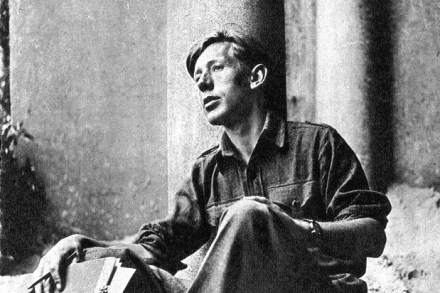
George Monbiot had a moving piece in yesterday’s Guardian in which he reflected on the UK government’s efforts to arrest and charge returning British subjects who have gone to fight the Assad regime in Syria. As Monbiot said in his very opening: ‘If George Orwell and Laurie Lee were to return from the Spanish civil war today, they would be arrested under section five of the Terrorism Act 2006. If convicted of fighting abroad with a "political, ideological, religious or racial motive" – a charge they would find hard to contest – they would face a maximum sentence of life in prison. That they were fighting to defend an elected government against a fascist rebellion would have no bearing on the case. They would go down as terrorists.

‘Islamophobe’ of the Year

From our UK edition

I have been honoured to receive a number of awards in my career. Yet one which I have especially yearned for has so far eluded me. Now it seems finally within my grasp. Since I began writing I have dearly hoped to catch the eye of the judges for the ‘Islamophobe of the Year’ title. There are a number of reasons. Firstly because one of its earliest recipients was Polly Toynbee. Anything that Polly wins is something I covet. Secondly, I have always desired the award because the term ‘Islamophobia’ itself is so fantastical and ridiculous. Winning an award with it in the title would be like waking up to discover I had been given a prize by the Queen of Wonderland.

My night with Godfrey Bloom

From our UK edition

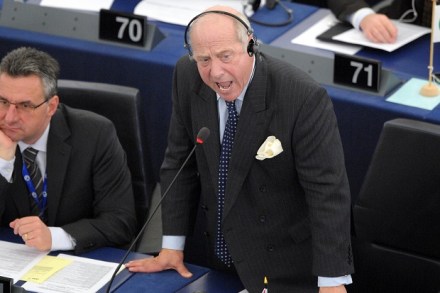
On Thursday night I spoke at the Oxford Union on the motion 'This House believes post-war immigration into Britain has been too high.' In many ways this is an easy debate to explain and win, notwithstanding the fact that Lord Singh, Nadhim Zahawi MP and Monica Ali were lined up in opposition. The Conservative Prime Minister David Cameron has said immigration has been too high and that he wants to bring it down. The Labour Leader Ed Miliband has said the same. As have all major, mainstream British politicians. And no wonder. A British Social Attitudes survey from last year showed 77 per cent of the British public want immigration to come down. Almost 60 per cent want it to come down by 'a lot'.

Iran, Saudi Arabia, and the Middle East’s 30 year war

From our UK edition

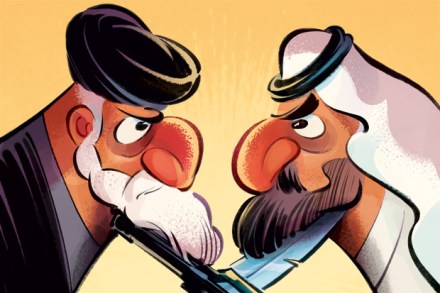
[audioplayer src="http://traffic.libsyn.com/spectator/TheViewFrom22_23_January_2014_v4.mp3" title="Douglas Murray discuss Islam's 30 year war with former solider Thomas Tugendhat"] Listen [/audioplayer]Syria has fallen apart. Major cities in Iraq have fallen to al-Qa’eda. Egypt may have stabilised slightly after a counter-coup. But Lebanon is starting once again to fragment. Beneath all these facts — beneath all the explosions, exhortations and blood — certain themes are emerging. Some years ago, before the Arab ‘Spring’ ever sprung, I remember asking one top security official about the region. What, I wondered, was their single biggest fear? The answer was striking and precise: ‘That the region will clarify.

In memory of my friend Alexandros Petersen – a victim of the Taliban

From our UK edition

On Friday a Taliban suicide bomber detonated in downtown Kabul in the doorway of a Lebanese restaurant which was popular with foreigners. Two accomplices then went into the restaurant and gunned down the people inside. The victims included a Labour party candidate for the forthcoming European elections, the IMF’s country director and a young Afghan couple. They also included a friend and colleague, Alexandros Petersen. Educated in London, Alex worked for some years at the Henry Jackson Society as well as at the Atlantic Council and the Woodrow Wilson Center. He had recently joined the political science faculty of the American University in Afghanistan.

Amsterdam

From our UK edition

‘What are people in your country saying about Holland these days?’ one Dutch friend recently asked me. I hadn’t the heart to reply that no one was talking that much about his country. But the question seemed typically Dutch. Endlessly outward-looking and interested, yet charmingly insular and with a slightly off-kilter view of itself. The Dutch character — like the country — is fascinating for that cocktail of conservatism and libertinism, strict rule-making and anarchism which runs through it. Foreign tourism there has undoubtedly suffered in recent years from an exaggeration of just one side of that complex character. And although this seems mercifully to have declined in recent years, Amsterdam remains a victim of its culture of licence.

Is the startling rise in Muslim infants as positive as the Times suggests?

From our UK edition

Today’s Times has a lovely example of positive spin.  The headline is: ‘Rise in Muslim birth rate as families ‘feel British’. The story which gives rise to this headline is that: ‘Almost a tenth of babies and toddlers in England and Wales are Muslim, a breakdown of census figures shows.  'The percentage of Muslims among the under-fives is almost twice as high as in the general population. In an indication of the extent to which birth rate is changing the UK’s religious demographic, fewer than one in 200 people over 85 is Muslim.  'One expert said it was foreseeable that Muslims who worshipped would outnumber practising Christians.’  Incidentally – I have previously written about this story here and here.

Absolute moral squalor on display at a London church

From our UK edition

‘Did Israel spoil Christmas again?’ I only ask because the claim that they did is becoming a modern tradition in Britain. The softest and most commonplace expression of the claim comes from those vicars or congregation members who claim that they find it ‘hard’ to sing ‘O little town of Bethlehem’ nowadays because of how dreadful the situation in Bethlehem is today compared with how little, still and dreamlessly sleepy it was back in Jesus’s time. This Christmas I had already attended one church which perpetuated this new conceit. And earlier this week I went to the church of St James in Piccadilly, which has made anti-Israeli propaganda its signature dish in recent years.

The murder of Lee Rigby had everything to do with the worst version of Islam

From our UK edition

The ‘guilty’ verdict has been delivered in the trial of Michael Adebolajo and Michael Adebowale for the murder of Drummer Lee Rigby in May. An interview with the soldier’s parents has just been released in which they say that their son died in the cause of protecting the rights of our democracy, including the freedom of speech and the freedom to walk the streets in safety. So it would do an injustice to the young man’s memory not to reflect on what has constituted an additional outrage and insult in this already horrific case.

‘The left’ doesn’t matter; but its cowardice does

From our UK edition

I know it’s not quite the year’s end. But I think the sweetest words I heard in 2013 are already set: ‘The left doesn’t really matter’. Those words were said to me by a pollster. The point he was making was that although the commentating classes obsess about the state of the left, it doesn’t really matter. Among the public as a whole only a handful of people take any interest in where the left does or doesn’t stand on issues and what this does or doesn’t mean. If there is anyone who thinks that a shame they should just look at the contortions ‘the left’ is going through now over the issue of gender segregation.

David Cameron rebrands failure in Afghanistan as victory

From our UK edition

If you can’t win then you have to redefine what winning means. That is what David Cameron has tried to do with his statement about Afghanistan: ‘mission accomplished’. As Isabel notes, the PM’s speech in Camp Bastion has come up with a new definition of victory: ‘The most important part of the mission … The absolute driving part of the mission is the basic level of security so that it doesn’t become a haven for terror.’ Of course the Prime Minister has to define victory like that because everything else has been such an utter and complete disaster. ‘Our man’, Hamid Karzai has, predictably enough, been stepping away from coalition forces as they themselves prepare to step away from Afghanistan next year.

Britain’s immigration debate is utterly mad

From our UK edition

This week's Mail on Sunday carried two stories on the same page about immigration. Perhaps unwittingly the two stories — and one man in particular — demonstrate the craziness of this country's immigration debate. One story was about a Conservative party candidate at the 2010 election who has defected to UKIP. Her ex-husband has released a video made while she was a Conservative candidate saying stuff about sending illegal immigrants and failed asylum seekers back home. The second story is about a Labour party pollster who tweeted sarcastic comments about Labour voters who express concerns about immigration levels.

This is Britain: a crackdown on Islamic extremism will not cause attacks on Muslims

From our UK edition

Hallelujah, vaguely. The Prime Minister’s extremism task force set up in the wake of the murder of Drummer Lee Rigby has just reported and its findings, ‘Tackling Extremism in the UK’ include the following admission: ‘We have been too reticent about challenging extreme Islamist ideologies in the past, in part because of a misplaced concern that attacking Islamist extremism equates to an attack on Islam itself. This reticence, and the failure to confront extremists, has led to an environment conducive to radicalisation in some mosques and Islamic centres, universities and prisons.’ Who could possibly remain opposed to such prevailing common sense?

Cocktails: Cupboard love

From our UK edition

At the back of every drinks tray or cabinet there are always some stray bottles. Some deserve to be lonely, others just end up that way. But it is occasionally worth sifting the wheat — or at least grain — from the chaff. Here is a guide for doing so. Vermouth Only keep your bottle if you make your own martinis. If you drink them as they should be drunk you will need so little that only a martini alcoholic could ever reach the bottom of the bottle. You won’t need to buy two in a lifetime. So keep it, but on no account ever drink it on its own. Curacao and other brightly coloured things Abandon all hope. You will never find a use for them. They cannot be used in the home. Try to dispose down the sink, otherwise at a local authority waste site.

Who is more powerful: a backbench MP or Alan Rusbridger?

From our UK edition

Well Alan Rusbridger has certainly received a glowing review from his own newspaper for his appearance in Parliament yesterday. In a moving paen, Roy Greenslade today describes how his boss ‘was able to bat away MPs' concerns without raising a sweat, despite bluster from a couple of them who sought to suggest he might be guilty of breaching the Terrorism Act.’ Which, if it is true, says more about the MPs than it does about Rusbridger. As it happens, I don’t know why some of the Select Committee MPs went into some of the cul-de-sacs they did. Why the ‘outing’ of the sexuality of some people working at GCHQ should have been such a prominent issue for Michael Ellis I do not know.

David Cameron has his price: the Dalai Lama or ‘the global race’?

From our UK edition

David Cameron has taken a trade delegation to see the People's Republic of China. The hope is obviously to stir up trade for Britain. Nothing wrong with that. Except that when Mr Cameron was in Sri Lanka the other week he chose to lecture the Sri Lankan government over the manner in which they put down their Tamil separatist problem a few years back. This must have been galling to more than a few Sri Lankans since much of the funding for the Tamil Tigers over the years came from open fundraising in the UK. However, you may recall that relations between London and Beijing turned very frosty after David Cameron met with the Dalai Lama. Indeed, an earlier trade delegation was cancelled by Beijing. But now we are told that Britain has 'turned a page' with China.

Surprise, surprise, Iran has betrayed the Geneva deal

From our UK edition

At the start of this week I hinted that the negotiations which went on in Geneva last weekend were not a meeting of equals. On one side were the Iranians, representing the clear wishes of their unelected Supreme Leader Ayatollah Khameini. On the other were the P5+1 countries joined by the unelected Supreme Baroness Catherine Ashton whose primary desire seemed to be to just declare some deal – any deal. So a wretched deal was done which has initiated the fraying and eventual collapse of sanctions, and Baroness Ashton and Secretary Kerry hugged each other for the cameras and got their moment of feeling like world saviours. Now it is business as usual.