Douglas Murray

Douglas Murray

Douglas Murray is associate editor of The Spectator and author of The War on the West: How to Prevail in the Age of Unreason, among other books.

Is there absolutely nothing that can spook the diversity advocates?

Today's Times carries an interesting story. A new report from the Department of Education reveals that: ‘Almost one in three of England’s primary school children is from an ethnic minority – the highest level yet.  One pupil in five speaks English as a second language.’ There follows some information about how these numbers are putting an ‘unprecedented pressure’ on schools which now ‘struggle to cope’ after a 2.1 per cent increase in pupils at state primary schools in one year alone. The extraordinary thing about stories like this is that they just sail by.  No politician has anything much to say about it.

Rape culture, Rotherham and double standards

Freddy’s blog on the so-called ‘rape culture’ that we in Western democracies are all meant to be struggling under reminds me of an unwittingly important moment on BBC3 last year.  It was provided by our colleague James Delingpole when he appeared on something called ‘Free Speech.’  This is an almost comically appalling ‘yoof’ programme which I did once from an ice rink in Doncaster alongside a Page 3 model and Owen Jones. Anyway, on the occasion that poor James appeared one of the subjects that came up was ‘rape culture’.

A conversation with Jonathan Sacks

The former Chief Rabbi, Lord (Jonathan) Sacks, is one of the most interesting thinkers, writers and speakers about today.  His interventions into the public debate rarely fail to encourage thought, knowledge and indeed wisdom.  I had the pleasure of interviewing him last year for the magazine just before he was due to give a major lecture in London titled ‘Confronting violence in the name of God'. The themes of that interview and talk are now significantly expanded into a book due to be published later this month.  It is called ‘Not in God’s Name: confronting religious violence'.

Doctors’ orders

[audioplayer src="http://rss.acast.com/viewfrom22/thehighpriestsofhealth/media.mp3" title="Douglas Murray and Christopher Snowden discuss whether the NHS is too bossy" startat=35] Listen [/audioplayer]On a radio discussion show shortly before the general election I made the not terribly original point that the NHS had become our national religion. The first caller immediately objected. ‘No, it’s not,’ he said. ‘The NHS is far more important than a religion — it’s about life and death.’ Ignoring the theological presumption for a moment, this view is common enough.

Liberty’s ‘Human Rights’ campaign uses luvvies to spread misinformation

Does anybody else remember life in Britain before the year 2000?  Despite the distressing increase in the number of walking, talking human beings one meets who were born since the millennium, there must be some other people who remember those times.  Yet what a picture of that era is now being painted. Take the incredibly glitzy and celeb-driven campaign currently running thanks to the campaign group ‘Liberty’.  No less a site than The Spectator has run the ads. And understandably so. For they are not only well-funded but feature the icons of our time.

Smash Isis now

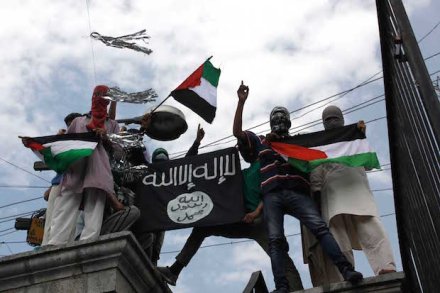
[audioplayer src="http://rss.acast.com/viewfrom22/defeatingisis/media.mp3" title="Andrew Bacevich and Douglas Murray discuss how ISIS can be crushed" startat=39] Listen [/audioplayer]For months, the White House has been saying that it has Isis on the run. Yet each week the world sees that Isis is only running forwards. Last week, the US state department briefed that Isis was ‘a significant threat to all of our partners in the region’ and ‘a significant threat to the [US] homeland. We’ve never seen something like this. This is a formidable, enormous threat.’ Which is fine as an observation. But governments aren’t only in a position to make observations.

Will Theresa May allow Muhammad Salah to enter the UK?

Unencumbered by the regressive Liberal Democrats, the new government has already managed to start taking extremism seriously.  The counter-extremism legislation which the Lib Dems managed to stall will be included in the Queen’s Speech next week. But the government already faces an early test of its policies. Muhammad Salah – a ‘star’ of Huda TV – is due to speak next month at ten venues across the UK, from Edinburgh to Crawley at a ‘Welcome Ramadan’ event. You can see the invitation from ‘Human Appeal’ here. Now Salah is a strange and disconcerting figure to ‘Welcome Ramadan'. And the Home Secretary can hardly deem his views to be conducive to the public good.

Secularists need to prioritise their targets

I was on the BBC on Sunday morning discussing the government’s new counter-extremism legislation. Unusually for a discussion on this area the debate seemed to me to be constructive and engaging.  Perhaps this is a reflection of the changed political weather. But there was one strange thing – which is why I mention it here – and that is my disagreement with the former Liberal Democrat MP Evan Harris who was on this occasion representing the National Secular Society (NSS).  I like Evan, share many of his views and rather like his ever so slightly other-planetary manner (something he shares with that other former Liberal Democrat MP, Julian Huppert).

This election campaign has shown a democracy in a horrible state of disrepair

It is often said that we get the politicians we deserve. But throughout this election I have kept wondering, ‘Are we really as bad as all this?’ The answer must be ‘yes’. This bland and empty 'campaign' has not only been the fault of the main parties competing to govern the UK – it has also been a reflection of what they believe we, the general public, now expect from our politics. Of course the result is aggravating, in part because we keep trying to enjoy contradictory things. For instance at some point in recent years it was decided that any statement outside a vague centre-left orthodoxy constituted a ‘gaffe’.

The people from the sea

 Lampedusa The young hang about in packs or speed around town, two to a scooter. Old women group together on benches around the town square in front of the church. The men continually greet each other as though they haven’t met for years. The likelihood is small. With fewer than 6,000 inhabitants, and as close to Libya as it is to Italy, Lampedusa is the sort of place from which any ambitious young Italian would spend their life trying to escape. Yet every day hundreds and sometimes thousands of people are risking their lives to get here. ‘Please tell people we have nice beaches,’ one islander pleads.

If Ed Miliband makes ‘Islamophobia’ illegal, I volunteer to test the new law immediately

I am out of the country at the moment and I see that Ed Miliband has used the opportunity to ‘say’ in an interview with the ‘Muslim News’ that he will outlaw ‘Islamophobia’ if he becomes Prime Minister. I use ‘say’ because ‘Muslim News’ has never seemed to me an especially reputable outlet for news, Muslim or otherwise. And I say ‘Islamophobia’ in scare quotes because, well, the term deserves them. There are many things to say about this, but allow me confine myself to three points: If Ed Miliband does become Prime Minister and chooses to make ‘Islamophobia’ illegal would he mind letting us know what he thinks ‘Islamophobia’ is? After all a ‘phobia’ is an irrational fear.

The fall of Lutfur Rahman shows the power of brave campaigning journalism

So farewell then Lutfur Rahman. On Thursday the Islamist-aligned Mayor of Tower Hamlets was found guilty of electoral fraud. The poll in which he was 'elected' has been declared void and he has now been barred from office. There is much to be said about this and the implications for British democracy as a whole of what went on in Tower Hamlets. But this is also a time when certain people should be given a huge amount of credit. The lawyers and the four local residents who brought the case obviously deserve admiration for their tenacity and their principled stand against corruption in public life. But it is also worth mentioning two journalists. After all, the profession has gone through a bad time of late.

The Plame game

Nothing is capable of undermining American democracy more than its legal system. Amid the plea bargains, perp walks and 95 per cent conviction ratings for some crimes, one feature of the system stands out as particularly rank — the role of ‘special prosecutor’. A new piece of evidence relating to a high-profile conviction eight years ago provides a perfect demonstration. The case relates to a legal dispute spanning President George W. Bush’s period in office. In late 2003 the situation in post-war Iraq had already begun to go horribly wrong. In the US, many who had eagerly supported the invasion and warned of the risks of WMD were flaking away and seeking scapegoats. In the ‘Plame affair’, the perfect outlet seemed to have been provided.

Islamic extremism doesn’t need a rebrand

I have been wondering why nobody so far in this election seems to have made any mention of what most people recognise to be the biggest security problem facing this country. But then I discovered that the Mayor of London, Boris Johnson, last week appeared at the Al Falah Islamic Education Centre in West London. He used the opportunity to express, er, ‘concern about the level of Islamophobia in the capital’ and to insist that 'an alternative word needs to be found to describe extremists who claim to act in the name of Islam'. According to the Evening Standard: ‘Mr Johnson, whose great-grandfather was a Muslim, added that a "problem in the language" needed to be resolved, with the issue discussed with the Muslim Council of Britain.

What’s more disturbing than a group of discredited old Nazis? The Green Party

Yesterday's Mail on Sunday had an interesting account of a meeting in London of Nazis, neo-Nazis, British National Party types and anti—Semites of various other hues. The paper infiltrated the meeting and exposed what was said - which is a very good service and deserves praise. But I challenge anyone to look through the photos and biographies of the few participants who gathered at Victoria station and then in a nearby hotel and not reflect that this is a gratifyingly washed-up and pathetic movement. During their deliberations they appear to have gone over the usual stuff about how they think the Holocaust was made up and been used by Jews for their own advantage and so on.

Snowden now faces the traitor’s fate – worship from hipsters and Hollywood

New York Brooklyn is the hipster heaven of New York, which is perhaps why it was there that a bust of Edward Snowden was unveiled yesterday.  Not that it stayed long.  The bust of the former National Security Agency contractor was put on a pedestal sometime on Monday with the word ‘Snowden’ glued on the base at the Prison Ship Martyrs' Monument at Fort Greene Park.  It was taken down a few hours later by parks and recreation employees. I don’t want to read too much into this, but the brief deification and bringing down of Snowden’s image does seem apposite.

‘The truth is hard’: an interview with Roger Scruton

To the extent that Britain has philosophers, we do not expect them to address issues of any relevance to the rest of us. They may pursue some hermeneutic byway perhaps, but not the urgent or profound issues of our time. Roger Scruton has always been an exception in this regard, as in many others. He has spent his adult life thinking and writing about the nature of love, the nation state, belonging, alienation, beauty, home and England. But even his closest readers may gulp at the relevance of his latest subject matter. His new novel, The Disappeared, is set in the north of England and centres on the recent rape-gang cases. It’s a gripping, disturbing narrative dealing with abduction and abuse but also love, escape and a type of redemption.

Is Britain losing the war against radical Islam?

Some stories are almost too predictable. Take this one. Three schoolgirls from Britain disappear to Syria, apparently in order to join Islamic State and become ‘jihad brides’, or more precisely ‘jihad rape prizes’. There is a huge public outcry. In particular the families of the girls – and others in the Muslim communities – ask why the police did not know that these girls were planning to go to Syria. Before long Keith Vaz – never one to miss the lowest form of bandwagon – hauls police chiefs in front of his Parliamentary committee. There the police chiefs are made to apologise for not knowing the movements of the three schoolgirls.

Is London’s ‘diversity’ to blame for its ‘unprogressive’ views on homosexuality?

I have been most interested in recent posts here by Alex Massie and Matthew Parris.  Here is a poll which might interest them both. YouGov recently carried out a survey in the UK which sought primarily to judge public opinions on the issue of posthumous pardons to people convicted of homosexuality. So far so hip, cool and with the beat. But the poll also asked respondents whether they think in general that homosexuality is 'morally acceptable' or 'morally wrong'.  What do you think the figures were?  Well in most regions of the UK those people who thought homosexuality 'morally wrong' sat at around 15 per cent.  About what one might have expected.  But what do you think the figure was in that enlightened beacon of progressive diversity which is our capital?

We can’t just blame Benjamin Netanyahu for the lack of peace in the Middle East

The re-election of Benjamin (‘Bibi’) Netanyahu in Israel has not gone down well in the chancelleries of Europe, let alone the White House. During his terms of office, a majority of western politicians and commentators have become opposed to Netanyahu, viewing him as an obstacle to peace. BBC reporters claimed that his win was down to ‘scare tactics’. The shadow health secretary, Andy Burnham, said he found Bibi’s success ‘depressing’. But the election results are a reminder that, although outside the country there is a vast industry focused on the unresolved Israel-Palestinian border dispute, inside Israel other issues dominate.