Douglas Murray

Douglas Murray

Douglas Murray is associate editor of The Spectator and author of The War on the West: How to Prevail in the Age of Unreason, among other books.

The political resurrection of Christianity

From our UK edition

There is a passage in Milan Kundera’s novelisitic essay ‘Testaments Betrayed’ where he writes about the nature of history. Man walks in a fog, Kundera observes. He stumbles along a path and creates the path as he walks it. When he looks back, he can see the path, he may see the man, but he cannot see the fog. Everything looks inevitable after it has happened. So we have the ‘sleepwalkers’ explanation of how Europe stumbled into the first world war. We have the ‘inevitability’ of the slide into the second world war. It is perhaps the greatest of all idiotic modern presumptions that so many people imagine while looking back that they would have known better or acted differently. Which brings me to the present.


Beware the restless, shifty liars

From our UK edition

I have only been to Alexandria once, some years ago, when Hosni Mubarak was still in power, but it struck me as a sad city. Of course the library was not the library. The lighthouse was not the lighthouse. The city was not the city. I looked around for the remnants of the Greeks who had made it their own, but there seemed little left of them. Is there a cause we are financing so considerable it is decent to pass the cheque on to the next generations? Alexandria was on my mind again this week while reading a new biography of the city’s most famous modern poet, Constantine Cavafy (1863-1933). He was part of that world which migrated across the Mediterranean.

Can anyone save Britain from self-destruction?

From our UK edition

Tens of thousands of people turned out on the streets last week to protest against mass immigration. The protestors were promptly labelled ‘racist’ by their own government, ‘far-right’ by the New York Times and as having links to ‘neo-Nazis’ by the Guardian. The protests in question happened in cities across Australia, including Sydney – but frankly those sentences could have been written about similar protests in Britain and in almost any western country. Coincidentally, the past weekend also saw the ten-year anniversary of the German chancellor Angela Merkel opening the doors of Europe, saying ‘We can manage’ and allowing Europe to become the home of anyone in the world who wanted to move in.

Why the row about the England flag matters

From our UK edition

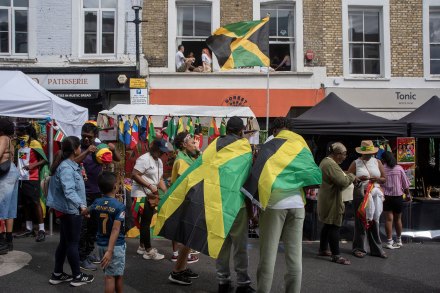
At the end of Sky News’s coverage of last year’s Notting Hill Carnival, its correspondent recited the usual list of arrests, stabbings and so on before concluding her piece to camera by saying: ‘But overall it’s been a really peaceful and enjoyable day.’ This year the honour of summing up the beauty of the event was left to Sky’s arts and entertainment correspondent, Katie Spencer. The reason it is important for two million people to gather in the tight streets of Notting Hill over the August bank holiday, she said, is because of ‘resistance to racism’. ‘This is a place where community comes together,’ she went on, ignoring all the shops in the area that had been boarded up. ‘You don’t walk around constantly looking over your shoulder.

The oppression of Sally Rooney

From our UK edition

Almost a decade ago the Irish academic Liam Kennedy published a tremendous book with the title Unhappy the Land: the Most Oppressed People Ever, the Irish? It is a dissection of one of the most curious pathologies in the world: the desire to have been oppressed; a glorying in being repressed. Kennedy, like a few other brave writers (Ruth Dudley Edwards, Malachi O’Doherty, Kevin Myers) has the courage to point to an under-examined seam in Ireland’s history. Specifically he takes aim at the mawkishness that exists in contemporary Irish affairs. The desire to be the first victim, perhaps the greatest victim, of all victims, anywhere in the world. You see similar strains of aspiring victimhood in other mini-nationalisms.

Clive of India must not fall

From our UK edition

The only MP I have ever really wanted to marry is Thangam Debbonaire. The former Labour MP for Bristol West and I have little in common. But it has sometimes been a desire of mine to marry her and take her surname, so becoming Mr Debbonaire. Marital relations would doubtless be fraught, but on the plus side there would be the thrill of friends being able to say things like ‘Darling, you know the Debbonaires are coming for dinner?’ Which would more than make up for it. Since being booted out by the voters at last year’s general election, Debbonaire has been elevated to the House of Lords, where she still attracts my attention.

My victory over Mohammed Hijab

From our UK edition

One of the occupational hazards of being a journalist is being hounded by litigants. Indeed, one of the reasons why much of the media finds it easier to report fluff than to write about difficult issues is that the latter can be costly in terms of money, as well as time. Three years ago I wrote a column in this magazine about some of the downsides of diversity. At the time there had just been serious disturbances in Leicester between local Hindus and Muslims. One of the people who decided to throw himself into the middle of that trouble and to try to make things worse was an online pugilist known as Mohammed Hijab. Hijab had already been filmed intimidating Jews in Golders Green and whipping up a crowd of masked men outside the Israeli embassy in London.

How to handle the Wagner problem

From our UK edition

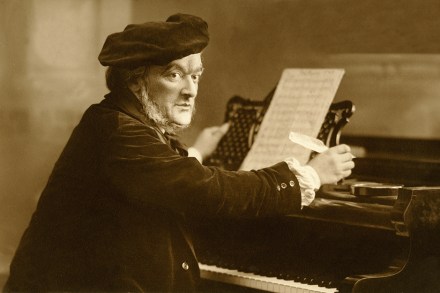
There are deep ructions across Europe, as in Britain. All come down to the same thing. The societies in question have decided to take in more people than they could ever absorb or integrate, and have done so at a rate that will ruin these societies financially as well as socially. It’s a little late for the occasional minister to talk about the fabric of the country being under ‘strain’, or the need for greater ‘social cohesion’. These things have been shot for years. What is interesting is not just what a mountain Wagner is for modern Germany, but how they deal with it The problem is that every counter to this problem has the same Charybdis. Oppose the migration extremism and even now you will be accused of Hitlerian tendencies.

Soul suckers of private equity, Douglas Murray on Epstein & are literary sequels ‘lazy’?

From our UK edition

44 min listen

First up: how private equity is ruining Britain Gus Carter writes in the magazine this week about how foreign private equity (PE) is hollowing out Britain – PE now owns everything from a Pret a Manger to a Dorset village, and even the number of children’s homes owned by PE has doubled in the last five years. This ‘gives capitalism a bad name’, he writes. Perhaps the most symbolic example is in the water industry, with water firms now squeezed for money and saddled with debt. British water firms now have a debt-to-equity ratio of 70%, compared to just 4% in 1991. Britain’s desperation for foreign money has, quite literally, left Britain ‘in the shit’.

MAGA, Epstein and the paedo files

From our UK edition

Bill Clinton published another memoir last year, entitled Citizen, and I take it that everyone read the book the minute it came out. For those who somehow didn’t, there’s a striking passage that can be easily found by standing in a bookshop, going to the index and searching under ‘E’ for ‘Epstein’. This leads to a single page reference in which the 42nd president gives a terse and somewhat legalistic account of his relationship with Jeffrey Epstein, explaining that he never went to Epstein’s island, borrowed his plane only to support the work of the Clinton Foundation and cut off contact before Epstein’s first arrest in 2005. In a brusque summary Clinton or his ghostwriters conclude: ‘I wish I had never met him.

The pointlessness of ‘smashing the gangs’

From our UK edition

‘Smash the gangs’ is the fascinating slogan that Keir Starmer’s government has settled on for tackling illegal migration. What is the government going to do to stop the hundreds – sometimes thousands – of people sailing across the Channel and coming into England each day? ‘We will smash the gangs,’ they say. The slogan is interesting for reasons beyond the tough-guy rhetoric. For it suggests, of course, that it is people-smuggling gangs that are the main problem. Perhaps our government sees them as being like press gangs back in the day, roaming around northern France, waylaying passing migrants and forcing them on to rubber dinghies to begin a new life in Britain.

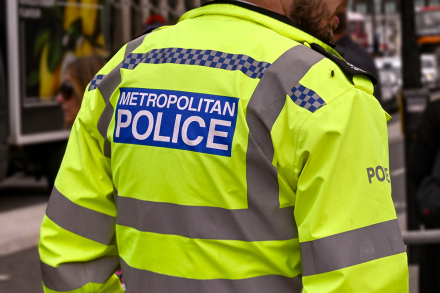
My tips to avoid arrest by the Met

From our UK edition

An interesting event occurred in London at the weekend. A young man who goes by the name of Montgomery Toms attended a Pride parade. But he did not attend in order to dress in bondage gear while shouting ‘Love is love’ and ‘Free Palestine’. Instead he went with a sandwich board which had a trans flag on it, followed by an equals sign and then the words ‘mental illness’. This is a tactic pioneered by an American man known as ‘Billboard Chris’, because his name is Chris and he wears a billboard. Chris’s schtick is to walk around with a sign saying things like ‘Children cannot consent to puberty blockers’.

Who really built this country?

From our UK edition

Anyone who has visited Canada or Australia in recent years might have noticed an interesting new tradition. This is the trend for issuing a ‘land acknowledgement’ at the start of any public event. Before discussion gets under way, some bureaucrat or other will get up and note that we are all fortunate enough to be on the land of X, and then garble the name of some not-especially-ancient tribe. The moment gives everyone a feeling of deep meaning and naturally achieves nothing. Even our King indulged in some of this in May when he opened the latest session of the Canadian parliament. Before getting down to the meat of his speech, Charles said: ‘I would like to acknowledge that we are gathered on the unceded territory of the Algonquin Anishinaabeg people.

The dangers of toxic femininity

From our UK edition

The American critic and classicist Daniel Mendelsohn has just published a new translation of The Odyssey. In his superb introduction, Mendelsohn also does something that many modern translators and critics avoid, which is to point to the oddness and different-ness of Homer’s world. For that and many other reasons, reading Mendelsohn’s fresh and clear translation was a counterweight to one of the great imperatives of our time: ‘Let us look at this long-ago thing only in order to see if it can shed any light on the glorious us and now.

What else could Israel do?

From our UK edition

Over the past few days British readers have been able to enjoy a number of hot takes on the situation in the Middle East. First, there have been all the politicians, such as the Scottish First Minister John Swinney, who have called for our government to step in and ‘de-escalate’ the conflict between Israel and Iran. But even leaving aside whether the mullahs in Tehran can be swayed by Britain or Scotland, ‘de-escalation’ is the only surefire way to ensure that they continue to pursue a nuclear capability. Elsewhere, the BBC has been playing a blinder. When the conflict began, it decided that its audience would be well served by having the celebrity chef Hugh Fearnley-Whittingstall give his thoughts on the matter.

How to ruin a city

From our UK edition

Why would you choose to make a city crappy? Plenty of cities don’t have much going for them. But when they do, it takes a certain amount of skill to actively wreck them. Take London, for instance. Anyone in charge of our capital needed only to maintain it, if not improve it. Yet in almost a decade as mayor, Sadiq Khan has overseen a decline which is obvious to any resident or visitor. That first sign of rot – the tolerance of minor crime – is everywhere. It might be graffiti on the Tube. Or it might be the fact that it is risky to hold a mobile phone in the street or park a bicycle. Khan’s police aren’t interested in minor crimes such as phone and bicycle theft. And they’re not much interested in major crimes either, such as stabbings.

Richard Hermer’s campaign against Britain

From our UK edition

Five years ago, the man who is now Lord Hermer gave an interview to the Times. The then QC was asked how he’d want to be remembered. The answer he gave was curious. ‘The world will be a better place,’ he said, ‘when privileged men like me stop seeking a place in history.’ I’m not sure who Lord Hermer thinks should be seeking a place in history, though I assume he was just paying lip service to the spirit of 2020 and wanted to be read to mean that in future most of the running should be done by underprivileged transsexuals. While I cannot agree on the substance, I can agree on one specific. The world would certainly be a much better place if people like Lord Hermer stopped seeking historic roles.

The derangement of Harvard

From our UK edition

It is 60 years since William F. Buckley said that he would ‘rather be governed by the first 2,000 people in the Boston telephone directory than by the 2,000 people on the faculty of Harvard University’. Yet even the godfather of American conservatism would be surprised at how much more attractive the folks in the phone directory appear today. Harvard is currently having a major row with Donald Trump’s administration. It results from the way in which the university responded to the 7 October attacks in Israel. While the Hamas massacres were still on-going, more than 30 Harvard University student organisations signed a letter which claimed to hold the ‘Israeli regime entirely responsible for all unfolding violence’.

The death of public discourse

From our UK edition

It is said that since Donald Trump returned to the Oval Office, it is once again possible to use the word ‘retarded’. Or at least to use it without being cancelled by a group of demonic online third parties pretending to be woefully offended by the use of an often-useful term. I don’t know how long this window of opportunity will remain open, so let me note while I can that it is hard to think of a country in the world that has a more retarded public discourse than Britain. Almost everyone in public life aims to stop any discussion of the issues via obfuscation and misrepresentation The journalist Andrew Norfolk died this month at the age of 60. For once the term ‘brave’ deserves to be used of a journalist.

Should you be arrested for reading The Spectator?

From our UK edition

Regular readers will know that I have an obsession with home burglaries. Specifically those occasions when a burglar goes into a British home, helps himself to the contents of the household and finds that the last people on his case are the British police. Scanning some recent burglary statistics, I was struck again by the almost miraculous failures of force after force. Take Kent Police. In a recent breakdown of crime statistics, the force managed a career high. In one of the areas where they are meant to have oversight, there were 123 home burglaries. Of those 123 burglaries, they managed a great, round zero in their detection rate of the burglars. Or 0.