Douglas Murray

Douglas Murray

Douglas Murray is associate editor of The Spectator and author of The War on the West: How to Prevail in the Age of Unreason, among other books.

James O’Brien spreading ‘fake news’ via the BBC is a must-watch

The row about ‘fake news’ and the ‘crooked media’ appears to be ongoing.  And every time the BBC and other mainstream media mention it they present themselves solely as the victims of such phenomena.  So let us turn to just one edition of the BBC’s Newsnight. On Wednesday of this week the programme was presented by James O’Brien.  Now in the first place Mr O’Brien is a strange choice to present this programme.  Not just because his awkward, cut-out, Lego man gait makes it obvious why he has made his career in radio, but because he is the sort of hyper-partisan figure who, if they came from the opposite political side, would never be hired by the BBC. But back to Wednesday’s Newsnight.

The shameful hypocrisy of Sweden’s ‘first feminist government’

A couple of weeks ago I named the Labour MP Tulip Siddiq as my pious political hypocrite of the week, mainly for being silent on her bigoted aunty while strikingly vocal about a total stranger. I’m afraid that I was so overwhelmed by applicants for last week’s award that I have only just emerged from the pile of entries. However, I am now in a position to reveal the latest recipients of this increasingly coveted prize. Pipping even Speaker John Bercow to the award are the brave sisters of the Swedish government. Here is a photo from earlier this month of Isabella Lovin (Sweden’s Deputy Prime Minister, Minister for International Development Cooperation and Climate and spokesperson of Sweden’s Green Party).

The David Beckham email leak should trouble us all

What would you do if naked pictures emerged of a celebrity you liked? Or one you didn’t? What about a slew of emails that were meant to be private that were hacked and then leaked into the public domain? Would you turn away from them, tutting. Or might you be tempted to read them? Would your inclination to read them increase if you liked the person, or if you really disliked them? We seem confused about all of this at the moment. The leak of David Beckham’s emails has condensed the confusion. Most of us believe that private communications should be private. Most of us believe that people’s private communications should not be hacked. And yet whenever they are hacked and then released we cannot help but crawl over the results. Perhaps we should pause.

Some ‘anti-fascists’ need to look in the mirror

I have noted before in this place that the people who seem most fascist these days are self-described ‘anti-fascists’. The inaugural weeks of Donald Trump’s Presidency are – whatever else you think of them – doing a fine job in smoking these people out. The principal cause of ‘anti-fascist’ ire today would appear to come from the collective decision that anybody whose opinions do not wholly concur with a narrow set of agreed upon ‘liberal’ views is a ‘fascist’. This is not a wholly new development – Allan Bloom noticed this more than thirty years ago.

Abandoned to their fate

Another day in northern Nigeria, another Christian village reeling from an attack by the Muslim Fulani herdsmen who used to be their neighbours — and who are now cleansing them from the area. The locals daren’t collect the freshest bodies. Some who tried earlier have already been killed, spotted by the waiting militia and hacked down or shot. The Fulani are watching everything closely from the surrounding mountains. Every week, their progress across the northern states of Plateau and Kaduna continues. Every week, more massacres — another village burned, its church razed, its inhabitants slaughtered, raped or chased away. A young woman, whose husband and two children have just been killed in front of her, tells me blankly, ‘Our parents told us about these people.

My pick for the pious political hypocrite of the week award

I would like to propose Labour MP Tulip Siddiq as the winner of the pious political hypocrite of the week badge for her response to President Trump’s temporary immigration halt. From today’s Guardian we learn that Ms Siddiq is one of a number of Labour MPs who have warned that the UK Prime Minister’s allegedly ‘feeble’ response to President Trump’s recent immigration order risks making UK Muslim communities feel ‘disenfranchised and disillusioned.’ Apparently the consequences of this failure could be ‘played out on our streets’ and ‘turning a blind eye to the reality of this ban we run the risk of losing the trust of an entire generation of young British Muslims.

Nine questions those protesting against Donald Trump’s immigration ban must answer

I wonder whether there might be any long-term effects from shouting ‘racist’, ‘fascist’, ‘misogynist’ all the time? It is possible that it is hard to think while your fingers are in your ears and you are shouting names at everybody. I just put the thought out there. Certainly the consequences of not thinking much seem to be all around us.  Though the Trump administration has decided to put temporary travel restrictions on people from certain countries, the policy seems to have certain internal inconsistencies. For instance, as Gordon Brown said in 2008, 75 per cent of Britain’s security threats originate from Pakistan.

Dutch courage

It looks like the people might do it again. After the British electorate misled themselves so badly and American voters failed to rotate the Clinton and Bush families for another presidential cycle, the latest fear is that democracy might occur in Holland. Polls currently show Geert Wilders’s Freedom party almost at level pegging with the governing VVD party, both milling around the 30-seat mark. Questions about when the Dutch became illiberal miss the point that this is a revolt in defence of liberalism rather than against it. The misinterpretation does Dutch voters a serious disservice and fails to acknowledge that the Dutch status quo of recent years — like that in the UK and US — has gone badly wrong.

The empathy trap

Being against empathy sounds like being against flowers or sparrows. Surely empathy is a good thing? Isn’t one of the main problems with the world that there isn’t enough of the stuff going around? Paul Bloom of Yale University is here to argue otherwise. As he explains, while empathy can be a good thing in certain circumstances, in general it is a poor moral guide. ‘It grounds foolish judgments and often motivates indifference and cruelty.’ As always this depends on definitions. And as Bloom says from the outset, ‘The act of feeling what you think others are feeling —whatever one chooses to call this — is different from being compassionate, from being kind, and most of all, from being good.

We are living in a seriously phony age

At the risk of coming across all Holden Caulfield, this is a seriously phony age. Everywhere you look there are people objecting to things they think other people have said or would like them to have said. This past Saturday provided a fine example when in Washington and various other Western capitals some people decided that a fine response to the Trump administration is to pretend that it is ‘anti-women’ in some way. Various politicians, Guardian journalists and others without lives walked around for a day tilting furiously at this imaginary enemy. Some took their daughters with them, as though it is a good idea to inebriate the next generation with the same cocktail of phantoms and lies.

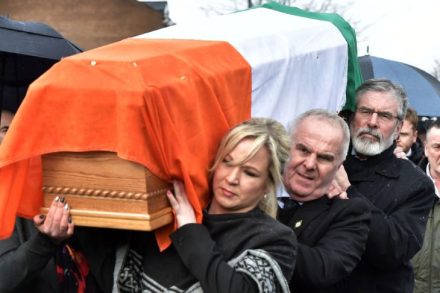
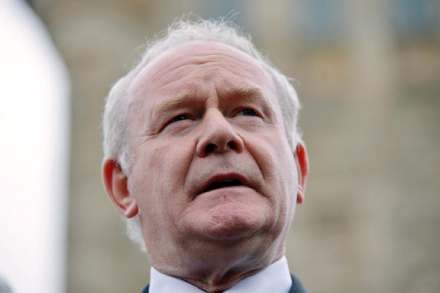
At least Martin McGuinness made old age. Many others didn’t

When Martin McGuinness said he was retiring from politics due to serious illness it gave vent, almost immediately, to the sort of ‘How McGuinness became a man of peace’ stories. Personally I have always thought the salient point about the man is not that he became a man of peace but that he was ever a man of violence. Over recent years a narrative has developed around the Troubles, that the people who ‘became men of peace’ are much to be admired.

Obama’s decision to free Private Manning disgraces America

Barack Obama's decision to commute the prison sentence of Private Manning is a final, disgraceful undermining of American interests by the outgoing US President. Manning's decision to dump vast swathes of stolen information with the Wikileaks organisation, which then published them, caused untold and untellable damage to America and her allies. It revealed operational details which should never have fallen into the hands of America's enemies. Manning ensured that they were available not just to such groups and nations but to the entire world. And of course leaks encourage leaks.

Golden showers and pigs heads: welcome to the era of trash news

While observing reactions this week to allegations against America’s President-elect my mind has been ineluctably returning to 2015 and the story so inventively known as ‘pig-gate’. In case anyone has forgotten, this was a story which was pumped into the British press and then into the world’s media about the then Prime Minister of the UK, David Cameron. A former Conservative party donor – Lord Ashcroft – had fallen out with David Cameron years before because Cameron would not give Ashcroft a position in the British cabinet. Being a man of means and owning a publishing house, among other things, Ashcroft had his revenge in an inventive and thoroughly modern manner.

There’s a simple explanation for the Brexit ‘hate crime’ spike

A New Year is upon us and a new wave of racism, bigotry and xenophobia is meant to be stalking our land. That’s according to a Sky poll released on Monday which proclaimed that ‘Britain is more racist and less happy since Brexit vote’. If this made you check your pulse and wonder what racism has started coursing through your veins since June 23rd, fear not. The headline does not reflect reality but simply some peoples’ perception of reality. It is the result of a question in the poll which asked people not whether they felt more or less racist since last June, but to answer the question ‘Would you say Britain is more or less racist than a year ago?

Boris Johnson’s award-winning entry in the ‘President Erdogan Offensive Poetry’ competition

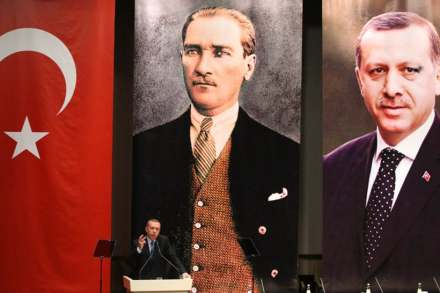
We’re closing 2016 by republishing our ten most-read articles of the year. Here’s No. 4, in which the future foreign secretary Boris Johnson was named as the winner of Douglas Murray's 'President Erdogan Offensive Poetry' competition I’m pleased to announce that we have a winner of The Spectator’s President Erdogan Offensive Poetry competition, and here it is: There was a young fellow from Ankara Who was a terrific wankerer Till he sowed his wild oats With the help of a goat But he didn’t even stop to thankera. The author of this winning entry is former Mayor of London and chief Brexiteer, Boris Johnson MP.

The predictable Muslim ‘good news stories’ have arrived

Since my Tuesday piece on the Berlin attack – when, as the BBC is still saying, a lorry ‘went on a rampage’ in the city – a number of readers have asked if I could give them this week’s lottery numbers. It is true that much of what I predicted has already come true. For instance, I anticipated that by Christmas Day at the very latest a group of Muslims from the incredibly small and very persecuted (by other Muslims) Ahmadiyya sect would pop up at a church in Germany and that the media would report it as ‘Muslims’ doing this. This particular ‘Muslim good news story’ actually happened faster than even I had guessed.

Here we go again – but this time, Je suis Berlin

Well the year isn’t finished, but thanks to what looks to be the combination of the world’s most peaceable religion, a truck and a temptingly bustling Christmas market in Berlin I’m going to have reprise my most frequently written piece of recent years. So here we go again. On Monday night a truck was driven into a busy pedestrian area in Berlin. In the immediate aftermath the media were understandably wary. It could be a Glasgow-like accident or it could be a deliberate act. Struggling with this conundrum the BBC plumped for ‘Lorry kills nine at Christmas market.’ Naughty lorry. To date the attack still doesn’t have a hashtag that’s stuck. There was an early push for ‘Ich bin ein Berliner’, but for some reason it didn’t catch.

Decent people don’t ‘explain away’ hideous crimes

A man was arrested on Monday of this week after stabbing a man on a passenger train at Forest Hill station in London.  Reports of the incident say that the knife-wielding assailant had shouted ‘Death to Muslims’ and ‘Go back to Syria’ among other things.  Some reports suggest that he may have been looking for a male Muslim to stab.  As always we’ll learn more about this in the coming days.  But in the meantime, here are some things that we are very unlikely to hear. It is very unlikely that anybody will argue that we should investigate and analyse the foreign policy views of the knife-wielding maniac at Forest Hill.

Tony Blair’s IRA amnesty should also apply to British soldiers

This morning’s Sun carries the story that all British soldiers involved in killings in Northern Ireland during the three decades of the Troubles now face investigation.  More than 1,000 ex-service personnel ‘will be viewed as manslaughter or murder suspects in legal inquiry.’  According to information received by the paper, 238 ‘fatal incidents’ involving British forces are being re-investigated by the Police Service of Northern Ireland’s Legacy Investigations Branch. This is especially timely.  In recent days I have been reading Austen Morgan’s new and so-far under-noticed book Tony Blair and the IRA.  To my knowledge it is the first full account to date of the ‘on the runs’ scandal.

The Casey review highlights a major problem in British society

Dame Louise Casey’s review into ‘opportunity and integration’ is finally out.  Commissioned a year ago by the then Prime Minister, David Cameron, and finished some time ago, there were fears that this review would remain ‘on ice’.  Casey – who also led the government’s review of the Rotherham child-grooming scandal – is nobody’s idea of a push-over and the new government was said to have been wary about releasing the report in its current state. One can see why.  Although it will take some days to read and absorb the entire 200-page document, it is clear from the executive summary that Casey has pulled few punches.