Douglas Murray

Douglas Murray

Douglas Murray is associate editor of The Spectator and author of The War on the West: How to Prevail in the Age of Unreason, among other books.

Here comes Bloomberg

From our UK edition

39 min listen

This week, has Mike Bloomberg blown his presidential hopes with a disastrous TV debate (00:50)? Plus, has the BBC really gone downhill (12:05)? And last, Toby Young reveals all about his first stand up comedy gig (26:30).

Why I’ll never become an MP

From our UK edition

Every now and then someone asks me if I have ever thought of becoming an MP. My response tends to be a laugh so deranged that the question answers itself. When I manage to verbalise the answer it usually goes something like this: ‘No, because I enjoy saying what I think is true.’ Occasionally my conversationalist will persist: ‘But MPs have a huge variety of opinions. Parliament is not filled with silent types.’ Throughout such interactions various names and images flash through my head. I think of Sarah Champion, for instance — the Labour MP for Rotherham. Ms Champion got her seat in 2012 and among the problems she inherited was the fact that her constituency had recently been one of the largest crime scenes in modern British history.

Four defences of free speech that everyone should read

From our UK edition

Every generation, and individual, has to rediscover the arguments for free speech for themselves. Some people learn from major incidents. Some when the censors come for someone close to them, or an opinion that they hold. Others come to believe in free speech because they realise that while being offended on occasion might be terrible, it is nowhere near as terrible as any system designed to make being offended impossible. Fortunately there are short-cuts to finding the best defences of free speech. The English language provides an especially rich tradition on which to draw. From many centuries of literature allow me to list just four works: two classic, two modern.

Why I’m standing by my old enemy Selina Todd

From our UK edition

Most people won’t have heard of Selina Todd. The only reason I had was because some years ago the BBC invited me to appear alongside her on one of those slots that used to be for intellectual discussion. ‘Would you be interested in coming on Radio 3 at about 10.30 p.m. to discuss class?’ I was asked. ‘Absolutely not,’ I replied, the subject being the only national obsession I would leave the country to escape. ‘That’s precisely why we want you,’ began the producer. And so eventually I ruined a perfectly good dinner and headed to the BBC where I met the aforementioned Todd. She turned out to be an Oxford professor whose area of study is the working class and whose specialism is resentment.

In defence of Alastair Stewart

From our UK edition

Here is a good test case going on before our eyes. The broadcaster Alastair Stewart has left his job of decades after sending a quotation of Shakespeare to a member of the public. The quotation (because it refers to an ape and the recipient happens to be black) is being interpreted as a sign of racism. A sign so grave that a long and illustrious career is over. So here is a test. Does ITV actually think that Alastair Stewart is a secret racist, really hates black people and has spent his life hating black people? Does it think that he has managed to hide this throughout the course of a long and illustrious career, in which I imagine that he worked with people of every imaginable race and background? Does it think that his deep, terrible racism has only come to the surface once?

How to fight back against ‘cancel culture’

From our UK edition

‘Cancel culture’ is a horrible term because outside of a dictatorship nobody can actually be ‘canceled’ or otherwise ‘disappeared’. All that can happen is that people can be found to have trodden across one of the orthodoxies of the age. A small number of bullies then come for them. And a larger number of otherwise decent people then fail to stand up for them. It is this last part of the matter that is worth focusing on. It is the only part that is fixable. All ages have their orthodoxies. And if writers, artists, thinkers and comedians do not occasionally tread on them, then they are not doing their jobs. Meanwhile human nature remains what it is.

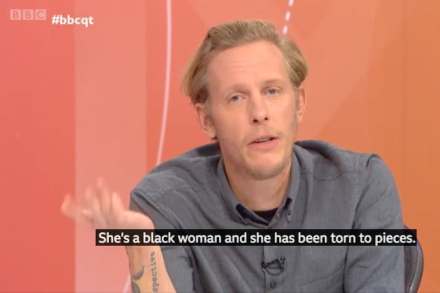
The terrifying parable of Laurence Fox’s Question Time appearance

From our UK edition

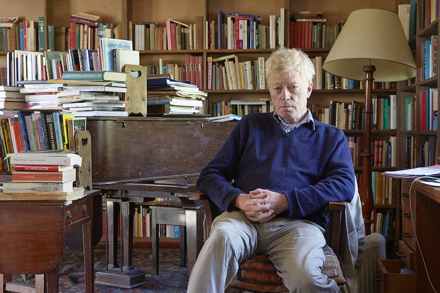
In what turned out to be the last year of his life, Roger Scruton often mulled on the nature and techniques of twenty-first century denunciation. For Roger, like others who had seen totalitarian societies up close, knew what intimidation and officially-imposed forms of thinking were actually like. Which is not to say, of course, that modern Britain or America are totalitarian societies. Only that we have people among us who act with precisely the same techniques as those did in totalitarian societies. In modern Britain, as in communist Czechoslovakia and elsewhere, the habits are the same. A member of a profession comes into their workplace in the morning to find a letter of denunciation signed by all their colleagues.

Roger Scruton: A man who seemed bigger than the age

From our UK edition

Sir Roger Scruton has died. Diagnosed with cancer last summer, he passed away peacefully on Sunday surrounded by his family. There will be a lot of things written and said in the coming days. But perhaps I could say a few things here. The first is to reiterate something that the Scruton family have said in their announcement of his death. There they refer to how proud they are of Roger and of all his achievements. I think I can say that all Roger’s friends share that feeling. His achievements were remarkable. He was a man who appeared to know about absolutely everything, producing books on architecture, philosophy, beauty, music, religion and much more. In many ways – as his former student Rabbi Sacks once said to me – he seemed bigger than the age.

Coffee House Top 10: The Scruton tapes: an anatomy of a modern hit job

From our UK edition

We’re closing 2019 by republishing our ten most-read articles of the year. Here’s No. 3: Douglas Murray on the shameful hounding of a distinguished philosopher: Sometimes a scandal is not just a scandal, but a biopsy of a society. So it is with the assault on Sir Roger Scruton, who in recent weeks has been smeared in the media, fired by the government and had his life’s work assailed. Scruton is the latest, though far from the first victim of the modern outrage mob. It is now four years since the Nobel prize-winning scientist Tim Hunt was fired by University College London (among other institutions who were lucky to have him).

‘I aspire to write for posterity’: An interview with Tom Stoppard

From our UK edition

Sir Tom Stoppard is Britain’s — perhaps the world’s — leading playwright. Born Tomas Straussler in Zlin, Czechoslovakia, in 1937, his family left as the German army moved in. The Strausslers were Jewish. In adulthood he learned that all four of his grandparents were killed by the Nazis. His father was killed by the Japanese on a boat out of Singapore as he tried to rejoin his wife and two sons. In India his mother married again, to an English Army man who gave his stepchildren his surname. Stoppard has lifted the lid on his early life only once before, in a piece for Talk magazine in 1999.

Labour’s anti-Semitism shame must never be forgiven

From our UK edition

Sometime around the start of this decade, before anti-Semitism was as cool as it has become, I was standing on a stage in London with a couple of rabbis and a Muslim. And if that sounds like the start of a joke then what followed wasn’t. We were there at the request of a new Jewish group to speak out against the anti-Semitism that we already saw on the rise in the UK. I’m not much given to protests myself as long-time readers will know. But the day showed some solidarity with British Jews and we all went home at least partly feeling like some good had been done. But one thing about the day stayed in my mind. During her remarks, one of the rabbis summoned up the famous phrase of anti-fascists in the 1930s. 'They shall not pass’. Or ‘No Pasaran!

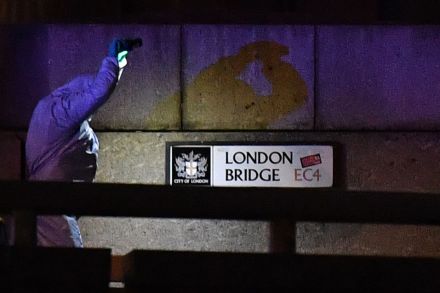
The failed lessons of the London Bridge attack

From our UK edition

Some readers have been asking me to comment on the latest London Bridge terrorism incident. And if I have some reluctance it is only because although ennui comes from writing the same article over and over again, that’s nothing like the feeling you get from writing the same article so often that you don’t even need to change the name of the location of the attack each time now. London Bridge 2 has been pored over enough in recent days. The heroism of certain members of the public has rightly been noted. Politicians of all the main parties have tried to pin the blame for the attacker’s early release on their political opponents. And everything goes on as usual. But there are a couple of remaining things still worth noting about all this.

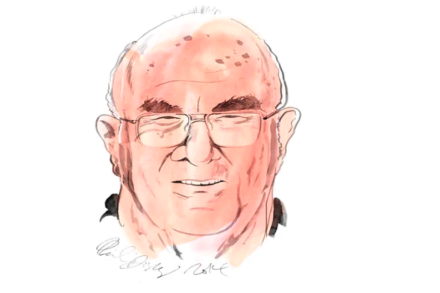
Clive James: a tribute

From our UK edition

Clive James died last weekend at his home, surrounded by his family, after a long illness. The poet, writer, critic and television star was one of the most remarkable, talented and insightful members of his generation. Loved by millions, he was an incomparable presence in the lives of his friends and readers right up until the end. In 2014, when he seemed very near that end, I went to see him at his home in Cambridge to talk about life, love, poetry and the proximity of death. I feared that it would be our last conversation. Thank medicine it wasn’t. But before I’d even got home, Clive had written again to say that he wanted to re-emphasise to me the ‘gratitude’ he felt about his life. It was a very Clive sentiment that. There is much to say.

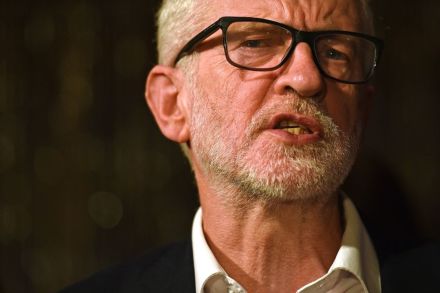
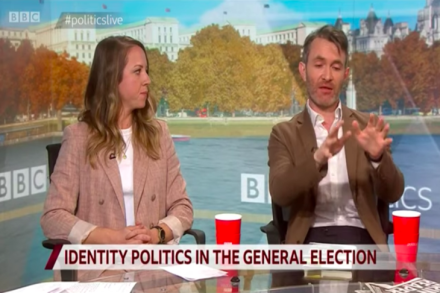
Holly Rigby and the ignorance of the Corbynistas

From our UK edition

One of the few advantages of going on television or radio is that in time you meet all the leading nutters in the land. In most ordinary situations, I would never have encountered Holly Rigby. She says that she is a ‘teacher’, though seems to be part of that miraculous class of leftist activist able to juggle a full-time job with popping up on media channels at any hour of the day or night as a full-time activist for Jeremy Corbyn.  Last week, I found myself on air with Holly for an hour on the BBC’s ‘Politics Live’. She seemed harmful enough. I don’t think there was an answer she gave which did not begin with the words ‘As a teacher’. Presumably as some kind of appeal to authority.

The carnage inside Charlie Hebdo: an eyewitness’s account of the attack

From our UK edition

It is almost five years since two trained jihadists went into the offices of Charlie Hebdo in Paris and killed 12 people. Philippe Lançon survived the editorial meeting that was taking place as the gunmen burst in. Published to huge acclaim in France last year, Disturbance is his account of events. It is long, perhaps too long, with numerous discursions. But who would edit such painful, painstaking testimony? On the morning of the attack, Lançon had been weighing up whether to go to Charlie or to Libération, where he also worked. He chose to go to Charlie, whose difficult, brilliant, brave team had kept producing the magazine, despite a decade of growing attention from Europe’s modern-day blasphemy police.

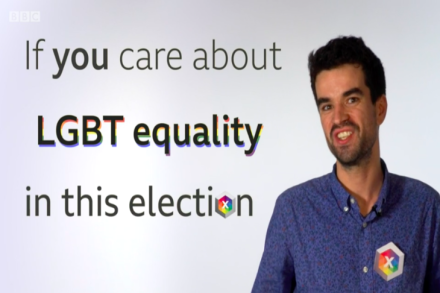
What the BBC doesn’t understand about gay voters

From our UK edition

In my latest book, ‘The Madness of Crowds’ (copies of which can be found in all remaining [not remainder] bookstores, etc) I mentioned in passing that I sometimes wondered how it feels to be a heterosexual reading the news these days. That feeling wafted past me again over the weekend as I went to the front page of the BBC News website and came across a video titled ‘General Election 2019: What to look out for on LGBT issues’.  The video is presented with positively boastful impartiality by a BBC journalist called Tobias Chapple who wears a charming form of blue nail polish. The camera often lingers on this, as though to prove to us that what we are watching is a truly queer production.

How I was ambushed by Nick Robinson

From our UK edition

Ah, the BBC. There’s really nothing like it is there? This morning I had the pleasure of appearing on BBC Radio 4’s Today programme. I know what you’re already thinking: ‘You fool, you fool – it’s a trap’. But I was phoned last night and asked if I would come on this morning to discuss Barack Obama’s recent remarks against ‘wokeness’. At some inconvenience to myself I rearranged my schedule, got up early and headed to the BBC. Only to discover that I was today’s BBC effort at replaying the recent Rod Liddle – Emily Maitlis exchange.  I was on with a professor of grievance studies from Birmingham City University called Kehinde Andrews. Which is fair enough.

Don’t be such a chicken about Chick-fil-A

From our UK edition

While never having felt any previous urge to dine in Reading, I now find myself trying to secure a table at the Oracle Shopping Centre. Should any Spectator reader wish to join me there over the next week, I can ask Chick-fil-A to make it a table for two. There we can dine on any number of foodstuffs. We could start with a chicken sandwich and then progress to either eight or 12 chicken nuggets as our main course. Or we could do the same in reverse order, treating the nuggets as an amuse-bouche before the main event. All washed down with one of those sugary, non-alcoholic drinks that cause the locals to get into fights. If that doesn’t sound like a good night out then you may just have to accept that the war for liberty involves sacrifice.

On black privilege

From our UK edition

Discussions of ‘privilege’ have become one of the themes of this age. In a short space of time, the obsession with the subject has forced its way from the margins of the social sciences right into the centre of all cultural and political debate. Politics and office politics is increasingly consumed by it. One day it is Rory Stewart being asked to account for his privilege by that ghetto-denizen Cathy Newman. Another it is Don Lemon being talked over by a black trans woman at the mass asylum breakout that constituted last week’s Democrats LBGT Town Hall. Everywhere the privilege discussion is the same. Who has privilege? Who should give it up? Who should have more?

What Michael Gove really said at the German embassy

From our UK edition

In the magazine cover piece this week I describe how institutions as well as individuals are having a hard time making it through this deranging age. Bishops call for restraint but then have outbursts of ungodly anger. MPs and peers talk about the need for civility and then are found jabbering like street-corner lunatics. But something that happened yesterday evening provides almost a case-study of the era. There is no reason why most people should have heard of Peter Neumann. A minor left-wing pundit, he is currently a professor of ‘security studies’ at King’s College London. As it happens, King’s is fast-becoming a home for insignificant polemicists masquerading as academics. But perhaps that is a subject for another occasion.