Douglas Murray

Douglas Murray

Douglas Murray is associate editor of The Spectator and author of The War on the West: How to Prevail in the Age of Unreason, among other books.

A classic Bond villain

North Korea watchers are good book-buyers, rarely able to resist scratching that itch of interest caused by the world’s worst regime. Accounts by escapees sit on our shelves alongside the memoirs of anyone (Kim Jong-il’s sushi chef, for example) who has come into contact with the country or its leadership. Some books, such as Barbara

Any type of Brexit is better than no Brexit at all

It’s a strange beast, the internet. On Monday night, I was slightly reluctantly dragged onto Newsnight to discuss Brexit. Attentive readers will know that I very rarely write or speak about the subject. There are many reasons for this, one of which is that I said most of what I had to say three years

Antisocial media

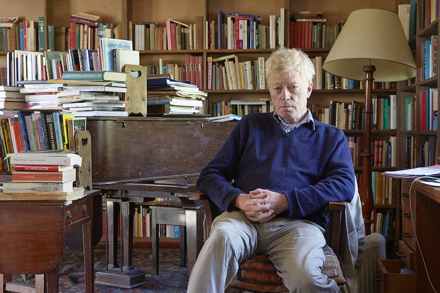
Two considerable injustices were undone this week. The first was the reinstatement of Sir Roger Scruton to the government’s ‘Building better, building beautiful’ commission. The second was the prosecution of Carl Beech for fraud and perverting the course of justice. The cases may be very far apart in their details, but their origins lie in

Roger Scruton gets his job back

Roger Scruton has been reappointed as head of a government housing body after he was sacked in April following a magazine interview in which his views were misrepresented. The letter from housing secretary James Brokenshire, who fired Scruton, is published below: Dear Sir Roger, Thank you so much for our conversation about the next steps on the

Is Boris wrong to claim Islam set the Muslim world back?

I do love the Guardian. As the years go by almost no publication continues to give me such constant amusement. This week has been no exception. A couple of days after first reading it I still remain almost impossibly amused by the paper’s lead, front-page story from earlier this week. The banner headline read ‘Boris Johnson

The three unanswered questions from the Roger Scruton hit job

The New Statesman has apologised to Sir Roger Scruton. In a statement published on its website, the magazine has admitted that in April this year its deputy editor, George Eaton, tweeted out ‘partial quotations’ from an interview with the philosopher ‘including a truncated version’ of a quotation. The New Statesman has further admitted that the effect of this quote-tampering was that:

Billy Connolly and the death of free speech

I hope readers will forgive me for returning to a subject I addressed here recently. It was a reflection on the current confusion over who in our society is allowed to speak and who is not. Back then I referred to the oddity of the YouTuber Carl Benjamin being forced to live with his worst ‘joke’

Are Tories fanatics? The New York Times thinks so

The New York Times’s strange jihad against post-Brexit Britain continues. Some readers may have missed the paper’s insistence that having only just finished eating mutton, the British public are currently stock-piling food and all but preparing to start eating each other (see here, here, and here just for starters).  But yesterday they have returned to the

The confusing modern rules of telling a 'joke'

The pace of outrage is such these days that before anybody has thought through any one outrage we are all expected to have moved onto the next one. So while everyone is still trying to work out the precise etiquette when female protestors carry out an orchestrated protest at a black tie event, perhaps readers

Mahathir Mohamad and the hypocrisy of Cambridge University

One of the most enjoyable videos to watch on YouTube features Colonel Gadafi. I am not referring to those snuff videos which cover the internet in which the Libyan leader is shown getting the sharp end of the Libyan peoples’ emotions. Rather I refer to the Colonel’s seminal, though too infrequently referenced, address to the

The New York Times and the problem with 'radicalisation'

One of the words that has become increasingly useless over recent years is ‘radicalisation’. As more and more terrorist attacks took place across the West in recent years the word got trotted out with some utility. Al-Qaeda and Isis fighters were reported to have been ‘radicalised’. Soon a whole arm of dubious expertise grew, purporting

Why this year's al-Quds Day march could be different

This weekend might provide an interesting spectacle. On Sunday the annual al-Quds Day march sets off in London from outside the Home Office. Of course al-Quds Day is the day inaugurated by the late bigot Ayatollah Khomeini, and his initiative allows peace-loving Khomeinists to stroll along the streets of London (among other capital cities) calling

Why do some remainers think ageism is acceptable?

Doubtless there is little cross-over between the readership of The Spectator and that of the New European. Not just because sales figures show that almost nobody reads the strange paper set up after the 2016 Brexit vote, but because while The Spectator includes a wide array of different views, the business model of the New

The Scruton tapes

Sometimes a scandal is not just a scandal, but a biopsy of a society. So it is with the assault on Sir Roger Scruton, who in recent weeks has been smeared in the media, fired by the government and had his life’s work assailed. Scruton is the latest, though far from the first victim of

Notre Dame's loss is too much to bear

Civilisation only ever hangs by a thread. Today one of those threads seems to have frayed, perhaps snapped. It is impossible to watch the footage coming out of Paris, all that can be done is to groan and turn away. It is not possible to watch the spire of Notre Dame collapse. It is not

Last rights | 17 April 2019

Four years ago, the Assisted Dying Bill was overwhelmingly defeated in parliament. The euthanasia debate hasn’t disappeared, however. One recent poll showed that 90 per cent of the UK’s population now support assisted dying for the terminally ill. So is a relaxation of the law inevitable? Would it represent progress? Or is it very dangerous?

When will Roger Scruton's detractors admit they were wrong?

In American law there is a concept called ‘the fruit of the poison tree’ which means that if the source of some alleged evidence is rotten, or has been wrongfully obtained, then everything coming from it is also recognised as tainted. After this past week I would suggest a similar concept enters the lexicon in

Roger Scruton's sacking exposes the Tories' cowardice

So the New Statesman decided to interview Sir Roger Scruton. Perhaps there are those who think that Scruton should not have agreed to be interviewed by the New Statesman, the left-wing magazine being unlikely to conduct a fair interview. But Scruton was the magazine’s wine columnist for many years, and under the editorship of Jason

Capital punishment

Is now a good time to talk about Jews and money? The Jewish Museum in London thinks so, and perhaps it is right. Motifs of Jewish financial chicanery that have never really gone away are back. The internet age has allowed memes about Rothschilds, rootless financiers and other thinly veiled claims of Jewish duplicity to