Douglas Murray

Douglas Murray

Douglas Murray is associate editor of The Spectator and author of The War on the West: How to Prevail in the Age of Unreason, among other books.

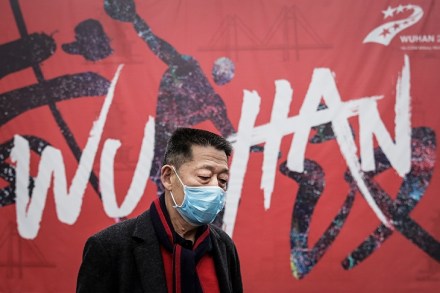
The case for Chinese reparations

It is time we started to talk about reparations. I am not of course referring to the demands made by certain communities to be given vast cash payouts for things that happened before they were born, to people they never knew, by people they never met. I am talking about the need of the citizens of the world to be given reparations by China for what it did to us all this year. Before proceeding further, perhaps it is worth putting a few things in perspective. Delivering his spending review before the House of Commons last week, the Chancellor Rishi Sunak cited figures from the Office for Budget Responsibility explaining that the UK economy is due to contract by more than 11 per cent this year.

Carole Cadwalladr should now return her Orwell Prize

A small but significant event has just occurred. This morning the legal case between Arron Banks and the journalist Carole Cadwalladr was due to start. The case came about because of Cadwalladr’s claim that Arron Banks – who was a founder of the Leave.EU campaign (the non-official Leave campaign) – was offered money by the Russians. Cadwalladr has been going around for years making these and other unfounded accusations in every forum and on every platform she can manage. It is not as though her campaign has been obscure. The Observer newspaper has supported her, and as her entirely unsubstantiated claims grew, she was shamefully awarded the Orwell Prize for journalism.

Donald Trump won’t leave me alone

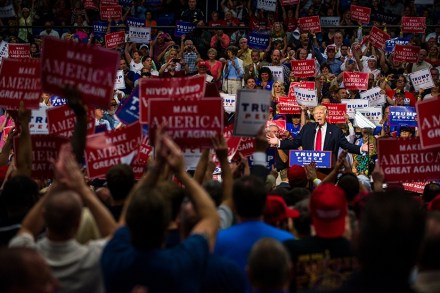
Ever since I saw him in Pensacola, Florida the other week, Donald J. Trump will not leave me alone. Each morning I wake up, turn on my phone and find more messages sent overnight. On just one morning this week I rolled over to find emails from him titled ‘Chaos’, ‘Rigged’ and ‘We’re gaining momentum.’ Another said ‘The left hates you, Douglas.’ He doesn’t know the half of it. Clearly my email address has been shared. Because in just one morning I also got emails from Mike Pence (‘We’re closer than ever’), Eric Trump and bewilderingly — for I cannot see what fresh constituency she brings — Eric’s wife, Lara.

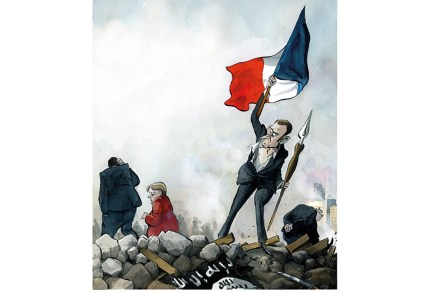
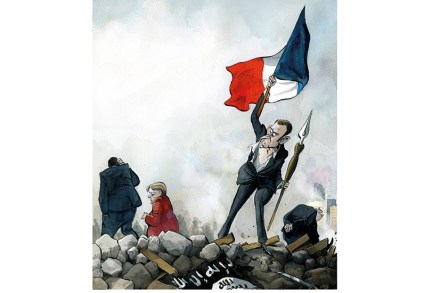
Macron alone: where are France’s allies in the fight against Islamism?

36 min listen

First, France has been shaken by a series of gruesome terror attack – yet western leaders seem remarkably reluctant to support President Emannuel Macron. (01:04) Lara speaks to The Spectator's associate editor Douglas Murray and writer Ed Husain. Next, this year's US election was truly remarkable – but what was it like to report on it? Lara is joined by the editor of The Spectator's US edition Freddy Gray and Washington editor Amber Athey. (17:31) And finally, the British pub has historically been remarkably adept at circumventing restrictions on drinking – but how has it dealt with lockdown? Lara talks to journalist John Sturgis and Spectator writer Mark Mason. (27:21) Presented by Lara Prendergast. Produced by Gus Carter and Matthew Taylor.

Macron alone: where are France’s allies in the fight against Islamism?

A few years ago, in a Lords debate on the treatment of Christians in the Middle East, the late Rabbi Jonathan Sacks reminded his peers of some famous words of Martin Luther King: ‘In the end we will remember not the words of our enemies but the silence of our friends.’ That reflection may now be going through the head of the French President, Emmanuel Macron. In recent weeks he has been left alone on one of the most dangerous and delicate ledges of our time: that of Islamic extremism. And while he has already incurred the wrath of much of the so-called Muslim world — with French goods disappearing from many Arab supermarkets and Macron condemned from Ankara to Islamabad — it is the silence of everyone else that has been so striking.

The cameras miss what’s really happening in Washington

Washington, DC On election day in the capital there is no thrill in the air, but there is a sound: that of hardboard being placed over all of Washington’s windows. Wherever you go in the centre of town, the area is either boarded up or in the process of being so. I enjoy my sausage and eggs on a sidewalk to the accompaniment of the last windows being drilled. ‘Was everything all right?’ my waitress enquires. ‘Delicious,’ I tell her. ‘If the city is still here tomorrow, I’ll be back.’ DC feels as if it is preparing for a natural disaster, not an election result. Like all other major cities in the Western world, Washington has been stripped of its tourists by coronavirus. But an added exodus of the locals has occurred.

Matthew Parris, Lionel Shriver and Douglas Murray

25 min listen

On this episode, Matthew Parris talks about how, on free school meals, he's truly fallen behind the zeitgeist; Lionel Shriver on why she's voting for Biden, warts and all; and Douglas Murray's reflections from America in the days before the election. Tell us your thoughts on our podcasts and be in for a chance to win a bottle of Pol Roger champagne by filling out our podcast survey. Visit spectator.co.uk/podcastsurvey.

Trump’s humour is his weakness – and his strength

Earlier this summer left-wing activists announced a ‘semi-autonomous zone’ in the Capitol Hill area of Seattle. Denuded of law enforcement and any other signs of the American state, these activists deluded themselves that they were creating a blueprint for the perfect society. After a number of wholly predictable murders and rather more rapes, the state retook control. The area where the state formerly known as CHAZ briefly stood is now just another homeless encampment, overlooked by empty luxury apartments. Local businesses are suing the city for failing to protect them. All still have ‘Don’t hurt me’ signs in the windows. One, a hairdresser, stresses that it is ‘a minority-owned, women-led, LGBTQIA+ staffed local business’.

Why should The Strand survive?

From our US edition

On Friday book-loving New Yorkers got a shock as the city’s largest bookstore — The Strand — announced that it risked going out of business. A post on Twitter from the company said: ‘We need your help. This is the post we hoped to never write, but today marks a huge turning point in The Strand's history. Our revenue has dropped nearly 70% compared to last year, and the loans and cash reserves that have kept us afloat these past months are depleted.’ https://twitter.com/strandbookstore/status/1319686649798905856 What followed included an appeal to the public to return to the store to ensure that the 93-year-old business could keep trading. Prominent writers and pundits rallied around, and in recent days lines have appeared outside.

strand

My week with the baying Antifa mob

Portland, Oregon In the days when you could still watch a nature documentary without feeling as if you were sitting through a politics lecture I saw footage of a pack of smaller predators taking down an elephant. At the time I remember thinking: ‘Why don’t you keep running? Why don’t you knock the first one off and keep going?’ Strangely, I thought of that elephant again in the very different savannah of Portland, Oregon. In recent years this city in the Pacific Northwest has become famous for a variety of reasons — none of them good. As one long-term resident said to me last week: ‘This used to be a very civil town.’ Not any more.

The transatlantic mask divide

Should we wear our masks? The question has been on my mind as I have been battered that way and this by a variety of people with stronger feelings than mine on the matter. The week before last, while I was walking down Oxford Street, police outriders began to emerge. Like most of the public I stopped with interest and some excitement, wondering who the traffic might be halting for. Sadly it turned out to be neither the Queen nor Matt Hancock. Instead the traffic was being stopped for several thousand anti-lockdown protestors. Those of us who had hoped to catch a glimpse of, or even a wave from, the Health Secretary found ourselves instead being shouted at. ‘Take off your masks’ the marchers declaimed from the road’s centre at those of us on the pavement.

At last, the Conservatives are showing some fight in the culture war

A beautiful noise rang out last week in the wake of the news that the government is considering Charles Moore to become the new chairman of the BBC and Paul Dacre to be the head of the broadcasting watchdog Ofcom. The noise was the sound of the British left wailing that toys they thought were theirs alone might now (under a Conservative government) finally go to identifiable conservatives. The former editor of the Guardian Alan Rusbridger shrieked that ‘this is what an oligarchy looks like’. This and similar tweets were presumably sent from the lodgings of the Oxford college that Rusbridger was made principal of five years ago. Others who screamed themselves sick included BBC employees who briefed that Moore’s appointment ‘would shatter morale. People will leave.

All protests are not equal in the eyes of the police

I’ve never been a great fan of public demonstrations. When I was at university, one of the great causes du jour involved a bus company owned by a man accused of not much liking the gays. My generation were short on causes, so intermittently there would be a call for direct action against the bigoted buses. I slipped along once, not sure whether I really wanted to join in. Apart from the sight of a few dozen callow students preventing one of the guilty buses from progressing up the High Street, my main memory is the almost animalistic rage of a number of the bus’s passengers. Unable to be heard above the chants, they looked like flies in a bottle, getting ever more furious about being made to be late for their next appointments.

Douglas Murray, Francis Pike and Philip Hensher

32 min listen

On this week's episode, Douglas Murray asks - why would anyone want to be a government adviser, given what's happened to Tony Abbott? The historian Francis Pike reads his piece on Thailand's Caligula; and Philip Hensher reviews a new book on Wagner.Spectator Out Loud is a weekly audio collection of three Spectator writers reading their pieces in the latest issue.

Who would risk being a government adviser?

Poor Tony Abbott. It would seem being prime minister of Australia doesn’t bring you to the attention of the British media. To come into its sights you must be put forward for a role as UK trade adviser. Then they will discover your existence and aim to destroy whatever reputation they didn’t know you had with the usual modern British charge-sheet. This time the charge was led by Kay Burley. The latest advertisements for her Sky television show boast that Burley is ‘always formidable, rigorous, fair, honest and searching’, among much else. Perhaps Burley hadn’t seen the advert. Certainly she displayed no such qualities when she discovered the existence of Tony Abbott.

In defence of Tony Abbott

You sometimes wonder whether we live in an adult country anymore. For the last two days the broadcast media has been obsessing about whether Tony Abbott is a fit and proper person to be a trade envoy for the United Kingdom. Since he is a former Prime Minister of Australia, a distinguished statesman and a great friend of the United Kingdom you might have thought he would be eminently suited for the role. But Kay Burley of the Sky News network, among others, has announced that Abbott is (in her eyes) guilty of wrong-think. You don’t need to see the clips. You could come up with the list yourself. You know the drill. We are told that Abbott is a ‘homophobe’ and ‘misogynist’. He is furthermore a ‘climate change denier’.

Protestors are clearing a path for Trump

‘This city is not going to stop burning itself down until they [the protestors] know that this officer has been fired.’ Thus spoke Whitney Cabal, a leader of the Kenosha chapter of Black Lives Matter, in response to the latest police shooting in Wisconsin. The use of the passive in that sentence is revealing. As Theodore Dalrymple has pointed out (see ‘The knife went in’) it is common for people to assign motive to inanimate objects when they are loth to admit to being in the wrong. I suspect that the suitably named Ms Cabal knows that the state of Wisconsin did not auto-combust this week, as Krook does at the end of Bleak House. True, there was first a police shooting and arrest. But someone must then have put a match to the place.

Remembering Roger Scruton

As readers of The Spectator know, Sir Roger Scruton died in January this year at the age of 75. Before his death, he agreed to the setting up of an institution that would bear his name and seek to continue his legacy. The Roger Scruton Legacy Foundation is that institution and it has now launched. As the foundation puts it, ‘The mission of the Roger Scruton Legacy Foundation is to establish the legacy of Sir Roger Scruton through supporting the conservation, care, and continuation of humane wisdom and culture from the Western tradition.’ Lady Scruton sits on the RSLF’s board. Many of Scruton’s numerous friends and former colleagues are also involved and I am honoured to be among the members of the advisory board.