Douglas Murray

Douglas Murray

Douglas Murray is associate editor of The Spectator and author of The War on the West: How to Prevail in the Age of Unreason, among other books.

Would you pass the ‘fake breasts’ test?

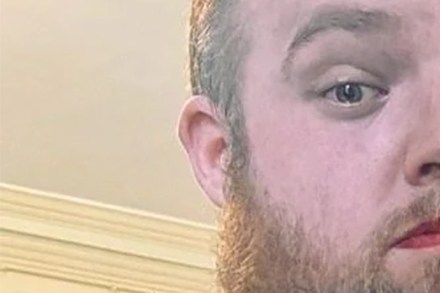
I am considering sticking on a pair of prosthetic breasts and applying for a job at Oxford University. The Spectator paying what it does, all of us columnists must have a side-hustle of sorts. Perhaps this could be mine. The thought is inspired by the emergence into the news of Matt Rattley, a lecturer in biochemistry at St Hilda’s College, Oxford. I know it is unkind to attack people for their looks, so allow me to describe Rattley’s appearance in as neutral a manner as possible. People like Rattley try their luck among the most tolerant people in the hope that tolerance will be endless Rattley is clearly a man – or to put it in the language of our time, he is someone who was ‘assigned male at birth’.

Douglas Murray: the Left’s Palestine ‘fetish’ – and why the West can still be saved | Part two

36 min listen

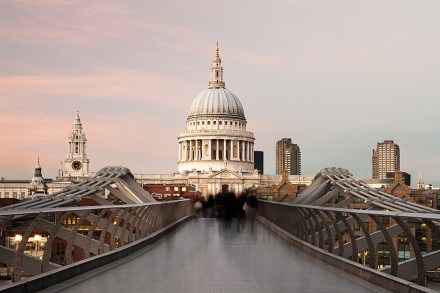
In the second part of Michael Gove’s conversation with Douglas Murray, they discuss the rise of antisemitism, the Left’s obsession with Palestine and the unlikely alliance between Islamists and the radical Left. What does the future hold for Israel – and would replacing Netanyahu really change anything?They also turn to the things that make Western civilisation worth defending, from Britain's great cathedrals to classical music and literature. Despite the challenges facing the West, can it be saved even at the 13th hour?Produced by Oscar Edmondson.

Douglas Murray: the Left’s obsession with Palestine – and how the West can still be saved | Part two

Will we always have Paris?

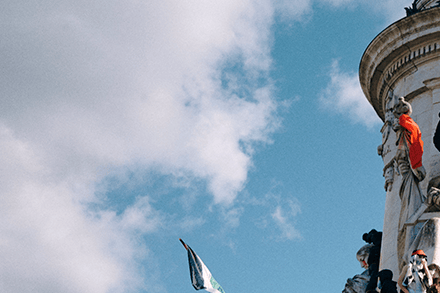
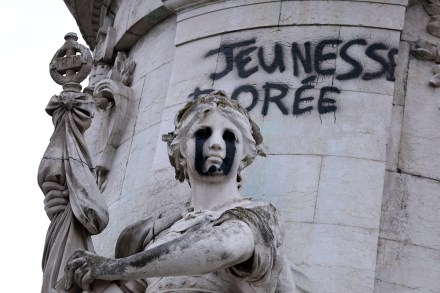
Two worlds met in Paris last week. Thanks to the presence of Art Basel, some of the world’s most valuable art that wasn’t already in the city was shipped there. It arrived just in time for Paris to go up in flames. Most of the art fair went ahead as planned at the Grand Palais, but the final weekend was cancelled. Parisian friends and those who were visiting the city described scenes of Dada-esque absurdity. They navigated streets filled with burning bins and rioting ‘youths’ in balaclavas, before slipping into champagne receptions. Some who attempted to get out of the city spoke of Mogadishu-like scenes at Gare du Nord, where the country’s newest net-contributors were busily assaulting any available police and stealing the luggage of any tourist they could find.

Douglas Murray: integration has failed – and Britain faces civil conflict | Part one

40 min listen

As the embers fade from last week’s unrest in France, could Britain be heading for a similar fate? In the first of a two-part interview, Michael Gove is joined by author and Spectator columnist Douglas Murray to discuss the future of Western civilisation. Douglas argues that decades of mass migration and failed integration have left Britain facing the prospect of civil conflict, warning that violent extremists could one day ‘take this country by force’. He also asks why successive governments have allowed alleged jihadists to settle in Britain while pursuing members of our own armed forces. Has Britain lost the will to defend itself – and is it already too late to change course? Produced by Oscar Edmondson.

Douglas Murray: integration has failed – and Britain faces civil conflict | Part one

France is a warning – our civilisation is not immortal

Could it happen here? I suppose that’s the underlying thought many of us have had as we watch France burn. And the immediate response is, why wouldn’t it? I am old enough to remember in the early 2000s when people used to say France was a model of integration. Then in 2005 the suburbs went up in flames, followed by parts of the centre of Paris and other major cities. The Citroën flambé became a national dish and suddenly talk of ‘the French model of integration’ disappeared. That same year, eight home-grown terrorists of foreign origin attempted to blow up the London transport network, four succeeded and a little bit of that blasé British attitude that we know better than the French disappeared too. In 2011 our own cities started burning, but we learned nothing from that.

There is no such thing as a clean execution

There are times when the absence of Jonathan Swift is acutely felt. One such moment came at the end of last month with the botched execution of a woman in Tennessee called Christa Pike. Pike has been in prison on death row since 1996 when she was convicted of the torture and murder of a classmate when she was just 18. She had originally been sentenced to death by electric chair. But society has become more benevolent since the 1990s and so, at the age of 50, Pike was prepared for execution by lethal injection. If society sanctions the ultimate punishment, it should not look away from what that punishment looks like The injections went ahead but they did not work.

Reading is the ultimate life hack

The London Underground used to be a happy place for authors. We would get into a carriage and see rows of people, studiously ignoring their neighbours – unless their neighbour was a dog – and reading a newspaper or an actual, physical book. The same went for the New York subway and, to a lesser extent, all train networks. Today you get into a carriage and everyone is staring into the same phone screens that they stare into most of the rest of the day. Books give us some ability to see through, as well as put into perspective, the troubles of our time I try not to be judgmental about this, since I always try to see the best in people, however disgusting they might look.

The game you are not allowed to win 

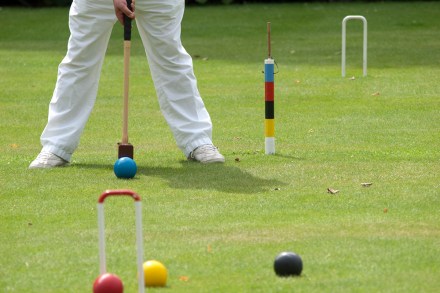
Some years ago I heard a moving story about Roy Jenkins. An unpromising start to any anecdote but stay with me. It involved a croquet match during the late period of his life – as Chancellor of the University of Oxford – when Jenkins had become one of the grander, not to say more pompous, figures in our public life. According to someone playing with him, his Lordship had appalling luck. Although he wielded his mallet with all requisite skill, his ball would not go through the hoops. Eventually the grand old man stormed off the pitch in a great huff. Only after he had left did the other players discover that the ball Lord Jenkins had been working was from a different croquet set, and too big to fit through the hoops.

I like a good hypocrite

I’ve always admired Diane Abbott, though admittedly only for one thing. Many years ago the MP for Hackney North and Stoke Newington campaigned against private schools. As a good socialist this comes as part of the ideological package, and Abbott was more than happy to join in the class war against parents who are in a position to educate their children outside the state system. However, as some readers might remember, when it came to her own school choice Ms Abbott looked around the local state schools and decided that none of them was good enough for her own progeny. So she sent her son to the City of London School, a private school for boys. Confronted with this hypocrisy, Abbott did the sole thing that I admire her for.

Who exactly can wear a face covering?

I’m trying to work out what the new rules are in this country. I think I’m getting there, though any Spectator readers who can assist might help me avoid an appearance at the local magistrates’ court. On political party funding, this week’s new rules seem clear. You may collect immense amounts of money from trade unions if you are a political party protecting the interests of trade unions. But if you don’t enjoy the largesse of the unions and are a party of business, you are not allowed to receive money from people who have done well in business. Furthermore, the Labour party’s in-house brainiac, Angela Rayner, has made it clear that any person who does give large sums of money to a party that is not her own can be described as a ‘foreign dictator or fascist oligarch’.

Would Sadiq Khan back a rave in a mosque?

I must return, regrettably, to the subject of the Church of England. Readers with long memories may recall the year of our Lord 2024. In February of that year, the people who are meant to care for Canterbury Cathedral allowed a ‘silent disco’ to take place over two nights in the place where St Thomas à Becket was martyred. Two thousand revellers turned up to take part in what became known as ‘a rave in the nave’. Naturally the Church of England authorities denied that this constituted any sort of defilement of one of England’s holiest places. Fast forward to September of that same year and it was Peterborough Cathedral’s turn. That was when it announced an Ibiza-themed nightclub evening with DJs spinning an ‘epic’ set of ‘soul, funk and contemporary hits’.

Who will remember Keir Starmer?

I am starting to think that Keir Starmer might have been in it for himself. In saying that, I am not trying to echo that laziest of all critiques of politicians that ‘they’re only in it for the money’. Good luck to anyone trying to make money from politics in Britain these days. Rather, I mean that the former prime minister’s decision to leave the House of Commons and trigger a by-election is not the behaviour of a patriot. There were many people in the legal world who were nervous when the former director of public prosecutions decided to put his name forward as a Labour candidate for parliament. DPPs are meant to be politically impartial, like BBC presenters.

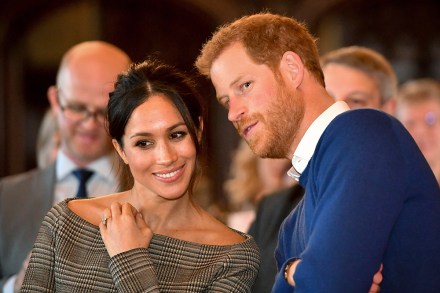
Harry and Meghan deserve a second chance

A little while back I came across a copy of Ted Hughes’s Laureate poems which had an inscription to some friends. Inside was an unpublished squib by the late poet laureate which read: ‘The Royalist/ Is afraid/ The Queen’s a pin/ In a hand-grenade.’ If I understand the poet’s meaning correctly then I count myself such a royalist. I dislike criticism of the royal family, especially of the monarch. When it happens it feels too much like people hammering at something fundamental – far more fundamental than the critic appreciates. If criticism is to be made it seems to me that it should be done privately, so as not to disturb the fragile equilibrium of the rather magical arrangement we have on these islands.

Middle England is finally waking up to the migrant crisis

I don’t know how familiar readers are with the term ‘accelerationism’. It is generally used to describe a tendency on the left, though is increasingly heard on the right too. The basic idea of accelerationism is that there are certain flaws in the societal structure which if pushed could bring things to their inevitable conclusion more quickly. It is why there are so many people on the left of politics who say that sustainable government spending should be discouraged. It is not just because they are economically illiterate. What they really hope is that a speeded-up financial disaster will expose the ‘underlying contradictions of capitalism’, and we’ll all realise that Karl Marx was right and promptly vote for Zack Polanski or similar at the next election.

The mawkish madness of Dobby’s ‘grave’

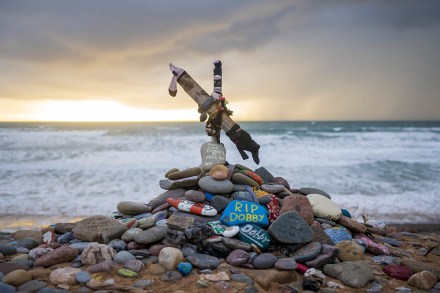
I don’t know how many readers have visited the grave of Dobby the house-elf, but any who have should immediately be sectioned and have their subscriptions to The Spectator cancelled. This strong course of action occurs to me after reading one of those stories that can make you laugh, cry and smack your head into your hands all at once. It relates to a ‘memorial’ which apparently sits on Freshwater West beach in Pembrokeshire, Wales. The area is run by the National Trust – a charity which used to look after our nation’s heritage sites. The beach in question was where filming took place for Harry Potter and the Deathly Hallows.

Rod’s bravery made others brave too

How do you produce the type of person who cares deeply while seemingly not giving a damn? With great difficulty, it turns out. Plenty of people imagine that they can say what they think, but very few do. For most people, some real or imaginary social punishment lies on the horizon: a dinner they won’t be invited to; a club of which they fear they will never become a member. Rod Liddle was one of the happy few who was free. He was free to say what he thought. He was free to voice unpopular opinions and – often harder – he was free to voice popular opinions. When the whole world seemed to be falling on his head he had a perfectly contented attitude towards it.

I wish more people had imposter syndrome

I have spent part of the past week thinking about imposter syndrome, and how we might be able to give it to more people. In an interview this week, Andy Burnham’s best friend Steve Rotheram, who happens to be the Mayor of Liverpool, said that our latest Prime Minister had struggled with imposter syndrome ‘for many years, like most people from working-class backgrounds’. All of which leaves me slightly baffled. Surely, whatever your origins, if you have made it to Cambridge University in your late teens, got a job in Westminster in your early twenties, become a Member of Parliament in your thirties, have become a mayor, are best friends with a mayor and are now Prime Minister, it might be time to stop with the feeling of ‘imposter syndrome’?

The problem with the Widdecombe suspect’s ‘fair trial’

It’s hard to hold anyone responsible for anything today in British politics. That’s because no sooner have the facts emerged than everybody in Westminster has played another game of musical chairs. If the word ‘amusing’ can be used in the same paragraph as ‘attempted beheading’ allow me one amusing example. Last month, a 30-year-old asylum seeker from Sudan allegedly attempted to behead a local man on the streets of Belfast. The attack was apparently caught on video. Everyone was geared up to make their points. The left was preparing to argue ‘So you’re saying all asylum seekers are beheaders, are you?’, while the right was gearing up to say: ‘We must hold people accountable.

The hijacking of Ann Widdecombe’s death

I don’t know if you remember that old saw: ‘Always speak ill of the dead.’ I don’t recall being brought up with it myself, but a number of our fellow countrymen apparently were. After the brutal killing of Ann Widdecombe last week we saw some fine examples of people following this rule. Peter Tatchell – a prominent member of the ‘be kind’ brigade – took to social media to describe the death of Widdecombe in celebratory tones. He listed her crimes, such as her belief that marriage is a union between a man and a woman, and then ended his tweet by saying: ‘BIGOT!’ As though final judgment had been passed down from on high.

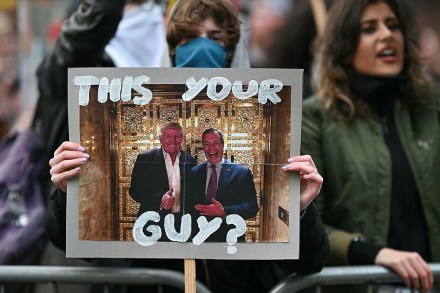
What Farage can learn from the anti-Trump playbook

In January this year Dominic Cummings – once of this parish – warned The Spectator’s editor and assistant editor that Whitehall and the establishment parties would ‘stop at nothing’ to prevent Nigel Farage from becoming prime minister. As Cummings told the Quite right! podcast: ‘The people around [Keir] Starmer and all through the upper echelons of the Whitehall system are looking at Donald Trump. They’re looking across Europe, and they’re saying to themselves: “The lesson is to strike early and strike hard and not let these people in… Let’s smash the absolute living shit out of Farage, and make sure that he doesn’t win, by fair means or foul.