Dominic Green

Dominic Green

Oscars 2018: and the winners are…

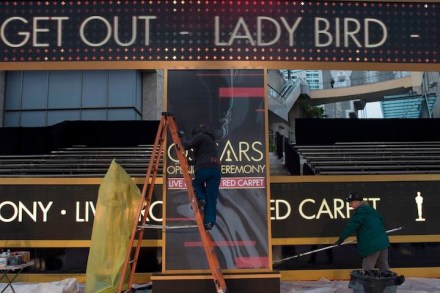
Tomorrow night, TV viewers will take to their couches for a night of Hollywood glamour, razzmatazz and gross hypocrisy. A bunch of vain halfwits who make millions waving guns around or taking off their clothes will preach to us about gun control and sexual morality. Yes, it’s the 493rd annual Oscar Awards. I have the

Bruce on Broadway – and out of touch

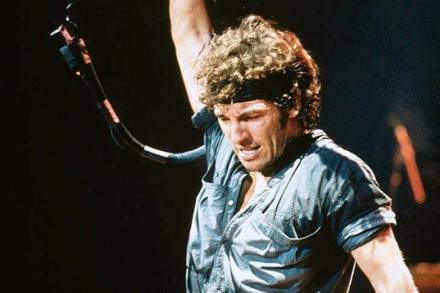
Bruce Springsteen promised that he was ‘Born To Run’, and now, like Judy Garland and Ethel Merman before him, he is running on Broadway—and running, and running. From last October to early February, the workingman’s tribune performed five nights a week at the Walter Kerr Theatre, his tools a piano, an acoustic guitar, and a … Read more

What do Walt Whitman, Jackson Pollock and Jimi Hendrix have in common?

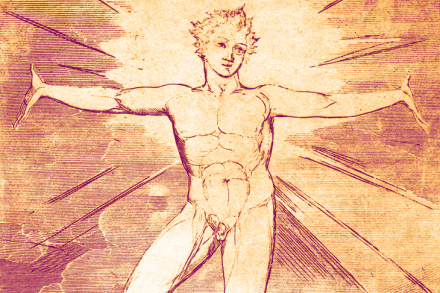
On 3 September 1968, Allen Ginsberg appeared on William F. Buckley’s Firing Line. Buckley exposed Ginsberg’s politics as fatuous — the blarney, stoned — but Ginsberg stole the aesthetic victory by reading ‘Wales Visitation’, a homage to William Blake. ‘White fog lifting and falling on mountain brow,’ Ginsberg intones, ‘…teeming ferns/ exquisitely swayed/ along a

Blake

Wool, wheat and wet weather

From our UK edition

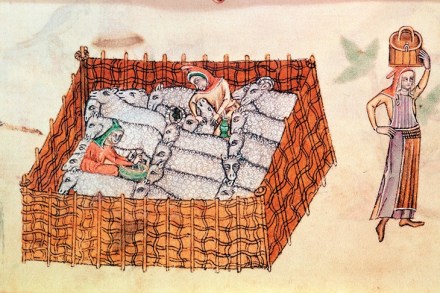
Englishness is big business in the nation of shopkeepers, and not just in politics and tourism. In literature, the gypsy scholars of Clan Macfarlane range freely across the hills and lexicons in search of old England, the dying and undead. This paperchase confirms that a change in the self-image of the English is afoot too.

Taking the rough with the smooth

From our UK edition

In The Ambassadors, Henry James sends Lewis Lambert Strether from Boston to Paris to retrieve Chad Newsome, the wayward heir to a factory at Woollett, Massachusetts. Strether never names the ‘small, trivial rather ridiculous object of the commonest domestic use’ that has enriched the Newsomes, though he does say that it is not clothes pins,

Vice guys

From our UK edition

In 1981, an FBI team visited Donald Trump to discuss his plans for a casino in Atlantic City. Trump admitted to having ‘read in the press’ and ‘heard from acquaintances’ that the Mob ran Atlantic City. At the time, Trump’s acquaintances included his lawyer Roy Cohn, whose other clients included those charming New York businessmen

America’s other civil war

From our UK edition

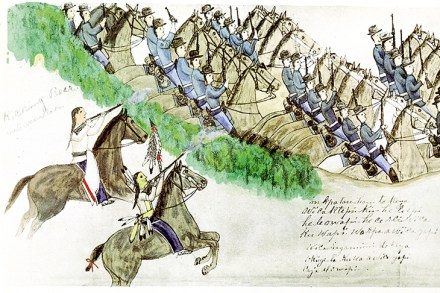
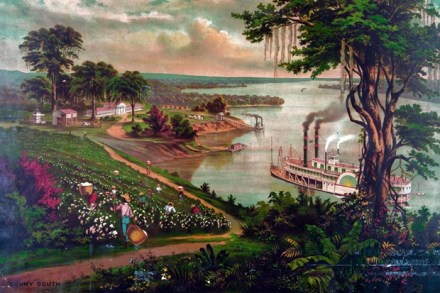
‘What makes the Red Man red?’ the Lost Boys asked in Disney’s Peter Pan (1953). According to Sammy Cahn’s lyric, it was embarrassment: ‘The very first Injun prince/ He kissed a maid and start to blush.’ Redness is everywhere in The Earth is Weeping — in the anger of the Indians, harried and starved into

A hellish paradise

From our UK edition

‘Short of writing a thesis in many volumes,’ Patrick Leigh Fermor wrote in his preface to The Traveller’s Tree, ‘only a haphazard, almost a picaresque, approach can suggest the peculiar mood and tempo of the Caribbean and the turbulent past from which they spring.’ Island People, Joshua Jelly-Schapiro’s first book, is an academic picaresque. This

Knight’s tale

From our UK edition

In The Cousins’ War (1999), the Republican political strategist Kevin Phillips argued that three ‘civil wars’ had defined politics in the English-speaking world: the English Civil War, the American Revolution and the American Civil War. The ideological battle lines of 1641 recurred in 1776 and 1865, and not just because the Sons of Liberty and

Towards the best of all possible worlds

From our UK edition

The flour is what matters, and not the mill, Georg Christoph Lichtenberg wrote in his notebook in 1799. ‘When we ask what time it is, we don’t want to know how watches are constructed.’ A telling assertion, considering Lichtenberg’s place and time. For nearly two centuries, the ‘mechanical philosophy’ had ground down tradition and metaphysics

Godly swingers

From our UK edition

There were two communist manifestos of 1848. One had no influence whatsoever on the revolutions of that year, but now symbolises the struggle against bourgeois capitalism. The other secured a small readership, and is almost forgotten today, but it also laid the foundations of a business that catered to bourgeois propriety. The gestation of Marx’s

Britannia rued the waves

From our UK edition

Military history is more popular than respected. It is not hard to see why. It is masculine history, a trifecta of logistical planning, technical detail and violent death. It shows the value of hierarchy and duty, sacrifice and patriotism — disgraceful notions which the young and impressionable might be inspired to emulate. And,with its sudden

Samuel Palmer: from long-haired mystic to High Church Tory

From our UK edition

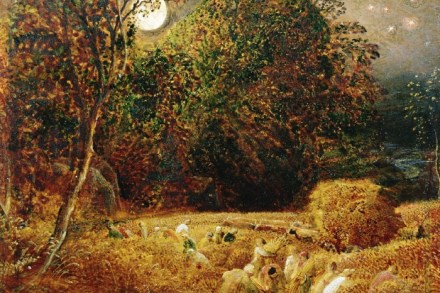
In his youth, Samuel Palmer (1805–1881) painted like a Romantic poet. The moonlit field of ‘The Harvest Moon’ (1831–32) glows with uncanny significance; for Palmer, as for Tolstoy’s Lieven, the bowed forms of the peasants at the harvest are shadows of divinity. Palmer aged like a Romantic poet too. The long-haired mystic became a High

The swastika was always in plain sight

From our UK edition

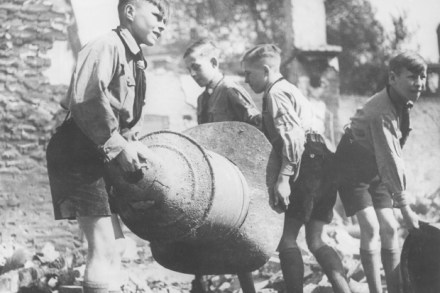
In 1940, when Stephen Spender heard a German bomber diving down towards London, he calmed himself by imagining that there were no houses, and that the bomber was ‘gyring and diving over an empty plain covered in darkness’. The image consoled Spender with his ‘smallness as a target, compared with the immensity of London’. But

The real theatre of war

From our UK edition

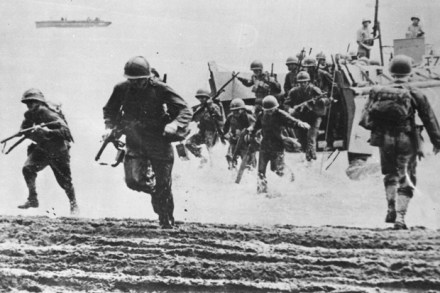
The history of ‘great events’, Voltaire wrote, is ‘hardly more than the history of crimes’. Physically, the war in Asia was the second world war’s greatest event. The Asian theatre, much of it water, was seven times larger than the European theatre. America’s mobilisation was the most complex in history, Japan’s crimes among the most

Licence to kill

From our UK edition

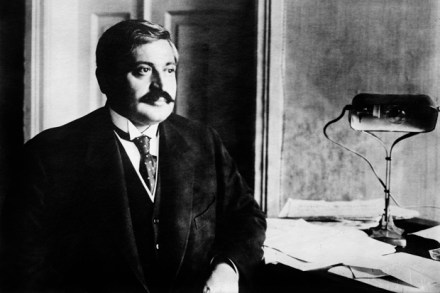
One morning in March 1921 a large man in an overcoat left his house in Charlottenburg, Berlin, to take a walk in the Tiergarten. A young man crossed his path, drew a pistol and shot him in the neck. Emitting a groan ‘like a branch falling off a tree’, he fell dead. The assassin ran,