Deborah Ross

Deborah Ross is the chief film critic of The Spectator

Epic, immersive and tiresomely long: Killers of the Flower Moon reviewed

From our UK edition

Martin Scorsese’s Killers of the Flower Moon is a Western crime drama that runs to three-and-a-half hours. (Sit on that, Oppenheimer!) But which is it: an epic masterpiece? Or just very, very tiresomely long? There are certainly pacing issues, and things that needed further explanation – there is no hand-holding. That said, the running time does allow for world-building, and it builds a world so engrossing that when I came out of the cinema onto the high street it was weird to see a Superdrug and Costa Coffee rather than dusty tracks and horses and vast landscapes beset by oil derricks. So I guess it’s epic and also tiresomely long. Does that help? This isn’t a thriller.

The miracle of The Miracle Club is that it does, I promise, end

From our UK edition

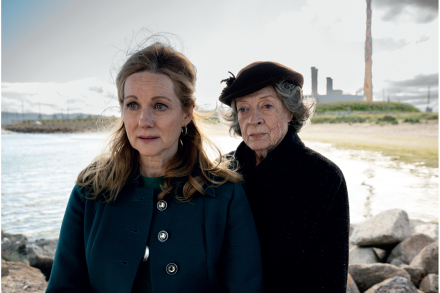
The Miracle Club, which is about a group of Irish women who travel to Lourdes, has a magnificent cast – Maggie Smith, Kathy Bates, Laura Linney – and it inspired me to pray. ‘Dear God,’ I found myself praying mid-way through, ‘let this be over soon.’ The film’s stars make it just about watchable but it’s still a disappointingly trite and shopworn affair. It’s as if three thoroughbreds have been entered in the local donkey derby. It inspired me to pray. ‘Dear God,’ I found myself praying, ‘let this be over soon.’ It is written by Jimmy Smallhorne, Timothy Prager and Joshua D. Maurer, and directed by Thaddeus O’Sullivan.

Soapy and sentimental: Ken Loach’s The Old Oak reviewed

From our UK edition

Ken Loach has said The Old Oak will be his last film – he’s 87; the golf course probably beckons. It’s not one of the ones he’ll be remembered for. At least, however, it is starkly different from the others as it’s a cheerful, sunny romcom set in Paris in the spring. I’m joshing you. It’s set in the deprived north-east where the skies are permanently grim and tensions rise due to the arrival of Syrian refugees. As you’d expect, it is a compassionate film that is respectful all round but it is also heavy-handed, soapy and sentimental, with a redemptive ending that is unearned. I wish him joy on the golf course and can only hope he has better luck keeping his eye on the ball there.

Menacingly entertaining thriller, despite the clichés: A Lesson reviewed

From our UK edition

The Lesson is a literary thriller that is occasionally heavy-handed but also menacingly entertaining, plus you get Richard E. Grant in his full pomp. That said, when do you not get Richard E. Grant in his full pomp? Has anyone ever seen him at 50 per cent pomp? Has anyone ever come out of the cinema thinking: ‘I wish Richard E. Grant had given it more?’ The monstrous character is his speciality and he is deliciously, marvellously, full-on monstrous here.  Written by Alex MacKeith and directed by Alice Troughton, The Lesson is very self-aware, always delivering little winks to the audience. It is divided into chapters. It is particularly interested in endings. ‘What makes an ending?’ someone will ask, and by the end you will know.

Someone stop Kenneth Branagh: A Haunting in Venice reviewed

From our UK edition

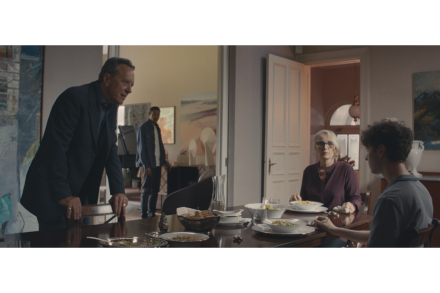
A Haunting in Venice is Kenneth Branagh’s third Poirot film (after Murder on the Orient Express and Death on the Nile) and as each one is worse than the last you could say he’s on a losing streak. Why someone with Branagh’s CV would persist, I don’t know. Why someone who has his dignity at heart hasn’t yet rugby tackled him to the ground while shouting ‘STOP!’, I also don’t know. That is the biggest mystery here. The film is directed by Branagh, who yet again casts himself as Poirot even if we all know what Poirot looks like and that’s David Suchet. The first problem is that Hallowe’en Party, the Agatha Christie novel on which this is based, is set in an English village and goes nowhere.

The best drama without any drama that you’ll see: Past Lives reviewed

From our UK edition

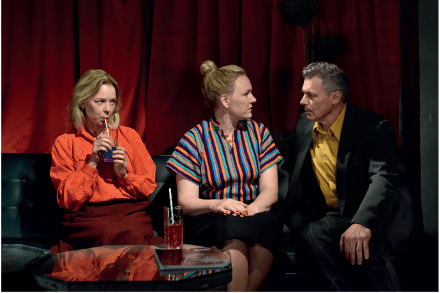
Past Lives is an exquisite film made with great precision and care about what could have been, even if what could have been does not mean it should have been. Forgive me; it’s a hard film to pin down. That it’s exquisitely affecting and made with great precision and care is enough for now. No need to make a song and dance about it. Indeed, as Past Lives so deftly shows, you can have an excellent drama without any of the drama. I think that I may be in love with Greta Lee myself This is a first film from Celine Song, who is Canadian-Korean and otherwise a playwright. It opens with a scene in New York where three people are sitting at a bar and an unseen pair are trying to guess what their stories are, as you do. (‘Is the white guy her husband?

Depardieu’s Maigret is the best yet: Maigret reviewed

From our UK edition

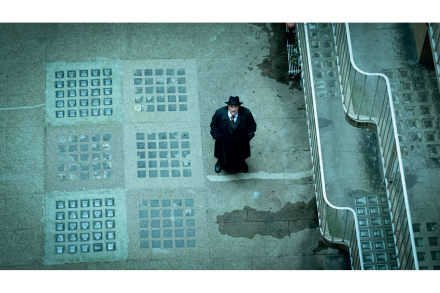
Georges Simenon’s lugubrious detective Maigret has appeared in umpteen screen adaptations and dozens of actors have played him. Now it’s Gérard Depardieu’s turn. Depardieu’s Maigret isn’t, in fact, quite how I imagined Maigret. He’s bulkier than the one in my head; moves more cumbersomely, like a sad circus bear. And I never saw him with that nose – but then who would? Yet he may be the best so far, despite the likes of Jean Gabin, Charles Laughton, Richard Harris and Michael Gambon having had a go. This is adapted from Maigret and the Dead Girl (1954) and is directed by Patrice Leconte. It is minimal and melancholic, beset by the gloominess (I don’t think any lightbulb runs to more than five watts) that also has the great detective in its hold.

Colourful, tender and sweet, grounded in magical rather than social realism: Scrapper reviewed

From our UK edition

Scrapper is a film about a working-class kid who, after her mother dies, has to look after herself. I know what you’re expecting. It isn’t that. It’s not an earnestly grim wrist-slitter. It’s not an indictment of modern Britain with no shred of hope. It’s not Ken Loach. It’s not even desaturated and grimy. Instead, it’s colourful, tender and sweet with quirky moments that are grounded in magical rather than social realism. And it’s just 84 minutes long, which is a boon. (‘A boon,’ confirms bladders everywhere.

You’ll be pleasantly surprised at how unpleasant this is: Strays reviewed

From our UK edition

Based on the poster showing two cute dogs – a border terrier and a Boston terrier – I had assumed Strays was a (probably lame) kiddie film with a remit to amuse the aforementioned kiddies during the long, long, very long summer holidays, so here’s what I was saying to myself during the opening moments: ‘Christ on a bike, what the hell is this?’ I can now tell you that Strays is vulgar, rude, offensive and disgusting. But the biggest, weirdest shock? At a certain point I realised it was funny, and rather touching, and that I was having fun. In other words, I was pleasantly surprised. Or, given its frequent scatological content, pleasantly surprised, unpleasantly. Here’s what I was saying to myself during the opening moments: ‘Christ on a bike, what the hell is this?

Modest fun: Red, White & Royal Blue reviewed

From our UK edition

Red, White & Royal Blue is a rom-com based on the LGBT bestselling novel by Casey McQuiston. Nope, me neither, but the New York Times reviewed it as ‘a brilliant, wonderful book’ and on Amazon UK it has garnered nearly 44,000 reviews, with an average of 4.5 stars, so let’s not be hasty. The romance here is between ‘America’s First Son and the Prince of Wales’, says the blurb, which does sound juicy, and it’s not a YA (Young Adult) novel but an NA (New Adult) one, apparently, aimed at a slightly older audience. I did consider reading it so that I could say this isn’t as good as the book, as is standard in these instances, but then realised that as an OA (Old Adult) life is too (frighteningly) short and I couldn’t be bothered. But my best guess? Not as good as the book.

Dense and spectacular – and not pink: Oppenheimer reviewed

From our UK edition

Oppenheimer is Christopher Nolan’s biopic of J. Robert Oppenheimer, the brilliant quantum physicist and ‘father of the atomic bomb’ who was later haunted by what he’d created. Starring Cillian Murphy, and his cheekbones, the film is dense, ambitious, complex, so very long (three hours) and impressive, even if it does drag by the end. (When a film is so very long, that’s the price you pay.) I could go on and on but, for many, the main selling point will be this: it isn’t Barbie and it isn’t pink. If that’s all the thanks you get for developing the next generation of weapon, I’m glad I never bothered It’s a Nolan film so, of course, it’s not chronological storytelling. I pity his wife.

Should be called Ken: Barbie reviewed

From our UK edition

Finally, the Barbie film is here, for which we must be thankful, as the tsunami of pre-publicity meant you probably felt obliged to lock your bathroom door so the trailers didn’t follow you in there. They should have called this Ken but I guess that’s not going to help bring down the patriarchy It’s a film that wants to have it all ways. Let’s parody Barbie but also isn’t she a feminist? There’s of lot of zeitgeist appeasement going on here. But the production values are sensational and there are some excellent jokes, even if Ryan Gosling’s Ken leaves Margot Robbie’s Barbie standing. They should have called this Ken, but I guess that’s not going to help bring down the patriarchy.

Gripping: Name Me Lawand reviewed

From our UK edition

You’d have to have a heart of stone to not be moved by Name Me Lawand. It’s a documentary about a Kurdish boy, deaf since birth, who has lived a lonely, isolated and shut-in life until he learns British Sign Language and slowly starts to blossom and reveal who he is. (Who are we without language?) There is only one big release this week – Mission: Impossible – Dead Reckoning Part One, which I couldn’t see in time for my deadline anyhow – but this small film has to be more affecting than any mission that turns out to be possible in the end. Unless, that is, your heart is one of the stony ones. The film is impressionistic and observational. It does not give us specific facts, which can be frustrating. But it wants to immerse us in Lawand’s world, and it does so grippingly.

Did ChatGPT write this? Indiana Jones and the Dial of Destiny reviewed

From our UK edition

Indiana Jones and the Dial of Destiny is the fifth and final film in the franchise so it’s Harrison Ford’s last go at cracking the bullwhip as either the world’s greatest archaeologist or the world’s greatest plunderer, depending on where you are coming from. Ford is now 80 but they still make him appear to climb rock faces, jump between buildings, punch underwater eels in the face and gallop a horse through the New York subway – and there is no doubt about it: he could pluck the still-beating heart from your chest if he was of a mind, so steer clear and never grab the stool next to him in Pret. (I wonder if Ford ever beseeched on behalf of his character: ‘Can’t he just do Wordle and watch Homes Under the Hammer for a morning?

Wes Anderson’s latest cliché: Asteroid City reviewed

From our UK edition

After the screening I attended of Wes Anderson’s latest, Asteroid City, I overheard a couple of critics saying how much they loved his films and what a genius he is, and I was minded to interrupt with: ‘What, even though he’s been making exactly the same film for years now?’ Or: ‘What, even though I kept waiting for it to take a shape and it never did?’ But I was too shy, so I’ll let it all out here. The problem with Wes Anderson films, it now occurs to me, is that they are Wes Anderson films, and my patience has run out. Asteroid City is a film set within a play that, in turn, is set within a TV documentary, and if this sounds confusing, it’s probably because it is.

Magnificent: Pretty Red Dress reviewed

From our UK edition

Pretty Red Dress is a debut feature starring a one-time X Factor winner so, you know, kill me now. But it’s a thin week and I’ll cut it some slack and be kind, like it says on the T-shirts. That was my thinking, because, as is now obvious, I can be a patronising fool. This is a terrific film. It’s original, has heft, is magnificently performed, and it blew me away. The writer-director is Dionne Edwards who, as I also now know, was named one of Screen International’s Stars of Tomorrow in 2019. One of her shorts, We Love Moses, is available on Disney+ and it is totally worth 15 minutes of your time. The X Factor winner isn’t Harry Styles, for once, but Alexandra Burke, who triumphed in 2008.

Wikipedia does more justice to this fascinating story than this film: Chevalier reviewed

From our UK edition

Chevalier is a biopic of Joseph Bologne, Chevalier de Saint-Georges, whom you’ve probably never heard of, as I hadn’t. He was an 18th-century French-African virtuoso violinist and composer who wowed everyone in his day – in 1779, John Adams, then the American ambassador to France, called him ‘the most accomplished Man in Europe’ – but was erased from history and is only lately being rediscovered. Fascinating, you would think, and he was fascinating. Even a cursory look at his Wikipedia entry is thrilling. But this is not a fascinating or thrilling film. It is handsomely mounted yet strangely bland and strikes too many false notes. I was going to say it’s as if Disney had made it but then remembered: this is Disney.

Terrifying: Reality reviewed

From our UK edition

Reality is an edge-of-your-seat thriller that isn’t like any edge-of-your seat thriller you’ve encountered before. Trust me. It’s a docudrama that isn’t ‘based on a true story’ because it is a true story. It’s an enactment of the FBI’s interrogation of American whistleblower Reality Winner. Taken directly from the transcript of the audio recording, the word-for-word screenplay includes every cough, every ‘um’, every dog bark, every banality, no embellishments. Yet it’s more terrifying than any film that has set out to terrify (see: Sisu). You should trust me on this too. The film is directed with clarity and precision by Tina Satter, a playwright who discovered the transcript online and first turned it into a theatre piece (Is This a Room).

I may never recover: Sisu reviewed

From our UK edition

When I went into the Sisu screening I knew only that it was a Finnish film, so was expecting an arthouse drama, maybe featuring bearded men in nice fisherman knits and herrings being salted, rather than this hyper-violent, viciously bloody exploitation flick from which I may never recover. It is a swift 90 minutes and will please those who desire this experience, and it is clever in its simplistic, empty way. But if it’s not your genre, you will almost certainly find yourself praying: ‘Dear God, I’ll never tell another lie if you just make this end.’ The film begins with a title card saying that ‘Sisu’ is a Finnish world that can’t be translated.

Warm, charming and tender: Are You There God? It’s Me, Margaret reviewed

From our UK edition

Are You There God? It’s Me, Margaret is an adaptation of Judy Blume’s seminal young adult novel (1970) about an 11-year-old girl who talks to God about her friends and boys and who she wants to kiss and whether she’ll ever get breasts or menstruate. (This could also be called Are You There, Margaret? It’s Me, Your Period, and I’ll Come When I’m Ready!) Not being the target demographic, I assumed I’d be bored to death but, ever the professional, I drank 12 espressos and 17 cans of Red Bull beforehand. That turned out to be wholly unnecessary. This is a wonderfully charming, warm, tender, pitch-perfect film, much better than anything else I’ve seen recently. So that’s a good outcome, even if I did jangle for days afterwards.