Deborah Ross

Deborah Ross is the chief film critic of The Spectator

Trance: not Danny Boyle’s finest hour

From our UK edition

Obviously, we all love Danny Boyle and want to have his babies — I’d like at least two of his babies — but his latest film, Trance, is a horrid mess. A psychological take on the art-heist film, it is miscast, iffily acted, confusing, implausible (to the extent I never fully understood what was happening) and is interspersed with bouts of horrible, ill-judged violence. In one instance, for example, a man gets shot in the penis. This need not be a dealbreaker necessarily but at some point, possibly before we’ve even had the first child, and to prevent such nonsense going any further, I will have to sit him down and say: ‘Danny, love, this shooting at penises has to stop. We’re going to be parents. Why not gardening? Or golf?
No questions asked | 21 March 2013

From our UK edition

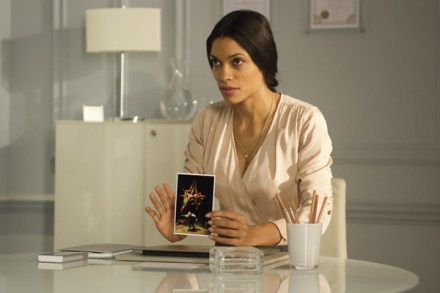
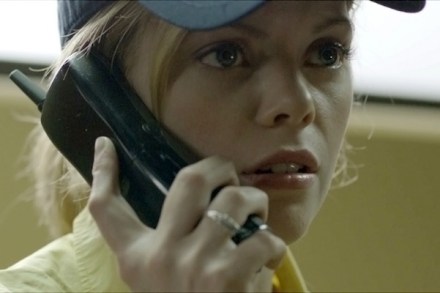
Compliance is a small film that says big things rather than one of those big films  that say very little, if anything. It’s written and directed by no one you have ever heard of, and stars no one you have ever heard of (I know!; be brave!) yet takes such a rivetingly clear-eyed look at the dark truths of human behaviour and the consequences of accepting authority without question that I don’t think I will ever get it out of my mind. It’s not an easy watch, which is kind of the point, and I’m not even sure what genre it is. Psychological horror? Thriller? But it will haunt and resonate. I saw it a week ago with my husband and we are still discussing it, which, for a pair who ran out of things to say to each other years ago, is quite something.

Get a life

From our UK edition

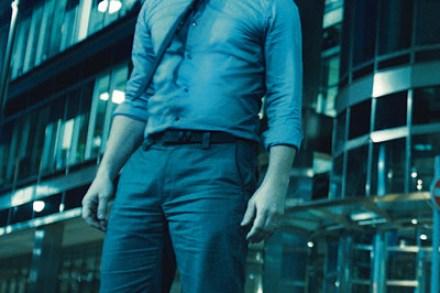
Welcome to the Punch is a British crime action thriller and here is why you may wish to see it: it is set in a night-time London so magnificently lit even I wanted to visit, and I live there. And now, ten reasons you can skip it, get on with your life and save 99 minutes, whether those minutes are precious or not. My time isn’t particularly precious, but it may be different for you. Here you are. 1. Although it has a top, top cast (James McAvoy, Mark Strong, Andrea Riseborough, David Morrissey) it only goes to prove the following old saying: the best cast in the world cannot save a poor script/story, try as they might. The fact I’ve just made up this old saying doesn’t make it any less true, for now or all time. 2.

Robot & Frank

From our UK edition

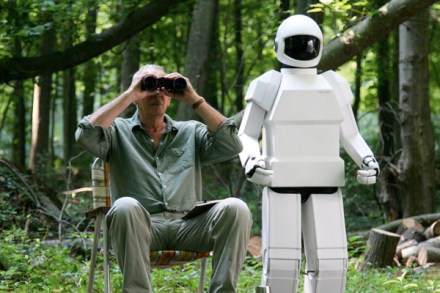
Robot & Frank is about a robot, and Frank, and I’d like to say it is as charmingly irresistible as you might suppose from the cute posters all around town, but hand on heart?  I cannot. It’s OK, I guess, as far as it goes, but it doesn’t go far enough, and, in the end, settles for what I most feared it would settle for: sentimentality. A pity, as the set-up is brilliant, and the questions it throws up — are you still you, once your mind starts to fail?; who is going to look after all our old?  — so worth asking, but it never properly gets to grips with any of them.

Secrets and lies | 28 February 2013

From our UK edition

After a succession of epic films including three hours of watching Cloud Atlas disappear up its own bottom — if you are going to disappear up your own bottom, at least make it snappy — along comes this crisp and confident thriller which demands you only appreciate it for what it is: a crisp and confident thriller. It’s set in the vastly wealthy world of Bernie Madoff-style hedge funds but, although it could easily have slipped into some kind of essay about money being the root of all evil, or how the rich bastards who crashed the economy keep getting away with murder (perhaps literally, in this instance), this has other things on its mind, like keeping you gripped and entertained.

Only disconnect

From our UK edition

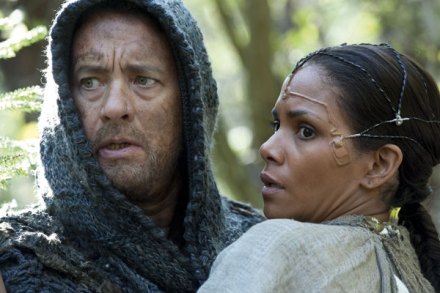
Cloud Atlas is part-sci-fi, part-thriller, part-romance, part-comedy, part-action flick, part-this, part-that and it all adds up to? A whole lot of not very much. Based on David Mitchell’s novel, this strains, laboriously, to capture that novel’s scope and complexity, but gets nowhere near, and takes three hours to get nowhere near. (If you are going to take three hours, you can’t get somewhere, at least? Is that too much to ask?) Its problem isn’t lack of ambition. This cost $100 million, had three directors and stars multiple A-listers in multiple roles in multiple storylines.

What kind of film does ‘Hitchcock’ think it is?

From our UK edition

Hitchcock is one of those films which would have been much better off if it had taken a moment to sit down and decide on its own sensibility. Before a camera had even rolled, it should have pulled up a chair and asked itself: am I a film about Hitchcock’s marriage, or am I a film about his psyche, or am I a film about one of his films, or am I an inside-Hollywood comedy, starring Sir Anthony Hopkins lumbering about in a fat suit and perving at blondes? If it had asked itself, it might have settled on the one, and retained its focus, and told us something. But it didn’t, so it doesn’t, and it tells us nothing. It’s not awful. It’s just not much of anything; the kind of film you will walk away from with a ‘so what?’ and a shrug. ‘So what?

A Cirque to irk

From our UK edition

Just as Les Mis was soaringly monotonous, Cirque du Soleil: Worlds Away (3D) is soaringly pointless. No point to it whatsoever. I looked. I looked everywhere for a point, even under my cinema seat. (That’s how desperate I was.) But I came up empty-handed. It’s 90 minutes of sheer, total, utter pointlessness, as written and directed by Andrew Adamson (who directed the first two Shreks and the first two Chronicles of Narnia) and produced by James Cameron, who has made some good films, and Titanic. God knows what they were thinking of when they embarked on this. And boredom doesn’t even come near it. I experienced the sort of boredom that is also a seething rage spread thin. What am I doing here? When’s it going to end? Why did anyone imagine this was even a film?

Telling tales

From our UK edition

I cannot tell you about all the things Steven Spielberg can and cannot do. I cannot tell you, for example, if he can make decent goblets from Quality Street wrappers or funny teeth from orange peel, as I can, but what I am able to say is this: he knows how to tell a story; where to start it, where to finish it, what to do with all those fiddly bits in the middle. And although Lincoln is a film that pays fantastically close attention to politics — not a negative per se, but unless you are on top of your American history you may occasionally find yourself scratching your head — its narrative swoop largely takes the legislative detail in its stride, plus the star is Daniel Day-Lewis, which is always a thing. He is not so much an actor, more a shape shifter.

Blow up

From our UK edition

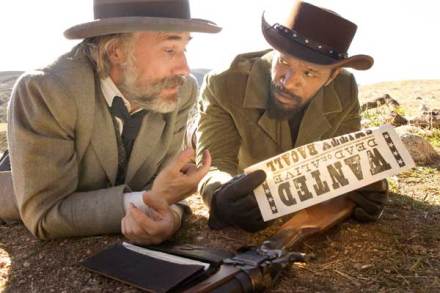
Here is a Quentin Tarantino film that, like all Quentin Tarantino films, is a typical Quentin Tarantino film, in the style of Quentin Tarantino, in that he takes a familiar trope, nods at it, toys with it, pokes it about, swills it round his mouth, then blows the whole thing up. I wonder if he was like this as a little boy. I wonder if his mother ever said to him, ‘Quentin. I love you. You’re my son. But if you keep stringing the other kids along so exploitatively and then blowing everything up in their poor faces they aren’t going to want to play with you. I don’t know where you get it from. Now, go tidy your room, dear, before I slice off your ear and shoot out your stomach so blood splatters out the front, out the back and up the wall. Run along.

The monotony of Les Misérables

From our UK edition

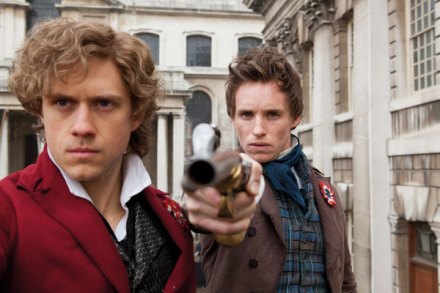
Les Misérables is one of the longest-running, most popular stage musicals in history, having been seen by 60 million people in 42 countries — sit on that, Cats! — and although I can’t comment on the live show, as I’ve never seen it, I can tell you this film, which comes in at around 140 hours, boils down to a lot of fuss and singing (of the jaw-straining variety) about a very minor parole offence. I’m telling you, if I’d ever Dreamed a Dream, whether In Time Gone By or In My Local Starbucks, that so many jaws would strain so much for so little, I’d feel completely satisfied, but otherwise? I’m not so sure. Directed by Tom Hooper, with a stellar, A-list cast — sit on that, all other casts!

Trading places | 28 December 2012

From our UK edition

The trouble with this adaptation of Salman Rushdie’s Booker prize-winning Midnight’s Children, aside from the fact it is a mess and a muddle, is that it goes on and on and on and on. And on. And on. And then, just when you think it has to be over, it goes on some more. If it were up to me, I would charge film-makers for every minute — £1, say; let’s not be greedy — over 90 minutes that I’m kept in the cinema for no good reason. In this instance, as the film comes in at two and a half hours, I think I’m owed £60 (plus VAT and expenses) and I will be invoicing Mr Rushdie directly, as we cannot let him off the hook. Rushdie has no one to blame for this but Rushdie. Rushdie wrote the script. Rushdie is the executive producer.

Tiger feat

From our UK edition

Wow! Just: wow! Life of Pi may be the most ravishingly beautiful film I have ever seen. It’s stunning. It’s gorgeous. Its visual inventiveness made me want to weep for joy. It is magical realism made magical and realistic. The palette of colours is extraordinary. You will feel you are in the sea and above the clouds and as if you are on a boat with a Bengal tiger too. Wow! Just: wow! But, weirdly, while enraptured by its look, its emotions never seemed especially pressing, and as for the spiritual journey, it didn’t exactly float my own particular boat. Is it saying a belief in God always makes life a better story than one without a God? That this is why we require faith? Is it advocating a Life of Pi-ety?

Everlasting love

From our UK edition

Michael Haneke’s Amour is about love as we near the end of life and is so painful it isn’t a film to ‘like’ or ‘enjoy’ but is one you do have to see. It’s amazing. It is, effectively, two hours and seven minutes of watching someone die, but it is riveting, and I’m still jangling from it. Haneke has taken the ordinary — getting old; dying; happens to us all; no exceptions — and has transformed it into something so literate, powerful, terrifying, intelligent and extraordinary. I’m still jangling from it, and expect to jangle until at least next Wednesday, if not Friday week. Actually, that’s overoptimistic. This is one of those films that, I suspect, is going to stay with me for life, and I’d best get used to it.

Lost in translation | 8 November 2012

From our UK edition

Mother’s Milk is an adaptation of Edward St Aubyn’s novel of the same name and is about an English family who are about to lose their beloved holiday house in Provence. (Diddums, I’m minded to say, but only because I’ve never had a holiday house in Provence to lose, and am quite bitter about that.) Although I am generally a fan of this sort of in-action film — a family go away, there are tensions, they return home again — this is just too hopelessly faithful to the text. Huge chunks of it are spouted all over the shop.

What shall we do with the drunken sailor?

From our UK edition

Paul Thomas Anderson’s The Master is his first film since There Will Be Blood and although it stars Joaquin Phoenix and Philip Seymour Hoffman, who give two of the most blistering performances you will see for an unspecified time period — usually, the form is to say ‘this year’, but how do I know? I’m not psychic! — it is all so enigmatic and underwritten I felt rather shut out. A ‘challenging’ film is one thing, but one that actually slams the door in your face is quite another, as well as rude. Heck, I’m mother to a teenager and can stay at home if I want to be shut out and have doors slammed in my face. It’s a pity, though.

The spy who loved M

From our UK edition

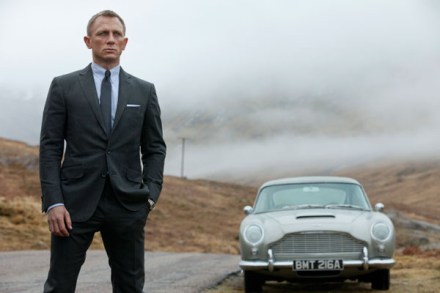
Skyfall is the latest James Bond film, as directed by Sam Mendes, which I felt I should make clear, as there is always so little pre-publicity around these releases. (You’d think the marketing people would splatter the poster on every bus and ensure every newspaper runs through every Bond Girl yet again, wouldn’t you? Pathetic.) But, now it has quietly sneaked up on us, is it any good? Yes, it is rather. It takes up the baton which Casino Royale proffered but Quantum of Solace dropped. By this, I mean although all the furniture is in place — the cars the gadgets the women the stunts the exotic locations — it further explores Bond as a fully-fledged character, and has emotional heft. Actually, something quite Freudian emerges.

Don’t look now

From our UK edition

I don’t know quite what I was thinking when I went to see this film as it is full of everything I personally hate. Low-life gangsters. Drugs. Violence. Liberal use of ‘pussy’ and the c-word, which I loathe so much I cannot say it myself. My son, when he was little, once overheard it somewhere and asked me what it meant and I said it was a sort of German bundt cake, but crispier, and for years I lived in terror he would be presented with a German bundt, but crispier, and exclaim, ‘Wow, great c-word!’ — but this isn’t about the film, is it? So, the film. Yes, it’s full of everything I personally hate but this does not, necessarily, make it a hateful film. It is well acted.

Young love

From our UK edition

The perks of being a wallflower are few and far between, in my experience, and I’m not even convinced you can be a wallflower if you are as ravishing as, say, Emma Watson, who modelled for Burberry whenever her Harry Potter schedule would allow, which isn’t the way it usually works for wallflowers, but what do I know, really? In fact, this being a teenage coming-of-age drama, I will now hand over to a teenager, although not a willing one, as he is anxious to escape to ‘top field’ to do ‘nothing’ with ‘just people’. Still, I have bribed him with the promise of a tenner and a lifetime supply of Lynx (Africa) and so here he is, quizzing me: What is it about? And be quick, as I have to go top field to do nothing with just people.

What’s it all about?

From our UK edition

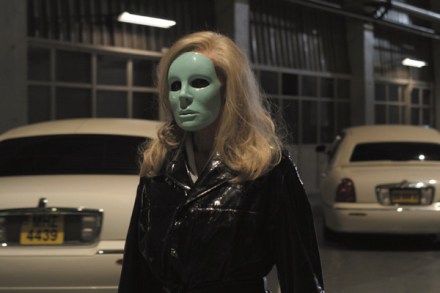
Holy Motors is so mad, deranged, lunatic, bonkers, cuckoo and away with the fairies that, if you were on a bus, and saw it boarding, you’d pray it didn’t sit next to you, although, knowing your luck, it probably would. That said, maybe you shouldn’t be quite so prissy and stand-offish. This film is a wacky ride, as well as a crazy, insane and off-the-wall one, but it is also peculiarly involving, exhilarating and unforgettable. I am still picking it out of my teeth, as if it were yesterday’s lamb chop, unlike the film I saw last week, whatever it was. (Was it good? Did I like it?) This is written and directed by the French auteur Leos Carax, who hasn’t made a full-length film for over a decade, and is obviously a bit of a one.