Deborah Ross

Deborah Ross is the chief film critic of The Spectator

Deborah Ross: The Selfish Giant is not fresh, but it’s superbly performed

From our UK edition

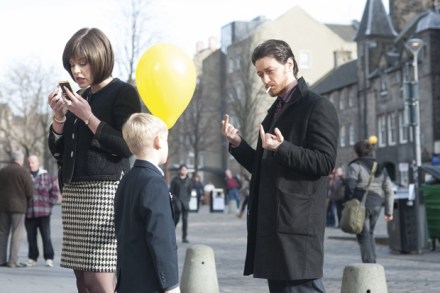
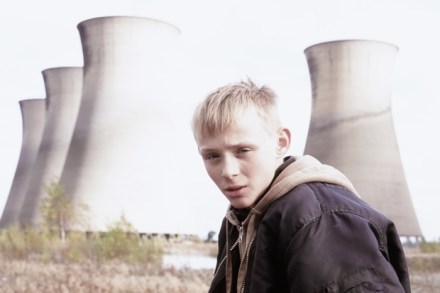
The Selfish Giant is a British social-realism film in the tradition of all such films from Kes onwards, so it never feels particularly fresh, but it does feel real and true, is superbly performed, and it does pack quite an emotional punch. I had to gather myself afterwards, and I’m still gathering myself, and may be gathering myself for some time to come. So it’s good at what it does, even though what it does has been done before. At least I think that’s what I’m trying to say. I’m never really that sure. This is the second feature from Clio Barnard, whose first, The Arbor, was a portrait  of the Bradford playwright Andrea Dunbar, inventively told by fusing lip-synching with  first-hand testimonies.
Tom Hanks is the greatest actor alive

From our UK edition

The main thing you should know about Captain Phillips is that it really puts you through the wringer. It’s based on the true 2009 story of the hijacking of a US container ship by Somali pirates, and the Navy Seal rescue mission that ensued — pirates, a word of advice: if you are going to kidnap Tom Hanks, America is simply not going to let you get away with it — and my heart was in my mouth throughout. It is nail-bitingly exciting, even if you know the outcome, and I think I can safely say it’s a better film than the one I thought I was going to see. Or, to put it another way, when I initially saw ‘Captain Phillips’ was about to open my first thought was: ‘Gosh. I wonder who is playing Princess Anne.

Four good reasons not to watch The Fifth Estate

From our UK edition

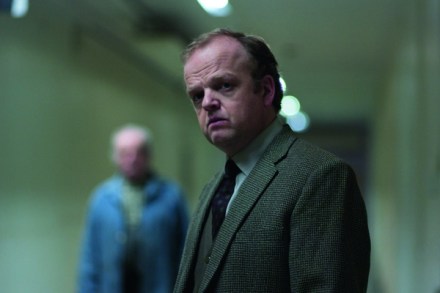
Just how interesting you find The Fifth Estate may entirely depend on how interested you are in the whistle-blowing site WikiLeaks and its founder Julian Assange, in the first instance. This does not do what Senna did, for example, or what The Social Network did, and grip you in the places you didn’t know you could be gripped with a subject matter you’d no idea could be gripping. It’s not like that and I’ll tell you for why, in bullet points, because I’m just in a bullet-y mood today, and if you don’t use your bullet points — we are all allocated a certain amount at birth — they will start to atrophy and rot.

I watched Filth from behind my hands. It’s ghastly and unpleasant, but what I saw of it was brilliant

From our UK edition

People are generally saying Filth fully fulfils the promise of its title and is not for the faint of heart or queasy of stomach or lily of liver and, alas, I am all three, in spades. (My liver is, in fact, so lily-ish it may be a wonder of medical science.) Rape. Anal Sex. Violence. Drink. Drugs. Masturbation. Vomiting down yourself. There’s a part of me that would like to say that’s the average Saturday night in our house, but the truth is we generally watch The X Factor and record Strictly. So I endured this film, from behind my hands, rather than enjoyed it, but in the enduring, was there some reward, as can sometimes happen? We can work that out as we go along. No advantage in rushing such things.

Woody Allen’s new film will so knock your socks off, you will never retrieve them again

From our UK edition

Blue Jasmine is the latest film from Woody Allen who, at various stages of his career, has been declared on-form, off-form, sliding-from-form, returning-to-form and, for all I know, as I don’t follow these matters closely, wearing form like a carnival hat with tinkling bells, but there is no need to bother with any of that. All you need know is Blue Jasmine is brilliant. It’s brilliantly written, directed and observed; it’s brilliantly watchable, if not mesmerising; and brilliantly performed, particularly by Cate Blanchett, who will knock your socks off, and may knock them off so explosively there is every chance you will never retrieve them again. (They might be knocked off all the way to kingdom come, for example.

About Time review: If Richard Curtis is brilliant at anything, it’s Upper Middle Class Lifestyle Porn

From our UK edition

The easiest thing would be to sneer at Richard Curtis’s new film About Time, and so I will a little, or maybe significantly. It’s hard to know at this point, as I’m up here, at the beginning, and the end is down there, at the bottom, and who knows what will happen in between. It’s as much a mystery to me as to you. However, pre-sneering, in whatever amount, I should make clear that if you have enjoyed Curtis’s previous films— Four Weddings, Love, Actually, Notting Hill, but not The Boat That Rocked, which we’ll pretend never happened, as that’s best all round — you will enjoy this. It’s more of the same, pretty much, as our bumbling hero searches for love, bumblingly.

Racking up the tension

From our UK edition

Berberian Sound Studio is a film about a man who can’t get his expenses repaid and hurts a lot of vegetables — don’t worry, the RSPCV is on to it — although I suspect there may be rather more to it than this. I suspect there are hidden meanings. I suspect there are references to those nasty Italian giallo films of the Sixties and Seventies. I suspect it is, at least in part, a love letter to old, analogue sound technology. This is, in short, one of those arthouse tarts, always winking and hitching its skirt to those in the know. Yes, annoying for those not in the know — stop winking! Stop hitching your skirt! Have you no pride? — but I wouldn’t write it off all the same. It’s brilliantly creepy, whatever.

A painful but brilliant film: Deborah Ross on Maisie’s betrayal

From our UK edition

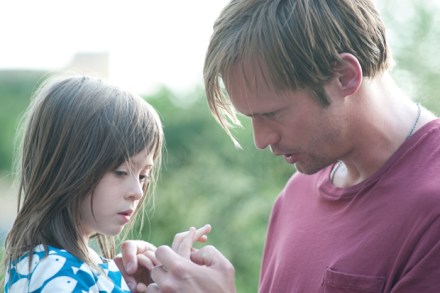
What Maisie Knew is an adaptation of the Henry James 1897 novel, updated to Manhattan in the now, and is described in the bumf I received as ‘heart-warming’, which is utterly strange, as it’s a child-caught-in-the-middle drama, and just so painful. It’s compelling. It’s exquisitely done. It’s brilliantly acted. (According to the most recent figures,  the chances of Julianne Moore turning in a duff performance are 0.00 per cent.) But it’s not a comfortable watch, which should not put you off, of course. There must be discomfort at the cinema just as there is discomfort in life, as Socrates might have said, if he had lived to experience film.

Kuma would shine at any time of the year

From our UK edition

Mid-August is a hopeless time for films; so hopeless, useless and bleak, if I don’t use three words when one would have done, I am just never going to fill up this space. The assumption is people don’t wish to visit the cinema on summer evenings, or they are on holiday (I wish!), so the studios put out all their rubbish. This week sees the opening of Bachelorette (a Bridesmaids rip-off), Planes (a Disney film, originally intended for DVD only) and The Lone Ranger, which is said to be so lousy, terrible and awful the producer is going to be hung from a lamppost on Sunset Boulevard, as a warning to all other Hollywood producers.

It’s possible that Deborah Ross left her critical faculties outside the screening room

From our UK edition

The thing is, I love the character of Alan Partridge so much it may well be that, when it came to this film, I left my critical faculties outside the screening room, possibly somewhere along Wardour Street. If you see them, might you return them? I would hate them to fall into the wrong hands, or be sold to the highest bidder. Anthony Lane of the New Yorker, for example, has always been after my critical faculties and the late film critic Roger Ebert was once quoted as saying he’d pay anything for them; anything. Luckily, he was American, and they would never be allowed to leave the country, but you see what I’m saying? Why it’s important I get them back?

Sandra Bullock must be blindfolded when she picks her movies

From our UK edition

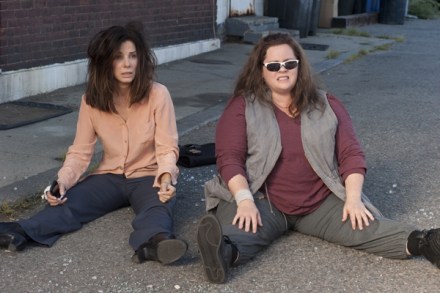
Sandra Bullock is a highly watchable actress and she seems like she’d be fun to hang out with — I have no idea why I think that; I just do — but, Jesus, how does she choose her movies? With a blindfold and pin? Sure, she won an Oscar for The Blind Side, during which she dragged around that poor black boy as if he were a tired old circus bear, and there was Speed and After You Were Sleeping, but The Proposal? Premonition? Speed 2? Two Weeks Notice? I suppose you think I’m going to add: ‘And now this?’ which I am, although not unreservedly. It’s not all bad. It’s possibly only half bad. Perhaps when she was poised with pin, the blindfold shifted? And she saw out of one eye, at least?

At last, a film about proper women who aren’t just drippily searching for love

From our UK edition

Frances Ha will make many spit ‘Frances...Bah!’ but I won’t be among them. Yes, it is rather kooky, and highly self-conscious, with its New Wave references and its Woody Allen influences (it’s a serious, black-and-white, Manhattan comedy), but it’s also sweet, endearing, touching, and features proper women you can actually believe in, and who aren’t just drippily searching for love, which is something of a novelty. Plus, it comes in at under 90 minutes, which is totally great. I was over the moon about that. You know, when I am appointed Professor of Film Studies somewhere, as is still only a matter of time, the first thing I will tell my students, once we’ve dealt with the New Waveyness of the New Wave — Goddard: he was a one!

Wadjda is Saudi Arabia’s first feature-length film and is shot by a woman

From our UK edition

Wadjda is the first feature-length film to come out of Saudi Arabia, and was shot by the country’s first female director, and although people will talk about how it breaks boundaries and how pioneering it is, that’s not what you most need to know. What you most need to know is that it’s fascinating, involving, moving, an entirely excellent film in its own right and, therefore, rather unlike The World’s End, which isn’t. It also has a few good jokes in it, which is rather unlike The World’s End, too. And it treats women as worth more than a quick shag in a toilet, which The World’s End doesn’t, just so you know.

Yes, ‘The Moo Man’ is a film about cows. But it is absolutely amazing

From our UK edition

Pacific Rim is a giant monsters v. giant robots film and although written and directed by Guillermo del Toro, who made Pan’s Labyrinth, which was sublime, it’s still just a giant monsters v. giant robots film, and now we have dealt with that, we can move on to The Moo Man. The Moo Man is not like Pacific Rim. There are no giant monsters seeking to destroy the world, and no giant robots seeking to protect it. There is no CGI, no 3D, no battle scenes, no violently thumping soundtrack, no action — bar a day trip to Eastbourne — and no token woman who is feisty, as is the way with token women when the alternative might mean having to actually give them a fair crack of the whip.

Emma Watson shines in The Bling Ring

From our UK edition

Sofia Coppola’s latest film is not an action adventure, or a supernatural horror, or a stoner comedy, just so you know. Instead, it’s about the emptiness of the celebrity lifestyle just as her Lost in Translation was about the emptiness of the celebrity lifestyle, and Somewhere, and Marie Antoinette, in its way. Write about what you know, everyone says, and fair play to Sofia. Being ‘Hollywood Royalty’ herself, she can’t be any stranger to excess, and she has thought about it, and keeps thinking about it, and The Bling Ring is, I would say, and for what it’s worth (not much, I suspect) her best film to date. It’s taut, makes its point without hammering it home, well acted (particularly Emma Watson; I know!) and visually delicious. The Louboutins!

Film review: I was right: a British thriller starring Jason Statham is to be avoided

From our UK edition

Hummingbird is a British thriller starring Jason Statham which may be all you need to know to keep away and if it is, can’t say I blame you. Statham is the actor who rose to fame as one of Guy Ritchie’s entourage and now plays bad-ass, hard-boiled action heroes of the kind who can take on whole armies and crack open all their heads and emerge breathless, admittedly, yet with only one small graze. I normally avoid his films and films of this type as they are just not my thing — you’d think anyone who could take on whole armies and emerge with just a single graze would be interesting, but not so much — yet I was seduced into giving it a shot. It looked promising.

Review: Stir yourself — I am Nasrine is far from an Earnestly Grim Wrist Slitter

From our UK edition

I Am Nasrine is one of those small, low-budget films showing somewhere awkward on a day and time that probably aren’t ideal but you can’t expect everything in life to be handed to you on a plate, and it’s worth the effort, if you can stir yourself sufficiently. (Can you? Most people I asked said you couldn’t, but I believe in you, as I always have.) Its writer-director, Tina Gharavi, who is Iranian-born but is now a lecturer in Digital Media at Newcastle University, was nominated for a Bafta for most outstanding debut, and although it is one of those films about the immigration experience, and a young woman who flees her home country for one of those better lives that could well turn out worse, it’s not what I would call An Earnestly Grim Wrist Slitter.

Michael Douglas is 68 – and for the first time, as Liberace, vaguely sexy

From our UK edition

Behind the Candelabra is Stephen Soderbergh’s film about Liberace, starring Michael Douglas and Matt Damon, and already you will have heard two things which, naturally, you will need me to confirm so you can move on with your life. These two things are: 1. It is fabulous. 2. The film was ultimately funded by the television channel HBO, as Hollywood declared it ‘too gay’. I will now deal with both: 1. Yes. It is fabulous. No other word for it, unless that word is ‘glorious’. 2. True and, if I had the time, I would go to Hollywood and knock their heads together.

Gemma Arterton’s new vampire flick, Byzantium, is melancholia at its most trying

From our UK edition

Neil Jordan’s Byzantium may well be stylish and moody — so moody, in fact, I wanted to send it to its bedroom with the instruction it could only come down again when less sulky — and Gemma Arterton and Saoirse Ronan may well be fine actresses, but yet another vampire film? Really? True, it plays with the tropes a little. There’s a mother and daughter twist. There are no pointy teeth, just pointy thumbnails. But that thing vampires do, after they’ve sucked human blood and then look up, with blood-smeared lips and chin? That’s here, plentifully, and it always makes me wonder why vampires have such bad table manners. Weren’t they taught any, while growing up?

Film review: Drifting with Something in the Air

From our UK edition

Something in the Air is a French film set in Paris in 1971, three years after the uprisings of June 1968; a time when civil unrest was still ongoing but starting to tail off. In France, this film is titled Après Mai, which makes a lot more sense, as it speaks of an aftermath, and I don’t understand why anyone imagined it a good idea to rename it with something quite so nebulous, although I’m guessing there were fears the American market would be too shallow and dumb to get it otherwise, which is always a worry. (Hark at me! When I read recently, ‘Sharon suffers stroke’ I gave no thought to the former Israeli PM and thought instead: ‘Who’d have predicted she’d outlive Ozzy?