Deborah Ross

Deborah Ross is the chief film critic of The Spectator

Allergic to blockbusters? See Wakolda

From our UK edition

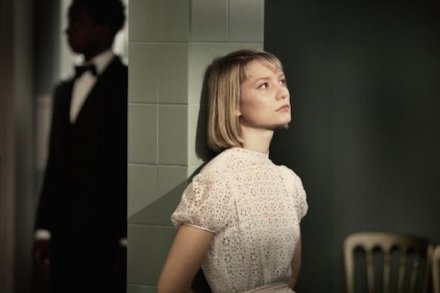
Wakolda is not a sunny film for a sunny day, just so you’re aware, but as there is so little else around — August is a hopeless month for films; August is a dumping ground for the sub-par — you are going to have to take that on the chin, bear it as best you can, and while this is not sunny it is, at least, masterfully made. Set in Argentina in 1960, it’s a fictional imagining of how a German doctor insinuates himself on a family, and how that doctor turns out to be Josef Mengele, the ‘Angel of Death’ from the Nazi concentration camps. It’s not a thriller exactly. Instead, it is an unsettling, atmospheric, mood-driven piece, which, I should add, just so you’re aware, also features creepy dolls. That’s how un-sunny it is.
Moon Indigo: an all-you-can-eat buffet for the eyes – but your brain will feel famished

From our UK edition

Your enjoyment of Michel Gondry’s Mood Indigo may entirely depend on how much visual whimsy you can take, what your threshold might be, whether you can go with it or whether it wears you out and brings you to your knees. There’s animated food and little mice that zip around in cars and eels wriggling out of taps and rubbery human limbs that elongate and doorbells that scuttle like frenzied cockroaches — sit on that, Wes Anderson! You too, Terry Gilliam! — but it may be whimsy at the expense of coherence, feeling, story. My threshold is not that high, I now know.

The problem with Believe is you simply won’t believe any of it – unless you’re a child

From our UK edition

The trouble with Believe is that, unless you are ten years old or under, which I’m assuming you are not, you won’t believe. Not for a second. Not for a minute. Not a word of it. This doesn’t see itself as a children’s film and isn’t being marketed as a children’s film, which means I can’t be kind and generous about it, as I might be about an actual children’s film, if I were in a charitable mood. (Rare, but it can happen. Or at least I think it did happen, once.) The film had been ‘inspired by actual events’, or so I’d read, and follows Sir Matt Busby, the legendary Manchester United manager, coming out of retirement to coach a group of young working-class lads.

How did a New York nanny become one of the great photographers of the 20th century?

From our UK edition

Finding Vivian Maier is a documentary about the American nanny who led a wholly secretive life as a photographer and who, posthumously, has been described as ‘one of the greatest photographers of the 20th century’. It’s a good story, which is well told here, and told breezily (83 minutes), which we like. But I’m not convinced the quote from Michael Moore on the poster — ‘Amazing...this should be seen with other people, in the dark, on a big screen’ — is necessarily true. Ms Maier has already been the subject of Alan Yentob’s Imagine strand on the BBC, and this film could just as happily be viewed on TV as in the cinema, I think.

A miracle: a three-hour film that flies by

From our UK edition

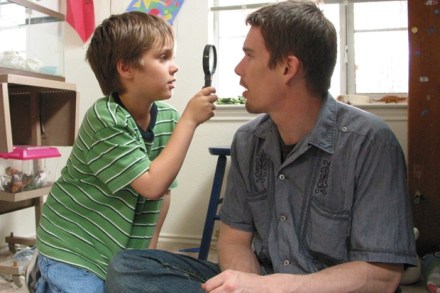
Richard Linklater’s observational chronicle, Boyhood, was 12 years in the making and is 166 minutes long — that’s nearly three hours, in real money — and I wasn’t bored for a single moment. Isn’t that miraculous? Have you ever heard the like? Me, who is generally bored at the drop of a hat? Me, who is generally bored before the hat even hits the ground? But those 166 minutes (still nearly three hours, in real money) just flew by, as can happen, when you are utterly engrossed. Who knew? This is the story of a family, as told through the eyes of a boy, Mason (Ellar Coltrane), who ages from six to 18, in real time.

The 100-Year-Old Man Who Climbed Out of a Window and Bloody Well Should Have Disappeared

From our UK edition

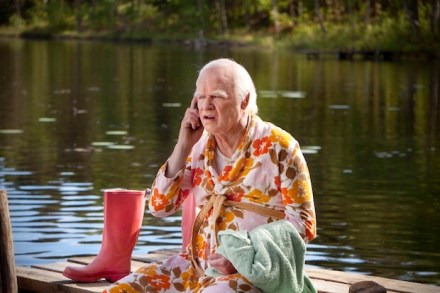
If it were up to me this would be called ‘The 100-Year-Old Man Who Climbed Out the Window, Fell, and Was Never Heard From Again’ as this way we’d be out of the cinema in two minutes flat, no hard feelings. Alternatively, if The 100-Year-Old Man Who Climbed Out the Window and Disappeared had actually disappeared, then I could have lived with that. But, no, the 100-year-old is in every frame, more or less, and this is a 100-year-old who will quickly get on your wick, just as the film itself will get on your wick. Based on the Swedish bestseller of the same name, by Jonas Jonasson, it’s a monotonous, one-note caper that will have you wishing: OK, so he doesn’t fall, but couldn’t he change his mind, and just climb back in?

Walking on Sunshine: the feel-ennui musical of the year

From our UK edition

As far as ‘jukebox films’ go, Mamma Mia! was a riot, Sunshine on Leith was tolerable, just about, while Walking on Sunshine is a step too far and brings the genre to its knees.It’s being billed as ‘the feel-good musical of the year’ although, bereft of a single original idea, ‘the feel-ennui musical of the year’ may be the better fit. Also, ‘I-feel-really-really-bored-and-quite-insulted-and-also-rather-repulsed-and-I-keep-checking-my-watch-in-the-hope-it-will-be-over-soon’ would cover it quite adequately. Set to 1980s hits (‘Holiday’; ‘Don’t You Want Me’; ‘Girls Just Want to Have Fun’, etc.

A funny weepie that paints itself into a contrived corner

From our UK edition

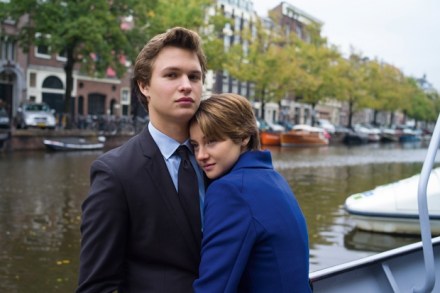
The Fault in Our Stars, which is based on the bestselling young-adult novel by John Green, is about two teenagers with cancer who fall in love and it’s a sort of Love Story for younger people, God help them, although unlike Love Story it’s not set to mislead an entire generation. (In my experience, love means having to say you’re sorry constantly, and at least three times before breakfast.) This is funnier — it’s funny about the Big C; that’s its USP — but it is still a weepie and yes, I did weep, as I’m not a cold-hearted monster (am I not still recovering from Marley & Me?

Belle has everything going for it – except for a decent soundtrack or script or plot or acting

From our UK edition

Belle is based on the true story of Dido Elizabeth Belle, the illegitimate, mixed-race daughter of a sea captain and his African slave mistress, who was brought up as a free gentlewoman by her great uncle, Lord Mansfield, at Kenwood House, Hampstead, in the 18th century. How fascinating, you might think. You just can’t mess up with a story like this, you might also think. It has everything going for it; a costume drama fulfilling all our beloved Jane Austen tropes (class, gender, etc.) with the added charge of race. How could it go wrong? Alas, all too easily. This is disappointingly lifeless, and shallow, and the soundtrack! So many violins, you’ll leave feeling as if you’ve been quite violently smacked around the head with one. Repeatedly.

Grace of Monaco: a big, glistening, strutting, irresistible turkey

From our UK edition

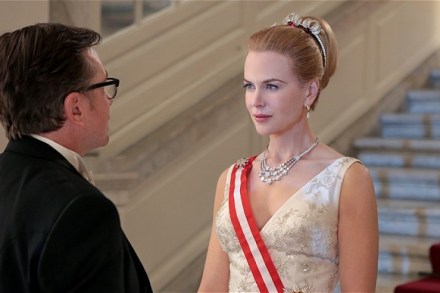
Grace of Monaco, the Grace Kelly biopic starring Nicole Kidman, is an absolute joy, and I highly recommend it. Unless you live under a rock, which I think I might envy (dark, quiet, peaceful, but maybe dank?), you’ll know it was savaged at Cannes, but don’t let that put you off, as this isn’t just some middling turkey; this is a big, glistening, strutting turkey. This is one of those turkeys so jaw-dropping it achieves grandeur of the kind I find quite irresistible. Also, as a reviewer, sensationally bad films are always a pleasure because they are easy to write about — I plan to knock this off in under ten minutes — and you can take any number of cheap shots.

Avoid the latest commercial juggernaut and go off-road with Run & Jump

From our UK edition

When you see the latest corporate entertainment juggernaut hurtling at you, what are your options? When I saw X-Men: Days of Future Past (what?) hurtling at me, I thought: I can either jump aboard or I can swerve off-road. In this instance, I chose to swerve off-road — I’ve seen Godzilla; I’ve done my time — and although it could have ended in disaster, and I could have been hurled into a ditch or something, it actually worked out great, as I swerved off-road straight into Run & Jump, which is a lovely film, just lovely, and although nothing gets blown up, it does star Maxine Peake, whose performance may very well blow you away.

The humans in Godzilla are so bland and dull you may well find yourself rooting for the monster

From our UK edition

Godzilla is from the director Gareth Edwards, a Brit whose first film, Monsters, truly put him on the map, as it daringly played with the genre, and incorporated a plausible human love story, and the difference between that film and this may be summed up as follows: whereas Monsters was a clever and inventive film made for relatively little money ($500,000), this is a quite stupid film made for a lot of money ($160 million). Oh dear. It sounds like I’m wearing my disapproving hat again, although I don’t always. For example, I take it off for special occasions, and sometimes even in bed. (Sometimes yes, sometimes no; depends.) What’s it all about?

‘Sometimes audiences applauded Frank; sometimes they threw stuff at him’

From our UK edition

Frank is a music biopic, but only of sorts, as it is not at all like your average music biopic. It’s not that processional march we have come to expect; that chronological story of tough beginnings, the moment of discovery, tour montages, calendar dates flying, and finally making it big. In fact, this is about a musician for whom making it big would be the death of him, and very nearly is. Also, it stars Michael Fassbender wearing bad knitwear and a giant paper-mâché head. So it is not Walk the Line or Dreamgirls or The Karen Carpenter Story, is what I’m saying, and it is profoundly more interesting and affecting for it.

Blue Ruin is unwatchable, bloody – but, from what I saw, rather good

From our UK edition

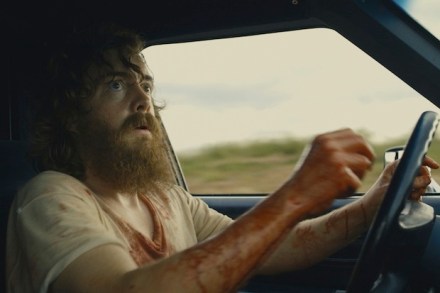
Blue Ruin is a low-budget yet highly accomplished revenge thriller although whether you have the stomach for it is another matter. I do not have a strong stomach, as we know, and as I braced myself for the next startlingly bloody burst of violence, having yet to recover from the last startlingly bloody burst of bloody violence, I was often just longing for it all to be over. I like excellent film-making as much as the next person but, ideally, I would also like to be able to watch it. Stuff you don’t need to know but might like to: this has been a huge festival hit, winning several prizes, and much acclaim for its writer-director Jeremy Saulnier, who had previously only made corporate videos and one small feature (Murder Party).

If The Other Woman is a box-office hit, I’m going to have to top myself

From our UK edition

The Other Woman is not just an extremely bad film but also a wholly reprehensible one (she says, with her most disapproving hat on). It’s a comedy, although if you find any of it funny, that’s all I will ever need to know about you, but its unfunniness isn’t what upsets me so much. It’s the dishonesty. It’s being sold as a film that ‘celebrates female friendships’ and ‘is absolutely a feminist movie’ (Cameron Diaz) even though it is an insult to all women everywhere from beginning to end. Who doesn’t realise this? Do they expect us not to realise this?

Waiting for Godot – but with plot

From our UK edition

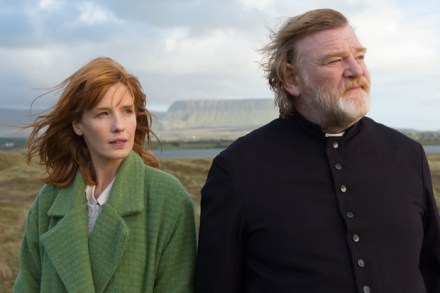
If the very first scene of Calvary doesn’t immediately draw you in there’s every chance there is something seriously wrong with you and I would urge you to book an appointment with your GP. It is a terrific opening and it takes place in Ireland, in a Catholic church, within the dark, intimacy of a confessional box, as Father James (Brendan Gleeson) listens to a voice from the other side of the partition recounting how he was repeatedly sexually abused by a priest when he was a child. This parishioner wants revenge, but as his abuser is now dead, he will kill Father James instead, in a week, on the beach. What better way, in fact, to get back at the Church than to murder a good priest, an innocent, and on a Sunday too?

The Double will stay in your mind, like a bit of food caught in a tooth

From our UK edition

I should warn you that if you go see The Double it is one of those films that will trouble you long after the event. It will trouble you at breakfast and it will trouble you at lunch and it will trouble you as you go about your business, whatever that might be. Yes, a pain — haven’t I got enough troubles of my own? Haven’t I got enough to think about as it is? — but it is so singular and compelling, there is every chance it is worth it. It’s directed by Richard Ayoade, his second feature after the terrific Submarine, who is known to TV viewers as Moss from The IT Crowd as well as being a regular guest on those comedy panel games that have been told to include more women, like we don’t have better things to do.

What backing singers are really thinking behind the ‘ooh, ooh, oohs’

From our UK edition

Have you ever looked at backing singers and thought: what is their story? Do they or have they ever prayed for their time to come? As they are going ‘ooh ooh, ooh ooh’ behind Kylie are they thinking, ‘I want to kill Kylie’? Do they mind that no one knows their name? Do they ever ponder why it’s so often white artists with black backing singers and never the other way round? I have often wondered about all this, and now realise if I’d stopped idling over such questions, got off the sofa and done some digging, I could now be in possession of an Oscar. I’m a fool to myself; I truly am.

These screen suicides deserve a nudge off the ledge

From our UK edition

A Long Way Down is about four would-be suicides who meet for the first time on the top of a tall London building, intending to jump, but instead of jumping they decide to hang around and annoy the hell out of us for the next 90 minutes. Had I known what I know now, and had I also been on top of that tall building, I might well have given them all a hefty nudge. Based on the Nick Hornby novel, which, in itself, may not be the most successful of Hornby’s novels, it opens on New Year’s Eve on top of that building as our suicidal quartet truck up. Firstly, it is Pierce Brosnan as Martin Sharp, a former breakfast television star whose fling with a 15-year-old — ‘I thought she was 25!’ — led to a spell in prison and the end of his career and marriage.

Are you a lobotomised teenager? Then Need for Speed is for you

From our UK edition

OK, Need for Speed, if we must, and we must because I sat through it (running time: 130 minutes) and do not see why you should be spared. Need for Speed is based on a video game and here is the plot synopsis: ‘Vroooooooooom! Vroooooooooom! Vrm, vrm, vrm...VROOOOOOOOOOM!’ And it’s the sort of ‘Vroooooooooom!’ which vibrates behind your forehead, making it feel as if it may blow it off, while also making it hard to doze or zone out mentally, which is a pain.