Deborah Ross

Deborah Ross is the chief film critic of The Spectator

Doing the wrong thing

From our UK edition

Like The Revenant and The Big Short, Spotlight is yet another Oscar contender ‘based on true events’ — although it has now been suggested that The Revenant was 99.7 per cent made up. (Does this matter? Only, I suppose, in the sense that you should know what you’re watching.) But we’re on firm ground with Spotlight, where the events — the Boston Globe’s uncovering of systemic child abuse by Catholic priests in Massachusetts — are a matter of record, although how you make a film about something so awful, I don’t know. Personally, I wanted the film to give it to the Church with both barrels, and let rip with fury, but it’s too restrained for that.

On the money

From our UK edition

The Big Short is a drama about the American financial collapse of 2008. It talks you through sub-prime mortgages, tranches, credit-default swaps, mortgage-backed securities, collateralized debt obligations ...and, yes, I just bored myself to tears typing that list. I had to prop my eyes open with matchsticks typing that list. I would even propose that I was more bored typing that list than I’ve ever been in my whole life, which is saying something, as I saw Monuments Men. And, previously, I would have proposed that there is no way you could ever make any of the above fascinating or compelling or sexy, let alone scathingly funny. But The Big Short is fascinating, sexy, compelling and scathingly funny. It’s a miracle.

Endurance test

From our UK edition

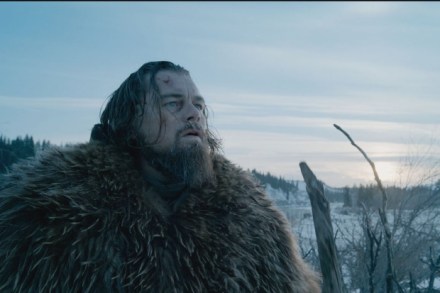
The Revenant is a survival-against-the-odds film that so puts Leonardo DiCaprio through it I bet he was thinking, ‘I wish I was back on that boat that went down.’ He is mauled by a bear. Viciously. He is buried alive. He eats still-throbbing, blood-dripping raw liver, and quite forgets his manners. (Wipe your chin, man; there’s never any excuse.) He cauterises his own wounds, falls off cliffs, spins down rapids, slits open a dead horse and sleeps within for warmth. The film recently triumphed at the Golden Globes — best film, best director (Alejandro G. Iñárritu), best actor (DiCaprio) — but all I was thinking was, ‘Oh God, please let this be over soon.’ Faint hope.

Mad about the boy | 7 January 2016

From our UK edition

This is the week of The Hateful Eight, the latest Quentin Tarantino film, but Tarantino being Tarantino, there were no screenings for reviewers, so I’ve yet to see it. There also seems to have been some falling out with the Cineworld, Picturehouse and Curzon chains such that their cinemas won’t be showing the film at all. Tarantino, such a pain, and if we were to meet, which I admit is unlikely —we move in very different circles — I would have no hesitation in telling him so. What’s he going to do? Slice off one of my ears, nail me to the wall with the other, stroll off to lunch, then come back and pump my chest full of bullets? On the other hand, I could just keep quiet, I suppose.

Bad manners | 31 December 2015

From our UK edition

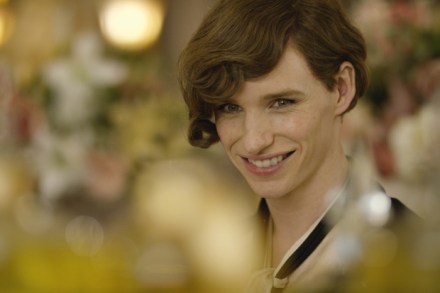
The Danish Girl is based on the true (if heavily revised and simplified) story of Lili Elbe, one of the first people ever to undergo sex reassignment surgery, but while the timing of this is right — transgender issues are surely the next equality frontier — the film itself somehow isn’t. It’s OK. It’s probably passable, if you’ve got two hours to kill. But it’s repetitive, excessively polite and also, given the subject matter, surprisingly dull. It opens when Lili is still Einar, married to Gerda, and if the two ever came round for dinner you’d be mouthing over their heads: ‘Who invited them?’ And: ‘Oh boy, do you think they are ever going to leave?

Grandma: a feminist comedy that punches magnificently above its weight

From our UK edition

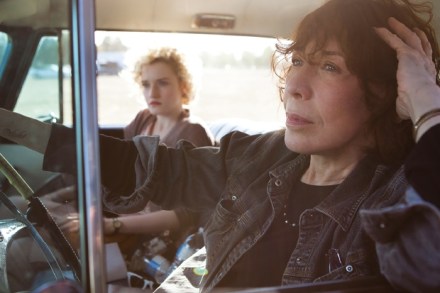
Apologies if you were expecting a review of Star Wars here, but Disney is not allowing critics access prior to the film’s opening on the 17th, and anyway, we’ve got Grandma, which was made for $600,000 in 19 days and has a running time of 79 minutes and stars a 76-year-old, so there is that. It’s also a feminist comedy with a plot driven by the need for an abortion, and if that doesn’t win you over, I’m not sure what else to say. It’s terrific? It’s small-scale, but punches magnificently above its weight? I laughed, and also cried? I could say that and have just said that, because it’s all true. Grandma stars Lily Tomlin and there is every sense this wouldn’t be a film unless it starred Lily Tomlin because she is the film, basically.

I wanted to beat it with a stick and cry, ‘Get on with it!’: Carol reviewed

From our UK edition

Carol is an easy film to admire — so beautiful to look at; entirely exquisite — but such a hard film to feel anything for. Based on Patricia Highsmith’s 1952 lesbian novel The Price of Salt, this is a love story that, here, doesn’t venture below the waist, literally, emotionally or metaphorically. It glides across its own glittering surfaces, never investigating what may lie beneath, and playing restraint to the point of inertia. Its director, Todd Haynes, has spoken about how hard it was to make a Hollywood film about two women, starring two women, so I feel bad delivering the news, but deliver it I must: what was taboo in ’52 may not be that exciting today.

Sins of the fathers | 19 November 2015

From our UK edition

This is a documentary in which three men travel across Europe together, but they’re not pleasurably interrailing, even though there are often times they probably wished they were. For two of them, Niklas and Horst, the journey is about confronting their fathers, who were high-ranking Nazi officials responsible for the deaths of millions of Jews, while for the third, the eminent British human-rights lawyer Philippe Sands, it means visiting the place where his grandfather’s family was exterminated. This place, Galicia, which straddles the modern-day border between Poland and Ukraine, is the exact place my own grandmother’s family were murdered. Her father lost every one of his seven siblings. She lost every aunt, uncle and cousin.

Was Steve Jobs really a genius?

From our UK edition

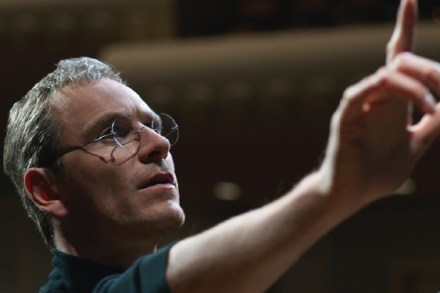
Steve Jobs is a film about a man in whom I have little interest, but for 120 minutes I was at least quite interested, which is a result. But this doesn’t make it a great film, and in many ways it isn’t. It never quite pins Jobs down. It never quite works out what it wishes to say about him. That he was such a ‘genius’ it didn’t matter if he was also a bit of a dick? Or that it did matter, totally? Plus, the ending is calamitous. But it is well made, and the performances are ace, as is the dialogue, and I was kept interested, so the journey may well be worthwhile, even if the destination is not.

Lush, lyrical, exquisite

From our UK edition

Brooklyn is a wee slip of a thing compared to the Bond film, Spectre, and cost $12 million, as opposed to $300 million, but what it lacks in length, budget, pre-title stunt sequences, theme songs, sports cars, exotic locales, babes in stages of undress, villains with master plans, Omega watches, rooftops chases, speedboats and exploding buildings, it more than makes up for with real storytelling and real feeling, which you just can’t create from post-production CGI, don’t you know.

Shaken, not stirred

From our UK edition

Spectre is the 24th film in the Bond franchise, the fourth starring Daniel Craig, the second directed by Sam Mendes, and the first at not much of anything. Nothing new to report, in other words. It probably delivers what the die-hard fans want, but it is not like Casino Royale or Skyfall (no one talks about Quantum of Solace, by the way, because it’s assumed everyone involved was drunk) as it doesn’t deliver to those of us who never liked Bond, but then discovered that we did. Where has Bond’s interior landscape gone? Where is his woundedness? Where is the emotional heft? Who might we actually care about here? At least we open quietly, with Bond lying back in a meadow, simply watching the clouds float by... I’m kidding, of course.

Self-pitying, despairing, often delusional: the real Marlon Brando

From our UK edition

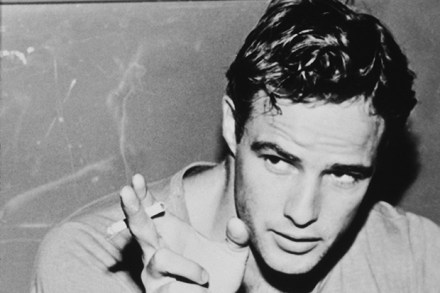
Listen to Me Marlon is a documentary portrait of Marlon Brando that has him burbling into your ear for 102 minutes, but if you have to have someone burbling in your ear for 102 minutes — and there is no law saying it’s obligatory — you could do a lot worse. This isn’t one of your regular documentaries. There are no talking heads, and it’s not blah-blah-blah and then he did this and then he did that and then his BMI got ridiculous, and so on. Instead, it is based on the hundreds of hours of personal audio tapes Brando made in his lifetime, which haven’t been heard until now, and which were uncovered by film-maker Stevan Riley, who wrote, directed and edited.

The Program could do with a good dose of performance-enhancing drugs

From our UK edition

The Program, as directed by Stephen Frears, is a biopic of Lance Armstrong, the American cyclist and ‘sporting hero’ who came back from cancer to win the Tour de France seven times before he was exposed as a drugs cheat. It is a thrilling fall-from-grace story, the sort that brings you out in goosebumps just thinking about it — to know you have cheated, to know you are about to be found out, to live with having been found out; how might any of this feel? This should have served Armstrong up on a plate, but it somehow doesn’t. It covers the ground, but it’s underpowered dramatically. It’s like watching a perfunctory documentary, acted out. It doesn’t give us the man. I wanted to see him unravel.

They do more than just ninny about in elaborate hats, thank Christ: Suffragette reviewed

From our UK edition

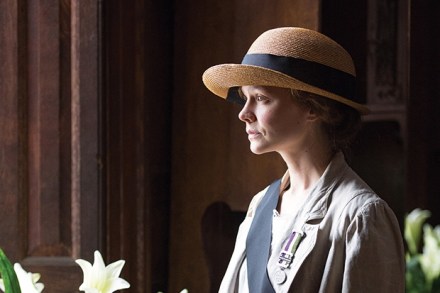
Suffragette is one of those films in which the parts are greater than the sum. Or, in this instance, the part, singular, as it’s Carey Mulligan’s central performance that gives this the emotional power it might otherwise lack, and the sense of involvement it might otherwise lack, and she therefore saves the day, thank Christ. This is a story that deserves to be told, and it would have been a tragedy had it entirely got away. Here we do, at least, see that these women didn’t just ninny about while wearing elaborate hats, as the stereotype sometimes has it, but were astoundingly heroic and brave, enduring endless rounds of prison and hunger strikes and being force-fed.

Home is where the heart is | 24 September 2015

From our UK edition

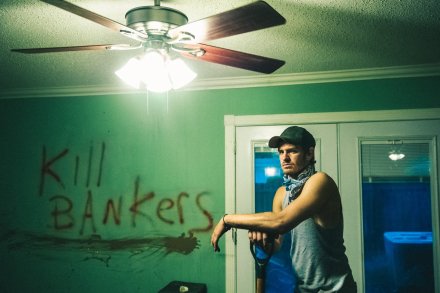
99 Homes is an American drama about house repossession. Bummer, you might think, but here is what you don’t yet know: films about house repossessions can be electrifying. Or at least this one is. Set in 2008 or thereabouts, against the backdrop of the real-estate bust and ensuing foreclosure crisis, this has much to say about a system that allows the rich to get richer while the poor get shat on (basically), but, above and beyond that, it is also nail-bitingly tense, as gripping as any thriller, and it will totally tear your heart out. In terms of impact, it may even be the Cathy Come Home of our times.

Dual control | 10 September 2015

From our UK edition

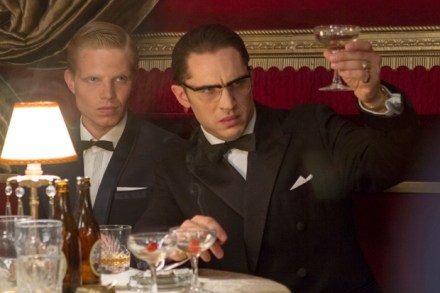
Legend is a biopic of the Kray twins starring Tom Hardy as Reggie and Tom Hardy as Ronnie, so it’s buy one get one free, and this offer will sell the film. It sold it to me, who would otherwise have little interest in the Krays, and was never moved to correspond with either (see Harry Mount's Arts Feature; I did once write to David Cassidy, but did not receive a reply). So it’s Hardy’s performance(s) that’s the draw, and Hardy is dazzling because Hardy is dazzling, not because Legend is especially dazzling.

Family matters | 3 September 2015

From our UK edition

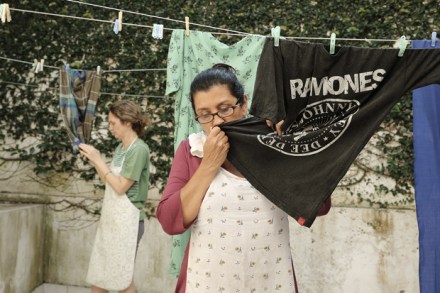
The Second Mother is a Brazilian film concerning a wealthy family, their live-in housekeeper, and the arrival of the housekeeper’s daughter, who throws the household into upheaval. If pushed, I’d say it’s about class and the female experience but, before you run for the hills, you should know it is socio-economic warfare beautifully written and it is socioeconomic warfare exquisitely performed and it is socioeconomic warfare undertaken with humour and heart, and if you’re still not sold, more fool you. The housekeeper — who is also nanny, maid, gardener and dog-walker — is Val, as played by Regine Chase, who is dynamite; who engages in the first frame and then simply carries on doing so.

All from nothing

From our UK edition

Andrew Haigh’s 45 Years stars Charlotte Rampling and Tom Courtenay as a long married couple whose relationship is disturbed by a letter relating to his first girlfriend, a German who died in the Swiss alps 50 years earlier. Aside from that, not much happens. A shopping trip to Norwich is about as exciting as it gets, on the action front. But this is one of those ‘inaction films’, as I call them, in which nothing happens, but everything happens; it is simple yet absorbingly profound. And it will resonate. It will resonate afterwards and it will resonate the next day and it will resonate the day after that. In fact I am still resonating, and rather wish I wasn’t, so I could move on with my own life. It’s rare for a film to affect me in this way.

Male order | 20 August 2015

From our UK edition

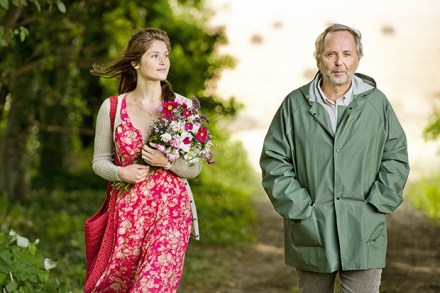
Gemma Bovery is a modern-day refashioning of Gustave Flaubert’s literary masterpiece Madame Bovary, and while such refashionings can work well in some instances — Bridget Jones as Pride and Prejudice, for example, or West Side Story as Romeo and Juliet, if we want to go further back —this is not one of those instances. Instead, this is that other kind of instance; the one that desperately makes you wish they’d left well alone. It’s based on the graphic novel by the writer-artist Posy Simmonds which, in turn, was based on her comic strip in the Guardian.

Great expectations | 13 August 2015

From our UK edition

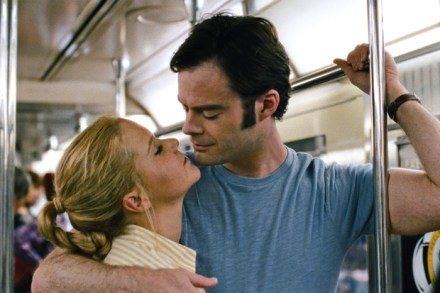
Trainwreck is a romcom as written and directed by Amy Schumer, the American comedy prodigy whose Comedy Central sketch show is properly hilarious and transgressive, from what I’ve seen. Indeed, if nothing else, I beseech you to watch one particular sketch, as viewable on YouTube, where a group of famous Hollywood actresses gather to celebrate one of their number’s ‘last fuckable day’, explained as follows: ‘In every actress’s life, the media decides when you’ve finally reached the point you are not believably fuckable any more....’ So my hopes for this film were sky-high. My hopes were that it would take the standard, misogynist romcom tropes and give them the pitiless thrashing they so deserve.