Deborah Ross

Deborah Ross is the chief film critic of The Spectator

Unequal in love

From our UK edition

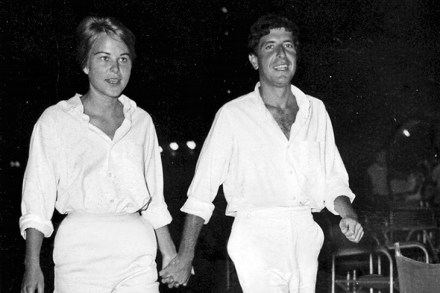
Marianne & Leonard: Words of Love is Nick Broomfield’s documentary chronicling the muse-artist relationship between Marianne Ihlen and Leonard Cohen. Her name comes first because Broomfield wished to tell her story but, even so, this could be titled Marianne & Leonard: And A Lot More On Him. Hard to fathom what the point is, really. As Broomfield was also her lover, I even thought: is he not just using her all over again? Still, it will appeal to Cohen fans — and who isn’t one? — plus you do get to see him shaving while off his head on acid, which is fascinating. How did he not ever cut himself? This is a conventional documentary combining talking heads with archive footage. We begin with Hydra, the Greek island that was an outpost for artists in the 1960s.

Beauty and the beasts | 18 July 2019

From our UK edition

The Lion King is Disney’s photorealistic CGI remake of the beloved, hand-drawn 1994 original that, for many children, offered a first introduction to the idea of patriarchal monarchy. (Relax. I’m not going down that road today. Just not in the mood.) And already it’s been trampled underfoot by many critics. It ‘monetises nostalgia’. It is ‘unnecessary’. It’s a ‘glorified tech demo’ from ‘a greedy conglomerate’. It is all those things, maybe, but I was mostly entranced anyhow. Also, I don’t understand why the two films can’t happily co-exist. Why have one film about patriarchal monarchy when… no, still not in the mood. Sorry. But I expect I’ll be business as usual next week.

The invisible man | 11 July 2019

From our UK edition

The Brink is Alison Klayman’s documentary portrait of Steve Bannon, Donald Trump’s former chief strategist (he shaped the ‘America First’ campaign, proposed the Muslim travel ban, etc.) and former boss of Breitbart News, the place where unsuccessful white men go to whine. The film follows him for 15 months from the autumn of 2017 as he attempts to organise far-right European parties into a ‘populist nationalist’ movement, and you may wish to look away when Nigel Farage smarms all over him as it’s not a pretty sight. (I’m a delicate flower, so could only watch from behind my hands.) But it is not insightful and, alas, utterly fails to capture the man behind the persona, if there is one. (He seems to have no personal life but did once try golf.

Meet the folks

From our UK edition

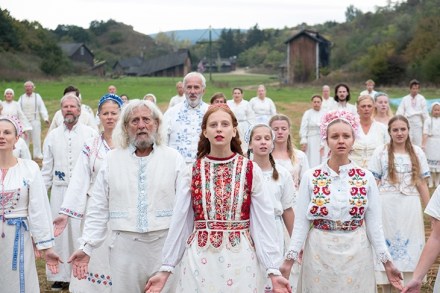
Midsommar is the latest horror film from Ari Aster, who made Hereditary, which starred Toni Collette and was a sensation. That was a domestic, claustrophobic scenario packed with jump scares — well, jump-ish scares; I wasn’t that scared, actually — whereas this is pastoral and relies more on building a quiet dread. It’s set in the remote countryside where a pagan community has its own superstitions and rituals and ‘elders’ and a maypole — and they are never good news, maypoles. This is clever and gripping in its own right, but it is also familiar and will certainly put you in mind of The Wicker Man. That is, the 1973 original, not the 2006 remake starring a deranged Nicolas Cage jump-kicking women in the throat, which we will never talk of again.

All you need is love | 27 June 2019

From our UK edition

Yesterday is the latest comedy (with sad bits) from Richard Curtis, directed by Danny Boyle, about an unsuccessful singer-songwriter, Jack, who wakes up to discover that he’s the only one who remembers the Beatles so can now steal all their tunes, if he’s of that mind. Unusually for Curtis, the lead is an Asian and there is no Bill Nighy (not a sign, not a whiff), which is an advance. And there are some funny moments — when Jack first plays ‘Yesterday’ to some friends, one sniffs: ‘It’s not exactly Coldplay, is it?’ But. It’s all intertwined with a romance that is not just generic but also intolerable.

Fallen god

From our UK edition

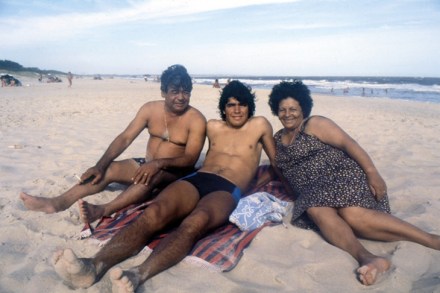
Diego Maradona, Asif Kapadia’s take on the poor boy from the slums of Buenos Aires who became a footballing god, is gripping if heartbreaking. It’s one of those scenarios where a stunning natural talent is exploited rather than protected. He even put me in mind of Judy Garland (minus the large and devoted gay following). But for all that, it is not wholly satisfying and it sent me scurrying to Wikipedia. What happened to his marriage? What were his ties with the mafia exactly? Plus, from what I read there, was he also a bit of a shit? Kapadia is an exceptional documentarian and, as with his previous films, Senna and Amy, he does not employ talking heads or any of that.

More, please

From our UK edition

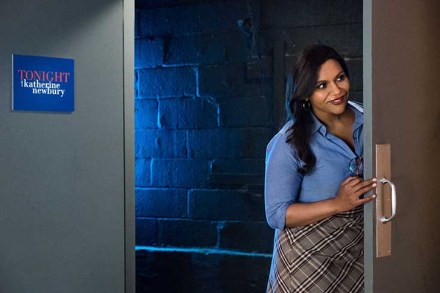
Late Night is a comedy starring Emma Thompson as a chat-show host in America whose ratings are in decline and who hires her first female writer. This is Molly, who is welcomed by the bank of male writers, not. They initially mistake her for someone who has come to take their food orders and greet her with: ‘I’ll have the soup.’ So it’s that. And then it’s quite a lot more of that, one way or another. And, you know, good. A woman-centred comedy that satirises the white male stronghold on comedy? Count me in! And it does have its terrific moments, plus Thompson is absolutely superb, and clearly having a ball.

O brother, where are thou?

From our UK edition

Sunset is French-Hungarian writer-director Laszlo Nemes’s follow-up to his astonishing Oscar-winning debut, Son of Saul. This time round the film is set as the Austro-Hungarian Empire is on the brink of collapse, and it is confounding, but not in a good way, as it’s as turgid as it is baffling. I’ve seen it twice now, and it was as turgid as it was baffling on both occasions. Disappointing, I know, but on the plus side the backdrop is a high-end millinery establishment, so the hats are fab. Truly. It opens seductively enough, in bustling Budapest in 1913. It opens as if this were a Dickens or Dostoyevsky, but it’s not that type of costume drama, alas, so best get that out your head.

Cheesy feat | 23 May 2019

From our UK edition

There have been claims that Rocketman, the biopic of Elton John, is ‘cheesy’ and ‘clichéd’, but, in truth, you do want these films to be a bit cheesy and clichéd. (In Bohemian Rhapsody if a record executive had never cried: ‘Nobody wants to listen to a six-minute opera song with words like “Galileo” in it!’ I’d have walked away in a huff.) So I’m fine with that — would you want a musical biopic without a montage of concert dates and newspaper headlines whirling past? — plus this is more than just that, as it’s also a fun, visually dazzling, extravagantly camp romp. And while the script is, generally, platitudinous, it still has its moments.

The invisible man | 2 May 2019

From our UK edition

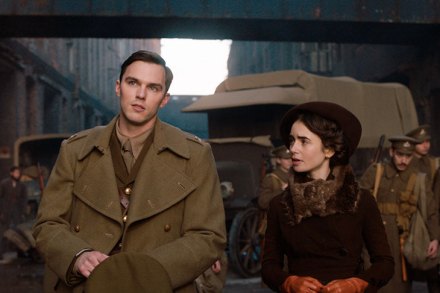
Tolkien is a biopic covering the early life of J.R.R. Tolkien (Nicholas Hoult) and it is not especially memorable. I’m even forgetting it as I’m trying to remember it. Yes, it’s one of those. Come back, come back, I need to remember you at least until the end of this review. But, no, it’s fading, fading, fading. Still, I’ll do what I can before it is fully gone, which may happen any minute now. This is quite the race against time, in fact. So, quickly, quickly. The film opens in 1916, during the first world war, with Tolkien, then 24, on the front line at the Battle of the Somme. As directed by Dome Karukoski, the horror of the battlefield is interwoven with imagery from Lord of the Rings — mythical characters thundering past on horseback etc.

Guns, Puccini and sex in the china cupboard

From our UK edition

Bel Canto is an adaptation of the Ann Patchett novel first published in 2001, which I remembered as being brilliant and unputdownable, even if I recalled only a few of the details — hostages, an opera singer; that was about it. So I found it on the bookshelf and read it again, which was daft. The book is brilliant (and unputdownable) and now I can’t come to the film without comparing them, which is unfair and not helpful. But I’m going to say it anyway: this isn’t as good as the book. Not nearly.

Men behaving very badly

From our UK edition

Fans of Paolo Sorrentino’s Il Divo, The Great Beauty (which won an Oscar) and his HBO series, The Young Pope, will have been keenly anticipating Loro, his take on the life and times of Silvio Berlusconi, the media tycoon and former Italian prime minister who has been involved in one lurid scandal after another. But if you were expecting some kind of blistering take-down, or satire, it isn’t that, and if you were expecting to somehow get under Berlusconi’s skin, heaven forbid, it isn’t that either. Hard to say what it is, beyond a sprawling mess that caters so exclusively to the male gaze it makes The Wolf of Wall Street look like a children’s tea party. Either that or this is: Manspreading, The Movie.

Dreaming of Nashville

From our UK edition

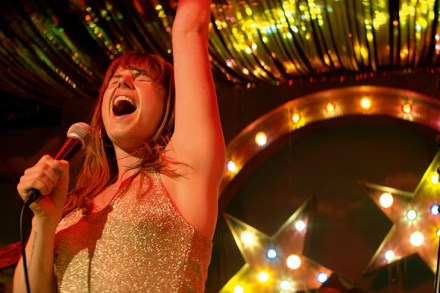
Jessie Buckley is the actress who, you may remember, was ‘phenomenal’ in Beast — I am quoting myself here so it must be true — and she is also phenomenal in Wild Rose. She plays a Glaswegian, ex-jailbird single mum who dreams of Nashville and making it as a country star and, good grief, the pipes on her. Sensational. And you can quote me on that. Indeed, I wish that you would. Bit fed up, frankly, of always having to quote myself. Like I don’t have enough to do! Directed by Tom Harper (War and Peace, BBC) and written by Nicole Taylor (Three Girls, also BBC), this opens with Rose-Lynn (Buckley) leaving prison after completing a year-long sentence for a drugs offence. ‘You gonnae be the next Dolly Parton!

I’m sorry I haven’t a clue

From our UK edition

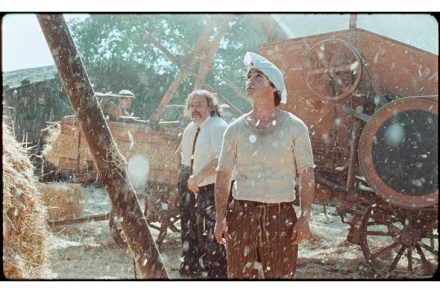
Alice Rohrwacher’s Happy as Lazzaro sets out as a neorealist tale of exploited sharecroppers, but midway through the story it falls off a cliff (literally) and returns as magical realism, although we mustn’t hold that against it. Or should we? I was sad to see the first narrative go, frankly — come back! Come back! — and the second half rather lost me. This film is beguiling and intriguing and poetic (she says, defensively) but God knows why it couldn’t have carried on as it began, and God knows what it adds up to. I haven’t the faintest. Written and directed by Rohrwacher (The Wonders, Corpo Celeste), the film won the prize for best screenplay at Cannes.

Double trouble | 21 March 2019

From our UK edition

Us is a second feature from Jordan Peele after his marvellous debut Get Out, which was more brilliantly satirical than scary and may well be the best ever horror film for non-horror people (i.e. me). Us has also garnered five stars everywhere, as well as, at the time of writing, a 100 per cent rating on the aggregate review site Rotten Tomatoes, so I’m out of step, I know, but I found it disappointing. The second act is essentially a zombie-style, home-invasion splatterfest that goes on and on and on. Allusions that you think will pay off don’t. It’s ultimately baffling and although I’m fine with baffling as a rule, if I’m going to sit through a zombie-style splatterfest it would have to be for a good reason. The opening is terrific.

It’s all me, me, me

From our UK edition

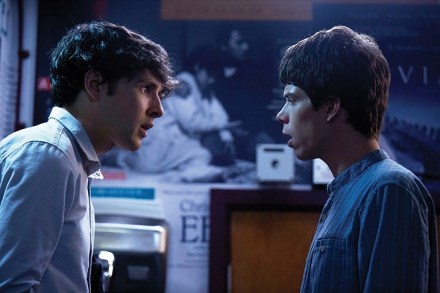
Simon Amstell’s Benjamin is a romantic comedy about a young filmmaker whose second feature is about to première, and he’s nervous. Don’t be, says his producer (Anna Chancellor). ‘Some people,’ she expands comfortingly, ‘will like it and some people won’t be into it, but each and every one of them is going to die, aren’t they? Because we are all going to die.’ Fair point. If you can ever say there is any point. Amstell’s career has always been predicated on his own existential crises, but as I’m one of those who is quite into that, I rather loved this film, not that it matters. Does anything?

Now, that’s better

From our UK edition

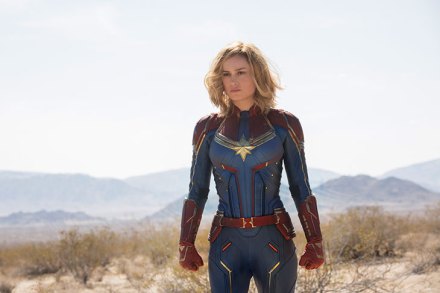
Captain Marvel is the 654th film in the Marvel franchise — the figure is something like that, I think — and as the first one to be female-led it was mercilessly trolled before its release by the fan boys. ‘This movie is gonna bomb like no other and they only have themselves to blame,’ was one typical remark. The nastiness escalated further when the film’s star, Brie Larson, said she was sick of being interviewed by ‘white dudes’ while doing promotion and asked why so many film critics are white and male. (78 per cent are, according to the latest research.) I don’t know why I’m telling you all this except to say that I’m one of the 22 per cent and this is the first of these films that hasn’t entirely bored the pants off me.

Cloak of invisibility

From our UK edition

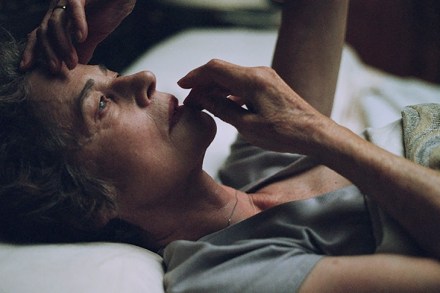
Hannah stars Charlotte Rampling in a film where not much happens and not much happens and not much happens and then, finally, not much happens. One scene, for instance, involves changing a light bulb and that’s it, and as close to an action stunt as we ever get. (Unless you count doing laundry.) But. But. It is also peculiarly mesmerising, showcases an extraordinary performance, and cumulatively builds into a powerful exploration of pain, loneliness and invisibility. So not much happens and not much happens and not much happens — but a great deal is said.

There’s something about Marie

From our UK edition

A Private War is a biopic of the celebrated Sunday Times war correspondent Marie Colvin who was, judging from this, brave, humane and utterly fearless as well as a drunk, lonely, traumatised and annoying. A complicated human being, in other words. And why did she do it? Why did she risk her life to get the truth out there? No easy answers are offered, thankfully. It may just be that she had to face death to feel properly alive. I can only say, with confidence, that the film features a magnificently fierce, alert and impassioned performance from Rosamund Pike, whose usual English rose delicacy is nowhere to be seen. It is top work, properly.

Soapy and second-rate

From our UK edition

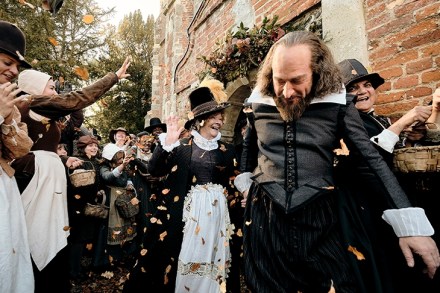
All Is True is Kenneth Branagh’s biopic of Shakespeare’s last years and All Is Not Very True, apparently, which we could live with, but All Is Not Very Interesting either, which is harder to endure, particularly at the midway point when you feel a nice doze coming on. I don’t get it. I mean, if you are going to conjecture, why not conjecture inventively as they did, say, with Shakespeare in Love? If you’re going to soar freely into the realm of imaginings, soar high! But this is leaden, lifeless, sentimental and afflicted by too many sub-plots that just don’t go anywhere. Also, if this portrait of the greatest writer of any age were to be believed, he was a walking cliché. As well as a bit of a moron.