David Loyn

David Loyn

David Loyn is a visiting senior fellow in the War Studies Department at King’s College, London and author of ‘The Long War – the Inside Story of America in Afghanistan’.

How stable is the Taliban government?

From our UK edition

Some western governments and media have been involved in a collective act of wishful thinking in recent months over the Taliban—believing them somehow to be ‘moderate’ and on the way to forming an inclusive government. The idea began with their elevation of status as a partner in negotiations with the US in Doha. They were legitimised, so some believed they had changed. The last remnants of that belief must have been burnt out by the appointment of the Taliban cabinet this week, which was not inclusive in any sense, but was the result of three weeks of bartering between different Taliban factions, only resolved by the intervention of the head of Pakistani intelligence, the ISI, General Faiz Hameed.
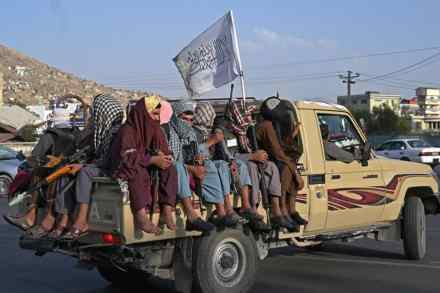
The West is being played by the Taliban

From our UK edition

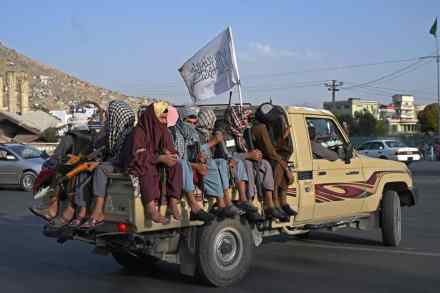
There have been some curious juxtapositions in Afghanistan this week. On the one hand, the under-19 Afghan cricket team was allowed to leave for a planned tournament in Bangladesh, as if things were normal, while on the other there was a sinister military parade taking place in Kandahar this week. After the lines of horsemen in flowing white robes, a deliberate image of Islamic warrior superiority, came the fleets of captured Humvees. And at the side of the procession lay a car packed with a bomb, suicide vest, and large plastic bottles of explosives from a roadside bomb. This is a government-in-waiting promoting terrorist weapons that indiscriminately kill civilians.

How the Taliban will govern Afghanistan

From our UK edition

When the Taliban ruled Afghanistan for five years in the late 1990s, the key power lay in a modest room in a house in Kandahar. There was just a simple iron bedstead and a box as furniture, and no door but a curtain separating it from the rest of the house. Sitting on rugs on the floor the Taliban founder Mullah Omar issued orders, made appointments and took money from the box. The ministries in Kabul operated on fiats issued from this room. His successor as Emir, Haibatullah Akhunzada, does not enjoy the same unquestioning authority. He was known as a scholar and ideologue not a fighter, and emerged as a compromise leader in 2017 after Omar’s successor Mullah Mansour was killed by an American drone strike. Akhunzada has since promoted extreme violence.

Panjshir valley and the last resistance to the Taliban

From our UK edition

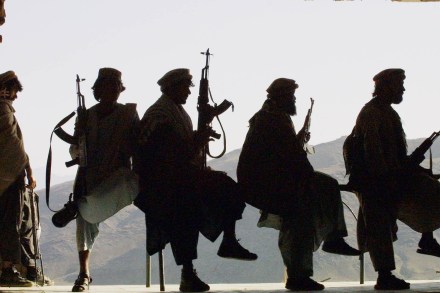
The Panjshir valley, about three hours’ drive north of Kabul, has a mythical hold on the Afghan imagination. It is a natural fortress, a long lemon-shaped valley surrounded on three sides by 13,000-foot-high mountain ridges, with the only entrance a narrow road in a deep winding gorge to the south, cut by the Panjshir river. It is a place of stunning beauty, with green fields either side of the river laden with apple blossom in the spring, irrigated by ingenious canals. The walls between the fields, and sometimes the houses themselves, are buttressed with rusting metal war remains – the wheels of a tracked vehicle, armour plating, bridges formed of shell cases.

What went wrong in Afghanistan

The collapse of the Afghan armed forces this week, far quicker than anyone expected, has revealed the depth of the corruption that has hollowed out the Afghan state, including, as it turned out, the military. On paper Afghanistan had 300,000 troops and paramilitary police, and 30,000 special forces – more than enough to secure the country against an insurgency if skillfully deployed and well motivated. The best of these troops are as good as any in the region. But they were strung out in thousands of checkpoints across the country, poorly fed, rarely paid, and with fuel and ammunition sold off before it reached them. Many of the units were composed of ‘ghost soldiers,’ phantom troops whose pay was collected by senior officers.

Afghanistan

What went wrong in Afghanistan

From our UK edition

When Joe Biden ordered the withdrawal of American troops from Afghanistan, he was able to say that they'd leave behind a formidable Afghan army with 300,000 troops, paramilitary police and some 30,000 special forces. That is, on paper, more than enough to secure the country against an insurgency if skilfully deployed and well motivated. The best of these troops are as good as any in the region. But they ended up strung out in thousands of checkpoints across the country, poorly fed, rarely paid, and with fuel and ammunition sold off before it reached them. Many of the units were composed of ‘ghost soldiers,’ phantom troops whose pay was collected by senior officers. Just a few weeks ago, Joe Biden downplayed the risk of losing Kabul.