David Crane

Riding for a fall | 8 March 2018

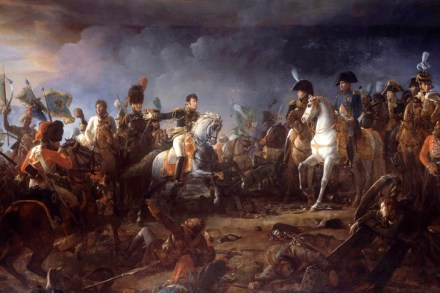
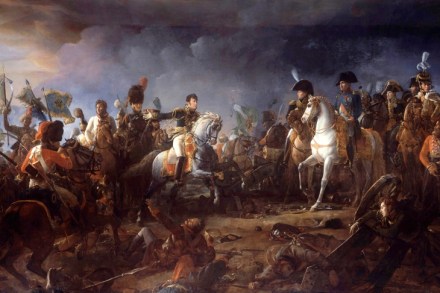
On 20 July 1805, just three months before the battle of Trafalgar destroyed a combined French and Spanish fleet, the Emperor Napoleon ordered his chief-of-staff to ‘embark everything’ for the invasion of England that he had been dreaming of for two years. ‘My intention is to land at four different points,’ he explained to Berthier, ‘at a short distance from one another... Inform the four marshals there is not an instant to be lost.’ While there is possibly no saga in his whole astonishing career — Russia included — that so vividly exposes the curious and almost wilful blind spots in Bonaparte’s make-up, his enemies would have done well to pay closer attention.

Mother of the nation

It can sometimes seem — unfairly but irresistibly — as if the sole function of the myriad Lilliputian German statelets of the Holy Roman Empire was to provide the royal families of Europe with some of their most dismal consorts. In the century and a half after George I came to the throne in 1714 Britain imported more than its fair share, but if in Caroline of Brunswick we drew quite possibly the rummest of the whole lot, in another and largely forgotten Caroline, Wilhelmine Karoline of Ansbach, the wife of George II, 18th-century Britain and Matthew Dennison struck, if not quite gold, then at least a good solid lump of iron.

Raising Cain

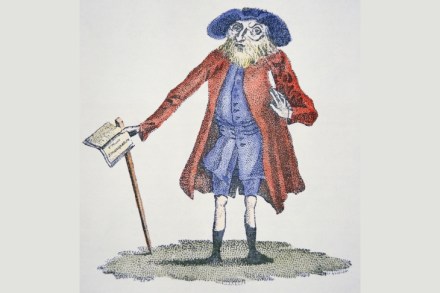
It is a pretty safe bet that for every 1,000 people who know of William Wilberforce, no more than the odd one might have heard of Benjamin Lay. In many ways this is understandable enough, but if anyone deserves to muscle in on the mildly self-congratulatory and largely middle-class pantheon of Abolitionist Saints, it is the gloriously improbable and largely forgotten Quaker throwback and hero of Marcus Rediker’s generous and absorbing act — his own phrase — of ‘retrospective justice’. There was probably only one period of English history in which Lay would have found himself at home, and that period, along with all the hopes and aspirations it had given birth to, had ended 20 years before he was born.

Blood and bling

There must be any number of self-respecting gemmologists out there on first-name terms with other diamonds, but for most of us the Koh-i-Noor is pretty well it. Most of what we think we know might be myth, guesswork or just plain wrong, and yet in spite of — or perhaps because of — that, the diamond which once adorned the Mughal empire’s Peacock Throne still retains all its old, ambiguous allure. If Anita Anand can trace her own fascination back to a childhood visit with her father to see the stone in the Tower of London, it is rather harder to see just what — other than ‘an ingenious agent’ — might have persuaded William Dalrymple to turn a ‘momentary jeu d’esprit’ into a full-blown book.

Too young to die

In the north transept of Westminster Abbey, there is a memorial by Joseph Nollekens to three British captains killed at the Battle of the Saintes. It is hard to imagine that many visitors notice it, but when the news of the battle reached London from the West Indies in May 1782, it inspired the same kind of hysteria that 120 years later would greet the relief of Mafeking. The victory might not have been all it was cracked up to be — Rodney had let the French fleet escape — and yet at a time when a bitterly divided country was embroiled in a losing struggle for its American colonies and a mismanaged war with France and Spain, anything which promised that Britannia still ruled the waves and Britons could fight and die as their forefathers had done was manna from heaven.

Spectator Books of the Year: Why Martin Luther was an extraordinary and unpleasant man

Lyndal Roper’s Martin Luther: Renegade and Prophet (Bodley Head, £30) is an impressive and fascinating read. I have no idea what Lutherans have made of it, but for those of us who have harboured an irrational dislike of this extraordinary and unpleasant man, it’s a comfort to know we weren’t completely wrong. It’s taken me a long time to come across her, but it’s hard to imagine there is a better short-story writer than Deborah Eisenberg. All unmistakably hers, all intriguingly different, and almost all brilliant, her Collected Stories (Picador USA, £17.75) brings together 30 years’ work that shows no sign of going off in quality.

England’s unloved king

Aethelred the Unready (c.968—1016) has not, as Levi Roach acknowledges, enjoyed a good press. In recent times there may have been some attempt in academic circles to take a more measured view of his calamitous reign, but the fact remains that if most us would have trouble saying quite what he did or did not do, or even what ‘unraed’ actually means, we all know how it ended. ‘And that is called paying the Dane-geld;’ wrote Kipling, But we’ve proved it again and again, That if once you have paid him the Dane-geld You never get rid of the Dane. On the face of it the revisionists have an uphill battle, too, because when Aethelred came to the throne as a child the kingdom was looking in pretty good shape.

The man who changed the world

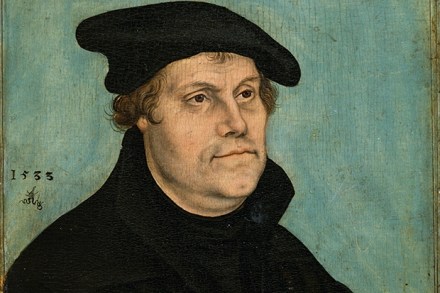
On 31 October 1517, as every child once knew, an obscure German monk nailed his 95 theses to the door of Wittenberg’s castle church and so began the Reformation. It would seem that there is no firm evidence that this ever actually happened as myth would have it, but whether Martin Luther nailed his theses to the door or glued them or merely posted them to Germany’s leading churchmen, the Christian world would never be the same again. Martin Luther: Renegade and Prophet is an exploration of a man’s interior life and development and not, as Lyndal Roper insists, either a general history of the Reformation or even of the Lutheran revolution in Wittenberg.

When English Catholics were considered as dangerous as jihadis

Martyrdom, these days, does not get a good press. Fifty years ago English Catholics could take a ghoulish pride in the suffering of their 16th-century Tyburn heroes, but in a western world that has learned to be wary of extremist talk of ‘holy war’ or the intoxicating visions of the martyr’s crown that fuelled the prayers of England’s young exile priests — ‘the supreme privilege, of which only divine grace could make them worthy’, as Evelyn Waugh put it — somehow makes for less comfortable reading.

The forgotten faithful

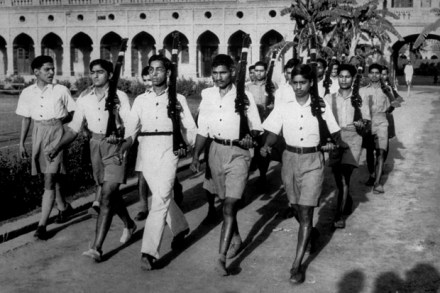
It is often said that cricket was ‘a game invented by the English and played by Indians’, and every so often a book comes along that makes you think that something similar could be said of the English language. It would seem from Farthest Field’s dust jacket that this is Raghu Karnad’s first book, but if this assured and moving memoir of wartime India is an apprentice piece, then you can only wonder what is coming next. From the very first page it is the brilliance of the writing that stands out.

Murder in the dunes: the ‘26 Martyrs’ of Baku and the making of a Soviet legend

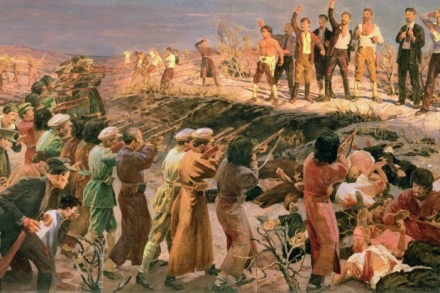
In the pre-dawn hours of 20 September 1918, a train, its headlamp off, heading eastwards out of Kransnovodsk on the Caspian sea, came to an unscheduled standstill among the lonely desert dunes of Transcaspia. From one of the two carriages stumbled a group of bound and blindfolded prisoners, who were pushed and dragged up to the crest of a nearby dune, and there gunned down and their bodies hastily covered with sand. In the context of the times and the area — 15,000 men, women and children had just been slaughtered in Baku on the other side of the Caspian — the political execution of 26 Bolsheviks might not seem a major event, but it was a murder that would resonate down through Soviet history.

William Marshal: kingmaker — or just king of the joust?

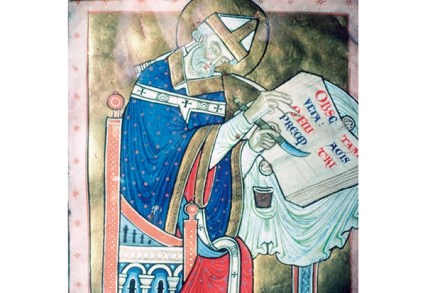
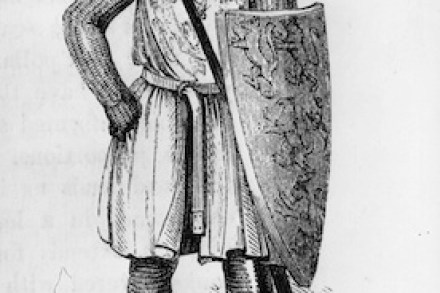
In February 1861 a 21-year-old French medievalist called Paul Meyer walked into Sotheby’s auction house near Covent Garden. He had been sent by the Bibliothèque Imperiale to bid on their behalf at the sale of the Savile collection of rare manuscripts, and though he did not have the funds to compete with the big players at the auction, he did at least manage to see, before it disappeared for the next 20 years into the insatiable collector’s maw of Sir Thomas Phillipps, a rhymed verse chronicle of 19,000-odd lines in Norman French that was to become the great obsession of his life.

Narrative history at its best – and bloodiest

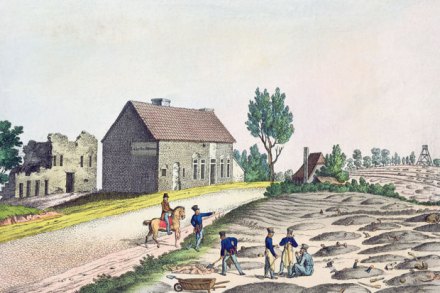
Anyone thinking of bringing out a book on Waterloo at the moment must be very confident, very brave or just plain daft. Over the last month there have been at least five new books on the battle, and so unless a writer is in a position to bring the equivalent of whole divisions of loyal Sharpe readers with him, he’d better have some new line to take. Nick Foulkes showed how it might be done with his terrifically entertaining Dancing into Battle, and Paul O’Keeffe has taken it a step further by quite simply giving the battle a miss. From the opening pages one is always aware that something pretty major is happening a mile or two over the next hill.

If you want to admire Napoleon, it helps not to have met Gaddafi

Forty-odd years ago, in the early phase of the Gaddafi regime, I had the slightly mixed fortune to attend the new Benghazi University’s first degree ceremony. The university had actually been closed for months and there were no degrees to award, but that did not stop them kitting out their foreigners in a job lot of academic gowns shipped in from Poland and marching us off to sit, ringed with machine-gun-carrying guards, in a huge tent under a broiling sun to wait for the Colonel himself to arrive. Every so often the band would strike up, we’d all stand, a loudspeaker would blare out ‘Mu’ammar Muhammad Abu Minyar al-Gaddafi’ and nothing would happen.

An old soldier sees through the smoke of Waterloo

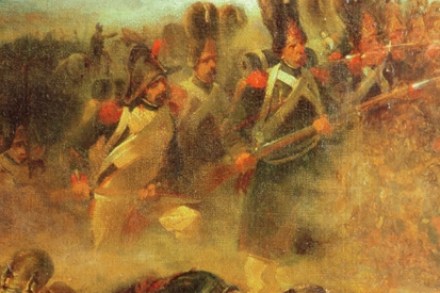
There is a very nice story of a dinner for Waterloo veterans at which Alexandre Dumas — ‘Dum-ass,’ as the Antarctic explorer Taff Evans would have him — was for some reason present. I can’t remember now the exact wording of the exchange between them, but Dumas had clearly spent so much of the evening sounding off about the battle as if he knew what he was talking about that a French general at the far end of the table could finally take no more. ‘But my dear Dumas,’ he protested, ‘it wasn’t at all like that! And remember, we were there!’ ‘Precisely, mon général,’ came back the reply. ‘You were there, so how could you possibly know?’ Gordon Corrigan is more than a chip off the old Dumas block.

Patrick Leigh Fermor and the long, daft tradition of Brits trying to save Greece

Twenty-odd years ago, while on holiday in the deep Mani at the foot of the Peloponnese, I got into conversation with an old and only partially reconstructed Greek communist shop-owner. I had been showing him a bit of pottery I had found on the sea bed at Asomati, and he wanted to know what had brought me to the Mani in the first place and was it Patrick Leigh Fermor? I said no — not strictly true — and he seemed pleased.  Leigh Fermor, he said — and he was not prepared to elaborate — had not been good for Greece.

Look again – the first world war poets weren’t pacifists

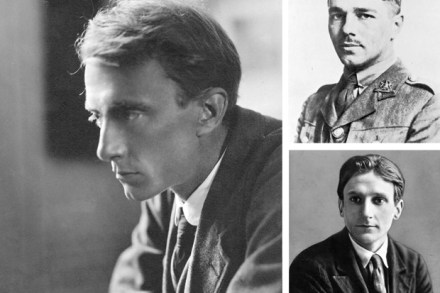
If the poets of the first world war probably enjoy a higher profile now than they have done at any time in the last 100 years, it has not been a smooth passage. When Wilfred Owen was killed in the last week of the fighting he was still virtually unknown, and even 25 years later in the middle of another war, when the ludicrous Robert Nichols — the man Edmund Gosse had once seen as a new Keats and Shelley combined — brought out his anthology of first world war poetry, there was still room for only four poems by Owen and none at all by Isaac Rosenberg, Edward Thomas or Ivor Gurney.

War is good for us

At the heart of this work is a startling and improbable statistic and the equally surprising and counterintuitive thesis that flows out of it. We are used to looking back on the 20th century as comfortably the most violent in all human history — the silver medal usually goes to the 14th — but if Ian Morris(a fellow at Stanford University) is to be believed, the century that could wipe out perhaps 50 million to 100 million in two world wars and throw in the gulags, the Cultural Revolution, civil wars, government-orchestrated famine, trench-stewed pandemics and any number of genocides for good measure was, in fact, the safest there has ever been. If sometime around 7a.m.

How Denmark’s Jews escaped the Nazis

Of all the statistics generated by the Holocaust, perhaps some of the most disturbing in the questions they give rise to are the following. Of the Jews in Hungary, the Netherlands, Greece, Latvia and Poland, between 70 and 90 per cent died, while the corresponding figures for Estonia, Belgium Norway and Romania were between 40 and 50. In France and Italy somewhere around 20 per cent perished. In both Bulgaria and Denmark, however, just one. Bo Lidegaard’s Countrymen is the story of how Denmark to a great extent saved its  Jewish population from the labour and extermination camps, but it inevitably raises issues of equal relevance to the rest of Europe.

How we beat Napoleon

It feels the height of ingratitude to blame Jane Austen for anything, but it probably is her fault that most people seem to think that the only impact that the Napoleonic War had on British life was to bring Mr Wickham and the militia into the lives of the Bennet girls.