David Crane

‘He never drew a peaceful breath’: the tormented life of Henry VII

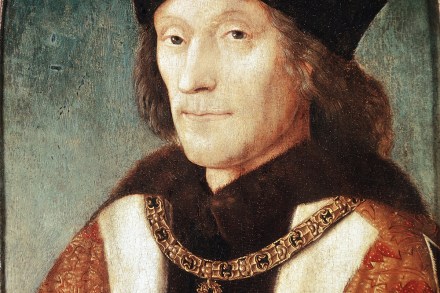
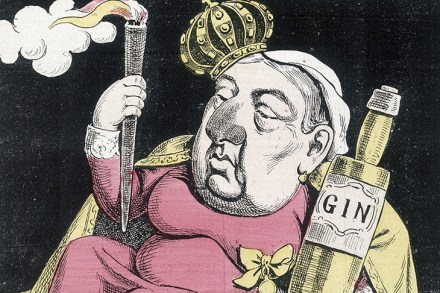
Have we ever had a more successful yet somehow forgettable king than Henry VII? A century ago, the Dictionary of National Biography could still hail him as the ‘Solomon of England’. But if he is remembered now it is almost solely for the dynasty he founded, with the domestic and international achievements of his own long and prudent reign largely ignored in the country’s bizarre obsession with the later Tudors.    There must have been an unusual mix of calculation and audacity to Henry’s character, because calculation alone could never have brought him to the throne.

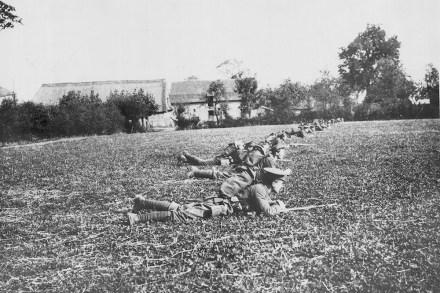
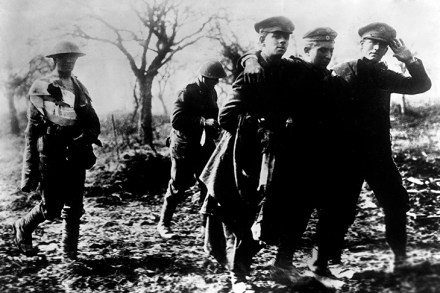
The nearest we’ll ever get to experiencing the horrors of 1914

In a German war cemetery to the north-east of the Belgian town of Diksmuide is the grave of a young soldier called Peter Kollwitz. He once lay among the 1,500 dead of the Roggevelde cemetery and it was there, in 1932 – the same year that Lutyens’s memorial to the dead of the Somme was dedicated – that his mother, the great German printmaker and sculptor Käthe Kollwitz, placed at his graveside the two granite figures known as the ‘Grieving Parents’. There is, as the historian Jay Winter wrote, ‘no monument to the grief of those parents who lost their sons in the war more moving than this simple stone sculpture’ that had been 18 sorrowing years in the making.

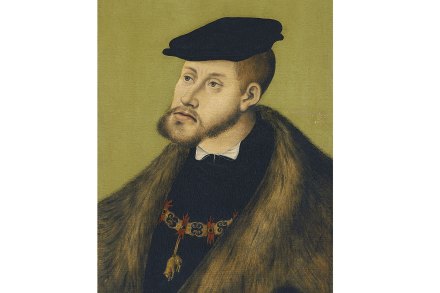
How ever did the inbred Habsburgs control their vast empire?

In 1960, Felipe Fernández-Armesto and Manuel Lucena Giraldo tell us, Lucian Freud went to the Goya Museum in Castres in search of a particular painting. He wanted to create portraits that were character studies and ‘not mere likenesses’, and Goya’s collective portrait ‘La Real Compañía de Filipinas’,a study in human nullity that represented ‘absolutely nothing’, was just what he was looking for. Fernández-Armesto explains: The work belongs in the tradition of what might be called Spanish ‘anti-portraiture’, from Velázquez’s ‘Las Meninas’ to Goya’s own devastatingly candid royal family group, ‘Familia de Carlos IV’, moral as well as physical delineations of regal vacuity.

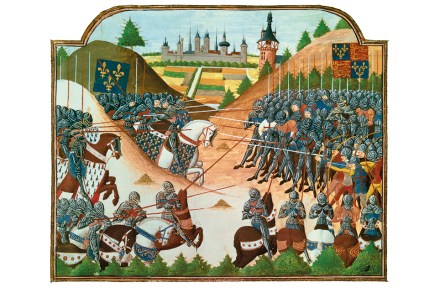
The Hundred Years War ends in England’s agonising defeat – but triumph for Jonathan Sumption

On 5 February 1328 the last Capetian king of France was laid to rest in the royal mausoleum of Saint-Denis. It is now 33 years, and more than 3,000 pages since Jonathan Sumption’s first readers followed Charles IV on his last journey, as his funeral procession wound its slow way from Notre-Dame across the Grand Pont and out through the streets of Paris into the open countryside to the north of Europe’s most populous and richest city. The death of Charles IV led to a crisis of succession that for the next four generations would embroil France and England in a war of unimaginable savagery.

The Franco-Prussian war changed the map of Europe – so why are we so ignorant about it?

Is there a single major European conflict of the past 200 years that gets so little attention in this country as the Franco-Prussian War of 1870-71? In 1961 Michael Howard brought out his history of the war, but Howard and the odd battlefield tourist apart, Rachel Chrastil’s bibliography – strong on contemporary memoirs, strong in fact on everything from the miraculous appearances of the Virgin Mary and the cult of St Radegund to the transmission of smallpox – is curiously thin when it comes to British interest.

Failing to denigrate Britain’s entire colonial record has become a heinous crime

This book has already had an interesting life, and most readers will by now know something of its history. For any who don’t, Nigel Biggar’s Colonialism was originally submitted for publication to Bloomsbury and was warmly received by them; but two months later it was indefinitely delayed, because (as the ‘email from the very top’ went) ‘public feeling’ was ‘not currently favourable’. Biggar writes in his introduction: I asked them to specify which ‘public feeling’ they were referring to, and what would have to change to make conditions favourable to publication, but they declined to give answers. Instead, they informed me that they were cancelling our contract. Happily, William Collins has rescued what Bloomsbury chose to jettison.

The history of the world in bloodshed and megalomania

It is hard to imagine why anyone should want to write one, but if there has to be a history of the whole world then Simon Sebag-Montefiore must be as good a candidate to write it as anyone. He would seem to have read pretty well everything that has ever been written, visited everywhere of historical interest on the planet and enjoyed – thanks to Covid and lockdown – the time to write the one book that he has always had in his sights. The only history we ‘adore’, Chairman Mao reckoned (and he ought to know), is the history of wars, and in The World: A Family History Sebag-Montefiore has taken the message to heart.

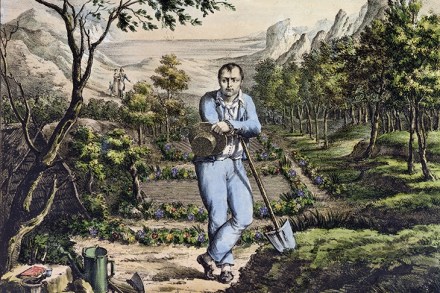
Straight lines and grandiose schemes — Napoleon the gardener

On 1 January 1806, a little over one year after his coronation, the Emperor Napoleon ordered the abolition of France’s new republican calendar and a return to the old Gregorian model. Over the past seven years republicans had grown used to ‘empire creep’, but even for those who had been forced to watch the principles of the revolution dismantled one by one and a republican general metamorphose into Emperor of the French, this last insult carried a peculiarly symbolic charge. For all its engaging dottiness — each new year, coinciding with the autumnal equinox, would begin on a different date — the short-lived republican calendar had embodied some of the most attractive and fragile dreams of the revolution.

Up close and personal: voices from the Great War, week by week

In the summer of 2014, David Hargreaves was invited by Robert Cottrell, the editor of The Browser, to write a series of articles shadowing, week by week, the course of the first world war. Over the next four years Hargreaves and his researcher and co-author, Margaret-Louise O’Keeffe, brought these out online, and they have now been published, originally by subscription, in a set of four volumes that runs in all to a monumental 2,200 pages. It is one thing to have dreamed up the project, it’s another to have carried it off with the collaborative skill and commitment on show here.

Holding the Empire responsible for the state of modern Britain is becoming commonplace

It seems to have become a virtual orthodoxy of the academic and publishing worlds that history and fiction now have their ‘reserved areas’. Sathnam Sanghera’s sprawling and intimidating bibliography — more than 50 pages of it — underlines just how wide and eclectic his own reading has been, but there is one sentence, more than half way into Empireland, that might make readers think. He is talking about a passage from Jan Morris’s Heaven’s Command, dealing with British racial atrocities, that seems, to Sanghera, indecently trivialising in its tone: The comment briefly makes me wonder whether you need to be a descendant of the colonised or a person of colour to feel the full, gut-wrenching horror of it all.

Is Indian cricket no longer cricket?

There is nothing in world sport, ‘nothing in the history of the human race’, Ramachandra Guha modestly reckons, that can remotely match the passions that surround Indian cricket. I have no idea how many listeners or viewers hung on every ball of Ben Stokes’s Headingley heroics last year, but it is a safe bet that had it been Sachin Tendulkar or Sunil Gavaskar batting, and an India victory over Pakistan at stake, then you could add as many noughts to that figure as will accommodate a cricket-mad population edging its way towards the one and a half billion mark. The Commonwealth of Cricket is part celebration, part elegy, but before all else unashamedly the book of one of those tens of millions of India’s cricket fans.

Vain, inbred and inept: how could the Habsburgs have survived so long?

One of the great mysteries of European history is how for the best part of 700 years a family who produced so many complete duffers as the Habsburgs managed to play such a crucial role in world affairs. There was certainly the odd exception to the general rule, and some highly effective women; but it says a lot about a family that once controlled much of the Old and the New Worlds that at the end of this lucid and entertaining history Martyn Rady can offer up Dr Otto von Habsburg, the last ‘pretender’ to the Austrian throne and MEP for the Bavarian conservative CSU party, as the ‘best emperor the Habsburgs never had’. One of the more mundane reasons for their remarkable durability in the early days was their canny gift for outliving their neighbours.

Is there no field in which the Jewish mindset doesn’t excel?

More than 20 years ago, George Steiner, meditating on 2,000 years of persecution and suffering, posed the ‘taboo’ question that no one dared ask: ‘Has the survival of the Jew been worth the appalling cost?’  It was not just the horrors of the pogroms or of Auschwitz that ‘enforced’ the question for Steiner, nor the centuries of exclusion and violence but — equally destructive — ‘the fear, the degradation, the miasma of contempt, latent or explicit,’ which has been the hereditary birthright of every Jewish child ‘across the millennia’. ‘Would it not be preferable, on the balance sheet of human mercies,’ Steiner asked, ‘if he was to ebb into assimilation and the common seas?

The man and the legend

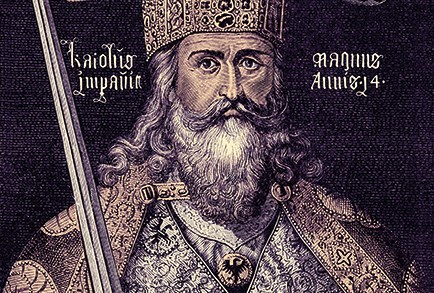
It is not often that a book’s blurb gives any idea of what’s inside, but Helen Castor’s endorsement — ‘a masterclass in the practice of history’ — is as good a description of this brilliant new biography of Charlemagne as we are likely to get. The broader contours of the life will be familiar to many readers, but what we have here — pace Janet Nelson — is less the ‘old-fashioned’ biography that she claims but a wonderfully generous sharing of knowledge that combines the conversational tones of the ideal classroom with the intensity of the trained anatomist, poised, knife in hand, to reveal the musculature beneath the skin.

King of the World: The Life of Louis XIV

I was flicking through an old copy of The Spectator the other day, one of the issues containing contributors’ ‘Christmas Books’, and there was a comment of Jonathan Sumption’s that ‘as a general rule, biography is a poor way to learn history’. It is primarily a matter of approach rather than simply subject of course, but if one was drawing up a shortlist of men who might qualify as exceptions to the rule, then Philip Mansel’s ‘King of the World’, Louis XIV, would surely be very near the top.

The Elder, the better

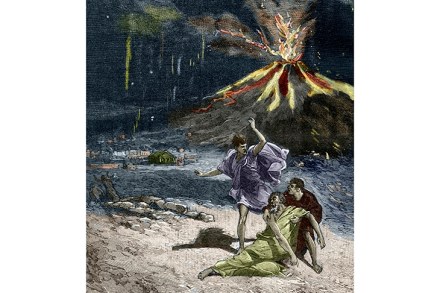
I couldn’t help thinking, as I read this book, of an old story, vaguely recalled from English A-level classes, about the poet and verse dramatist Gordon Bottomley. I can’t remember now which of his plays it concerns, but it must have been just after the notorious MP and swindler Horatio Bottomley had been imprisoned for fraud in 1922, because as the curtain fell on the final excruciating scene there was a shout from the audience: ‘My God, they’ve gaoled the wrong Bottomley!’ A reader is not going to get very far with Daisy Dunn’s new biography — the opening four lines, in fact — without a sinking sensation that the author has landed herself with the wrong Pliny.

Europe’s front line

In 1919, only months after the end of the Great War, a French airman called Jacques Trolley de Prevaux, accompanied by a cameraman, piloted an airship down the line of the old Western Front that stretched from the Belgian coast to the Swiss border. The result is a haunting piece of film in many ways, and yet what is perhaps most moving is not the scenes of devastation, but the sight of the people below, picking up again the threads of their old lives among the shattered ruins of what had once been homes, with the resilience of a people whom history had long accustomed to the miseries of war.

An age of paradox

‘It was the best of times, it was the worst of times... it was the epoch of belief, it was the epoch of incredulity, it was the spring of hope, it was the winter of despair, we had everything before us, we had nothing before us ... in short,’ as Charles Dickens famously told the first readers of A Tale of Two Cities, it was a period very much like their own. Dickens was right. John Stuart Mill once claimed that the two great ‘seminal minds’ of the period were Coleridge and Bentham, and in that brilliant yoking of opposites — the warm, creative current of Coleridgean thought and the chillier stream of Benthamite utilitarianism — is summed up all the contradictions and paradoxes that the Victorian age was heir to. This is the fascination of the period.

A date with Venus

There is something about the Transit of Venus that touches the imagination in ways that are not all to do with astronomy. The last Transit occurred in 2012, and if nobody who watched it will ever see another, the sight of that small black dot, making its almost imperceptible progress across the disc of the sun, offered, across the span of 243 years, an oddly moving connection with the scientists and sailors who quartered the globe and, sometimes, risked their lives in 1769 to attempt the first comprehensive observations of the event. There is no shortage any more of ‘global events’ — a good, old fashioned footballing brawl between England and Colombia will stop the planet — but in the more localised world of the 18th century it was another matter.

Change and decay | 5 July 2018

It seems somehow symptomatic of David Edgerton’s style as a historian, of a certain wilful singularity, that even his book’s title requires explanation. On the face of it ‘the rise and fall of the British nation’ seems a comforting enough notion, but when Edgerton deploys the term British nation he is not talking about any long perspective, but a very specific, post-imperial, nationalist project of internal reconstruction that rose and flourished between 1945 and the 1970s, only to sink back into the global system from which it had emerged. ‘Making the national explicit’ in this way, he writes, allows us to notice the non-national features of earlier and later periods.