Danny Shaw

Danny Shaw is a crime, justice and policing commentator and former adviser to Yvette Cooper.

Which crimes no longer deserve prison?

More people are being jailed than the justice system can manage. There are only 557 places left across 120 prisons in England and Wales, while prisoner numbers are increasing by 100 to 200 every week. Justice Secretary Alex Chalk had some tough-sounding rhetoric on Monday to deal with the problem: lock up dangerous offenders and send foreign criminals back home. Yet it distracted – perhaps deliberately – from the most liberal penal policy reform announced by a government minister in decades: a legal ‘presumption’ against short sentences.   Does the government want the message to go out that shoplifters won’t hear the clang of the prison gates? Incarceration is expensive: it costs £47,000 per inmate per year.

Why Met firearms officers want to hand in their guns

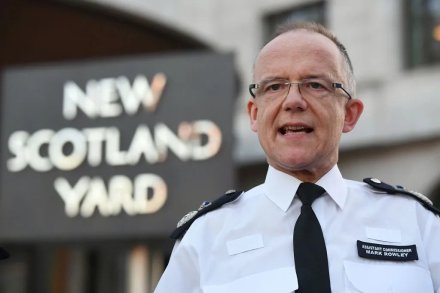
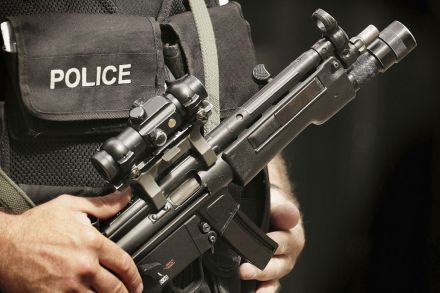
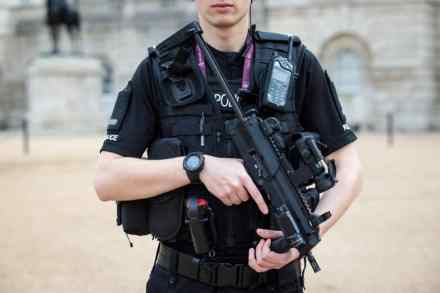
The decision by up to 300 Metropolitan police firearms officers to withdraw from armed duties is a serious and worrying development – the gravest that Sir Mark Rowley has had to face since he took over as Commissioner 12 months ago. It follows last week’s announcement by the Crown Prosecution Service (CPS) to charge a Met firearms officer with murder over the fatal shooting of Chris Kaba in south London in September 2022. The 24-year-old, who was black, was shot through the windscreen of a car which police had followed and tried to box in. Police had believed the car was linked to a firearms incident the previous day. No gun was subsequently found.   The Independent Office for Police Conduct (IOPC) launched a ‘homicide’ investigation, which took six months to complete.

The Met police is caught in a dangerous spiral

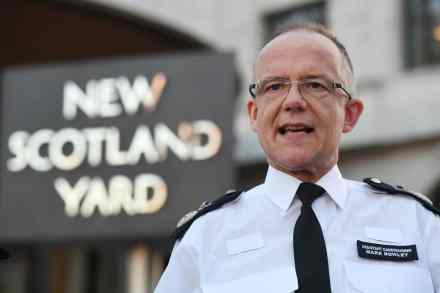
Twelve months after Sir Mark Rowley embarked on a mission to re-boot the Metropolitan Police following a wave of scandals, the force has revealed that it has suspended or placed work restrictions on a thousand of its officers.  More than 200 are currently suspended and 860 are on ‘restricted duties’ while criminal or misconduct allegations are investigated – taken together that’s as many as people as work in a small constabulary. In addition, there has been a 66 per cent increase in dismissals for gross misconduct – with 100 in the last year, and 300 more hearings in the pipeline.

Do we need a nationwide DNA database for crime?

When a man has spent 17 years in prison for a crime that he didn’t commit, there are many urgent questions about policing and the criminal justice system which need answering.  Andrew Malkinson, who will never get back those years after being wrongfully convicted of raping a woman in a violent attack in 2003, certainly deserves the answers. Why did officers from Greater Manchester Police (GMP) single him out as a suspect? Why was strong evidence that pointed away from him, such as the absence of scratch marks caused by the victim, seemingly overlooked? Why did police fail to disclose to Malkinson’s lawyers vital documents showing the long criminal records of two prosecution witnesses?

How did theft become effectively decriminalised in Britain?

Haven’t we all had that panicky, sinking feeling at one time or another? A realisation that we’ve been the victim of a crime. Perhaps it happened when you couldn’t find the mobile phone in your back pocket. Or after you spotted fragments of glass on the road near your car windscreen. You might have felt dread returning home to find your front-door key won’t turn in the lock… because an uninvited guest has secured it from the inside. Burglary, car crime and pickpocketing are a feature of our lives like back pain and the common cold; we can take precautions to reduce the risk but they’re bound to happen at some point. Classified as ‘theft’, there were 1.

The police are struggling to operate in a smartphone world

These are busy times for the police watchdog. It’s just started an investigation into serious allegations of misconduct against Devon and Cornwall’s Chief Constable, Will Kerr, who’s been suspended. An inquiry has been announced into missed opportunities to root out the serial rapist, former Metropolitan Police officer David Carrick. And this week came an investigation into the police handling of an incident in which a woman was accused (wrongly) of dodging a bus fare.  It might seem odd for the Independent Office for Police Conduct (IOPC) to be examining a case of alleged fare evasion when there are so many other priorities, including fatal police shootings and deaths in custody. But after a social media clip of what happened sparked controversy, an inquiry became inevitable.

The BBC still has questions to answer over Huw Edwards

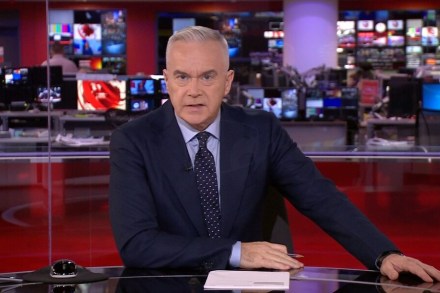
Huw Edwards is in hospital. That shocking news, in a statement from his wife, Vicky Flind, delivered an icy blast of reality to a news story that had bubbled out of control for six days, dangerously so for the BBC. Although reporters in its News division, where I worked for 31 years, had covered the events rigorously and sensitively, breaking new lines and analysing developments with care, the same surefootedness cannot be said for the BBC’s corporate arm. Their handling of the affair raises serious questions about complaints procedures, staff welfare and privacy. The BBC’s rationale for not naming Edwards (until his wife did so) remains unclear When the initial complaint about the News at Ten presenter was received on May 19, alarm bells should have sounded.

Can the Met stop responding to mental health calls?

‘The basic mission for which the police exist is to prevent crime and disorder.’ Those are the words of Sir Robert Peel, widely regarded as the founder of modern policing. In 1829, as home secretary, he established the Metropolitan Police in London, the first full-time professional force. It’s estimated that 83 per cent of calls into police control rooms across England and Wales do not relate to crime But if Sir Robert, who went on to serve twice as prime minister, were alive today he would surely be appalled at how that ‘basic mission’, the first of his nine 'principles of policing’, has been eroded.

The police will be pleased with their coronation performance

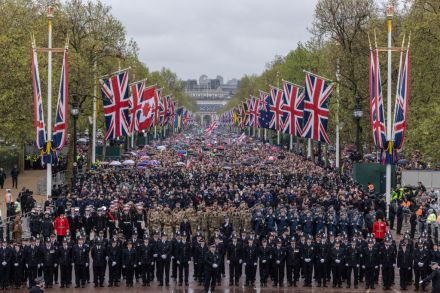
‘I am immensely proud of the exceptional work of our officers who prevented criminal disruption, damage and danger destroying such a unique occasion,’ said Sir Mark Rowley, the Metropolitan Police Commissioner. He was talking of course about the coronation amid the controversy that has swirled around the Met since reports emerged that people were wrongfully arrested as part of its operation in central London last Saturday, appropriately codenamed ‘Golden Orb’.  Frankly, the Met will regard the arrest of a handful of innocent people and a row about protestors’ rights as a price worth paying Among them were six members of the anti-Monarchy group, Republic, mistakenly suspected of having equipment for a ‘lock on’ style demonstration.

We can’t rely on the police to clean up mobile phone theft

A call from my younger son’s secondary school was not what I was expecting at 11.30 a.m., but as soon as I heard the secretary speak I knew what had happened to him. He’d just got himself a pair of Apple AirPods and was keen to use them – why wouldn’t he be? As he stepped off the bus, with his new wireless earphones in place, he was followed up the road to the school by two boys. A strategy which targets crime gangs is more likely to yield results than a drive to investigate every phone theft Suddenly, from behind, they made their move, grabbing him in a headlock. It took only a few seconds but enough time for them to get what they wanted: the AirPods, of course – and his smartphone.

Charles Bronson and the problem with parole hearings

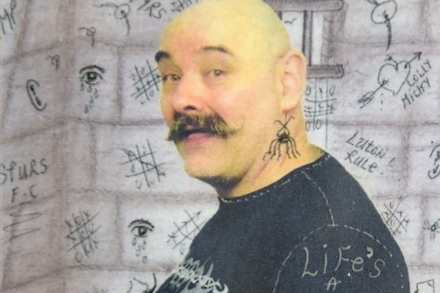
The letter delivered last week to Mr Charles Salvador, of HMP Woodhill, from the parole board did not bring him the news he wanted – it said his request to be released from prison had been turned down. But the outcome came as no surprise to me, nor I suspect many of the others who had watched his parole hearing by video-link at the Royal Courts of Justice in London in March. The conclusions that the parole panel reached were not rocket science, they were just common sense Salvador, whose birth name is Michael Peterson and who was previously known as Charles Bronson, has spent most of the past 50 years in custody.

The Met police is in a dire state

For the past 12 months, the Metropolitan Police has been in the organisational equivalent of a body scanner. Every vital organ of this 194-year-old beast has been examined in detail by Baroness Louise Casey and her review team enabling them to understand the Met in a way that no one has done before. The results, from top to toe, are alarming – and demand emergency surgery.  Scotland Yard commissioned the report after one its officers, Wayne Couzens, was jailed for life for the kidnap, rape and murder of Sarah Everard in March 2021. The backdrop also includes a string of other shocking scandals that has contributed to plunging levels of public confidence: in five years the proportion of people who believe the force does a good job locally has fallen from 70 to 45 per cent.

Is it time to break up the Met?

For more than 47 years, Dennis McGrory got away with murder. But last week justice was finally delivered: the pensioner was sentenced to life imprisonment for killing 15-year-old Jacqui Montgomery, in Islington, north London. His conviction was in large measure due to the work of Metropolitan police forensic scientists and detectives who never gave up on the case, which dates back to June 1975. So it was with Zafar Iqbal, who strangled his wife, Naziat Khan, in front of their young daughters in Norbury, south-west London, in 2001. Iqbal fled to Pakistan but Scotland Yard, working with other law enforcement agencies, tracked him down and eventually brought him back to the UK. He was jailed in December. How could the Met have hired Carrick?

Why the Met struggles to sack rogue police officers

This week, the charity CrimeStoppers, which receives anonymous tip offs from the public, launched a new hotline – for people to report corruption and abuse by police officers. It’s part of a drive by the Metropolitan Police Commissioner, Sir Mark Rowley, to ‘expose those who have undermined the Met’s integrity’ following a series of scandals which have shattered confidence in the force and left it in ‘special measures’.  Sir Mark says he employs 3,000 officers who can’t do their job properly because of health, performance or misconduct concerns, including 500 who are suspended or on restricted duties. About 100 are allowed to work only in backroom roles.

Firearms officers feel they have been let down by the Met

At 2.30 in the afternoon on September 22, 1999, Harry Stanley left the Alexandra pub in Hackney, east London, with a blue plastic bag containing a table leg that had been repaired by his brother. Unbeknown to Stanley, someone in the pub had called the police to report ‘an Irishman with a gun wrapped in a bag’ and minutes later, 100 yards from his home, two armed officers arrived. They challenged the 46-year-old (who was in fact Scottish) before firing two shots. He died instantly. Five years later, a jury at the second inquest to be held into Stanley’s death returned a verdict of ‘unlawful killing’ and the officers involved, Inspector Neil Sharman and PC Kevin Fagan, were suspended from duty.

‘They call him the tunneller’: meet the new head of the Met police

Dressed in full uniform and clutching a clipboard, Mark Rowley walked out of the Royal Courts of Justice in London, down the steps and towards a row of microphones. It was January 2014. An inquest into the fatal police shooting in Tottenham of Mark Duggan had just concluded with a verdict of ‘lawful killing’ and the Metropolitan Police Assistant Commissioner had a statement to make. As he began to speak, there were shouts from a group of Duggan’s supporters nearby. ‘Murderers, liars, racists, scum!’ they screamed, drowning out the officer’s words. One man came up to him, just inches from his face, and hurled abuse, but Rowley carried on.