Danny Shaw

Danny Shaw is a crime, justice and policing commentator and former adviser to Yvette Cooper.

Is the government right to restrict jury trials?

23 min listen

The government's plan to restrict jury trials passed its first parliamentary hurdle this week. It is one measure, amongst many, in a Bill designed to reduce the huge backlog currently facing the Courts. Labour MP Karl Turner and Danny Shaw, a former adviser, join Isabel Hardman to discuss why they have each come to their own, different conclusion about the merits of the Bill. For Danny, it is a pragmatic yet principled measure that will help mitigate an extreme situation. Karl, for his part, is – as you will hear – ferocious in his opposition, and argues that the evidence simply doesn't back it up. Amongst the debate though, there are moments of agreement – from the state of the justice system, to the government's handling of such a controversial measure.

Is the government right to restrict jury trials?

Can ‘calamity Lammy’ fix the justice system?

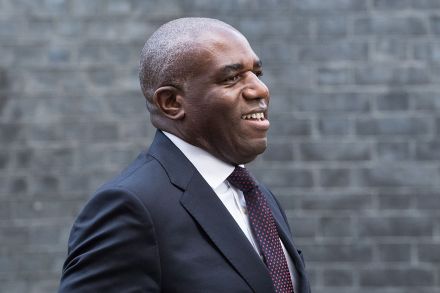
David Lammy, the deputy prime minister, has had a bruising five months. Last September, he took charge of the Ministry of Justice (MoJ), which oversees the courts, prisons and probation, as part of a reshuffle sparked by the forced resignation of Angela Rayner. Within weeks, the former foreign secretary had to deal with the accidental release from prison of Hadush Kebatu, an Ethiopian asylum seeker convicted of sexual assault who’d been living at the Bell Hotel in Epping. The error, by prison staff, was deeply embarrassing for everyone at the department, but it was compounded by Lammy's ham-fisted handling of it. After he’d publicly pledged to grip the problem it emerged other offenders had been mistakenly freed, spawning the unfortunate nickname, ‘Calamity Lammy’.

Can Shabana Mahmood save the police?

Over the past week, government ministers and police chiefs have been 'rolling the pitch' for what the Home Office is billing as the biggest overhaul of policing since the service was founded two centuries ago. A carefully co-ordinated communications campaign, involving set-piece interviews, newspaper op eds and filming opportunities, has been constructed by the department ahead of the long-awaited White Paper on police reform: ‘From local to national: a new model for policing’. It’s expected to be published today, six months after it was initially scheduled to be unveiled.

Could Shabana Mahmood merge the police into 12 forces?

‘The 43-force structure is no longer fit for purpose. In the interests of the efficiency and effectiveness of policing it should change.’ That was the conclusion of a review of the police service of England and Wales in September 2005 conducted by the independent policing watchdog, then known as HMIC. The findings led Tony Blair’s government to attempt a massive reorganisation of policing which at one stage would have involved merging police forces to create 12 larger ones. However, the merger plans became mired in controversy before being abandoned and the ‘change’ recommended by HMIC never happened. Twenty years on, the lessons from that botched reform process must be learned quickly by Sir Keir Starmer’s administration, and its new Home Secretary Shabana Mahmood.

How Shabana Mahmood can fix the police

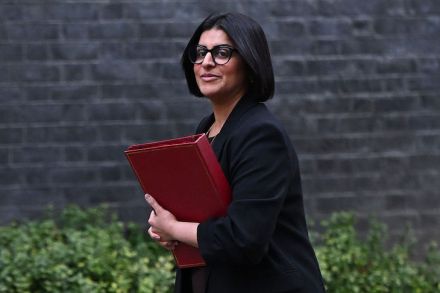
By the standards Shabana Mahmood has set for herself, the speech she made to police leaders at their annual conference in Westminster last week was not the most gripping. The Home Secretary’s delivery was stilted, awkward even, as she stuck closely to the script on the lectern in front of her. She left the stage as soon as she had finished without taking any questions. But there were two sections in Mahmood’s 20-minute address that stood out, sparking speculation that a once-in-a-generation overhaul of policing is on the way. She told the chief constables and police and crime commissioners (PCCs) assembled at the QE II Centre that she would be a ‘reformer at the Home Office’. Then, she referred to the way the £19.9 billion police service is organised in England and Wales.

Mahmood’s right turn, as migration figures revised – again

19 min listen

Economics editor Michael Simmons and Yvette Cooper's former adviser Danny Shaw join Patrick Gibbons to react to the Home Secretary's plans for asylum reform. Shabana Mahmood's direct communication style in the Commons yesterday has been praised by government loyalists and right-wingers alike, but her plans have been criticised by figures on the left as apeing Reform. Will her calculated risk pay off and how will success be judged? Plus, as ONS migration figures are revised – again – Michael restates his appeal for more reliable data. And how could migration data affect the budget next week? Produced by Patrick Gibbons.

How groupthink captures the BBC

August 29,1989 is a date that is burned into my memory. It’s the date that I first walked up Regents Street from Oxford Circus tube station and into the ornate lobby of Broadcasting House to begin my career at the BBC. That was the day, as a 23-year-old news trainee, that I began to learn the importance of accuracy, impartiality and fairness in reporting – the values that were instilled in me as a journalist and BBC staffer. To this day, they’re the values that continue to underpin the work of thousands of dedicated producers and reporters at the corporation.

The harrying of a Met firearms officer

‘No case to answer’. Those were the four words that finally ended an outrageously protracted legal and disciplinary case against a police firearms officer who fatally shot a man during an operation targeting a violent organised crime network in north London.  The firearms officer, whose name has not been revealed and is referred to only as W80, had to wait almost a decade to hear the chair of a misconduct panel utter those words. But the case should never have been brought in the first place, and its inevitable outcome is confirmation the police misconduct system needs urgent reform.

The parole system still prioritises offenders over victims

David Norris, one of the men who murdered the black teenager Stephen Lawrence, had his parole hearing this week, but he was so uncomfortable about being seen that those watching on a videolink only ever saw the back of his head. They did, however, learn a lot about what goes on inside it – and why Norris is nowhere near ready for release from prison. The two days of evidence also highlighted an alarming disparity between the attention given to a criminal bidding for freedom and the victims he left behind. The parole system is still geared towards the needs of offenders, with a pathway to rehabilitation and release for those serving long sentences The Parole Board agreed to hold Norris’s parole review in public.

The Met can’t blame politicians for the Linehan arrest

If it had been a sketch in one of his many comedy shows, it would surely have been rejected as too absurd.  After landing at Heathrow on a flight from Arizona, Graham Linehan, the Irish comic who created Father Ted, was arrested by five armed police officers for tweets that he had posted five months ago. The 57-year-old was told he was being held on suspicion of a public order offence. He was taken to a police station and questioned for several hours, before being released on police bail.  The Commissioner is correct to say that police should not be ‘policing toxic culture wars’.

Asylum reform: is Labour bold enough?

18 min listen

Danny Shaw and Tim Shipman join Lucy Dunn for today's Coffee House Shots to talk about the government's reforms to the asylum system. Having worked with Yvette Cooper before, Danny argues that the reforms are a great approach for a long-term solution – but he worries that they are not bold enough for the public mood. Is Labour putting procedure above politics? And, with the migrant hotel issue bubbling under the surface, is the public's patience wearing thin? Plus: as Zack Polanski is elected leader of the Green Party, is Labour about to be out-flanked by two radical populists to its left? The Greens and Jeremy Corbyn's new party could now pose as much of a threat on the left, as Nigel Farage's Reform is doing on the right. Produced by Patrick Gibbons.

The police guidance on revealing ethnicity does not go far enough

At nine minutes past eight on the evening of Monday May 26, Merseyside Police did something that no other British police force had done before.  Just two hours after a car had collided with football fans celebrating Liverpool’s Premier League triumph in the crowded city centre, the force proactively published the ethnicity and nationality of the man they had arrested, who had by then been taken into custody.  In all cases where charging decisions are publicised forces should state the ethnic group and nationality of the individual accused ‘We can confirm the man arrested is a 53-year-old White British man from the Liverpool area,’ the police said in a press release.

To be a success, Starmer’s migrant deal must pass tough tests

First came the Starmer-Macron handshake, sealing the UK-France migrant treaty. Following that was a series of Home Office stories about crackdowns on illegal working and smuggler gang adverts, filling the sleepy summer news pages. Then, the 21-page treaty itself was unveiled. And, finally, on Thursday morning Yvette Cooper, the home secretary, sombrely declared that the first migrants had been detained pending their return to France, with pixelated video footage of them supplied to broadcasters just in time for the evening TV bulletins.  In terms of media handling, press coverage and communications, the one-in, one-out migrant deal with France has been impressively choreographed, with a drumbeat of related announcements, statements and policies building up to the launch of the plan.

We need to cut the number of jury trials

In December 1999, the Labour government of the day appointed an eminent judge to conduct a review into the workings of the criminal courts in England and Wales. But when Sir Robin Auld’s report landed on ministers’ desks two years later, they faced fierce resistance to his proposals from, among others, parts of the legal profession. Many of his carefully thought through recommendations were never implemented. Lawyers, predictably, have voiced alarm Now, a quarter of a century later, the current Labour administration has an opportunity to make the radical court reforms that the Blair government ducked. The blueprint has been laid out in a compellingly argued 388-page document by another highly respected judicial figure, Sir Brian Leveson.

How did the BBC end up broadcasting Bob Vylan?

Until last weekend, Bob Vylan were not a household name. I admit that I had never heard of the rap group before. If you’d have asked me, I’d have said he’s a very famous folk-rock star whose name has been misspelt on the publicity material for Glastonbury.  But that really doesn’t matter – because I’m not producing the BBC television coverage of the festival. And whoever was in charge on Saturday should have made it their mission to know everything about all the acts that were going to be featured.

Britain’s police force isn’t fit for the 21st century

In last Friday’s early evening rush hour, three police vehicles had parked by the side of the North Circular Road in west London to deal with an incident involving a car and a van. A woman was sitting on a foldaway camping chair, looking shocked. Beside her was a young, uniformed officer, diligently writing an account of what had happened in her notebook.  As I drove past, I thought how, over the next few hours, those notes would have to be typed up onto a computer, along with any other crucial details she had jotted down by hand, while all the key information would also need to be transferred into multiple different databases. How much of the officer’s time would that take up back at the police station when she could be on the beat or responding to other emergencies?

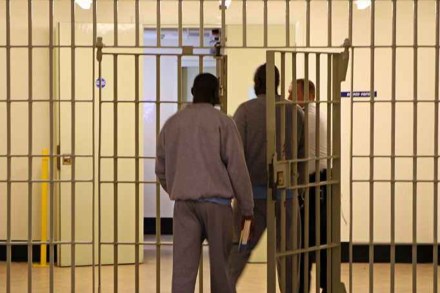
Is Labour tough enough to act on Gauke’s prison review?

Uncork the Gauke! In the coalition years, whenever George Osborne found himself in a tight spot as Chancellor, advisers would send for David Gauke, who was then a Treasury minister. The tall, imposing but unflappable Gauke would tour the radio and TV studios to deliver a measured message of reassurance, calming the political waters and restoring some credibility to whatever government policy was in the spotlight.  This week, Gauke has been uncorked again – this time by Labour – to solve the prison capacity crisis. When the party came to office, the population in men’s jails across England and Wales was rising so fast it was about to outstrip the number of places.

Are Labour ‘pandering’ to Nigel Farage?

14 min listen

Keir Starmer has succeeded in keeping immigration at the top of the news agenda for another day – although he may not be happy with the headlines. After his set-piece announcement yesterday, the Prime Minister is caught between fire from both sides. On the left, he is accused of ‘pandering' to Nigel Farage and even echoing the rhetoric of Enoch Powell’s ‘Rivers of Blood’ speech – with regard to Starmer's statement about Britain becoming an ‘island of strangers’. Meanwhile, Farage has called the Prime Minister ‘insincere’ and ‘playing catch-up’. Within Labour, some backbench MPs have broken ranks. But it is the quiet, soft-left faction – already uneasy about winter fuel, foreign aid etc. – that will concern the PM most.

Can Britain end its dependence on foreign workers?

Migration, migration, migration. Sir Keir Starmer didn’t express it like that in his Downing Street press conference, but he might as well have done. ‘Significantly’ reducing immigration, which is what he pledged in front of the cameras, can now be added to ‘smashing the gangs’ as clear priorities on which Labour will be judged over the next four years. The Prime Minister was at pains to say that the focus on cutting immigration was not about ‘politics’, in other words, some kind of knee-jerk political response to events (local election losses) or the popularity of other parties (Reform).

The Chris Kaba misconduct case doesn’t make sense

Here we go again. For those who drew up the convoluted regulations around police misconduct, the decision to proceed with a disciplinary hearing against the policeman who shot dead the notorious gangster Chris Kaba makes perfect sense. For most people though, it’s utter madness.  A trial at the Old Bailey, where footage of the incident was played back in slow motion, frame by frame, really ought to have been enough In September 2022, police sergeant Martyn Blake killed Chris Kaba with a single shot to the head, through the windscreen of the Audi Kaba had been driving in south London. The 24-year-old had refused orders to stop the car, which was linked to a serious firearms incident the previous night, and had tried to ram it free from the police vehicles blocking it.