Danny Shaw

Danny Shaw is a crime, justice and policing commentator and former adviser to Yvette Cooper.

Asylum appeals aren’t helping Labour close migrant hotels

From our UK edition

The top mandarin at the Home Office gave the game away. At a somnolent session of the Commons home affairs committee, Sir Matthew Rycroft revealed that Labour had dropped a key pre-election pledge, made just 72 hours before polling day. Instead of moving all asylum seekers out of hotels ‘within 12 months’, as the party had promised, it would take up to five years.  ‘The overarching aim continues to be to exit hotels by the end of the Parliament,’ Sir Matthew told MPs last month. The permanent secretary’s casual use of the term ‘continues’ suggested a process potentially concluding in the summer of 2029 had always been the plan – but it was a well-kept secret if it was: that date had never been publicly mentioned before.

Labour’s ‘two tier policing’ headache

From our UK edition

12 min listen

Labour have found themselves facing accusations of enabling ‘two tier policing’ following new guidelines from the Sentencing Council. Shadow Justice Secretary Robert Jenrick has been quick to criticise the government, but Labour’s Justice Secretary Shabana Mahmood has also urged the council reconsider their recommendations.  Yvette Cooper’s former adviser Danny Shaw joins Katy Balls and James Heale to discuss the row. While Danny points out that the issue is more nuanced than the row makes out, to the public the very perception of ‘two tier policing’ will damage the government - and at a time when confidence in the justice system is at an all-time low. How will they fix the problem? Produced by Patrick Gibbons.

Why people kill

From our UK edition

Why did he do it? Over the last few weeks, many of us have asked that question following a series of horrifying acts of violence that have been difficult to comprehend. Why was 15-year-old Harvey Willgoose fatally stabbed at a school in Sheffield? Why did Axel Rudakubana slaughter three girls at a children’s dance class in Southport last summer? And why did the father and stepmother of ten-year-old Sara Sharif abuse, torture and murder her?  Violent deaths are so shocking and alarming it’s natural that we search for explanations. But in the early stages, as details are pieced together and information about suspects isn’t known or publicly available, those answers often can’t be found. It’s not until the case comes to court that the full story can be told.

The police vetting system is a mess

From our UK edition

Picture the scene: the press conference room at New Scotland Yard in March 2023 – just after the publication of a damning report into the Metropolitan Police by Baroness Casey of Blackstock. Casey’s review, announced following the kidnap, rape and murder of Sarah Everard by a serving Met officer, had concluded that ‘predatory behaviour’ was ‘allowed to flourish’ in the Met, with ‘too many places for people to hide’, leaving the integrity of the organisation ‘vulnerable to threat’.  The Met were on the defensive – but they had a clear plan to raise standards and restore trust and they wanted journalists to hear it.

Why wasn’t the Southport killer stopped?

From our UK edition

13 min listen

At a press conference this morning, Keir Starmer moved quickly to announce a public inquiry into the Southport murders. This comes after Axel Rudakubana pleaded guilty to murdering three girls in a knife attack at a Taylor Swift–themed dance class last year. The Prime Minister promised that ‘no stone’ will be ‘left unturned’ when it comes to asking the ‘difficult questions… unburdened by cultural or institutional sensitivities’. Chief among these difficult questions is why – when Rudakubana had been referred to the counter-extremism Prevent programme three times – he wasn’t stopped? And is there any substance to claims by Nigel Farage of a ‘cover-up’? Katy Balls speaks to James Heale and Danny Shaw, former adviser to Yvette Cooper.

How the CCRC failed Andrew Malkinson

From our UK edition

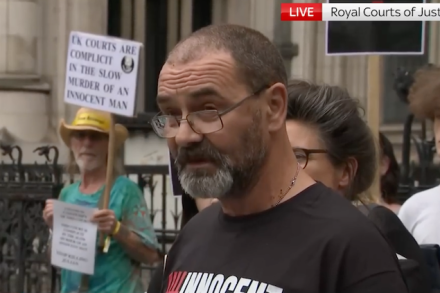
I met Andrew Malkinson, the victim of one of Britain’s gravest miscarriages of justice, on just one occasion. But he left quite an impression and I’ve been thinking about his case, especially since the belated resignation of Helen Pitcher, chairman of the Criminal Cases Review Commission (CCRC).  The organisation, which investigates potential wrongful convictions, failed Malkinson terribly. He served 17 years in prison for a rape he didn’t commit; the CCRC should have referred his case to the Court of Appeal after seven years. My encounter with the bearded, bespectacled Malkinson was at an office in central London on a summer’s day 18 months ago, shortly after his conviction had, finally, been quashed.

Elon Musk and the outrage about Britain’s grooming gangs

From our UK edition

19 min listen

The grooming gangs scandal is back in the news this week after Safeguarding Minister Jess Phillips rejected calls for a government inquiry into historic child abuse in Oldham, prompting a conservative backlash. Robert Jenrick, the Shadow Justice Secretary, called it ‘shameful’; Liz Truss, the former Prime Minister, labelled Phillips’s title ‘a perversion of the English language.’ Even Elon Musk, the owner of Twitter/X, has piled in, arguing that the Home Office minister ‘deserves to be in prison.’ As the grooming gangs story continues to gather traction, will we see an inquiry? And how should we assess the Home Secretary’s success six months into the job? Cindy Yu speaks to James Heale and Danny Shaw, a former adviser to Yvette Cooper.

Bobbies on the beat won’t stop the cyber crime wave

From our UK edition

One morning last week, in the early hours, I received a puzzling text from my bank. 'Did you use your debit card at 01.23 at Tenorshare.com?' it said. I’d never heard of Tenorshare before – it’s a smartphone support service apparently – and had certainly never knowingly made any payments to them. But someone had attempted to, by using my bank card details. When I contacted my bank, I was asked about another payment, to Wetherspoons, at ten to midnight on a Saturday night. Once again: not me, I was asleep in bed.  The crimes that take place away from the streets deserve attention too 'We’re blocking your card and sending you a new one,' said the assistant on the phone. 'Your card details must have got onto the dark web from a data leak.

Can the gargantuan court backlog be fixed?

From our UK edition

Just like London buses, you wait ages for a criminal justice review – and then three come along at once. First came the announcement of a sentencing review, led by former Conservative justice secretary David Gauke. Then there was a homicide review, to be conducted by the Law Commission. Now there will be a review of the criminal courts, with Sir Brian Leveson in charge. Billed as a ‘once in a generation’ review, the aim is to come up with ‘bold’ ideas to tackle the bulging backlog of trials in Crown Courts across England and Wales.

Have Labour got a grip of the prisons crisis?

From our UK edition

12 min listen

Labour are planning to publish a 10-year plan to get on the front foot when it comes to the prisons crisis. Shifting from the previous government’s preference to run the system hot to a policy of early release and carving out more places, the headline figure is that there will be 14,000 more prison places by 2031. But the fear today is that these won’t be enough to tackle the critical lack of space in UK jails. So, will Labour’s ongoing sentencing review advocate for greater leniency for certain offenders? And will the public see that as justice being served? James Heale speaks to Katy Balls and Danny Shaw, former adviser to Yvette Cooper. Produced by Oscar Edmondson.

Making sense of non-crime hate incidents

From our UK edition

12 min listen

The government has announced a review into how to properly police non-crime hate incidents (NCHIs). This follows the experience of Allison Pearson who, on Remembrance Day morning, was doorstepped by Essex Police demanding an interview about a long-forgotten tweet. Reports of NCHIs have dramatically increased in the last year, with 13,200 recorded in the 12 months to June (around 36 a day). What qualifies as an NCHI and how can the police be expected to enforce them? Is this police overreach or a necessary measure to tackle the rise in instances of anti-Semitism and Islamophobia? Oscar Edmondson speaks to James Heale and Danny Shaw, former adviser to Yvette Cooper. Produced by Oscar Edmondson.

Labour should be wary of scrapping short prison sentences

From our UK edition

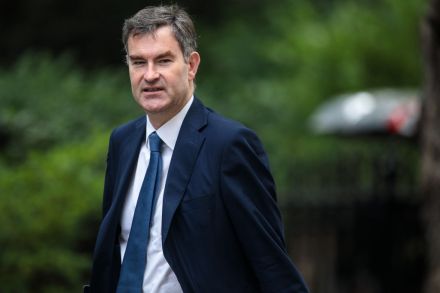
What is the point of a short prison sentence? David Gauke will no doubt think carefully about that question now that he’s been confirmed as the chair of the long-awaited Sentencing Review. Launched by the Ministry of Justice (MoJ), it aims to provide ideas for a new framework of sentencing across England and Wales that ministers hope will help keep the prison population in check and drive up the use of alternatives to prison.  Replacing short prison terms with community sentences is one idea that Gauke has favoured in the past and it’s gaining currency again. But it’s not straightforward, as I’ll explain. Even a short prison sentence has its benefits What is clear, however, is that the current position in prisons is unsustainable.

The problem at the heart of the Chris Kaba case

From our UK edition

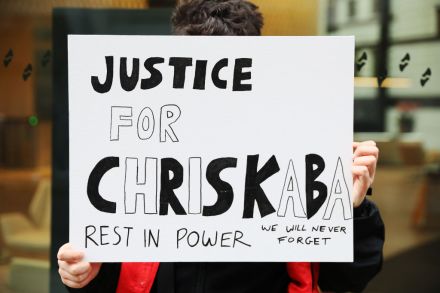
There are few moments more serious than when the state takes the life of a citizen, when a police officer kills someone in the line of duty. Such an event demands an independent and rigorous investigation in which the officer accounts for his or her actions. The family and friends of the person who has died deserve nothing less. But the prosecution of Martyn Blake, the firearms officer accused, and now cleared, of murdering Chris Kaba in September 2022 has raised uncomfortable questions about that process. There was something about the trial that didn’t feel right.  Sergeant Blake shot and killed Kaba through the windscreen of the Audi he had been driving in Streatham, South London.

British policing needs a total rethink

From our UK edition

If you started again with a clean slate, a blank sheet of paper, you would never design a system of policing like this.  It’s a system – in England and Wales – where there are 43 ‘territorial’ forces. No matter how big or small, each force has its own leadership structure, specialist units and support functions, such as finance, vetting and human resources. For instance, there’s Warwickshire constabulary with just 1,126 officers, and neighbouring West Midlands Police, with 8,000. They work together at times, but they are led, managed and organised in separate ways.  The most glaring discrepancies are in the capital.

Martin Hewitt is the right pick for ‘border tsar’

From our UK edition

The ‘border tsar’ isn’t the official title for Martin Hewitt. The former police chief has been appointed to the new role of ‘Border Security Commander’, but it won’t be long before he ascends to tsardom, given the hype around the job. The Border Security Command, which Hewitt will lead, was a key part of Labour’s general election manifesto, as part of their plan to ‘smash’ the criminal gangs bringing people across the Channel in small boats. It was one of the first announcements after Labour were elected, with an advert for the post of commander going out within five days. Managing expectations should be top of the list of his priorities, because this is destined to become one of the trickiest assignments in government. Hewitt is 58.

Thousands of prisoners are about to be released early. Is probation ready?

From our UK edition

I met Anthony by the gates of Thameside prison in south-east London. A skinny, gaunt-looking man in his 40s, he’d spent much of his adult life in and out of jail for offences linked to his mental health problems and addiction to drugs. His latest spell inside had lasted eight months. He was hugely relieved to be out and vowed, like so many other newly-released prisoners, never to go back. Seventy-five per cent of probation staff are women but 91 per cent of those they supervise are male Over the next few hours I joined Anthony and a support worker from a charity on a car journey across London as they raced against the clock to find him a bed for the night, register with a GP, so he could get the medication he needed, visit a benefits office and attend a probation appointment.

Prison cells are now being rationed

From our UK edition

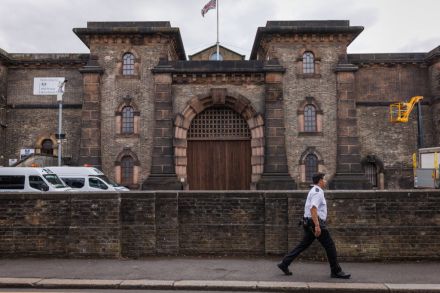
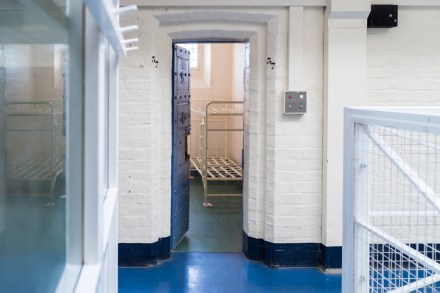
The announcement from the Ministry of Justice (MoJ) is couched in bureaucratic language, but there is no disguising it. ‘Process activated to manage prisoner movements’, said the headline on the department’s website, making it sound like a few minor procedural rules have been adjusted to help the transfer of inmates. In fact, the ‘process’ is an emergency measure to stop people being sent to prisons which are full.  The system is not working as it should.  The areas worst affected – or as the MoJ puts it those with ‘capacity concerns’ – are men’s jails in the north of England. There, prison cells will, in effect, be rationed.

The riots have proved swift justice is possible

From our UK edition

John O’Malley and William Nelson-Morgan; Adnan Ghaffour and Leanne Hodgson; Sameer Ali and Stacey Vint – some of the dozens of people who were arrested, charged, convicted and sentenced within days of taking part in the riots that swept across parts of the UK.  No delays in the police investigation for them, no waiting for the crown prosecution service (CPS) to make a charging decision and no adjournments in court. All cogs in the criminal justice machine working together, sending out a strong message of punishment and deterrence. Punch a police officer on Monday, hear the clang of the cell door on Friday.

How to stop the riots

From our UK edition

For five days at the beginning of August 2011, it felt like we were on the brink of anarchy. Over the last few days, similar scenes have played out on British streets: shops have been smashed and looted; people attacked; and police officers on the front line have been injured. There is nothing more frightening than losing control of the streets Labour's Home Secretary Yvette Cooper has vowed that 'there will be a reckoning' for those involved in the violence. In order to stop the riots, the authorities will have to adopt a similar approach to that taken 13 years ago. Lessons from that period must be applied now if the situation isn't to escalate.

Will Mark Rowley ban the pro-Palestine protests?

From our UK edition

13 min listen

Rishi Sunak met with Met Commissioner Mark Rowley today to discuss the Palestine protests planned for the Remembrance weekend. Sunak has called the marches ‘disrespectful’, and said he would hold Rowley ‘accountable’ for not banning them. Will the Commissioner change his mind? Isabel Hardman speaks to Katy Balls and Danny Shaw, former home affairs correspondent for the BBC.