Danny Kruger

LIVE: The Fight for the Right | Nick Timothy & Claire Coutinho vs Danny Kruger & Matt Goodwin

From our UK edition

28 min listen

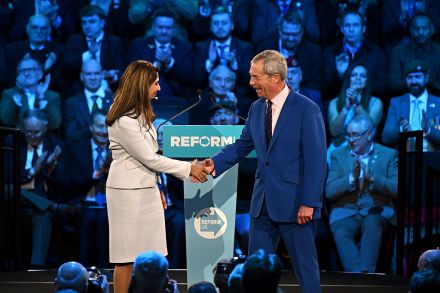
The Conservative party was once the natural political home for those on the right. No longer. The Tories’ vote share collapsed at the 2024 general election and the party, under new leadership, has since been outflanked by Nigel Farage’s Reform UK. Earlier this week, The Spectator pitted the Conservatives, represented by Nick Timothy and Claire Coutinho, against Reform UK, represented by Matt Goodwin and Danny Kruger, for the definitive debate on which party truly represents the future of the right. Listen to an excerpt of that debate here, and for more The Spectator events go to spectator.
LIVE: The Fight for the Right | Nick Timothy & Claire Coutinho vs Danny Kruger & Matt Goodwin

Real conservatives should join Reform

From our UK edition

That sound you can hear is panic. In the past week, articles have appeared by leading Conservatives including Danny Finkelstein, Charles Moore and Michael Gove attacking Reform for a range of crimes, from backwardness, to policy weakness, to (in the case of Moore, scurrilously) anti-Semitism. The onslaught is getting heavier, and more bitter. Suella Braverman’s move to Reform today caused Conservative HQ to publicly question her ‘mental health’, before withdrawing the slur when someone more senior saw it. The Tory establishment is in the last ditch, and has now resorted to what soldiers call Final Protective Fire – a barrage of artillery aimed at the very edge of its own position. The tactic is risky, but the alternative is being overrun and destroyed.

Abortion, assisted dying and Britain’s dangerous new politics

From our UK edition

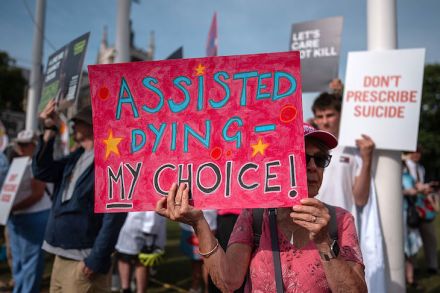
'Now, splendidly, everything had become clear. The enemy at last was plain in view, huge and hateful, all disguise cast off. It was the Modern Age in arms.' After last week, I feel like Evelyn Waugh at the time of the Nazi-Soviet Pact in 1939. The politics of 'progress' has found its fulfilment in the union of two total malignancies: the campaigns to abort babies at full term and to kill old people before their time. Here is our enemy, all disguise cast off. It's the revenge of the middle-aged against their dependents I've been accused of disguising something myself: my Christian faith. And it's true that while I've never hidden it (see my maiden speech) I didn't parade my faith as the basis of my objection to assisted suicide.

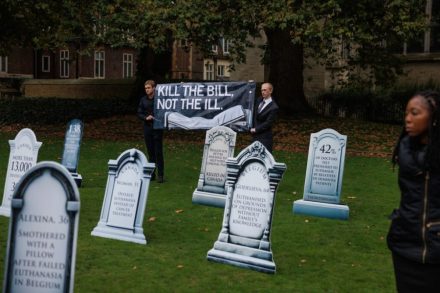
The Terminally Ill bill deserves to die

From our UK edition

They tried, they really did. Dignity in Dying, the lineal descendent of the 1930s Euthanasia Society and therefore great-great-niece of its sister the Eugenics Society, has been struggling for weeks to frame a bill that’s innocuous enough to pass through parliament. Today we saw the fruit of their efforts. The Terminally Ill Adults (End of Life) Bill has ‘the most stringent safeguards in the world’, says its sponsor, Kim Leadbetter MP. It’s only for the sickest people with less than six months to live; you need two doctors and a judge to confirm you’re really dying and really want to end it all early; you have to commit ‘the final act’ by administering ‘the approved substance’ yourself.

How the Conservatives can win again

From our UK edition

There is a tension at the heart of conservative thinking today – one that the Conservative party must address if it wants to win again at the next general election. The National Conservatism conference, being held in Westminster this week, is a bold attempt to speak to this internal struggle: how to strike the right balance between the right to be free and the right to belong.  Karl Marx was right in the 19th century when he said that capitalism causes all that is holy to be profaned and all that is solid to melt into air. John Gray was right in the 1980s when he said Thatcherism would eat itself – that the free market depends on social institutions and habits that the free market itself undermines.

Queen Elizabeth II and the path back to patriotism

From our UK edition

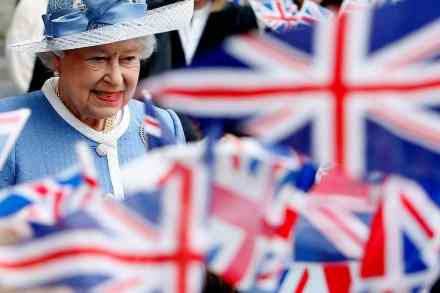
‘The people of England were long habituated to queues; some had joined the procession ignorant of its end – hoping perhaps for cigarettes or shoes – but most were in a mood of devotion.’ In Unconditional Surrender, his novel of the Second World War, Evelyn Waugh describes the queue to see ‘the Sword of Stalingrad’, wrought of silver, gold and Sheffield steel, which was displayed in Westminster Abbey in 1943 before it was presented by Churchill to Stalin in honour of the Russian people’s resistance to Hitler.  Here, wrote Waugh, in ‘the sacring place of the Kings of England’, the sword stood for the timeless and transcendent against the grossly modern, for old skills and old virtues in an age of mechanised war.

The right response to the Grenfell Tower disaster

From our UK edition

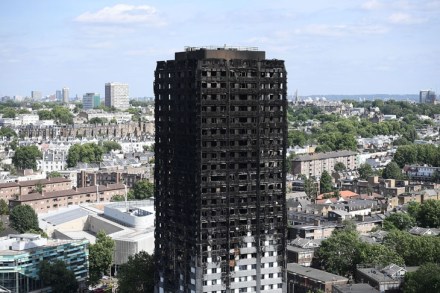
Everyone agrees the Grenfell Tower disaster must usher in a new era of social housing in the UK. The danger is that it sends us back to a very old era, when the council owned, managed and controlled community housing. There is another way forward, one which meets the rightful sense of injustice felt by people living on Lancaster West, the estate where Grenfell Tower stands – not the injustice of a botched refurbishment which (probably) caused the tragedy, but the injustice of residents not being listened to when they raised concerns, over many years, about their safety or quality of life.

Groping wasn’t the worst thing going on at The Presidents Club

From our UK edition

Once again public figures are fanning themselves with shocked surprise at something perfectly comprehensible to everyone else: men behave boorishly when drunk, sans wives, in the company of young women in short skirts paid to make themselves friendly. Of course, what went on at the Dorchester that night is seriously not okay and it's good news the Presidents Club is no more. But the problem wasn't just the groping. It was the event itself, and specifically the model of philanthropy on display. Too many rich people see charity as something peripheral to the real business of life. Inoculated by their wealth from any exposure to the demand side of what charities do, they see the supply side as a bit of fun, an opportunity to display their wealth and generosity.

Grenfell and the bigger, better society

From our UK edition

The last housing scandal in Notting Hill brought down a Conservative government and transformed the social policy of Britain. Peter Rachman was a slum landlord with a pink Rolls-Royce. His appalling treatment of poor immigrants, exposed during the Profumo affair, magnified the myth of exploitative, capitalist, decadent Tories. The 1964 election swept Harold Wilson to power with a promise of rent controls, and the era of council estates, comprehensive education and welfare entitlement was upon us. Despite the efforts of Wilson and his successors, Notting Hill is the most unequal corner of the most unequal city in the country.

How to make drugs boring

From our UK edition

Bill Blair, the former police chief of Toronto, slides into his restaurant chair and twinkles at the waitress. He’s 6ft 6in, white-haired now but perky. Bill has 120 years of policing behind him. He, his father and his grandfather all served 40 years in the force. Now he’s an MP and he’s legalising cannabis in Canada. The restaurant has been here since early in Bill’s father’s time on the beat. It claims to have invented the bacon cheeseburger. We sit round a plastic-topped table and Bill tells me how he ended up pushing drug reform. ‘When I left the force all three political parties wanted me to run for office. I’ve spent my life avoiding politics and the other parties reminded me why. They just wanted me for political kudos.

History won’t look kindly on David Cameron for more reasons than the referendum

From our UK edition

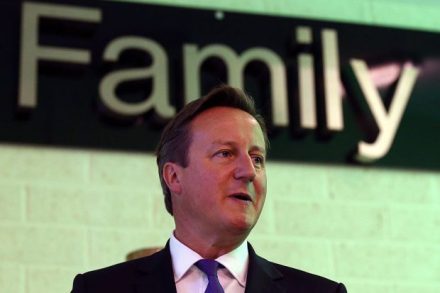
‘Bad policy.’ ‘No discernible impact on the key outcomes it was supposed to improve.’ ‘Deliberate misrepresentation of the data… a funding model that could have been designed to waste money’. ‘A waste of £1.3 billion’. ‘Failed’. The media’s treatment of the troubled families programme, whose evaluation has recently been made public, cannot have cheered David Cameron in his last week as an MP. History does not look likely to be kind to his great social policy. We should, however, be grateful to the former prime minister for his quixotic attempt to do the right thing on a massive scale.

Too big not to fail

From our UK edition

‘Bad policy.’ ‘No discernible impact on the key outcomes it was supposed to improve.’ ‘Deliberate misrepresentation of the data… a funding model that could have been designed to waste money’. ‘A waste of £1.3 billion’. ‘Failed’. The media’s treatment of the troubled families programme, whose evaluation has recently been made public, cannot have cheered David Cameron in his last week as an MP. History does not look likely to be kind to his great social policy. We should, however, be grateful to the former prime minister for his quixotic attempt to do the right thing on a massive scale.

Putting criminals on stage

From our UK edition

Danny Kruger explains how his theatre company helps offenders to go straight Felicia ‘Snoop’ Pearson was a drug dealer, with a five-year stretch for murder behind her and no nice future ahead. But then a random meeting in a Baltimore nightclub, with an actor in the hit TV show The Wire, led to a starring part for herself in the story about the lives and fortunes of hustlers and cops and pimps and politicians. She plays to type, a drug-dealer and murderer, and in the role she has found a sort of redemption, and a deeper truth: ‘Ain’t saying I’m the best actor out there — I know I’m not — but I also know that acting, by showing me how to feel, also showed me I hadn’t been feeling at all. You can’t sell dope all day and still feel.

I wrote ‘hug a hoodie’ and I’m proud of it

From our UK edition

Danny Kruger, who was David Cameron’s speechwriter, defends his most notorious piece of work for the Tory leader and says that love is a neglected crime-fighting device It happened to be the day that Boris Johnson took office as Mayor of London with a mandate to tackle youth crime. My wife and I were coming out of a house in Camden where we had been viewing a flat to rent. Standing on the steps with us, the owner of the flat suddenly saw the retreating rear of his moped, two boys aboard and half a dozen of their friends pelting along behind. Like the pair of prats we were, the owner and I tackled youth crime. When we caught up with the pedestrians, we received between us a black eye (owner) and cut lip (me), and no moped.

Diary – 20 November 2004

From our UK edition

I’m in Sedgefield, County Durham, contesting the nomination for the Conservative candidate who will fight the Prime Minister for his seat in Parliament. I make my speech to the assembled Tories: tax, Europe, crime, education, pensions. Afterwards I go into the corridor and make agonising conversation with the other finalist. I smoke a cigarette. I go to the loo. I smoke another cigarette. They are taking an extremely long time. Eventually the chairman emerges and delivers the verdict. The other chap takes it well, slipping away with a smile and a handshake. The chairman takes me to the pub. In 1997 Mr Blair promised a low-tax government, to make education a triple priority, and to be tough on crime and its causes.