Daniel McCarthy

Daniel McCarthy

Daniel McCarthy is a US columnist for The Spectator and is the editor of Modern Age: A Conservative Review.

Who lost Afghanistan?

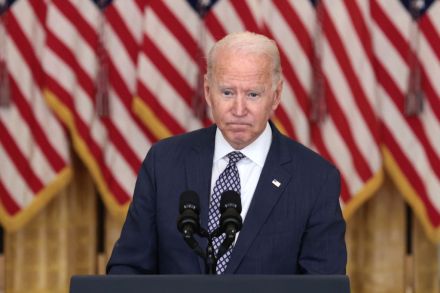
America's longest war draws to a bloody end. As the pullout deadline approaches, the probability of more atrocities like the suicide bombing last Thursday that killed 13 of our troops, and more than 90 Afghans, remains nauseatingly high. The American public was ready for us to leave Afghanistan. It was not prepared for just how ugly leaving could be. President Biden bears responsibility for the lives lost, just as he bears responsibility for those lost throughout the course of this conflict and the similarly ill-premised Iraq War — both of which he helped to launch while he was in the United States Senate. He has made grave mistakes. One mistake he has not made, however, is to waver from the decision to withdraw. He has not let terrorists change our timetable.

press

The last war for democracy

Twenty years after 9/11, the War on Terror has come full circle. Everyone expected the Taliban to surge back to power as soon as American forces left Afghanistan. Instead, the surge began while America’s embassy in Kabul was still open, inviting unwelcome flashbacks to Saigon in 1975 and Tehran in 1979. There are piquant memories of 1989, too — not of the Berlin Wall’s fall or a young Francis Fukuyama’s publishing ‘The End of History?’ in the National Interest, but memories of an Afghan insurgency’s triumph over a superpower. That triumph would inspire and ultimately contribute in the most concrete ways to a decade of terrorism, culminating in the 9/11 attacks.

war

The American epoch of failure 

For 20 years America built a Potemkin village and called it Afghanistan. Now this cardboard democracy has been trampled down in a matter of days by the Taliban. The speed and comprehensiveness of the rout cannot be explained by Joe Biden’s blunders. The war has drawn to a humiliating end not because of a weak president’s missteps in the final weeks but because the entire project was misconceived. Afghanistan was not ready for democracy and trillions of dollars in American aid could not even begin to change that fact. With US and allied forces providing security, the Afghan government did not even have to fulfill the most basic function of any state. The Afghan government lived off charity — foreign money, foreign arms.

war

The Democrats should investigate themselves for insurrection

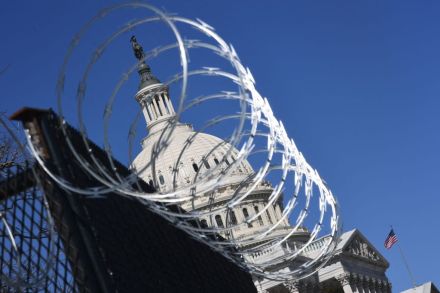
For nearly a month last summer a violent insurrection claimed control of Capitol Hill — in Seattle, that is, not Washington DC. The insurrectionists were leftists who proclaimed the six or so city blocks under their power to be a new state-within-a-state, the ‘Capitol Hill Autonomous Zone’, or CHAZ. Multiple shootings, murders and acts of arson took place before police finally restored legal authority on July 1. This insurrection, and the many other lethal incursions against the rule of law that took place last summer, have not occasioned much soul-searching or anger from progressives and liberals in the commentariat. The contrast with their fury over the riot at the US Capitol on January 6 of this year could not be more striking.

insurrection

How to win the culture war

Last November, voters in California, one of the most reliably Democratic states in the Union, defeated a ballot initiative that would have restored the state’s ability to use race as a factor in government hiring and employment. Affirmative action, a supposedly positive form of discrimination, could not win over the public even in a deep blue majority-minority state. Over 57 percent of California’s voters opposed it. So it’s little surprise that ‘critical race theory’ and other forms of racial indoctrination promoted within businesses, universities and primary schools have engendered revulsion among Americans nationwide. Children are being taught to sort and rank one another by color and ethnicity.

culture

Donald Rumsfeld succeeded at everything — so why did he fail in the end?

What kind of man was Donald Rumsfeld? A successful one, by almost every measure. Ivy League scholar-athlete, captain of Princeton’s football and wrestling teams. Successful candidate for office, easily reelected to Congress twice before he left to join the Richard Nixon administration. There he proved a success at navigating both the federal bureaucracy and the internal politics of the scandal-consumed administration. He survived Nixon’s resignation and soon became Gerald Ford’s chief of staff — and after that, the youngest man ever to serve as secretary of defense, taking charge of a newly-minted all-volunteer force whose morale and discipline were in shambles after Vietnam.

donald rumsfeld

Is J.D. Vance the right man for the right?

J.D. Vance is the man Republicans have been praying for since the day Donald Trump stormed to the party’s presidential nomination five years ago. He has a lot of the traits conservatives liked about Trump: Vance, too, is a political outsider with proven appeal to an audience beyond politics, thanks to his bestselling memoir Hillbilly Elegy. Like Trump, Vance offers himself as an avatar for the people who have been discarded by globalization and demonized by a left-wing media and education establishment. And he is as radical as Trump — maybe more so — in his willingness to reject the merely liberal side of American conservatism. Trump defied elite orthodoxy on trade and immigration. Vance adds proposals to curb the tech companies and tax Ivy League endowments. But if J.D.

vance

Is Sohrab Ahmari a Satanic ogre?

Sohrab Ahmari is an ogre sent by Satan to annihilate American freedom. At least, that’s the reputation he has with liberals of the more excitable sort. His new book ought to soothe their twitchy nerves. The Unbroken Thread is an easy going, ecumenical, rather cosmopolitan tour of 12 moral questions and select thinkers who responded to each of them. ‘My primary purpose,’ writes our implausible theocrat, is ‘not to offer definitive answers, drawn from any one particular tradition, but to explore the possibility that our contemporary philosophy might be wrong in crucial respects.’ Ahmari has been much vilified for his criticism of Drag Queen Story Hour, an event in which crossdressers introduce themselves to children in public libraries.

ahmari

Joe Biden’s party is over

Washington, DC The Democratic party is dying. That may be hard to believe since Democrats control both houses of Congress and won the last presidential election with a record 81 million votes. But the exiguous margins of their hold on the House and Senate, with fewer than 51 per cent of the seats in either chamber, tell another story, as does the desperation of their struggle to abolish the filibuster and federalise election law. Those policy aims are of a piece with dreams of ‘packing’ the Supreme Court with left-liberal justices — and packing the Senate too, by turning tiny Democratic bastions into new states. The left wing of the party even assails the constitutional principle behind the Senate itself, the idea of equal representation of the states.

Last chance to end the tech tyranny

What would Adam Smith think of cancel culture? Many advocates of banning books now hide behind a veil of free-market purity: If Amazon bans a book, it’s not really banned because the online megalomart is, a private company. But it controls an outright majority of book sales in the United States, and even that remarkable measure may underestimate the power Jeff Bezos’s company wields over individual titles. Bestsellers can be found elsewhere perhaps, but most books have few other outlets. So Amazon doesn’t ban books. It just makes them much harder to buy and read. If a private company chooses to do that, who are you to complain?

oligarchy tech capitalist pigs

The Republican party has taken over Donald Trump

Forty minutes into Donald Trump’s remarks at CPAC, I’d formed a conclusion. Donald Trump hasn’t just taken over the Republican party, I thought, the Republican party has taken over Donald Trump. The speech got off to a slow start, with Trump’s familiar critiques of illegal immigration failing to elicit much excitement from the audience. Was this tried and true, as far as they were concerned, or just tired and true? Soon enough Trump was uttering phrases that any Republican leader of the last 30 years might have recited: socialism, radical Democrats, exceptional nation, Judeo-Christian values. Farmers this and farmers that. Mostly fine — all routine. The urgency was gone. But the speech kept going. And while little was new, Trump started to sound like Trump again.

republican party

Death by debt

The US national debt is now in the neighborhood of $28 trillion. Some of that is money the government owes itself, but the publicly owned portion of the debt, some $21 trillion and counting, is roughly equal to the nation’s entire pre-COVID-19 domestic output for 2019 ($21.4 trillion). Republicans in Washington have already begun to sound the alarm over these figures — though, of course, far fewer of them were so outspoken about the debt when President Trump was the one running up the numbers. Is the mounting debt a threat to America’s way of life or just a convenient stick with which to beat a Democratic administration? Republicans tie the debt to spending. This crushing burden on the taxpayers of the future, they say, is a testament to the uncontrolled growth of government.

debt

Rush Limbaugh, conservative rebel

‘The cutting edge of societal evolution.’ That was one of Rush Limbaugh’s catchphrases in the 1990s, and it was an apt description of a man who revolutionized radio and politics alike. Limbaugh has now died at age 70, but the societal evolution that he accelerated continues. This is why Limbaugh will still be loved by the right and hated by the left for years to come. Rush was a media powerhouse in his own right as a radio host, but he was also the grandfather of Fox News. Ever since the Nixon years conservatives had thought that there could be a mass audience for their message, one large enough to support a television network. Efforts to create one, or buy one of the existing networks, all fell flat, however.

rush limbaugh

The death of the Republican right has been greatly exaggerated

As Donald Trump goes on trial in the Senate, the Republican party faces the possibility of a crack-up. Trump will almost certainly be acquitted, but the vote will be the third time in two weeks that GOP disunity is in the spotlight. Last week the attempt to oust Liz Cheney from her leadership role in the House saw the pro-Trump wing of the party come up short. Then 11 Republicans voted with the Democrats to strip Rep. Marjorie Taylor Greene (R-Ga / Q-Anon) of her committee assignments. Now it’s the Senate GOP’s turn to showcase its divisions. ​Cheney’s survival showed that the Trump faction isn’t strong enough — in Congress anyway — to purge the anti-Trump faction. Trump’s acquittal will mean his enemies inside the party can’t get rid of him, either.

republican

What does Trump want now? Revenge — and a second term

From our UK edition

The figure of the ex-president is one of the most endearingly republican features of American politics. He who was the most powerful man in the world for as many as eight years turns overnight into a political fossil. He’s no longer the leader of his party, much less his country. Whether in his fifties or in his seventies, his battles are over. Now there’s just millions to be made on the corporate lecture circuit and publishing ghosted memoirs. If you’re Jimmy Carter, you build houses for the poor. If not, the spotlight returns only when you’re the opening act for your party’s next nominee at the convention. The only big national event that’s all about you, once your time as president is up, is your funeral.

America’s Yeltsin moment

The end of the Cold War was as great a shock to US politics as it was to the Soviet Union’s. The Soviet regime didn’t survive, of course, and late 2021 will mark 30 years since the USSR dissolved. Mikhail Gorbachev had tried to save the Soviet system through reform. The Communist hardliners who briefly deposed him in the summer of 1991 tried to save it by rolling back reform. Neither sufficed — the regime, and the party and ideology at its heart, had lost their legitimacy irrevocably. The first US presidential election after the collapse of the USSR almost rendered the same verdict on the regime in Washington. The 1992 election saw a populist challenge to President George H.W. Bush from within his own party.

yeltsin

The fight for liberalism

The world has many island nations, and sometimes the United States counts itself among them. We have water on either side of us, and though we share our big island with Canada and Mexico, neither poses any threat. America is immune to invasion, a castle surrounded by the safest of moats. This wasn’t always so, and it isn’t really true today, unless we forget about Hawaii and our Pacific and Caribbean territories, most of which would be easy prey for other states if they weren’t under our sovereignty. In the earliest days of the republic, we shared the North American continent with outposts of Europe’s leading powers: France, Russia, Spain and Britain.

liberalism

How the GOP can win by losing Georgia

Not long ago I attended a gathering of young White House and congressional Republican staffers. Conversation turned, as you might expect, to the prospects for the GOP in Georgia’s two Senate runoff races in January — races that will swing control of the chamber if Democrats win them both. Only one young man dared to say the unsayable: not only would the GOP lose those races, but it should lose those races for the party’s own good. His points were sharp, even if no one was entirely persuaded. There would indeed be a silver lining to losing the Senate majority, and while few Republicans will wish for that, Trump voters will have some consolation if David Perdue and Kelly Loeffler go down next month.

georgia

The wars go on

America’s longest war has just entered its 20th year. The US invaded Afghanistan in October 2001 to overthrow the Taliban and destroy al-Qaeda. Now, nearly a decade after the death of Osama bin Laden, the Afghan war continues. And everyone expects that if the Americans ever leave, the Taliban will return to power. Yet the Taliban who take charge will not be the same as those who harbored bin Laden. The median age in Afghanistan is around 19 years old: half the country’s population was born after the war began. The US is not fighting a limited reservoir of Taliban militants; it is fighting a cultural force that has renewed itself over a generation.

wars

Has Ben Sasse won it for Joe Biden?

Will a Republican senator from Nebraska be the man who hands Joe Biden the White House? Ben Sasse has tried his best to do that. Sasse easily won reelection in the safe red state of Nebraska on Tuesday, leading his Democratic opponent by nearly 30 points with 85 percent of the vote in. But President Trump has not fared so well; in fact, he lost the vote in Nebraska’s Second Congressional district. Since Nebraska, like Maine, divides its Electoral College votes by district, that means Joe Biden gets an elector from Nebraska. And for that, Biden can thank Sasse, who next to Mitt Romney is the sitting Republican senator who has been most outspokenly critical of President Trump.

ben sasse