Daniel McCarthy

Daniel McCarthy

Daniel McCarthy is a US columnist for The Spectator and is the editor of Modern Age: A Conservative Review.

Bureaucracy is more dangerous than the AR-15

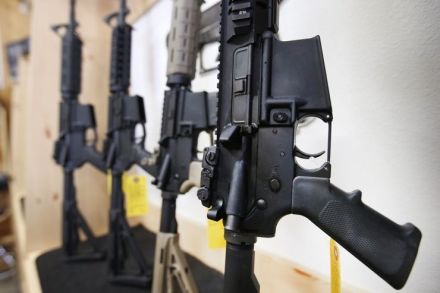
Should taking rights away from innocent people be a first resort or a last resort—or no resort at all—in response to a spate of heinous crimes? If we were talking about the First Amendment rights of religious minorities or of free speech, most liberals would insist that people who had committed no crime shouldn’t forfeit any of their liberties. But where the Second Amendment is concerned, these same liberals are quick to call for law-abiding citizens to give up a measure of freedom simply because they are under 21 or want to buy something that progressives don’t like—such as an AR-15 rifle.
Why Trump’s ‘trade war’ makes strategic sense

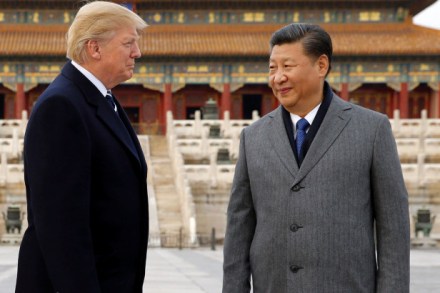
Has Donald Trump sparked off a trade war? His plans for a 25 percent tariff on steel imports and 10 percent tariff on aluminum have shocked friend and foe alike. China is outraged; so are Canada, Japan, and South Korea—allies that in fact export more steel to the U.S. than China does. They stand to be hurt worst if they aren’t granted exemptions or cut special deals by the president. Trump accuses the Chinese of 'dumping' steel into the American market, while the legal grounds for his new tariffs rest in the idea that strategically critical manufacturing is endangered by a diminished U.S. metals industry.

The problem with America is not Donald Trump

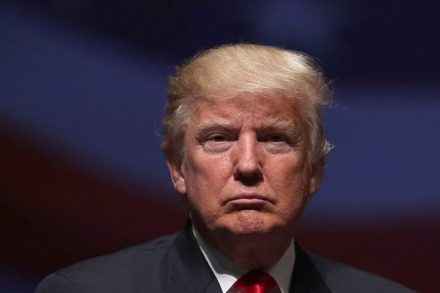
Something has gone horribly wrong in America, but it isn’t Donald Trump. The 45th president’s first year has in fact been a very good year for the country. By the time those 12 months were up, the unemployment rate was the lowest the country had seen in 18 years, and the number of new filings for unemployment benefits was at a 45-year record low. Even black Americans were doing better under Trump than they did under the first black president: by the start of 2018 the black unemployment rate was the lowest it had been since the Bureau of Labor Statistics started keeping count. For all that his enemies insist that Trump’s electoral appeal was really about race, in 2016 Trump made jobs the centrepiece of campaign.

You’re fired!

From our UK edition

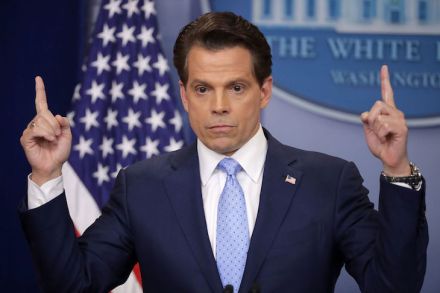
 Washington D.C. Even a reality show needs good plot twists, and Donald Trump has delivered them like the master he is. First the misdirection: a week of publicly humiliating his attorney-general, Jeff Sessions, to the point where Sessions would surely quit or be fired. Then the sudden swerve — it was the press shop, not the justice department, that was decapitated. Sean Spicer was out as press secretary. Anthony Scaramucci, a mini Trump whose language was as blue as the lenses of his fancy sunglasses, was in as White House communications director. Reince Priebus, chief of staff, was next to go, sacked after clashing with ‘the Mooch’. And then the climactic twist: in virtually his first act in office, Priebus’s replacement, Marine Gen.

Obama fell for his own myth

From our UK edition

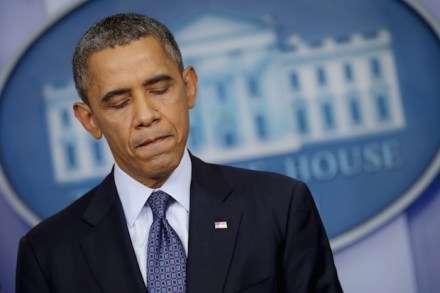
Barack Obama’s farewell address was not one for the ages. Like his presidency, it was full of hope yet ultimately disappointing. When Obama rode into office eight years ago, he had two mandates from the public: to right the economy after the Great Recession and to end the wars that George W. Bush had started but couldn’t finish. Beyond that, yes, his voters hoped this first black president would usher America into a post-racial future. Even many Americans who had voted against him wished him well. He was enormously popular, and he had majorities in Congress to prove it. He was in a position to make good on his promises. https://www.youtube.com/watch?v=H1O4iOoZxjg But he didn’t, and he doesn’t seem to realise it.

The intelligent case for voting Trump

From our UK edition

Last week more than 130 right-wing thinkers put their names to a defiant document — a list of ‘Scholars and Writers for America’ in support of Donald Trump. It includes the editors of five of the country’s leading conservative journals of ideas: R.R. Reno of the Christian conservative First Things; Roger Kimball of the New Criterion, the right’s leading journal of the arts; Charles Kesler of the Claremont Review of Books; the American Spectator’s R. Emmett Tyrrell; and me, the editor of the American Conservative. (Notably lacking are names from America’s oldest conservative magazine, National Review, which has been as hostile to Trump as the columnists of the New York Times and Washington Post.

Brains for Trump

From our UK edition

Last week more than 130 right-wing thinkers put their names to a defiant document — a list of ‘Scholars and Writers for America’ in support of Donald Trump. It includes the editors of five of the country’s leading conservative journals of ideas: R.R. Reno of the Christian conservative First Things; Roger Kimball of the New Criterion, the right’s leading journal of the arts; Charles Kesler of the Claremont Review of Books; the American Spectator’s R. Emmett Tyrrell; and me, the editor of the American Conservative. (Notably lacking are names from America’s oldest conservative magazine, National Review, which has been as hostile to Trump as the columnists of the New York Times and Washington Post.

Obamacare? Not in the least

From our UK edition

   Washington, DC On or around 17 October, the United States will stop paying its bills. The US Treasury will reach the limit of the debt it can legally issue — the ‘debt ceiling’ — and unless Barack Obama and Republicans in the House of Representatives come to an agreement, the US will stand on the brink of default. How did Obama get us into this mess? More importantly, can he get us out before the country (if not the world) plummets into crisis? The answer to the first question might surprise you: Obama is not an adroit politician. Good at winning votes, yes — not only better than the Republicans he faced in 2008 and last year, but better than Bill Clinton and either of the Bushes.

The hawk in No. 10

From our UK edition

Will Cameron play the Bush to Obama’s Blair? Eight years ago an American president led a passive British prime minister into a war both countries would regret. David Cameron is eager for history to repeat itself, with the national roles reversed. While Barack Obama dithers, Cameron demands tough action against Libya — with a western-imposed no-fly zone seemingly uppermost on his mind. ‘Do we want a situation where a failed pariah state festers on Europe’s southern border,’ he asks, ‘potentially threatening our security, pushing people across the Mediterranean and creating a more dangerous and uncertain world for Britain and for all our allies, as well as for the people of Libya?

Mr Tea

From our UK edition

The last time Republicans retook control of Congress, in 1994, the face of the revolution belonged to the party’s leader in the House of Representatives, Newt Gingrich. This year the standard-bearer is a less obvious figure: Rand Paul, the newly elected junior senator from Kentucky. Not only is Rand not part of the leadership, he is the son of Ron Paul, a maverick former presidential candidate who is considered a pariah within his own party. But this is an outsider’s hour in American politics, and the younger Paul is everywhere hailed as the paragon of the Tea Party revolt. That revolt has been directed as much against the Republican establishment as against Barack Obama and the Democrats.

The trouble with tea parties

From our UK edition

For many Tory voters, a change of government on 6 May will not be enough. What Britain needs, they think, is little less than a revolution — against skyscraping taxes and personal debt, a corrupt parliament, and a surveillance state that is stripping away liberties as old as Magna Carta. In short, Britain needs what America has: tea parties, a grassroots movement willing to take to the streets in protest against state power. Daniel Hannan and his Freedom Association lit the fuse for such a rebellion, or so they hoped, in February with a Brighton tea party. And Hannan is not alone, there are signs everywhere of a longing for a populist backlash.