Daniel Korski

Labour’s nuclear no-show

From our UK edition

Today, President Barack Obama hosts leaders from 46 countries for a two-day nuclear security summit that will focus on how to better safeguard weapons materials, both old and new, and to keep them out of the hands of terrorists. Labour’s manifesto was also launched today. What do the two things have in common? Not a lot, really. But they could have had a lot in common – if the Labour government had been willing to be bold. Here's how. As preparation for the summit, the US signed a new treaty with Russia last week to reduce the nuclear stockpiles of both nations, and the Obama administration issued a revised nuclear arms strategy intended to reinforce the nation's nuclear deterrent.
Nick Clegg’s self-defeating Scargillian rhetoric

From our UK edition

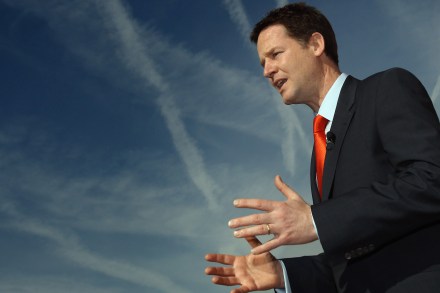
The transformation of Nick Clegg from moderate Europeanist to a populist continues apace. The Lib Dem leader is very serious about capturing the anti-politics mood among the electorate - no easy feat for some who looks as Establishment as the rest. Though he will likely be pleased with today's Observer interview, I wonder whether he will, in retrospect, feel comfortable with his view that a small Tory majority would somehow make a Cameron government illegitimate and that Britain could be plunged into "Greek-style unrest" if cuts were introduced. Where to begin? The electoral system works the way it does. It has many inbuilt problems - particularly for the Tories - but until it is reformed it produces lawful and legitimate governments.

Polish tragedy

From our UK edition

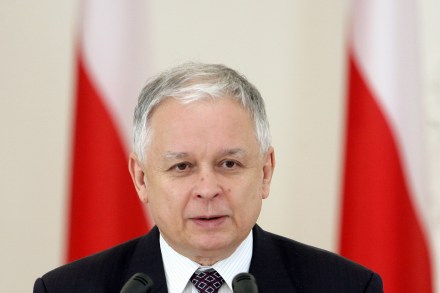
Polish President Lech Kaczynski, his wife and a number of top Polish officials, including the Central Bank president, the Polish ambassador to Moscow and an Army chief, were killed when the presidential plane crashed near an airport in western Russia.  The tragedy – the worst in modern Polish history – ends an extraordinary career for the actor-turned-politician who, alongside his twin brother Jaroslaw Kaczynski, upended Poland’s political system when they founded the conservative party Law and Justice, and in 2006 controlled both the presidency and the government. The brothers first found fame as child actors, with angelic faces in a film version of the popular children's book The Two That Stole The Moon.

Are the Tories ready for joined-up government?

From our UK edition

The Civil Service is readying itself for a new government. The BBC has already reported a discussion of efficiency savings among senior officials. In another part of Whitehall, work is a foot on how to set up a National Security Council should the Tories win. I have in the last few weeks been interviewing ex-ministers and senior officials as research for a RUSI paper, due out soon after the election, on how to improve the government's security set-up. Traipsing around various departments, a number of interesting conclusions have come to light: - Conservative ideas for an NSC are not the same as the government's NSID committee, however much ministers say it is, but there is yet no clarity on the Tory detail of what one official called "the second layer" of reforms.

Win one for the Gipper

From our UK edition

A Cameron government has the potential to change Britain - but not much else beside.  A Tory loss, however, could change much more. The Cameron Tories are a bellwether for Conservative movements in a number of countries, including the US. If they succeed, they will prove a powerful model for many moderate Republicans who believe their party is in an earlier post-Major phase - angry, divided and negative. If David Cameron fails to defeat Gordon Brown, few Republicans will look across to their British cousins for inspiration. The party will eschew any modernising project for a while longer and stick to their equivalent of IDS. In this scenario, the Republicans will pick up some congressional seats and governorships.

The hyperbole of Westminster

From our UK edition

Campaigns are conducted in poetry, former New York mayor Mario Cuomo once said. This one seems to be conducted in hyperbole. Every party is doing their level best to show that there is a difference, and a big one, between them and their opponents. That's normal. But to do so, they are stretching good arguments beyond what is sustainable. "Brownies" may be a particular mendacious form of hyporbolic campaigning (and governing),  but there are bound to be a few Tory and Lib Dem exaggerations on display during the campaign. Exhibit A. The Tories say a hung parliament will doom Britain as the markets will react badly to a potentially unstable government - with ruinous consequences. Exhibit B. Labour is at it too.

Goodbye world, see you in a few weeks (for a proper EU dust-up)

From our UK edition

With plenty of domestic issues to debate, the election campaign promises to see little intrusion from the outside world - barring Russia invading a small neighbouring country, a terrorist attack or another financial meltdown. Nor will Britain say much to the world in the next couple of weeks; ministers will be be represented at international meetings, for example in NATO, by senior officials, and Britain's diplomats have been told to keep quiet. As soon as the election is over, however, there will be plenty of action. The Cabinet Office is busy planning a quick update of the National Security Strategy, and then will come a slightly longer Security and Defence Review.

The Tunnel Ridge Fault election

From our UK edition

At times the chasm between Britain’s political parties is as great as the San Andreas Fault. Sometimes the difference is more like a small rift, a matter of tone not policy. In this year’s election, the difference between the parties is somewhere in between, like the lesser-known Tunnel Ridge Fault in Eastern California. In part, the appearance of only minor differences may explain why the polls are showing such different things; some predict that Labour will hang on to power, others that the Tories will be able to win.

Have a gay time

From our UK edition

Chris Grayling's erstwhile view that Britain's inn-keepers can interpret anti-discrimination legislation as they see fit belongs where he originally found it: in the biggot bin. There is no place for anti-gay views in British politics, or the Conservative Party. This is not just a question of electioneering -- ie currying favour with a symbolically important segment of the electorate - but is a matter of decency. Homosexuals have as much place in modern Britain as everyone else. A worrying part of the airing of Grayling's (now-disavowed) comments is that it has given Labour an excuse to tarnish the Conservatives with an anti-homosexual brush.

For the Tories, finding “good” EU issues gets harder

From our UK edition

I recently sat down with a European foreign minister to discuss the EU's enlargement strategy and how it would deal with those applicant countries, like in the Western Balkans, who want to join the Union but whose chances of integration in the next ten years or so are limited. We tried to write down those of his ministerial colleagues who could be brought together for a regular discussion of the issue; we stopped at five names.  Only five EU foreign ministers out of 27 could be counted on to join an unscheduled discussion about enlargement policy. That's a problem, including for the Tories. Here is why.

The Vatican plays the “Jewish Card”

From our UK edition

Speaking in a Good Friday homily, with the Pope listening, the Pontiff’s personal preacher, Fr Raniero Cantalamessa, likened the drive by the victims of abuse to seek justice from the Vatican, whose priests committed the sexual crimes, with the persecution of Jews. Victims' groups and Jewish organisations have said it was inappropriate to liken the discomfort of the Catholic Church to hundreds of years of violence and abuse. But it is more than inappropriate. It shows either an ignorance of the history of anti-Semitism; a desire to relativise the Holocaust; a near-pathological disregards for other people’s suffering; or a wilful aspiration to shift the blame away from the Vatican.

How do you solve a problem like Karzai?

From our UK edition

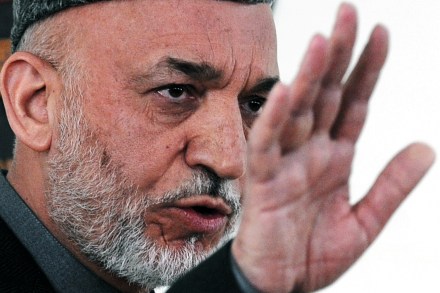
A few days after President Barack Obama flew to Kabul to look Hamid Karzai in the eye and demand that he combat corruption, drugs, crime and the influence of notorious warlords in his government, President Karzai has blamed foreigners, including UN and EU officials, for "very widespread" fraud during presidential and provincial elections last year. He is quoted as telling a meeting of election officials: "There was fraud in presidential and provincial council elections - no doubt that there was a very widespread fraud, very widespread ... But Afghans did not do this fraud. The foreigners did this fraud." As insane notions go this one is quite extraordinary – even by Karzai’s quixotic standards. And it demands a response.

Honouring the righteous

From our UK edition

In Britain, a lot of people think Parliament has either become useless, venal or both. Few would look to it for moral guidance. Not so in Serbia, where the nation’s legislature has condemned the 1995 Srebrenica murder of 8,000 Muslims in Bosnia-Herzegovina – Europe’s worst atrocity since World War II - for the first time. In 2004, I was involved in getting the Bosnian Serb authorities to admit their role in the crime. Reluctantly, they admitted that their forces participated in the killings, but many condemned the resolution at the time. So the Serbian move is significant. But the road to reconciliation in the Balkans is still long.

Who will be Cathy Ashton’s Sir Humphrey?

From our UK edition

The fight for the most powerful job you've never heard of is being fought by people who you've probably also never heard of. For EU foreign policy “czar” Cathy Ashton has published her plans for Europe’s diplomatic service, which is meant to oversee the EU's multibillion-pound annual development budget and have a diplomatic staff of about 7,000 people. Her proposals can be found here. The proposals have commentators are split. Dan Smith and Mark Leonard are in favour, but a couple of MEPs have called me expressing their frustration with the plans. European legislators are particularly concerned about the powers given to the Permanent Under-Secretary type figure, the Secretary-General of the EEAS.

The neocons were right

From our UK edition

When your face has been slammed into a concrete pavement, as you take cover from the mortar fire, you struggle to think the best of your fellow man. I certainly did. I cursed the Iraqis who were firing at me, and swore at the Iranians who were arming them. Most of all, I thought "what the hell are you doing here, you idiot?" I could have stayed in my diplomatic posting in Washington, DC. I could have been satisfied with my work in Bosnia and Afghanistan. But I had to go to Basra. Duty, a hunt for adventure, a worry I was missing out and a feeling that we, I, you and me, owed it to the Iraqis to rebuild their country whatever the rights and wrongs of the original invasion, had led me to go. We brought the regime down, I thought, we had to build the country up.

The Euro is so great – let’s have two of them

From our UK edition

European leaders have now agreed to bail out Greece in a coordinated affair, involving the IMF and bilateral assistance. The Times has written this up as a grab for more centralisation of policy-making by European Council President Herman Van Rompuy, but even the Tories know that’s not true, as judge by William Hague’s calm remarks. Trying to understand the problems of the euro has sent me back to my undergraduate economic textbooks and Robert Mundell’s work on optimum currency areas. As Spectator readers (many of whom are bankers) will know, the US economist theorised that a group of countries will benefit from a common currency like the euro if three conditions are satisfied.   1).

Germany to the EU: no more integration

From our UK edition

A Conservative Party article of faith has been the belief that other Europeans are innately more pro-EU than the British. In the past, this has undoubtedly been the case. Poll after poll has shown that Britons see the EU differently than most other Europeans. But as I have argued before, times are changing on the continent. In an article in the Frankfurter Allgemeine Zeitung (not a Europhile newspaper by any stretch), Germany's new politics is explained.

Sarkozy, le comeback kid?

From our UK edition

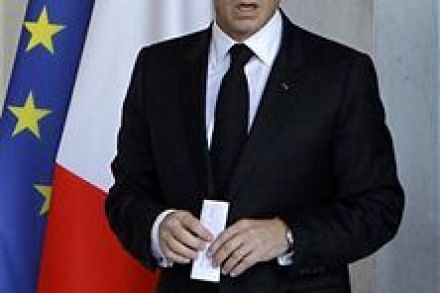
David Cameron may be talking about a new relationship with France, but let’s hope the Conservatives do better than Nicolas Sarkozy’s UMP, which suffered a heavy defeat in local and regional elections, with a Socialist-led opposition alliance taking an estimated 52 percent of the vote. This is bad. At least three of President Sarkozy’s enemies have now made a comeback: the French left, the far-right Front National and Dominique de Villepin, who appears to have been buoyed by UMP’s defeat and a new poll that showed the French preferred de Villepin to Sarkozy as UMP leader. It will be interesting to see how Sarkozy copes. Until now, he has not had any significant set-backs, but a defeat of this kind halfway into a five-year mandate cannot be dismissed.

Yanukovych – Ukraine’s Nixon?

From our UK edition

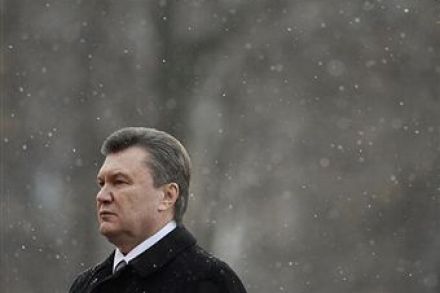
It is easy to paint Ukraine’s new leader, Viktor Yanukovych, as a pantomime monster, Russian stooge and businessman’s puppet. Last month I suggested his electoral victory over namesake Victor Yushchenko may not be as bad as people think. Now Andrew Wilson, Britain’s foremost Ukraine expert, argues the same. In a briefing paper, he notes that elections in Ukraine open up new opportunities for the EU: 'Paradoxically, Yanukovych’s quest for good relations with Russia could also make it easier for EU member states to reach a consensus about how to deal with Ukraine. Too often in the past, the EU has been unable to develop a coherent policy on Ukraine because some member states fear offending Russia.

Clegg’s consigliere: Lib Dems would “sustain the Tories in power”

From our UK edition

Everyone has been guessing at what Nick Clegg and the Liberal Democrats would do if the voters return a hung parliament after the next election. The Lib Dem leader has sent all kinds of mixed signals. But if there is one person worth listening on the party’s intentions it is Julian Astle, the head of CentreForum, Britain’s leading Liberal think-tank, and a former political advisor to Paddy Ashdown. Astle has, in recent years, acted as one of the Lib Dem’s unofficial consiglieri – but one that has never shied away from challenging party orthodoxy. He has, for example, argued against the Liberal Democrat pledge to abolish tuition fees – showing it would involve a significant redistribution of resources from poor to rich.