Daniel Korski

A good team with good policies

From our UK edition

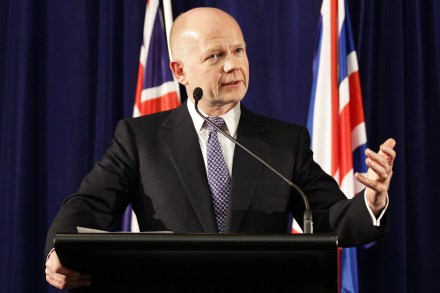
When the Tories were in opposition, non-aligned friends used to complain to me that the party's front bench was unimpressive. Labour politicians had walked the political stage for more than a decade; many were household names, while the Tories were unknown. But eight months in and Labour's top team is a largely unknown entity, with even its few ex-Ministers looking decidedly smaller without their briefcases, officials and government-issued cars. The Tory front bench, meanwhile, is the one looking serious and worthy of power. There is William Hague, a brilliant parliamentarian and that even rarer beast: a well-liked politician. Though currently suffering from a little newspaper criticism, he is seen as a heavy-weight by his counterparts and is galvanising the long-neglected FCO.
General Hague, attack

From our UK edition

William Hague must be feeling that the incoming rounds are coming closer and closer. The Spectator, The Daily Telegraph and now The Times (£) have each allowed their pages to be used as Forward Operating Bases from which to launch attacks against the coalition's foreign policy. Even in the coalition's own ranks, dissatisfied foot-soldiers (and a even a few senior officers) think that General Hague has lost his appetite for the fight. Tories talk about a man whose defeat in 2001left a permanent wound, and how the Christopher Myers fiasco left another gash. The government's equivocal response to events in Egypt has provoked fresh criticism, while the army of eurosceptics, once Hague's Praetorian Guard, no longer trust their commander.

Labour’s gravest military blunder

From our UK edition

Labour is often seen as having presided over the erosion of the British military, squandering money on Cold War equipment and sending under-equipped soldiers to far-away battlefields. But away from the public's scrutiny an even greater lapse occurred - the nation's cyberdefences were left undermanned while the threat grew daily. As William Hague will tell the Munich Security Conference: "Along with its numerous benefits, cyberspace has created new means of repression, enabling undemocratic governments to violate the human rights of their citizens. It has opened up new channels for hostile governments to probe our defences and attempt to steal our confidential information or intellectual property. It has promoted fears of future ‘cyber war’.

Coffee House interview: Julian Astle

From our UK edition

Open any mass-circulation newspaper and you will find plenty of insider's information about the Tory party. But precious little is known about their coalition partners, the Liberal Democrats. After decades in the political wilderness, most editors reasoned that it wasn't really worth their while finding out what the party thought. After all, what difference did it make?   Well, times have changed. What the party thinks, what it does, and, crucially, what it won't do, really does matter. So to help us here at Coffee House, Julian Astle, a friend of the Lib Dem leadership and director of CentreForum, the liberal think tank, has agreed to answer a few questions.

Al-Jazeera is not a new BBC World Service

From our UK edition

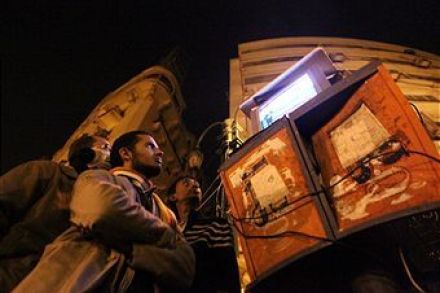
Egypt has made al-Jazeera English. The Qatari satellite channel has been the “go-to” channel; it has had more reporters on the ground than the BBC and CNN; and it has used technology in ways that make Western media look like they belong to a different era. Newspapers from the New York Times to the Wall Street Journal have talked about the channel's role in the protests. And all this despite its broadcasts being banned in Ben Ali's Tunisia and blocked in Egypt. Facing these constraints, the TV channel switched to social media like Facebook, Twitter, and YouTube. Its website posted Live Messages — audio messages recorded from phone calls placed by correspondents — on the ground, and used a facility called Scribble Live to get these updates online fast.

Where does it leave Israel?

From our UK edition

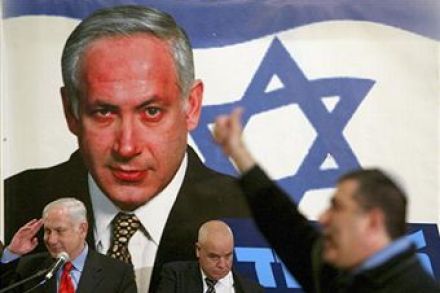
Israel is in a right state over Egypt's incipient revolution. Israeli politicians talk openly about the threat from an Islamist takeover, the greatness of Hosni Mubarak, and have even taken to sneer at the West's hopefulness. Now that President Mubarak has announced he will leave, the Israeli leadership will be looking on in horror. They are right to be concerned. The beleaguered Jewish state has already lost one regional ally in Turkey and does not relish the prospect of losing Egypt too. That would leave only Jordan, a country whose monarchy may be the next casualty of the pro-democracy movement sweeping the region. But it is not just a matter of numbers. The "cold peace" with Egypt was the most important strategic alliance Israel had in the Middle East.

Come on Europe; support the freedom you claim to love

From our UK edition

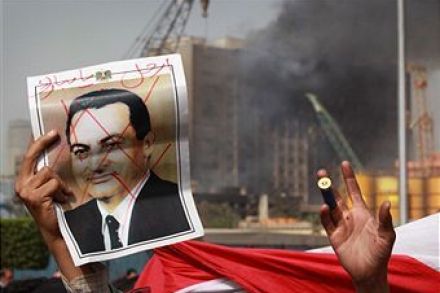
The Middle East is being rocked to its authoritarian core, as pro-democracy protesters defy Hosni Mubarak’s regime for the eighth day in a row. They want an end to his 31-year-rule and, to judge by their continued defiance, are unlikely to accept anything else than his departure. The events, however, have placed European governments in a quandary. Should they back the protests? Support what has been a friendly regime? Or sit uncomfortably on the fence, talking about the need to show restraint and start reforms but standing back from actually supporting regime change, in case the transition becomes violent or the outcome problematic? So far, it looks like the EU prefers sitting on the proverbial fence.

Coffee House interview: Paul Wolfowitz

From our UK edition

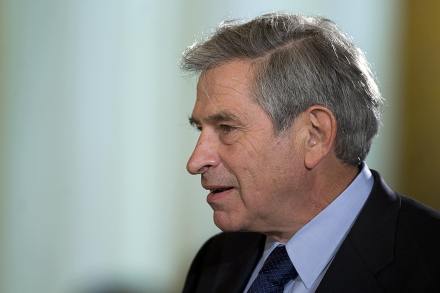
Nobody is as associated with George W Bush's drive to promote freedom and democracy in the Middle East as former US Deputy Defence Secretary Paul Wolfowitz. His role in the Iraq War, and belief that the US should promote democracy in a part of the world better known for authoritarian rulers, remains controversial to this day. But now that the Middle East is being rocked by pro-democracy protests – as people demand freedom, employment, and an end to tyranny – is this advocate of democracy finally being proven right? And what does he think about the dangers of democratic transitions?

The neoconservatives were right

From our UK edition

The last six years have been fallow ones for the neoconservatives. From around 2005, when Iraq began its descent into chaos, the ideology that did so much to shape US foreign policy became marginalised as, first, George W Bush turned increasingly realist and, then, Barack Obama continued where his predecessor left off. While ideas are not responsible for the people who hold them, it did not help that, after President Bush left office, those who espoused a neoconservative outlook included the likes of Sarah Palin. Funding for democracy-promotion was slashed, and the focus for aid programmes became "accountability" – with the word "democracy" banished from sight.

Coffee House interview: Ursula Brennan

From our UK edition

Few government jobs are as demanding as that of Permanent Under-Secretary, or PUS, in the Ministry of Defence. With Liam Fox as your boss, General David Richards as your colleague, and an exhausted, overspent department to run, it is no surprise that when Bill Jeffrey retired many of the government's most senior officials – including, it is said, No 10's Jeremy Heywood – balked at the challenge. Forward stepped Ursula Brennan, who until then had held the ministry's No 2 job before a career in the Ministry of Justice, and what is now the Department for Work and Pensions.

Will Mubarak Fall?

From our UK edition

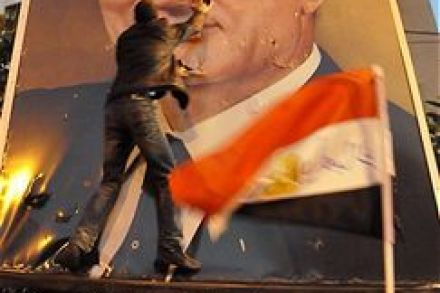
A week ago, that would have seemed a foolish question. But after thousands of Egyptians have taken to the streets for two consecutive days of protest, even Hosni Mubarak is beginning to look vulnerable. It has placed the West in a dilemma, in a way that Ben Ali's fall did not. For years, the fear has been that President Mubarak is the lesser of two evils. Though authoritarian, Mubarak's Egypt is a pro-Western state willing to live with Israel and combat Islamist terrorism. On the hand, the Muslim Brotherhood opposition, which shares an ideological wellspring with Al Qaeda, is a grave threat to Western security.

Thank you, Nacia Anastazja Brodziak

From our UK edition

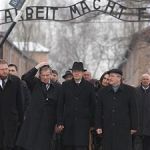
Today is Holocaust Day. A day to remember the horrors of the past. But it should also be an occasion to recall the moments of hope and the people - and peoples -  that personified that life-saving hope. Like Nacia Anastazja Brodziak who took in my fleeing grandparents, hid them from the Nazis in her tiny Warsaw flat and for five years pretended they were her Catholic cousins from the countryside. I went to see her more than a decade ago. I wanted to thank her. It is actually hard to thank someone without whom neither I nor my father would have been born. Today is a way to do so again - in one's prayers, or thoughts. It is also a day to thank peoples. The selflessness that individuals showed during World War II was also shown by a few nations.

The dangers of CameronCare

From our UK edition

A consensus has formed in the commentariat that besides George Osborne's stewardship of the economy, Andrew Lansley's healthcare reforms could become the government's vote-loser. The political facts are as simple as the forms are complex. One, David Cameron ran a campaign based on a promise to protect the NHS. Many people thought that meant from cuts and culls alike. The Health Secretary's reforms look, whatever the truth may be, like they are going back on the PM's promise. Second, the reforms can only be successful if a range of stakeholders - voters, practitioners, analysts - have been brought along, and had a chance to debate the issues. What Michael Gove has done so brilliantly is to pick up a debate Tony Blair began.

Mandarined

From our UK edition

One of the greatest challenges for any minister - and, by extension, the government's programme - is to avoid being "mandarined". That is, smothered by officials in the manner of Yes Minister. But it can happen to even the most powerful and outwardly confident politicians. Here is how. Reputation Management. First, the politician is thrilled to find herself or himself in office and is keen not to rock the boat - lest the Prime Minister is told by the Cabinet Secretary that the minister is under-performing. Tony Blair is said to have toyed with the idea of having report cards for ministers. As a result, the minister opts to push officials - but not too hard. Knowledge Management.

Call in a bulldozer for growth

From our UK edition

As the coalition considers how to develop a growth strategy, it would do well to call in Paddy Ashdown and hear about the 'Bulldozer Initiative' he launched while in Bosnia working for the United Nations. Not a highway programme, the Bulldozer Initiative was instead one of the smartest pro-business schemes I have seen. And something like it is now needed here. The brainchild of a French businessmen and based on the ideas of Peruvian economist Hernando de Soto, it involved building a partnership between politicians and businessmen to identify specific legislation and regulations that prevented companies from expanding their businesses and creating more jobs.

The government must continue to liberalise Europe’s market

From our UK edition

For a long time, the terms of Britain's Europe debate has been about the merits - or otherwise - of membership. This has occluded discussion about the need to promote a deregulated and economically liberal single market, for which the Conservatives have fought so successfully since Britain joined the then EEC in 1973.   Now Lord Brittan has shown the way. In a speech to Business for New Europe, he takes aim at the many illiberal practices that hamper economic development across Europe and hurt British business: “Portugal still has rules governing the minimum distance requirements between driving schools; and in Greece, directors of dancing schools need to live within a set distance of the school!

The Gaza flotilla raid was legal – but stupid

From our UK edition

Yesterday saw the publication of a report into Israel's naval blockade of Gaza, the Hamas-run part of the Palestinian crypto-state, and the Israeli military's raid on a flotilla of aid ships bound for the coastal enclave last year. The inquiry, headed by former judge Yaakov Turkel, argued that: "The naval blockade imposed on the Gaza Strip... was legal pursuant to the rules of international law" The inquiry defined the fight between Israeli forces and Hamas and other Gaza-based militant groups as "an international armed conflict".

Hague hasn’t lost his mojo

From our UK edition

There has been no shortage of depressing news for the Tories lately. But, the other day, Benedict Brogan wrote a lengthy post about William Hague that must have made particularly unpleasant in-flight reading for the Foreign Secretary as he jetted around the South Pacific. It argued that: "In his absence – and even when he is back in Britain – Mr Hague is the subject of a whispering campaign among his colleagues, who say that the spark of ambition has died in his heart, and with it his effectiveness as the front man for the nation’s diplomatic effort. The Foreign Office has got its mojo back, just when Mr Hague has lost his.

The defence review: MK II?

From our UK edition

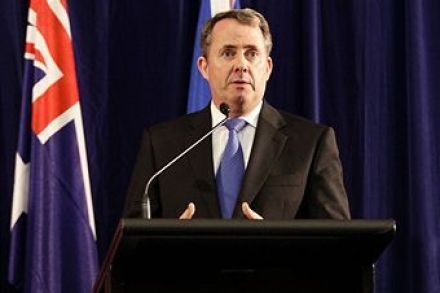
Most of my 2010 predictions did not come to pass; and many of the ones I made a few weeks ago for 2011 might not either. But one seems to have been a good bet. I wrote:  “Liam Fox will come under renewed pressure when it becomes clear that the defence budget cannot afford both aircraft carriers.” OK, so I phrased it provocatively. The Defence Secretary is an able and canny politician and will deal with any pressure that may arise. But my point stands; namely that the Strategic Defence and Security Review (SDSR) may not the last word, given some of the problems faced by the example the Army.

Aussie rules | 19 January 2011

From our UK edition

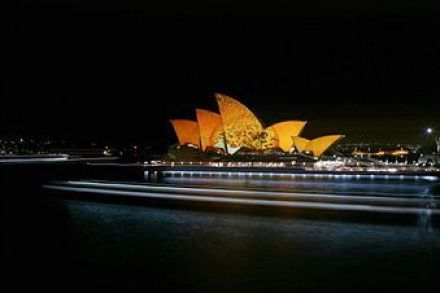
William Hague has been visiting Australia in the last couple of days, alongside half of the National Security Council. But you would not know it. Except for a few comments in the blogosphere, there has been little write-up of the visit in the newspapers. In many ways this encapsulates one of the government's key foreign policy dilemmas. Many of the world¹s problems require cooperation with the US, Europe and the BRICs ­ but especially the BRICs, who, for all their flaws and faults, are the fast-growing countries on the planet. If you want to force an end to Iran¹s illegal nuclear enrichment programme, then you need China. If you have any hope of stabilising Haiti, then you cannot do it without Brazil.