Daniel Hannan

All you’ll ever need to know about the history of England in one volume

From our UK edition

Here is a stupendous achievement: a narrative history of England which is both thorough and arresting. Very few writers could pull it off. Either they’d have an axe to grind, or they’d lose perspective, or they’d present a series of anecdotes, or they’d end up in a Casaubonish pursuit of other historians’ errors. In fact, to get it right, you’d ideally be a mature and accomplished author, steeped in the facts, who was nonetheless tackling English history for the first time. Which is more or less what Robert Tombs, a professor of French history at Cambridge, is. ‘A writer of history ought, in his writings, to be a foreigner, without country, living under his own law only,’ claimed Thomas Hobbes, adapting Lucian.

How Cameron could make the EU a winning issue (and why he won’t)

From our UK edition

[audioplayer src="http://traffic.libsyn.com/spectator/TheViewFrom22_23_Oct_2014_v4.mp3" title="James Forsyth, Mats Persson and Matthew Elliott discuss Europe" startat=60] Listen [/audioplayer]Imagine if David Cameron actually meant it. Imagine if he really did follow through with his implied threat to campaign for Brexit in the absence of better terms from Brussels. You can picture the televised address. An oak-panelled background with a large union flag hanging sedately in the corner, the PM with that furrowed house-captain expression he sometimes does. The script pretty much writes itself. ‘All of you know how hard I tried to secure a new deal. I was often criticised for being too conciliatory, but it was my duty to do whatever was in my power to reform the EU.

Cameron could win in 2015 if he took EU withdrawal seriously … but he won’t

From our UK edition

Imagine if David Cameron actually meant it. Imagine if he really did follow through with his implied threat to campaign for Brexit in the absence of better terms from Brussels. You can picture the televised address. An oak-panelled background with a large union flag hanging sedately in the corner, the PM with that furrowed house-captain expression he sometimes does. The script pretty much writes itself. ‘All of you know how hard I tried to secure a new deal. I was often criticised for being too conciliatory, but it was my duty to do whatever was in my power to reform the EU. I have to tell you today that the Brussels institutions are not interested in — are perhaps not capable of — the reforms that I believe the British people want.

Europe rose up in protest against the EU — here’s your guide to the new rebels

From our UK edition

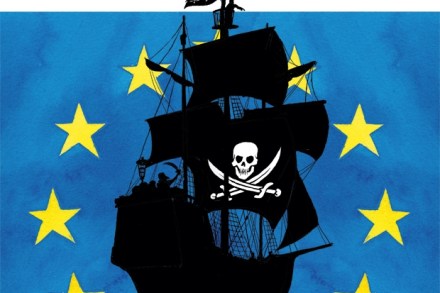
Daniel Hannan wrote in the Spectator earlier this year about the pirate parties of Europe I once shared a car to the airport with a French MEP, a member of the Front National (FN). He spoke that very correct French which, across the Channel, serves in place of accent as a social signifier. He casually mentioned that the Holocaust couldn’t have happened, at least not on the scale claimed: the volume of the ovens, he creepily explained, was insufficient. The European Parliament has always had its fair share of extremists, eccentrics and outright, drooling loons. With the FN then polling at 6 per cent, there seemed no need to treat any of its MEPs seriously, so I took to avoiding that one. Now his party is set to win tonight's European election.

Shakespeare invented Britain. Now he can save it

From our UK edition

[audioplayer src="http://traffic.libsyn.com/spectator/TheViewFrom22_10_April_2014_v4.mp3" title="Fraser Nelson and Angus Robertson debate the shared values of the English and Scots" startat=32] Listen [/audioplayer]‘What country, friends, is this?’ We’ve been wrestling with Viola’s question almost from the moment she asked it. It was barely a year after Shakespeare had scribbled out those words, in the first Act of Twelfth Night, that James VI of Scotland inherited England’s throne, beginning a 400-year confusion over national identity that has led to the present referendum on partition. The new monarch wanted to amalgamate his two realms.

Watch out Eurocrats, here come the Pirates!

From our UK edition

I once shared a car to the airport with a French MEP, a member of the Front National (FN). He spoke that very correct French which, across the Channel, serves in place of accent as a social signifier. He casually mentioned that the Holocaust couldn’t have happened, at least not on the scale claimed: the volume of the ovens, he creepily explained, was insufficient. The European Parliament has always had its fair share of extremists, eccentrics and outright, drooling loons. With the FN then polling at 6 per cent, there seemed no need to treat any of its MEPs seriously, so I took to avoiding that one. Now his party is set to win the next European election. But it’s not just madmen on the rise.

How Britain invented freedom – and why we need to save it now

From our UK edition

The single most common reaction I get from Americans when they learn that we’re placing our newspapers under our politicians is: ‘Y’all need a Bill of Rights’. You can see their point. Absolute freedom of expression used to distinguish the English-speaking peoples from the run of nations. The restrictions which even other western democracies applied — prohibitions on Nazi symbols, for example — were inconceivable in the Anglosphere. Over the past quarter of a century, that has changed. Anglophone democracies now regularly prosecute people for saying the wrong thing, usually on grounds of putative insult to some minority group.

The pain in Spain

From our UK edition

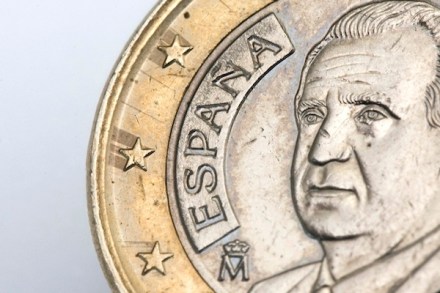
Spain was always going to be where the doom of the euro would be determined. Ireland, Portugal, Greece and Cyprus amount, together, to less than 5 per cent of the EU’s economy. They can be rescued without emptying the bailout fund. Alternatively, their defaults can be managed as controlled explosions. Spain is in a different category. Europe’s banks are massively exposed there: an explosion could blast the continent’s financial system to splinters. On the other hand, the sheer scale of a rescue package might finally exhaust the patience of the northern European taxpayers. Spain’s agonies were caused directly by the euro. We can’t, as we can in Greece, blame irresponsible local politicians or poor tax collection.

Allergic to freedom

From our UK edition

To what problem is the statutory regulation of herbalists a solution? Are the tiny bits of bark and sap and leaf peddled by contemporary wisewomen deleterious to human health? Are we at risk of being sterilised by St John’s wort, paralysed by pau d’arco, maddened by meadowsweet? Hardly. Herbal remedies might be inert placebos or they might, as my wife maintains, be better for you than antibiotics. My wife is often right; and in any case, as the author of Proverbs tells us, ‘better a dinner of herbs where love is than a stalled ox and hatred therewith’ (rarely could the bit about the herbs have applied so aptly). In a sense, though, it doesn’t matter whether complementary medicine lives up to its billing.

Politics: The right way to help Ireland

From our UK edition

Why is Britain committing £7 billion to a bailout which will trap Ireland in its present discontents? Would you trust an economic forecaster who had recently said this? The euro has done more to enforce budgetary discipline in the rest of Europe than any number of exhortations from the IMF or the OECD. If we remain outside the euro, we will simply continue to subside into a position of relative poverty and inefficiency compared to our more prosperous European neighbours. Or this: The euro has already provided great internal stability to the eurozone. Or this: If we get rid of sterling and adopt the euro, we will also get rid of sterling crises and sterling overvaluations. This will give us a real control over our economic environment.

Budget 2009: Darling is interested in headlines, not economic recovery

From our UK edition

The figures have now become literally unimaginable. Britain will borrow £175 billion this year, £173 billion the year after—a higher total in two years than in the entirety of the 316 years since King William introduced the national debt. It’s hardly surprising, in the circumstances, that people snatch at the more comprehensible numbers, notably the hikes in higher rate tax. It’s a classic piece of Brownite prestigiditation. Higher levies on those earning more than £100,000 or £150,000 a year will generate little revenue.

Brussels Notebook

From our UK edition

It’s dawning on me that the Prime Minister can’t listen to criticism. It’s dawning on me that the Prime Minister can’t listen to criticism. I don’t just mean that he can’t respond to criticism; I mean that he literally can’t listen to it. When he came to the European Parliament to drum up support for his spending plans, I made a three-minute speech in favour of balanced budgets. As I talked, he pulled his face into what I think was meant to be a disdainful smirk, then ostentatiously chatted to his officials, then pretended to doodle on a piece of paper. I’ve never doubted Gordon Brown’s convictions: he seems genuinely actuated by a desire to help the poor.

The real lesson of this fiasco is that we need elected police chiefs

From our UK edition

Perhaps now you’ll understand what we’ve been banging on about, we localists. For the better part of a decade, we’ve campaigned to place the police under elected sheriffs. Some of our chief constables, we contended, had cast off the cables that once attached them to public opinion. They were concentrating on speed cameras and hate crimes and community relations when the rest of us wanted them to concentrate on being unpleasant to scoundrels. The best way to align the police’s priorities with everyone else’s, we argued, was to place our constabularies under locally elected representatives. You disagreed — you, Spectator readers in particular. Our ideas, you felt, were downright un-British.

The modern Tory hero should be Jefferson

From our UK edition

In theory, Europeans find American elections vulgar and plutocratic. In practice, they find them utterly gripping. This is partly because the US is wealthy and powerful, but mainly because American campaigns, being more participatory than European ones, are more interesting. All organisations grow according to the DNA encoded at the time of their conception. The US was founded in a revolt against a distant and autocratic regime. In consequence, its polity developed according to what we might call Jeffersonian principles: the idea that power should be diffused and that government officials, wherever possible, should be elected. Most European constitutions, by contrast, were drawn up after the second world war.

EU leaders will never consult us again

From our UK edition

Daniel Hannan, who predicted the Irish ‘No’ vote in this magazine, now says that the EU will simply implement the Lisbon Treaty and never risk a referendum again By ten o’clock on Friday morning, it was clear that the ‘No’s had it. Ireland’s Europhiles were struggling even in their affluent strongholds within the Pale. In the rest of the country, they were being pulverised. A jubilant ‘No’ campaigner rang me from Galway, his words tumbling over each other. ‘It looks like a high turnout, too,’ he exulted. ‘The Eurocrats won’t be able to just carry on as if nothing has happened.’ Oh yes they will, I told him, sadly. They did when the Danes voted ‘No’ to Maastricht.

A chance for the Lords to justify their existence

From our UK edition

Like, I suspect, most Spectator readers, I saw no need for Lords reform in the first place. The old chamber functioned perfectly well, as even Labour was forced to admit. But the party took the view that, while it might work in practice, it didn’t work in theory. The hereditary principle, Tony Blair declared, had no place in modern politics: a strange argument, striking as it does directly against the monarchy and indirectly against all property. And so, with no very clear idea of what they wanted, ministers blundered into the current settlement: an appointments system which disproportionately elevates toadies, public-sector groupies and quangocrats. From Labour’s point of view, fair enough. These are precisely the sorts of people lefties like to see running things.

Last hours of a monster

From our UK edition

Amid fresh reports that Fidel Castro is at death’s door, Daniel Hannan says that the Cuban dictator was the beneficiary of Western hypocrisy about left-wing tyrants, and of the strategic errors of the 44-year US blockade Sola mors tyrannicida est, wrote Thomas More: death is the only way to get rid of tyrants. And so it has proved for Fidel Castro. Sixteen years ago, he looked finished. The USSR had collapsed, and the Soviet subsidies that had propped up the Cuban economy for 30 years had been abruptly terminated. Around the world, statues of Lenin were being melted down or sold off to collectors of kitsch. But Castro never wavered in his revolutionary fervour.

Ch

From our UK edition

On Sunday, Venezuela goes to the polls. The likely triumph of Hugo Chávez, writes Daniel Hannan, reflects a phenomenon sweeping Latin America that feeds not on hope but on hatred There aren’t really any proper dictators left in South America, but Venezuela’s Hugo Chávez is getting close. His first attempt at power was through an old-fashioned putsch. When this failed, he tried the ballot box, winning a more or less free election in 1998. Once in office, he quickly set about undoing the democratic system that had got him there. Previously autonomous institutions — parliament, the judiciary, the Catholic Church, employers’ federations, trade unions — were subverted.

Pick your own police chief

From our UK edition

You’d be surprised how many champions Sir Ian Blair has. Ken Livingstone thinks he’s terrific. So does his Oxford contemporary and namesake, Tony Blair. The Guardian has devoted a huge amount of space to telling us what a good job he is doing. According to one of its columnists, the clamour against the Metropolitan Police Commissioner has been whipped up by ‘the reactionaries in the force and their friends in the press’, who have never forgiven his enthusiasm for the Macpherson reforms. Hmmm. I’d have thought Sir Ian’s critics had plenty to go on without needing to dredge up what he said seven years ago. The shooting of Jean Charles de Menezes, and the spin that followed, was the worst breakdown in British policing that I can remember.

Accidental hero

From our UK edition

Rocco Buttiglione talks to Daniel Hannan about homosexuality, homophobia and ‘the morbid totalitarianism of the Left’ Martyrdom often seems to bring, at the end, a sense of elation. Thomas More was plainly on a high as he was led to the block, getting off a couple of memorable quips to the headsman. Rocco Buttiglione is in a similar mood. Buoyed up by the unwonted attention that followed his exclusion from the European Commission, he is launching a pan-European campaign for liberty of conscience. Supportive emails are flooding in, people are cheering him in the street and, according to the polls, three out of four Italians back him. Shortly before leaving for Brussels, he had told a journalist, ‘I am nobody in Italy, but in Europe I shall be somebody.