Dan Hitchens

Dan Hitchens is a senior editor at First Things. He is currently co-writing a book about Dr Johnson, and writes The Pineapple Substack.

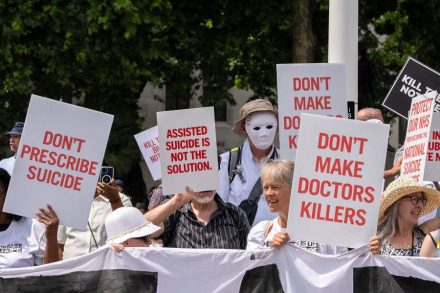
Canada’s assisted suicide laws are out of control

From our US edition

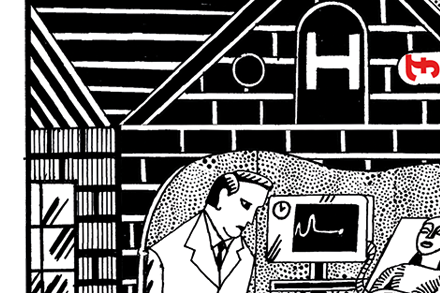
Death, somehow, seems like the wrong word. So Canada’s euthanasia doctors have adopted other terms for what they offer: each lethal injection is called a “provision.” Stefanie Green, a Vancouver Island doctor who used to work in maternity services, prefers “delivery.” Canada has sleepwalked into a moral maze with no exit, where euthanasia becomes a solution for social problems Since Canada’s parliament introduced euthanasia in 2016, a new vocabulary has arisen. Those with a terminal illness, whose death is “reasonably foreseeable” are “Track 1”; those who have no such diagnosis but qualify through “grievous and irremediable” conditions are “Track 2.

Canada

Will assisted dying become a cover for abuse?

Every year, thousands of stories of abuse pour into Compassion in Care, a charity that supports whistleblowers in the care sector. Volunteers manning the charity’s helpline hear of old people dismissed as ‘end of life’, deprived of food and water, abandoned in corners with neglected bedsores, needlessly sedated to make them less time-consuming. And now, says the charity’s founder and director Eileen Chubb, a former care whistleblower herself, they are bracing for ‘a massive increase in abusive cases’. That’s if the assisted suicide bill, which begins its journey through the Lords this week, becomes law. ‘We can foresee whistleblowers contacting us,’ Chubb tells me, ‘saying people died who didn’t want to die but were pushed into it, and the system failed them.

Could the House of Lords block the assisted suicide bill?

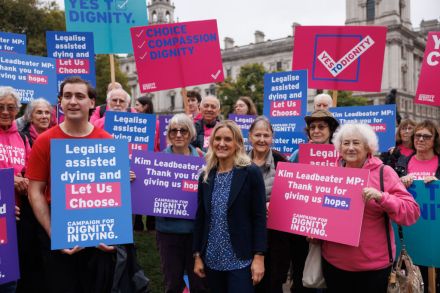
Could the House of Lords block the assisted suicide bill, which was approved by the Commons yesterday? It would be pretty unusual for the Lords to do so. But then nothing about the bill has been usual.  Proponents like to compare Kim Leadbeater’s bill to the big private member’s bills of the 60s on abortion, homosexuality and the death penalty. One difference is that those bills cleared the Commons with huge, commanding majorities. This bill was dragged over the finish line by a very small margin – just 23 votes – and amid a stream of defections from yes to no. In the seven months since the Commons first debated it, the bill's margin of support has more than halved, to the point where it has now lost its absolute Commons majority.

Assisted suicide could destroy the hospice movement

The hospice movement is one of the great achievements of post-war Britain. Inspired by the doctor Cicely Saunders, who in effect founded the field of palliative care, it has united cutting-edge research with a profound understanding of suffering and how to relieve it. Britain’s hundreds of hospices are Saunders’s legacy. But can that legacy survive an assisted suicide law? ‘It has the potential to destroy the sector in its entirety,’ says Amy Proffitt, former president of the Association for Palliative Medicine (APM). If assisted suicide is integrated into palliative care, and hospices legally must facilitate it, then ‘many of the medical profession would leave the sector entirely’, Proffitt adds.

Has the Royal College of Psychiatrists killed the assisted suicide bill?

How do you make assisted suicide safe? In recent months, a large part of Kim Leadbeater’s answer has been to point to the involvement of psychiatrists. Having a psychiatrist sign off each death, Leadbeater said, would ‘add expertise’. They would be part of a much-touted ‘multidisciplinary’ approach. In particular, they would be able to check that applicants met the threshold of the Mental Capacity Act. There’s just one problem. The psychiatrists themselves appear to think Leadbeater’s bill is a dangerous mess.I’m paraphrasing, of course. But last night’s statement from the Royal College of Psychiatrists, in which they identified nine major problems with the legislation and said they ‘cannot support’ it, is a major blow to the bill’s credibility.

Easter special: assisted dying, ‘bunny ebola’ & how do you eat your creme egg?

34 min listen

This week: should the assisted dying bill be killed off?Six months after Kim Leadbeater MP launched the Terminally Ill Adults (End of Life) Bill, a group of Labour MPs have pronounced it ‘irredeemably flawed and not fit to become law’. They say the most basic aspects of the bill – having gone through its committee stage – do not hold up to scrutiny. Dan Hitchens agrees, writing in the magazine this week that ‘it’s hard to summarise the committee’s proceedings except with a kind of Homeric catalogue of rejected amendments’ accompanied by a ‘series of disconcerting public statements’.  With a third reading vote approaching, what could it tell us about the country we live in?

The assisted suicide bill should not survive

Until about six months ago, it would have been hard to find a more inoffensive politician than the Labour backbencher Kim Leadbeater. A well-liked, upbeat, down-to-earth Yorkshirewoman, she entered politics because of a personal tragedy, the murder of her sister, the MP Jo Cox, in 2016. When asked on a Spectator podcast what was the worst piece of advice she had ever received, Leadbeater half-joked: ‘Have you thought about being an MP?’ Visibly a normal, friendly person plunked down in SW1, she won many admirers and attracted little controversy. Then in September Leadbeater came top of the private members’ ballot and chose to take up the cause of assisted suicide. The current law, she argued, is cruel to those dying in terrible pain.

The assisted dying bill is becoming a car crash

Kim Leadbeater has described her assisted suicide bill as ‘potentially one of the most important changes in legislation that we will ever see’. For Leadbeater and her allies, it is an attempt to make the law merciful: to give relief to those who want to control the manner of their death. But there is another, darker way to see the Leadbeater bill, and last week at the bill committee we got a glimpse of it. The committee stage was meant to reassure the doubters. At second reading, MPs were told that if the vote – just 18 days after the bill was published – seemed rushed, there would be plenty of time for parliament to change its mind. Layla Moran, one of the bill’s supporters, said: ‘Remember you can vote aye on a bill at second reading and no at a later stage.

Losing faith: will Labour’s VAT policy hit religious schools hardest?

25 min listen

In this week’s copy of The Spectator, Dan Hitchens argues that a lesser reported aspect of Labour’s decision to impose VAT on private schools is who it could hit hardest: faith schools. Hundreds of independent religious schools charge modest, means-tested fees. Could a hike in costs make these schools unviable? And, with uncertainty about how ideological a decision this is, does the government even care? Dan joins Damian on the podcast to discuss.  Raisel Freedman from the Partnerships for Jewish Schools also joins later, to discuss how the measure could threaten Jewish independent schools, when they provide a haven for students from a climate of rising antisemitism. Produced by Patrick Gibbons.

Religious schools will be hit hardest by Labour’s VAT tax raid

Imagine the government pledged to introduce a 20 per cent tax rise on ‘bankers’. Then imagine that, when the details were announced, the new tax made no distinction between HSBC executives and lowly bank tellers on £19,000 a year. Furthermore, imagine that the public debate failed to mention the people who were going to suffer most from the policy; that commentators argued over whether the tax rise was technically workable, while ministers self-righteously declared that they were sure the richest people in the country could cope with paying a little more. Far-fetched? Yes, but not a million miles from Labour’s proposed imposition of VAT and business rates on independent schools.

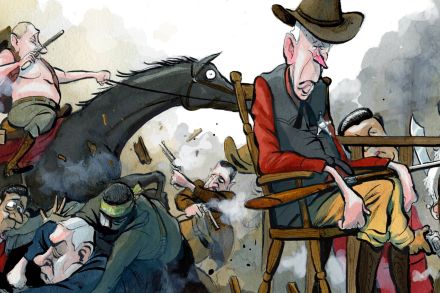
The reckoning: it’s payback time for voters

39 min listen

This week: the reckoning. Our cover piece brings together the political turmoil facing the West this week: Rishi Sunak, Emmanuel Macron, and Joe Biden all face tough tests with their voters. But what’s driving this instability? The Spectator’s economics editor Kate Andrews argues it is less to do with left and right, and more a problem of incumbency, but how did this situation arise? Kate joined the podcast to discuss her argument, alongside former Cambridge Professor, John Keiger, who writes in the magazine about the consequences that France’s election could have on geopolitics (2:32).  Next: what role does faith play in politics?

Does Keir Starmer’s atheism matter?

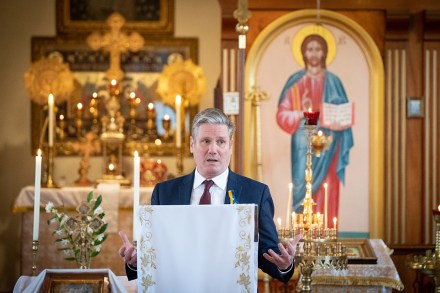
Good Friday, 2021, at Jesus House For All Nations church in Brent, north-west London. Face masked, head bowed, hands clasped, Sir Keir Starmer stands alongside Pastor Agu Irukwu. The pastor opens his arms to invoke Almighty God. We hear Starmer in voiceover: ‘From rolling out the vaccine to running the local food bank, Jesus House, like many other churches across the UK, has played a crucial role in meeting the needs of the community.’ A nice video tribute for Easter, this. Good to see churches getting some recognition. A sign, perhaps, of the inclusive national unity a Labour government would foster.

Tennis romance that doesn’t contain much tennis: Challengers reviewed

It sounds straightforward enough: a tennis romance starring Zendaya, idol of the mid-teen demographic and last seen riding a sandworm in Dune: Part Two. She plays Tashi Duncan, a junior player tipped for greatness, who finds herself in a love triangle with two other juniors: spoilt-but-roguish Patrick (Josh O’Connor) and nice-but-needy Art (Mike Faist). You might anticipate a girl-power version of Richard Loncraine’s Wimbledon (2004), with white skirts fluttering in summer breezes, coy glances at a face in the crowd, and a dramatic climax featuring a net rally in a final-set tie-break. Despite the lengthy game sequences, it’s not a film about tennis But Challengers is a very different kettle of fish.

A short history of stained glass

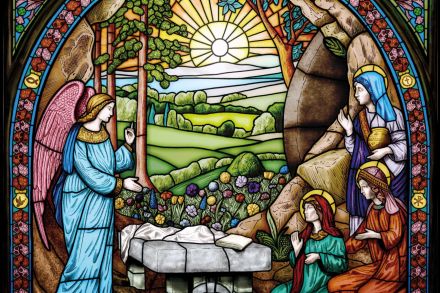
On 13 December 1643, a Puritan minister called Richard Culmer borrowed the Canterbury town ladder and carefully leaned it against the Cathedral’s Royal Window. He then ascended the ladder’s 60-odd rungs, holding a pike; according to his account, modestly written in the third person, ‘Some people wished he might break his neck.’ Culmer had in his sights the ‘wholly superstitious’ depictions of the Holy Trinity, of ‘popish saints’ such as St George, and in particular of St Thomas Becket. There Culmer perched, he recalled cheerfully, ‘rattling down proud Becket’s glassy bones’.

Remembrance Day protests through the ages

It’s not the first time that protesters have intruded on Remembrance Day. But this time feels different. In the 20s, the protests were against the poverty and inequality of the era. On Armistice Day in 1922, 25,000 unemployed ex-servicemen marched past the Cenotaph, wearing their medals next to tickets from pawn shops to indicate their plight. The year before, in Liverpool, 200 men interrupted the two minutes’ silence with shouts of ‘Anybody want to buy a medal?’ and ‘What we want is food, not prayers!’ In the 70s and 80s, more disturbingly, it was the far right who occupied the headlines. The National Front made its Remembrance Sunday march into its big national event.

New world disorder

38 min listen

On the podcast: In The Spectator's cover piece Jonathan Spyer writes that as America's role in international security diminishes history is moving Iran’s way, with political Islam now commanding much of the Middle East. He is joined by Ravi Agrawal, editor in chief of Foreign Policy and host of the FP Live podcast, to discuss whether America is still the world's policeman.  Also this week: In the magazine this week, The Spectator’s literary editor Sam Leith speaks to Jacques Testard, publisher at Fitzcarraldo Editions, the indie publishing house which has just won its fourth nobel prize in under ten years.

How the Georgians invented nightlife

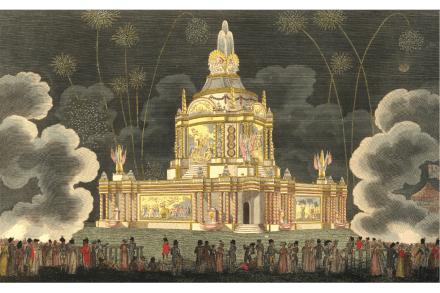
Modern nightlife was invented in London around 1700. So argued the historian Wolfgang Schivelbusch, who traced this revolution in city life to its origins in court culture. Medieval and Renaissance courts held their festivities while it was still light outside, but by the late 17th century, aristocrats preferred to party after dark. The trend was rapidly commercialised: a new kind of conspicuous consumer descended on pleasure gardens like Vauxhall and Ranelagh, to eat, drink, stroll and listen to music by the many-coloured light of thousands of oil lamps.

A great subject squandered: Golda reviewed

Born in Tsarist Kyiv in 1898, Golda Meir grew up with what she called a ‘pogrom complex’. That perhaps explained why later, as Israeli prime minister, she had such harsh words for Palestinians and Arabs. But then she had harsh words for a lot of people. Moses, she complained, ‘took us 40 years through the desert in order to bring us to the one spot in the Middle East that has no oil’. Women’s Lib, she averred, was ‘foolishness’, since the real discrimination was that men were unable to bear children.

Matthew Parris, Dan Hitchens and Leah McLaren

23 min listen

Matthew Parris, just back from Australia, shares his thoughts on the upcoming referendum on the Aboriginal and Torres Strait Islander Voice (01:08). Dan Hitchens looks at church congregations and wonders why some are on the up, while others are in a spiral of decline (08:32), and Leah McLaren describes the delights of audio and tells us why young children should be heard, but not seen (17:57).

Italy’s new wave: Europe’s escalating migrant crisis

45 min listen

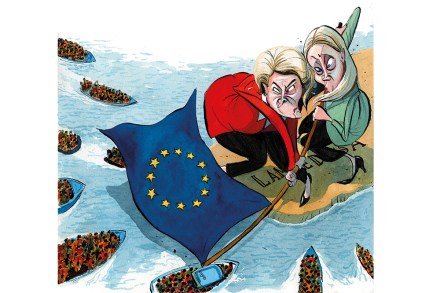
This week: Christopher Caldwell writes The Spectator's cover piece on Italy’s new wave of migrants. This is in light of the situation in Lampedusa which he argues could upend European politics. Chris joins the podcast alongside Amy Kazmin, Rome correspondent at the Financial Times, to debate Europe’s escalating migrant crisis. (01:23) Also this week: In his column, Matthew Parris writes about Australia’s Voice vote, a yes/no referendum being held on whether to establish a new body which will advise parliament on matters relating to Aboriginal and Torres Strait Islander peoples.