Dan Hitchens

Dan Hitchens is a senior editor at First Things. He is currently co-writing a book about Dr Johnson, and writes The Pineapple Substack.

Johnson & Johnson

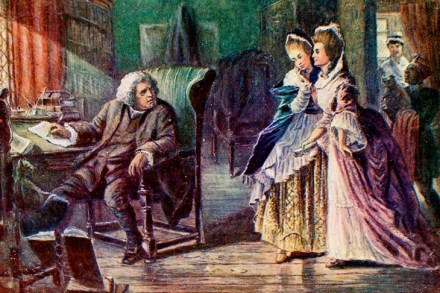
To understand Boris Johnson, you have to understand the figure who has inspired him, shaped his worldview and accompanied him throughout his career. Admittedly Samuel Johnson has been dead since 1784, but his importance to Boris is unquestionable. Our next prime minister thinks the other Johnson is a ‘genius’ who ‘gave the world compassionate conservatism’. Britain, Boris once wrote, ‘has never produced an author with a better or more generous understanding of human nature’. It’s not just that Boris admires Samuel’s essays, his poetry and the pioneering Dictionary of the English Language. The influence goes deeper than that.
Alabama’s abortion ban is a moment of hope

Alabama’s near-total abortion ban, signed into law on Wednesday by governor Kay Ivey, is a real moment of hope. The principle on which it grounds itself is simple enough; as Ivey put it: ‘Every life is precious.’ In those four words lies a remedy for the hatreds that divide humanity. True, pro-lifers have their own doubts over the bill: is it too tactical, by conceding very narrow medical exemptions? Is it not tactical enough, because it will be overturned in the courts and meanwhile alienate the middle ground? But whatever the merits of these criticisms, the Alabama ban is still a landmark. A body of legislators in the world’s superpower has affirmed that every life is precious and given that belief legal form.

Deep and meaningless

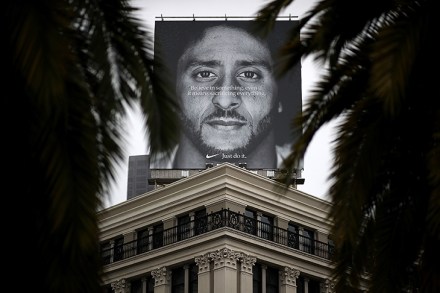
Walking down the street on my lunch break, I sometimes pass a delivery man wheeling a large handcart of Japanese food. The cart bears a striking message: ‘Creating a world where everyone believes in their own authenticity.’ It raises some immediate questions: for instance, what does it mean to believe in your own authenticity? How would you go about creating a world where everyone does? And what’s it got to do with Japanese food? It’s unfair to single out the delivery service. Today, brands big and small have a Profound Statement to make. On my way home I pass a 30ft electronic billboard which displays a young couple embracing beneath a glowing night sky. The left side is filled with a portentous message: ‘Your time in the universe is finite.

Argentina is the latest battleground in a global war over abortion

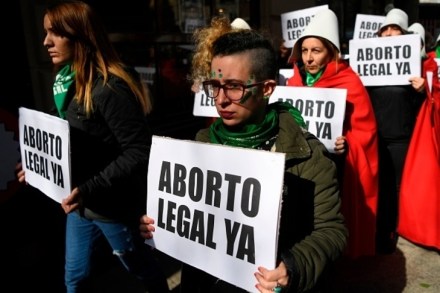
‘The world is looking at you,’ the actress Susan Sarandon informed Argentina’s Senate on Tuesday, ahead of its vote on an abortion bill. ‘Give women the right to choose!’ She may have been inspired by Amnesty International, who had taken out a full-page ad in the international New York Times to tell the Senate: ‘THE WORLD IS WATCHING’. In the early hours of Thursday morning, after a 16-hour debate, the senators failed to do as they were told. The bill, which would have legalised abortion up to 14 weeks – and beyond in the case of disability or a threat to the mother’s health – was defeated by 38 votes to 31. Sarandon and Amnesty were right, in a way.

Stand up for Muslims

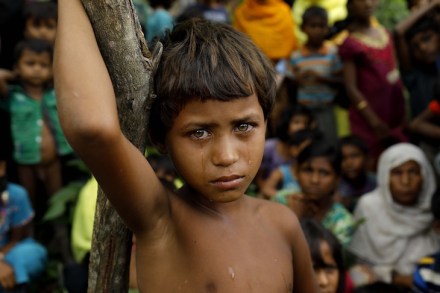
Anti-Christian persecution, for so long a great untold story, has started to gain the world’s attention. But the suffering of Christian communities, from Syria to Nigeria to China, is part of an even broader phenomenon. Religious conflict is on the rise across the globe, with ancient tensions being raised by new political methods. And in many countries — Sri Lanka, India, the Central African Republic and elsewhere — it’s Muslims who have the most reason to fear violence. In Burma, they may even have been victims of genocide. That, at any rate, is what UN officials are trying to investigate after a wave of brutality which has forced 700,000 Rohingya Muslims to flee the coastal region of Rakhine State since last August.

Theresa May’s climbdown on corporate excess is a major retreat for the Tories

‘Mayism’, whether it left you in admiration or despair, at least seemed like an identifiable philosophy. It was concerned with social justice, but it wasn’t socialist: it was better described as post-liberal. Mayism was sceptical of free markets, which were prey to ‘selfish individualism’ (as the manifesto put it), but it didn’t see big government as the answer. It preferred to spread economic power, by clamping down on corporate malpractice and giving new rights to workers. And the symbol of this – until yesterday when the Tories pretty much dropped the proposal – was the idea of putting workers on company boards. To be exact, the idea has not been entirely dropped.

The strange similarity between Donald Trump and Pope Francis

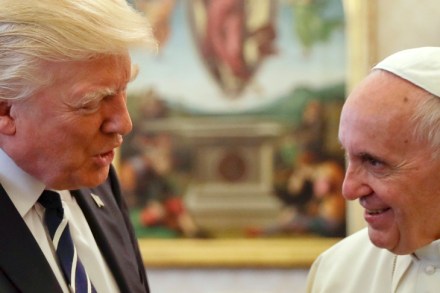
Donald Trump’s verdict on his audience with Pope Francis – ‘fantastic meeting’, ‘honor of a lifetime’ – may disappoint those who were expecting a showdown. The Pope is supposed to be Trump’s ‘antithesis’, ‘the anti-Trump’, his ‘polar opposite’ and so on and so on. But in the end the meeting was merely awkward, to judge by the photos, and the discussion was mostly confined to safe issues (life, peace and liberty good, persecution of Christians bad). People are making much of the grumpiest Pope photo, but Francis often looks bored and uneasy when he meets important dignitaries. He tends to cheer up around the poor and the sick.

Who is to blame for Brexit?

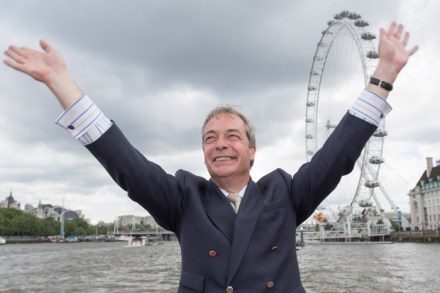
With Italy facing a referendum that could unseat its president, the EU’s member states in furious conflict over immigration, and Hillary Clinton looking like an increasingly shaky last line of defence, our very own Brexit is being held up as the model of a new, disruptive politics. But its meaning has been debated. For some, Brexit was democracy delivering justice: the West’s 'first big fightback', as Nigel Farage said on Sunday, against 'a metropolitan elite, backed by big business, who’ve just been increasingly getting out of touch with the ordinary voters.' The counter-narrative is that Brexit was a fake revolution: a coup by fellow-members of the elite who 'lied to please the mob'.

Pilgrimage’s progress

If Christian Britain is fading away, what will survive of it? One answer seems to be pilgrimage. In the past decade, 30 pilgrimage routes have been created or rediscovered; holy places have seen a 14 per cent growth in visitor numbers since 2013. These figures are recorded by a new organisation, the British Pilgrimage Trust, which wants to ‘revive the British pilgrimage tradition of making journeys on foot to holy places’. The BPT stresses that not all pilgrims are religious: ‘Bring your own beliefs’ is the slogan. Guy Hayward, who co-founded the BPT with Will Parsons, observes: ‘We have to tread very carefully around the language of spirituality and religion.

Gays for God

The LGBT rights movement — so the story goes — has split the Christian churches in two. On one side are the progressives, who believe that Christianity should accept gay people and recognise gay marriage. Lined up against them are the conservatives, who hold fast to the belief that being gay is sinful. It’s not entirely false, that story. There are just a vast number of Christians who don’t fit into it. Ed Shaw is an evangelical pastor in Bristol and is gay — or, as he puts it, he ‘experiences same-sex attraction’. It’s a less misleading term, he tells me. ‘If I say to people in conversation, “I’m gay,” they tend to presume that I’ll be delighted if they match me up with their gay friend Barry.

Dan Walker’s creationism shouldn’t disqualify him from breakfast TV

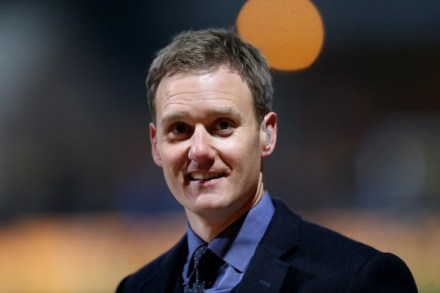
According to the Times, Dan Walker, the new BBC Breakfast presenter, is ‘a creationist’. A ‘senior BBC figure’ is quoted as saying that this ‘nutty’ belief would make life difficult for Walker if, say, he had to present a story about a 75,000-year-old fossil. How could he if he thinks the earth is less than 10,000 years old? Rupert Myers goes further in the Telegraph: ‘Creationists cannot be trusted to report objectively,’ Myers claims, ‘or to interact reasonably with their interviewees and with the public’. Before jumping to conclusions, it’s worth saying that Dan Walker’s beliefs aren’t publicly known. Anyone who thinks God made the world is a ‘creationist’ in some sense.

Briefing: What is the EU ‘red card’ and will it make any difference at all?

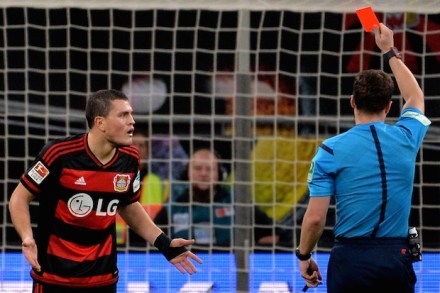
The ‘red card’ on proposed EU legislation has been hailed by David Cameron as a breakthrough; the ‘Stronger In’ campaign have put it at the top of their list of renegotiation successes. But it already pretty much exists. The very similar ‘orange card’ was introduced by the 2009 Lisbon Treaty. (The European Commission’s website explains how it works.) Here’s a comparison of the two: Numbers ORANGE CARD: 51% of the 28 EU parliaments can force a review by the European Commission. RED CARD: 56% of the 28 EU parliaments can force a review by the EU Council.

Taharrush Gamea: has a new form of sexual harassment arrived in Europe?

The Swedish and German authorities say they have never encountered anything like it: groups of men encircling then molesting women in large public gatherings. It happened in Cologne and Stockholm, but is it really unprecedented? Ivar Arpi argues in the new Spectator that it may well be connected to a phenomenon called ‘taharrush gamea’, a form of group harassment previously seen in Egypt. So what is taharrush gamea, and should Western police be worried? Here’s what we know. ‘Taharrush’ means sexual harassment – it’s a relatively modern word, which political scholar As'ad Abukhalil says dates back to at least the 1950s. ‘Gamea’ just means ‘collective’.

Briefing: what’s behind the junior doctors’ strike?

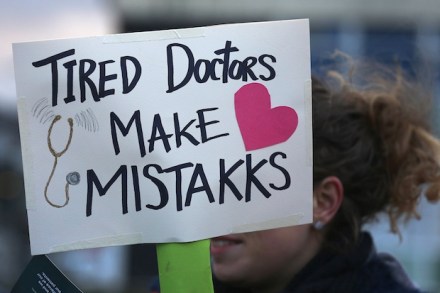
What’s the objection to the new contract? It applies to all junior doctors – that is, doctors who aren’t consultants and GPs – and would change how they’re paid.  The major concern is about ‘unsocial hours’ – weekends and nights. At the moment, junior doctors are paid a basic rate for working between 7am and 7pm Monday to Friday. Weekends and nights have a higher rate. This higher rate is now being cut. What’s more, the definition of ‘unsocial hours’ has changed – it now doesn’t include Saturday daytime or 7-10pm on weekdays. Why are the doctors striking?

Britain needs Christianity – just ask Alan Partridge

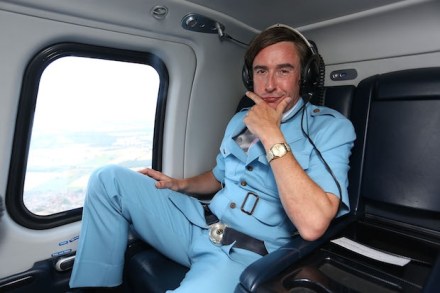
Are we really, as David Cameron claimed in his Christmas message, a country shaped by 'Christian values'? Yesterday’s Evening Standard poll – which found that shopping is three times more integral to Britons’ Christmas than going to church – makes you wonder what the phrase even means. It doesn’t just mean do-goodery, though that is important. About 10 million Britons get help from a church-based group every year. If you see a queue of homeless people in a town centre at about 6 o’clock in the evening, you can bet there are a bunch of God-botherers handing out sandwiches at the other end of it.

Why is the National Audit Office chairman defying his own code of conduct?

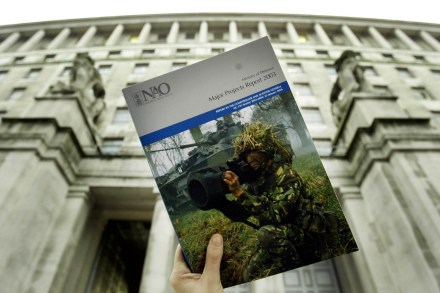
Everybody skims over a document at some point: when you’re asked to agree to terms and conditions before accessing wifi, you don’t always look too carefully at the details. But you might hope that the officers of the National Audit Office would be more scrupulous. The NAO – which scrutinises £1 trillion of public spending and revenue – has massive and unique powers. At Wednesday’s PMQs, for instance, Jeremy Corbyn based his claims on a new NAO report into NHS funding. With this level of influence, it has to be whiter than white.

Send in the street pastors

Martin Surl, the Police and Crime Commissioner for Gloucestershire, has been buying flipflops. Hundreds of them. Not for the police, but for a local Christian volunteer team of ‘street pastors’. Earlier this year, Surl announced a £40,000 grant to cover the group’s training and resources. ‘Some things are better delivered by people who aren’t the police,’ he says. What street pastors deliver is hard to sum up in a few words. When I first encountered them a couple of years ago in their uniform of baseball caps and blue jackets, both with ‘STREET PASTOR’ printed across them, I thought they were going to ask me whether I was saved. But street pastors are not street preachers.

Revealed: Osborne’s Budget giveaways for Tory marginals

Back in March, the Plymouth Herald was delighted by ‘a Budget with plenty for Plymouth’. As Mark Gettleson noted on Coffee House at the time, Plymouth is a ‘hyper-marginal city’: both its seats are currently held by Tories with small majorities, Oliver Colvile and Johnny Mercer. So the Chancellor’s generosity may not have come out of the blue. Now we have had an Autumn Statement with a bit more for Plymouth – half a million pounds for the 2020 Mayflower anniversary. Some might think it an exaggeration to describe this as pork barrel spending. But it was interesting to see how else Osborne spent the money.

There’s nothing irrational about patriotism

In the run-up to Remembrance Day, my local branch of the Quakers has been displaying a sign on the front door. It reads, with ever-so-slightly combative bold type: ‘Remembering all who have lost their lives in war’. They’re willing to mourn, as long as they don’t have to be patriotic about it. Temperamentally, I’m with the Quakers on this one: I struggle to get emotional at national symbols like the royal wedding or the sight of the Union Flag. But I know people who are moved by these things, and I’m not sure this is because they’re less enlightened than me and the Quakers. It seems more likely that we’re the ones who are missing something.

Free speech is the natural ally of transgender rights

Transgender men and women have a powerful story to tell. Their experiences are often heartrending: we should be appalled that nearly half of young trans people have attempted suicide. Meanwhile, there is compelling neuroscientific evidence to suggest that male and female can overlap, and that for some people gender dysphoria is no more eradicable from their nature than, say, being an introvert. How all this plays out, in terms of law and culture and surgery and public bathrooms, is another series of questions. But the basic point – that trans people should be listened to and helped, and neither explained as a problem nor scorned and marginalised – is a pretty unassailable argument. You would need to do something really stupid to discredit it.