Dan Hitchens

Dan Hitchens is a senior editor at First Things. He is currently co-writing a book about Dr Johnson, and writes The Pineapple Substack.

Inside the fastest growing – and shrinking – churches in the UK

From our UK edition

The Pentecostal preacher is in full flow – his voice raised to near-deafening volume, his gestures expansive but exact, the congregation murmuring back a chorus of ‘Amens’ – when he receives an unexpected interruption. ‘A woman asked me at the barbecue last week,’ he is telling us, ‘“Pastor, if I won the Lottery…”’  A voice somewhere to his right intervenes. ‘A-MEN!’ A wave of laughter from the congregation. The preacher rides it. ‘No! Don’t Amen that! We don’t believe in lotteries, we believe in work. Hard work. So, she asked me, “Pastor, if I won the Lottery, and I gave the money to the church repair fund, would you accept it?” And I said…’   The congregation is quiet again. We’re in the realm of moral theology.

William Moore, Katy Balls, Dan Hitchens and Ysenda Maxtone Graham

From our UK edition

31 min listen

This week: William Moore recalls the 1953 coronation with those that were there (01:02), Katy Balls reads her politics column (10:13), Dan Hitchens discusses the art of coronation (16:20) and Ysenda Maxtone Graham reads her review of The Seaside by Madeleine Bunting (25:20).  Produced and presented by Oscar Edmondson.

From Bayeux to Cartier-Bresson: how artists have brought the coronation crowds to life

From our UK edition

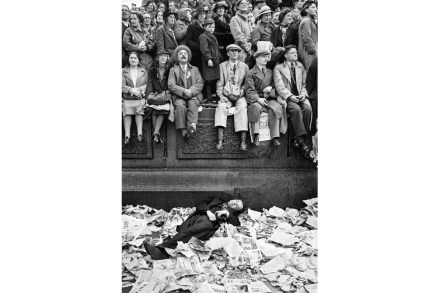
In 1937, the Parisian communist newspaper Ce soir sent a 28-year-old would-be filmmaker on an unpromising first assignment. Henri Cartier-Bresson was to take photographs of the British coronation, an event of limited appeal either to Ce soir’s readers or to Cartier-Bresson himself. But on the streets of London, he discovered what would become his signature approach. Two Brylcreemed lads in their best suits, hoisting their girlfriends on to their shoulders for a better view He would turn away from the King, the procession, the organised magnificence, and focus solely on the crowds, looking for some fleeting moment in which the meaning of the day was concentrated.

The real question at the heart of Roe v. Wade

From our UK edition

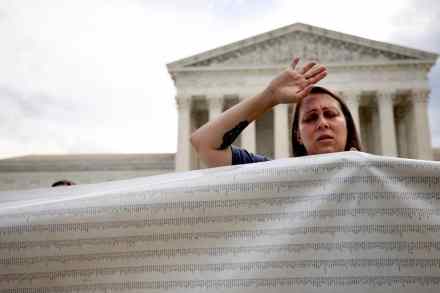
There are two possible responses to the sound and fury currently emanating from Washington and from the American media after a leak indicated that the Supreme Court will overturn Roe v. Wade in the next couple of months. For House Speaker Nancy Pelosi, Justice Samuel Alito’s 96-page draft judgment points to ‘the greatest restriction of rights in the past 50 years’. The Guardian’s Moira Donegan believes America is witnessing its ‘final days of reproductive freedom’. The Mayor of London Sadiq Khan, always to be relied on for a ludicrous soundbite, declared that ‘London stands with women across the United States today’. Bernie Sanders is calling for Congress to overrule the Supreme Court.

The lost shepherds

From our UK edition

40 min listen

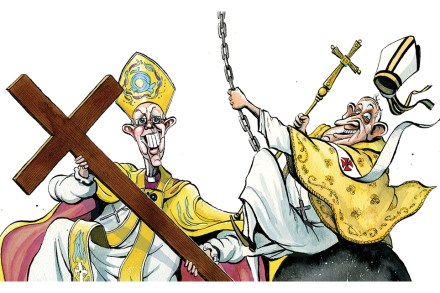
On the podcast this week: In his cover piece for the magazine, journalist Dan Hitchens examines whether Archbishop Justin Welby and Pope Francis can heal the divisions threatening to tear apart the Church of England and the Catholic Church. He is joined by Telegraph columnist Tim Stanley to ask whether these two men – once heralded as great unifiers by their respective Churches – can keep their flocks in order. (01:05)  Also this week:  In his column, The Spectator’s associate editor Douglas Murray questions whether the English countryside can be considered exclusionary, after the news that the green and pleasant land will be studied by ‘hate crime’ experts. He is joined by the explorer and broadcaster Dwayne Fields to ask is the countryside racist?

The third great crisis in Christianity

From our UK edition

After he anoints the King next month, Justin Welby’s thoughts will perhaps turn to his own future. If Anglican gossip is to believed, Welby plans to step down to make way for a new Archbishop of Canterbury once the new Supreme Governor has been crowned. You could hardly blame him for wanting a quiet life: the divisions within the Church of England are more acute now than at any time since he was enthroned ten years ago. Ever since February, when the C of E’s parliament, the General Synod, voted to introduce blessing services for same-sex couples, conservatives have been up in arms.

From the sublime to the ridiculous: Godland reviewed

From our UK edition

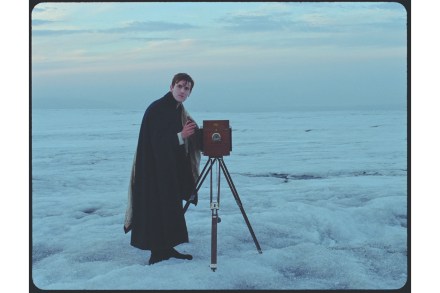
Godland is a film to see on the big screen: not just for its awesome, immersive cinematography, but because it is so remorselessly bleak that if you’re watching it at home you are likely to give up. To get the most out of it you need to be trapped. Lucas (Elliott Crosset Hove), an upright, serious, bearded young Lutheran priest in late 19th-century Denmark, is being sent to Iceland as a missionary. ‘Lucas, you must adapt,’ his red-faced bishop (Waage Sando) tells him while munching through a lavish lunch of chicken and boiled eggs. ‘At times your task will seem monumental.’ The Icelandic weather is forbidding, the bishop explains; in the perpetual summer sunlight people forget to sleep.

The ebb and flow of life on a houseboat

From our UK edition

In the spring of 2021 I took a man to a pub in Hackney and bought him a drink. Perhaps he should have been doing the buying, since I had just handed him a large sum in return for his narrowboat. But I was in an exultant mood. No London flat, I reasoned, could ever be as cosy as that low-ceilinged, teak-panelled interior with its coal-burning stove and narrow cabin bed. And outside it lay a pathway to adventure through the hidden districts of the capital, their parks, nature reserves, railway bridges, gasholders, locks, warehouses and waterside pubs. Such thoughts, amplified by a sub-genre of YouTube and Instagram accounts, tempt scores of idealists on to the canals each year. They quickly discover reality.

Jenny McCartney, Dan Hitchens and Gus Carter

From our UK edition

24 min listen

This week on Spectator Out Loud, Jenny McCartney argues that tomorrow belongs to Sinn Fein in Northern Ireland. What could this mean for reunification (00:55)? Then, Dan Hitchens asks why Oxford killed a much loved catholic college (11:44) before Gus Carter reads his notes on the tabletop game Warhammer (20:12).Produced and presented by Oscar Edmondson.

Why has Oxford killed off a much-loved Catholic college?

From our UK edition

Few institutions can match the global prestige of Oxford University. Just look at the gifts lavished on it, like offerings brought to some mighty emperor of the ancient world. There’s the Saïd Business School, controversially funded with £50 million from Wafic Saïd, who helped to broker the British-Saudi arms deal. There’s the carbuncular Blavatnik School of Government, criticised by Russian dissidents for how the funder made his millions. There’s the new student housing at St Peter’s College, partly paid for with a donation whose original source was the mid-20th-century fascist demagogue Oswald Mosley. Yes, people do sometimes ask whether there’s any cash the university won’t accept. And now they have an answer.

The political cunning of Elizabeth II: BBC1’s The Longest Reign – The Queen and Her People reviewed

From our UK edition

In all the tributes to Her late Majesty’s constancy, dignity, wisdom and devotion to duty, not enough has been said about her political cunning. But BBC1’s The Longest Reign: The Queen and Her People made a compelling case that Elizabeth II knew just how to tilt the balance. When she toured the new towns of the 1950s (see image), waving at the crowds with their little Union Flags and taking tea with the young families on the just-built housing estates, she was giving her wordless blessing to the welfare state.

The beauty of gasholders

From our UK edition

On 25 October 1960, a Boeing pilot aiming for Heathrow accidentally landed at an RAF base, only realising his error when the runway turned out to be alarmingly short. Disaster was averted, but the near-miss caused some embarrassment, and the minister of aviation had to answer questions in the House. What had confused the pilot, it emerged, was the advice from air traffic control to start his descent ‘in line with the gasholder’. He had picked the wrong one. Ever since, the gasholders near Heathrow and RAF Northolt have had painted on them, in 50ft-high letters, ‘LH’ and ‘NO’. There is a surprising amount of strange lore about these industrial relics, which once kept the nation’s homes and factories lighted and warm.

Will Alta Fixsler be allowed to die at home?

From our UK edition

If your severely disabled two-year-old daughter is dying, should you be allowed to take her home for her final hours? It sounds like the answer should be a simple ‘yes’. But in the law surrounding parents, children and healthcare, nothing is that simple. Alta Fixsler’s parents have been repeatedly thwarted in their efforts – as they see it – to do their best for their daughter. First, Manchester University NHS Foundation Trust sought to withdraw life-saving treatment for Alta. A judge subsequently agreed that it was in Alta's 'best interests for the treatment that is currently sustaining her precious life...to be withdrawn'. This was in spite of her parents seeking to take her to Israel for treatment.

Why Thomas Becket still divides opinion

From our UK edition

Visitors to the British Museum’s new exhibition will become acquainted with one of the most gloriously bizarre stories in the history of English Christianity: the tale of Eilward, a 12th-century Bedfordshire peasant. One day Eilward is in the pub when he has the misfortune to run into his neighbour Fulk, to whom he owes a small debt. An angry confrontation follows; eventually Eilward storms off drunkenly — in the direction of his creditor’s house, where he breaks in and starts trashing the place. Fulk catches him red-handed, beats him up and then hands him over to the authorities. One account suggests Eilward was framed; but whatever the truth of the matter, the judge sentences him to blinding and castration.

What the Pope’s visit means for Iraq

From our UK edition

You could be forgiven for taking a cynical view of Pope Francis’s visit to Iraq this weekend. How could the Pope’s rhetoric about ‘fraternity’ alter the brutal reality for the country’s Christians, whose population has dwindled from 1.3 million to 200,000 since the US-led invasion? Might the visit end up legitimising a political class that has failed to defend Christians against discrimination and jihadist persecution? Even the Archbishop of Erbil bluntly remarked that the first papal trip to Iraq was ‘not going to help Christians materially or directly, because we are really in a very corrupt political and economic system. No doubt about that. [Pope Francis] will hear nice words...

Power jab: the rise of vaccine diplomacy

From our UK edition

44 min listen

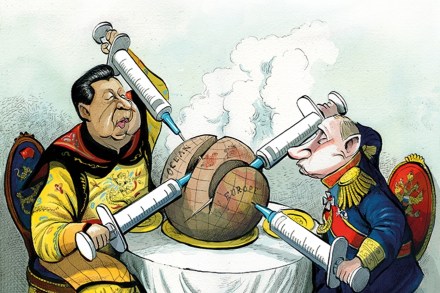
How are China and Russia getting ahead in the great game of vaccine diplomacy? (00:50) Has the US press lost its way? (11:30) Why is Anglo-Saxon history making a comeback? (27:20)With The Spectator's broadcast editor Cindy Yu; journalist Owen Matthews; Harper's publisher Rick MacArthur; The Washington Post's media critic Erik Wemple; journalist Dan Hitchens; and Sutton Hoo archaeologist Professor Martin Craver.Presented by Lara Prendergast.Produced by Max Jeffery and Matt Taylor.

Our love affair with the Anglo-Saxons

From our UK edition

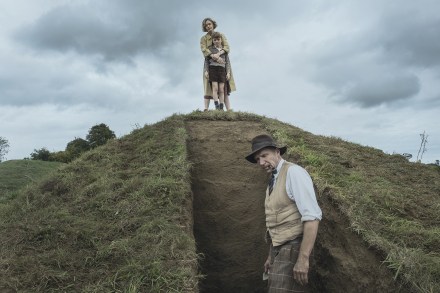
On 5 July 2009, an unemployed 54-year-old metal detectorist called Terry Herbert was walking through a Staffordshire field when his detector started to beep and didn’t stop. Herbert guessed almost immediately that he’d found gold. What he didn’t realise was that he had made Britain’s greatest archaeological discovery since the second world war. Three hundred sword-hilt fittings, many of them spectacular examples of Anglo-Saxon metalwork; a mysterious gold-and-garnet headdress, apparently for a priest; miniature sculptures of horses, fish, snakes, eagles and boars.

Divine right

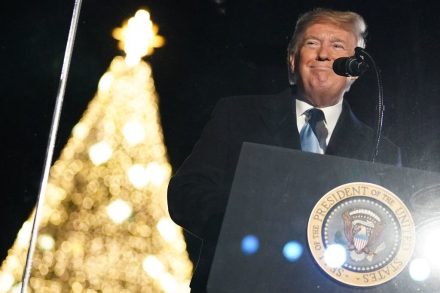
You’ve succeeded in business, made it as a TV star and got yourself elected president. What could possibly top that? Donald Trump may have stumbled on the answer. He has, perhaps accidentally, become a religious leader. Christianity has always played a major role in US politics. What’s new about Trump is the fervor he excites in his supporters, and how easily it can be combined with a kind of religious devotion. Trump fans bring crucifixes and rosaries to his rallies.

right

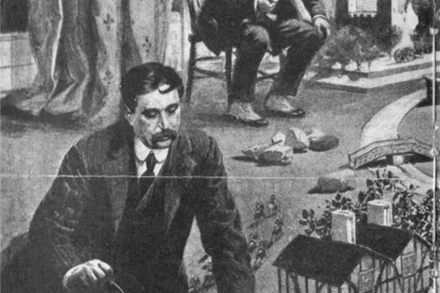
The fight to save G. K. Chesterton’s home from demolition

From our UK edition

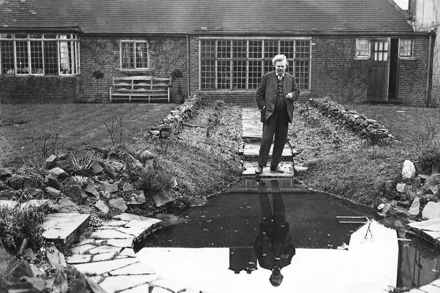
It’s a quiet Wednesday afternoon in Britain’s most expensive market town, and there’s a sense of foreboding in the air. Well, there is if you’re a G.K. Chesterton fan. South Bucks District Council is about to decide whether Overroads, the house where the author lived from 1909 to 1922, will be demolished and replaced with a block of flats. A Londoner until the age of 35, Chesterton moved here on a whim. He and his wife Frances, in a spirit of adventure, went to Paddington and asked to buy a ticket for the next train. It was going to Slough. (‘A singular taste,’ he remarked in his autobiography, ‘even for a train.’) From there they wandered to Beaconsfield, and liked it so much they never left.

Is not believing in transgenderism incompatible with human dignity?

From our UK edition

Judges, like comedians, seem ever more convinced that their role in society is to broadcast their political opinions. As Jonathan Sumption put it in his Reith Lectures, the judiciary often resemble a ‘priestly caste’ who want their liberal values to be raised to the level of ‘fundamental human rights’. This week, an employment tribunal in Birmingham produced the most ludicrous example yet of judicial overreach. Much of the tribunal’s judgment is barely readable – more on that later – but it puts its central point clearly enough: a ‘lack of belief in transgenderism’ is ‘incompatible with human dignity and’ – yes – ‘conflicts with the fundamental rights of others’.