Damian Thompson

Damian Thompson

Damian Thompson is an associate editor of The Spectator

How not to talk to builders

From our UK edition

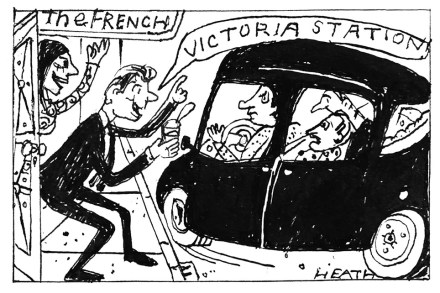
It’s week eight of the installation of a cheap Ikea kitchen in my flat, and an Albanian builder is slumped in an armchair in my sitting room. He’s shielding his face with his hand, Princess Diana-style, to hide the fact that he’s weeping. My kitchen sink drama began when I rang a firm of local builders and they sent round a chap called Dave with a twinkle in his eye and a plan to rip off his employers. ‘Here’s what you do,’ he said. ‘Hire me for a day, tell the boss you’ve changed your mind and sack me. Then I’ll come round after work, charge you half the original quote and we’re all laughing.’ I did sack him – but after five weeks, not one day, and there were no merry chuckles when I screamed down the phone that I wanted him out of my life, for ever.

The Goldberg crown has settled on a new head: Vikingur Olafsson’s Golberg Variations reviewed

From our UK edition

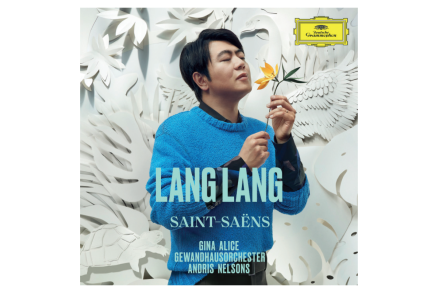
Grade: A+ In 2018, the Icelandic pianist Vikingur Olafsson released a solo Bach album. It bounced along unforgettably. Olafsson’s subsequent albums for Deutsche Grammophon were all lovely, but like many ‘intellectual’ pianists blessed with a pearly touch he could sound a bit precious. I missed the playfulness of his Bach, and so when he announced he was recording the Goldberg Variations I was excited. Could he sprinkle the magic of his original album over this famous Aria and its 30 tightly argued variations, at a time when there are more than 200 rival recordings on piano floating around – and roughly the same number on harpsichord? (When Glenn Gould cut his sensational Goldberg Variations in 1956, the only competition was a forgotten disc from Claudio Arrau.

The Pope, gay blessings and the Rupnik scandal

From our UK edition

13 min listen

Pope Francis's much-hyped 'synod on synodality' began in Rome this week and to say that it has got off to a rocky start is putting it mildly. On Monday, five leading conservative cardinals bounced Francis into making a highly ambiguous statement apparently opening the door to gay blessings. Meanwhile, and this subject is being played down by certain media outlets, allegations of sexual abuse surrounds one of the Pope's friends. The world-renowned mosaic artist Fr Marko Rupnik has been expelled from the Jesuits after women claimed he sexually abused them – but he remains a priest and for some reason Pope Francis has yet to allow him to be prosecuted canonically.

Rejoice that Hyperion’s impeccable back catalogue is finally available to stream 

From our UK edition

At the beginning of the 1980s a former ice-cream salesman called Ted Perry drove a London minicab to raise money for his dream project: the world’s most smartly curated classical record label. For the first time these magnificent recordings are arriving on Spotify, Apple Music and other platforms He called it Hyperion, after the Greek sun god, and by the time he died in 2003 it had acquired its own mythology.

So which Naomi do you think I am? The saga of Klein vs Wolf

From our UK edition

Maureen O’Hara, the flame-haired ‘Queen of Technicolor’ celebrated for her on-screen chemistry with John Wayne, hated to be confused with Maureen O’Sullivan, who was Jane to Johnny Weissmuller’s Tarzan. But they were both Irish-born Hollywood actresses called Maureen, so it kept happening. I once heard John Sessions describe the time he met the octogenarian O’Hara. He prepared for the encounter by repeating to himself: ‘Don’t call her Maureen O’Sullivan.’ They got on famously until, inevitably, the wrong name slipped out. She took it ‘as badly as you can possibly imagine’.

Genghis Khan and the Pope’s summer of madness

From our UK edition

21 min listen

Earlier this week, the Rome correspondent of the Times found himself mugging up on the history of Genghis Khan's Mongol Empire, and this is what he reported:  While the empire brought stability, it was created through the large-scale massacre of anyone who refused to submit to Mongol rule, leading to the death of millions. Mongol troops triggered famine in Iran by destroying ancient irrigation systems and catapulted diseased corpses into towns they besieged, a technique which reportedly introduced the Black Death into Europe. Why were the media suddenly writing about blood-crazed 13th-century warriors?

The future of churchgoing in the West: why Protestants should worry and Catholics should panic

From our UK edition

33 min listen

King Charles III is the first British monarch to inherit a post-Christian kingdom. Less than half of his subjects identify themselves as Christian, and only about one in 20 adults in the UK go to church on Sundays. Since 1980 church attendance has more than halved – and that's broadly the situation in most of Western Europe.  In the traditionally God-fearing United States, in contrast, roughly 20 per cent of people are practising Christians. But there, too, the statistics now point to a steady decline in religious belief; the figures are worrying for American Protestants and catastrophic for American Catholics.

Why I had to let go of my late sister’s house

From our UK edition

On the window ledge of my sister Carmel’s bedroom there’s a tray of cards inscribed with the months of the year, days of the week and numbers from 1 to 31. If you can be bothered to adjust the display every morning, you’ll have what’s called a ‘perpetual calendar’. I need to remember that I already have drawers full of Thompson memorabilia Sunday 3 October 2021 was the day Carmel’s calendar stopped being perpetual. That morning she woke up with a fever so alarming that her next-door neighbour called an ambulance. Before it arrived, Carmel changed the calendar; then she kissed goodbye to Otto, her Norfolk terrier, walked downstairs and left her house for ever. The next day, another ambulance took her from the Royal Sussex Hospital to Guy’s Cancer Centre.

Is 2023 Pope Francis’s ‘Year Zero’?

From our UK edition

33 min listen

Conservative Catholic critics of Pope Francis are referring to 2023 as his 'Year Zero' – a time of revolutionary upheaval initiated by an 86-year-old pontiff who feels liberated by the death of his predecessor Benedict XVI on New Year's Eve.  Events are moving fast. This October, the world's bishops will gather for a synod in which left-wing lay activists have been given an advisory vote by the Pope and permission to discuss ultra-sensitive topics such as women's ordination and blessings for same-sex couples.  It's true that Francis has rejected attempts by the ultra-progressive (and ultra-empty) German church to pursue a liberal Protestant agenda without reference to Rome.

Why is this genius playing to a half-empty Royal Albert Hall? Benjamin Grosvenor Prom reviewed

From our UK edition

There were times during last Friday’s First Night of the Proms when it felt as if we’d been transported back to Ohio during the Eisenhower administration. We could have been in Severance Hall, Cleveland, listening to its orchestra under George Szell – and there’s no higher compliment I can pay the BBC Symphony Orchestra, because the irascible maestro drilled his musicians to parade-ground perfection. You could tell the BBC orchestra was at the top of its game from the first snarls of the brass in Sibelius’s Finlandia – a more interesting piece of programming than it sounds. This was the choral version, in which the choir sings of Finland’s refusal to bend under Russian oppression.

Katy Balls, Olenka Hamilton, Damian Thompson

From our UK edition

24 min listen

This week: (01:08) Katy Balls on the tricky relationship between Labour and the Unions, (07:11) Olenka Hamilton on why Poland is having a row with Brussels over migrants and asylum seekers and (15:29) Damian Thompson asks whether the Vatican is turning its back on tradition and beautiful art.

Barbie’s world: the normalisation of cosmetic surgery

From our UK edition

39 min listen

This week: Ahead of the release of the Barbie movie, Louise Perry writes in her cover piece about how social media is fuelling the cosmetic surgery industry. She argues that life in plastic is not, in fact, fantastic. She joins the podcast alongside the Times’s Sarah Ditum, author of the upcoming book: Toxic: Women, Fame and the Noughties, to discuss the normalisation of plastic surgery. (01:11) Also this week: In anticipation of the BBC Proms Philip Hensher writes in The Spectator that classical music has gone from being a supreme cultural statement, to just another curious musical genre.

Has the Vatican abandoned beauty?

From our UK edition

The Cathedral Church of the Holy and Undivided Trinity in the Cambridge-shire market town of Ely is one of the supreme achievements of European Gothic architecture. Its octagonal tower lifts the eye to a sumptuously restored wooden lantern from which Christ looks down in majesty. Who on Earth thinks faith can be awakened by seeing a crucifix floating in urine? On the last Friday in June, his gaze fell on a congregation worshipping him at Evensong. Two hours later, as the Times reported, the cathedral was filled with ‘a very different crowd: 800 people [wearing headphones] attending a 1990s-themed silent disco. They wore diamanté strappy heels and leather trousers, carried glow sticks, drank chardonnay, yelled the words to Robbie Williams hits and twerked in the nave to Beyoncé.

Escaping the atheist hell of North Korea

From our UK edition

15 min listen

For 75 years, the most anti-Christian regime in modern history has thrown its citizens into prison camps if they are suspected of the slightest dissent. Ten per cent of people live in modern slavery; perhaps 200,000 are behind bars. I'm talking about North Korea, of course – a regime even more abhorrent than Stalinist Russia, but which attracts suspiciously little attention from Western governments and churches unless they feel threatened by its nuclear arsenal.  My guest in this episode of Holy Smoke is Timothy Cho, a Christian human rights activist who escaped from North Korea. Even as a child, he was sentenced to forced labour for the crime of watching a James Bond film.

Inside the world’s most vicious liturgy wars

From our UK edition

23 min listen

In the ancient Syro-Malabar Church of south India, clergy who try to change the liturgy do so at their peril. At St Mary’s Cathedral Basilica in Ernakulam last December, a long-standing dispute over whether the priest should face the people led to scenes in which protestors attacked clergy in the middle of the service, sending the sacred vessels crashing to the ground. As a result, the cathedral was closed – and remains so, six months later. This liturgy war is a hideous embarrassment for the Vatican, because the Syro-Malabar Church is the second largest Eastern Church in Communion with Rome. Traditionally dated back to St Thomas the Apostle's mission to India, it has four millions members worldwide.

The search for the next pope is turning ugly

From our UK edition

The Portuguese poet José Tolentino Mendonça is a handsome man in his fifties with a shaved head and meticulously trimmed beard. In one photograph he’s wearing an ultramarine blue polo shirt; in another, a lovely beige cashmere sweater that matches his tan. His poems depict emotional pain in cryptic language. In ‘The Last Day of Summer,’ unable to ‘choose attention or choose forgetfulness’, he recalls ‘your impatient and inconceivable eyes/ here with me now/ as I dance alone/ in the empty city’. But then Mendonça has no choice but to dance alone. He is a cardinal of the Catholic Church – and just possibly the next pope. Pope Francis has been in office for ten years and he’s spending more and more time in hospital.

The greatest female composer you’ve never heard of

From our UK edition

One of the most intriguing piano concertos of the late 19th century is unknown to the public – and no wonder: so far as I can work out, it has only been recorded once, on a speciality label devoted to neglected French repertoire. As I write this, there are only 11 copies available from Amazon and I recommend that you grab one quickly, because the Second Piano Concerto of Marie Jaëll (1846-1925) demands repeated listening. If you want proof women of the era could move beyond well-carpentered clichés, listen to Marie Jaëll The concerto’s harmonic language is superficially conventional: sweeping tunes decorated by arm-swinging arpeggios.

Succession: five nightmares for the next pope

From our UK edition

14 min listen

A charming octogenarian who plays ruthless games with the people who think they're going to succeed him: I reckon Logan Roy would have recognised a kindred spirit in Pope Francis, despite their diametrically opposed politics. Like many of you, I'm heartbroken that Succession has come to an end – but if you're missing the back-stabbing melodrama then you could always start following the real-life struggle to shape the Catholic Church after Francis. Plenty of cardinals would like to swap their red cassocks for a white one. But, as I suggest in this episode of Holy Smoke, whoever eventually takes the job will have to confront at least five nightmare situations, most of them created by the camera-friendly but privately ferocious current occupant of the See of Peter.

The Vatican and the Mafia – why Italy can’t seem to shake off organised crime

From our UK edition

35 min listen

The Sicilian Mafia is one of the most murderously amoral organisations on the planet – yet babyishly sentimental when it comes to Italian peasant Catholicism. And, like other branches of Italian organised crime, questions exist over whether they have allies in the Vatican, some of whose senior officials are as keen on money-laundering as the Mafia, only not so good at covering their traces.  The relationship between the hitmen and the hierarchy casts an exotic shadow over a new series of thrillers by Alexander Lucie-Smith, the first of which, The Chemist of Catania, has just been published. To quote A.N. Wilson, Lucie-Smith's plots are fast and his characters unforgettable. 'Menace, suspense, lust, love and fear all enliven his narrative.

The coronation music was – mostly – a triumph

From our UK edition

Sir Hubert Parry was upgraded from knight bachelor to baronet by King Edward VII in 1902, and my goodness he earned it. His anthem for Edward’s coronation, I was Glad when they Said Unto Me, begins with a thrilling brass fanfare – or it has done since George V’s coronation in 1911: Parry’s original introit wasn’t sufficiently attention-grabbing, so he beefed it up. But the most spine-tingling moment has been there from the beginning. ‘I was…’ sings the choir on the tonic chord of B flat major – and then the word ‘glad’ bursts out where we aren’t expecting it, in G major.