Damian Thompson

Damian Thompson

Damian Thompson is an associate editor of The Spectator and presenter of The Spectator’s Holy Smoke podcast

Does China have Vatican City in its sights?

From our UK edition

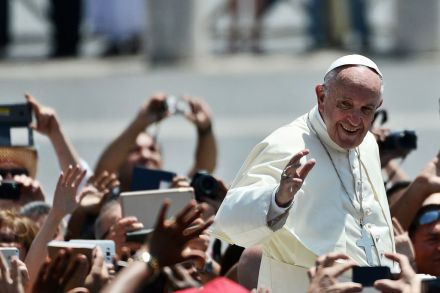
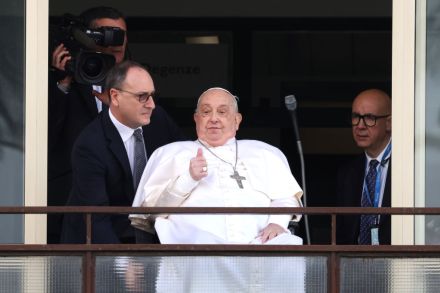
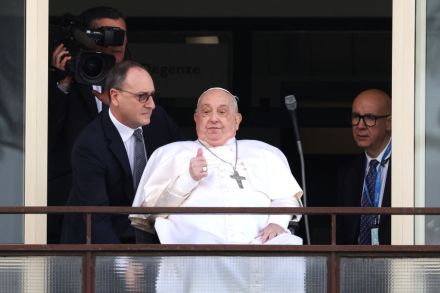
Last Sunday the Vatican released the first photograph of Pope Francis since his ordeal began. He was wearing a stole around his neck, indicating that he had concelebrated mass in the chapel of the Gemelli hospital. Admittedly, all he had to do was raise his hand and whisper a few words of consecration, but it would have been impossible to take such a photo a week earlier, when Vatican-watchers were checking their phones hourly to discover whether the See of Peter had become vacant. Francis is still very ill, of course, and everyone noticed that the picture was taken from behind, perhaps to hide his oxygen tube. The image was touching but unintentionally symbolic.

The filthy side of Dame Myra Hess

From our UK edition

The photograph on the cover of Jessica Duchen’s magnificent new biography of Dame Myra Hess shows a statuesque lady sitting at the keyboard, hair swept back into the neatest of buns. Add a pair of half-moon spectacles and she could be Dr Evadne Hinge, accompanist to Dame Hilda Bracket. This isn’t to imply that Dame Myra looked like a man in drag, but then neither did the ‘Dear Ladies’ played by George Logan and Patrick Fyffe, some of whose fans thought the singing spinsters actually were women. In their 1980s heyday Hinge and Bracket were national treasures – and so, on a far grander scale, was Dame Myra, who lifted Londoners’ spirits with her National Gallery concerts during the second world war.

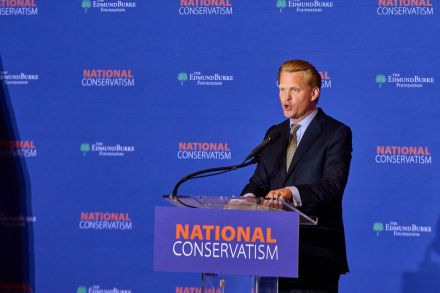
Christianity, culture wars and J.D. Vance: a conversation with James Orr

From our UK edition

62 min listen

James Orr was living the life of a young, high-flying lawyer when, after a few drinks at a New Year's Eve party, he asked for signs that God existed. The signs came; among other things, he narrowly avoided a fatal skiing accident. Now he is a passionate Christian and a conservative culture warrior who helped defeat an attempt to impose the tyranny of critical race theory on Cambridge University, where he is an associate professor of the philosophy of religion. He's also an intellectual mentor to the vice president of the United States; Politico describes him as 'J.D. Vance's English philosopher king'. Dr Orr says Vance is 'extremely articulate, but he takes no prisoners'.

Jonathan Bowden: my eccentric school friend who became a far-right hero

From our UK edition

When my old school, Presentation College, Reading, was demolished a decade ago, the Labour council desperately searched for famous old boys after whom they could name streets on the housing estate that replaced it. This was a challenge. According to the local newspaper, ‘names rejected include one in recognition of Mike Oldfield, the musician behind ground-breaking prog rock album Tubular Bells’ – rejected by Oldfield, I assume, since he hated the school. They settled on Bowden Row, ‘in honour of political philosopher and Presentation alumnus Jonathan Bowden’. I wonder if the residents of the handsome semi-detached houses know anything about Bowden. The council didn’t.

Conclave – what really happens when a pope dies?

From our UK edition

54 min listen

The film Conclave has picked up a host of awards across all the major ceremonies so far, including at the Screen Actors Guild, the Golden Globes, and winning Best Picture at the BAFTAs. Adapted from the novel by Robert Harris, it also has eight nominations at the upcoming 2025 Academy Awards. Full of intrigue, the film has viewers wondering how true to life the process depicted on the big screen is. And, with Pope Francis hospitalised, amidst the award season, this has only heightened interest in Papal conclaves and the election process.  Dr Kurt Martens, Professor of Canon Law at the Catholic University of America, joins Damian Thompson to unpack the process. What really happens when a pope dies? Produced by Patrick Gibbons.

Holy War and Antichrist: The rise of extremist rhetoric inside the Russian Orthodox Church

From our UK edition

35 min listen

The subject of Ukraine shattered the unity of Eastern Orthodoxy long before Russia’s full-scale invasion began. In 2018 the Ukrainian Orthodox Church declared independence from Moscow with the approval of the Ecumenical Patriarch of Constantinople. In response, Patriarch Kirill of Moscow broke off all relations with Constantinople, creating arguably the greatest schism in Orthodoxy for 1,000 years. There are now two main Ukrainian Orthodox Churches: one that supports independence and one still loyal to Moscow. As The Spectator’s Ukraine correspondent Svitlana Morenets points out, Ukrainians who previously didn’t care which church they attended now have to decide which to attend.

Americans should feel uneasy about the new Archbishop of Washington

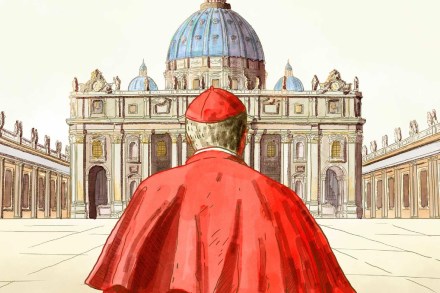
For an eighty-eight-year-old man who has spent only five days in the United States and doesn’t speak English, Pope Francis is a surprisingly partisan observer of American politics. For most of his life he was, like a typical Argentinean, viscerally but vaguely anti-American. By the time he became pope in 2013, he and the Democratic Party had embraced the ideology of the globalist left. And so they forged an alliance — one the Pope may soon regret, now that Republicans in the White House and on Capitol Hill are beginning to grasp the scale of the Vatican’s corruption. In 2016, Francis gave his blessing to the Hillary Clinton campaign’s Catholic front organizations, motivated not just by their shared obsession with anti-racism and climate change but contempt for Donald Trump.

Archbishop

Why militant atheists don’t understand religion: a conversation with Alister McGrath

From our UK edition

36 min listen

In his new book Why We Believe: Finding Meaning in Uncertain Times, Prof Alister McGrath rejects the notion that belief is a relic of the past and takes aim at the ‘new atheists’ who attack religion without even knowing what it is. Prof McGrath, emeritus Andreas Idreos Professor of Science and Religion at Oxford University, has had a unique journey to religion. A former Marxist atheist with a doctorate in molecular biology, he’s now a world-renowned theologian and Anglican priest.  In this lively discussion with Damian Thompson he talks about the boundary between science and religion, something poorly understood by aggressive atheists such as Richard Dawkins and the late Christopher Hitchens.

Are these performances of the Bach cantatas the best on record?

From our UK edition

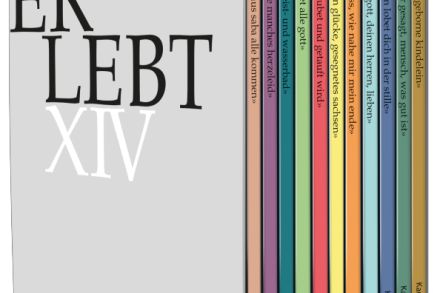
Three projects shedding light on the sacred music of J.S. Bach are nearing completion. The first consists of an epic 25-year project to record all the composer’s vocal works – passions, masses, motets and more than 200-odd cantatas – in electrifying performances supplemented by lectures and workshops. At the helm is a Swiss choral conductor renowned for his improvisatory skills – and surely the only baroque specialist to have played Sidney Bechet on a chamber organ. The second project is a guide to Bach’s church cantatas tailored at ‘cultural Christians’; that is, music lovers intrigued but intimidated by their Lutheran theology, unsure how to approach this treasure trove of, at a conservative estimate, more than 100 masterpieces of western civilisation.

Katy Balls, Alexander Raubo, Damian Thompson, Daisy Dunn and Mark Mason

From our UK edition

27 min listen

On this week’s Spectator Out Loud: Katy Balls analyses the threat Reform pose to the Conservatives (1:20); Alexander Raubo talks us through the MAGA social scene and the art collective Remilia (6:42); Damian Thompson reviews Vatican Spies: from the Second World War to Pope Francis, by Yvonnick Denoel (12:27); Daisy Dunns reviews the new podcast Intoxicating History from Henry Jeffreys and Tom Parker Bowles, as well as BBC Radio 4’s Moving Pictures (17:50); and, Mark Mason provides his notes on obituaries (22:46).  Produced and presented by Patrick Gibbons.

Inside the Unholy See: the infiltration of the Vatican by foreign powers

From our UK edition

Since it became independent in 1929, Vatican City has been the world’s smallest state. Every evening the gates close, leaving behind only 500 permanent residents. I once spent a week behind the walls as a guest in the Santa Marta hostel where the Pope lives; at night the deserted courtyards are thrillingly spooky. But it’s during the day that they echo with the footsteps of secret agents. The Vatican has been teeming with spies since popes started living on this 100-acre plot of land west of the Tiber when they returned from Avignon in 1377. In the 20th century it entered a new era of espionage when the papacy was targeted by Nazi Germany, Soviet Russia and the United States. By definition, secret agents are supposed to be difficult to identify.

Are Syrian Christians who speak the language of Jesus about to disappear after 2,000 years?

From our UK edition

26 min listen

There has been a Christian community in Syria since the first century AD. But it is shrinking fast and faces terrifying new threats as the country’s government, following the overthrow of President Assad, forges alliances with hardline Muslims including foreign jihadists – Uighurs from China, Uzbeks from Central Asia, Chechens from Russia, Afghans and Pakistanis. Mgr Michael Nazir-Ali, the former Anglican Bishop of Rochester who is now a Catholic priest of the Ordinariate, has written a heartbreaking piece for The Spectator about the Christians of Maaloula in southwest Syria. It’s one of the last remaining communities to speak Syriac, a dialect of Aramaic, the language of Jesus Christ.

Could Trump 2.0. herald a new era of religious liberty in America?

From our UK edition

36 min listen

Andrea Picciotti-Bayer, director of the US-based Conscience Project and a friend of Holy Smoke, joins Damian to talk about what the incoming second Trump administration could mean for religious freedoms in America. Andrea argues that the Biden administration waged an unprecedented assault on such freedoms during his term. What could happen over the next four years on issues like gender, abortion, adoption and religious discrimination? And what are the nuances between federal and state laws? (2:06) Also on the podcast, Damian speaks to The Spectator’s Will Moore, Lara Prendergast and Freddy Gray about the nomination of Cardinal Robert McElroy to be the new Archbishop of Washington.

Industry tragedy, Trump vs the Pope & the depressing reality of sex parties

From our UK edition

42 min listen

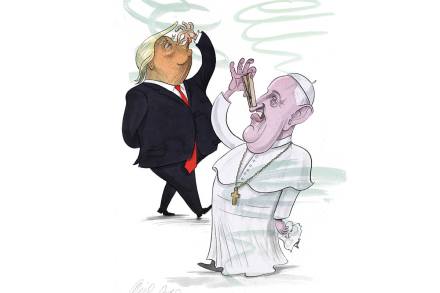
This week: the death of British industryIn the cover piece for the magazine, Matthew Lynn argues that Britain is in danger of entering a ‘zero-industrial society’. The country that gave the world the Industrial Revolution has presided over a steep decline in British manufacturing. He argues there are serious consequences: foreign ownership, poorer societies, a lack of innovation, and even national security concerns. Why has this happened? Who is to blame? And could Labour turn it around? Matthew joined the podcast, alongside the head of the Trades Union Congress (TUC), Paul Nowak. (1:05) Next: the Pope takes on President TrumpThe Pope has nominated Cardinal Robert McElroy to be the new Archbishop of Washington.

The Pope’s revenge: why the new Archbishop of Washington is such a controversial choice

From our UK edition

For an 88-year-old man who has spent only five days in the United States and doesn’t speak English, Pope Francis is a surprisingly partisan observer of American politics. For most of his life he was, like a typical Argentinian, viscerally but vaguely anti-American. Robert McElroy’s nickname among Catholic conservatives is ‘the wicked witch of the west’ But by the time he became Pope in 2013 both he and the Democratic party had embraced the ideology of the globalist left. And so they became allies. In 2016, Francis gave his blessing to the Hillary Clinton campaign’s Catholic front organisations, motivated not just by a shared obsession with anti-racism and climate change but contempt for Donald Trump.

Did Muslim leaders help conceal the grooming gangs scandal? A fierce exchange of views

From our UK edition

28 min listen

Welcome to one of the most heated exchanges of views in the history of the Holy Smoke podcast. In this episode, Damian Thompson talks to the distinguished Islamic scholar Dr Musharraf Hussain about the controversy surrounding the Muslim background of some of the accused in the crimes of Britain's 'grooming gangs'.  Damian draws an analogy between the Catholic hierarchy's cover-up of sex abuse by priests, and what he claims was the role of certain local Muslim community leaders in restricting debate about, and investigation of, abuse committed by men from Pakistani families. To say that there was no common ground between Dr Thompson and Dr Hussain would be putting it mildly, alas... Produced by Patrick Gibbons.

Catherine Lafferty, Michael Simmons, Paul Wood, Philip Hensher, Isabel Hardman and Damian Thompson

From our UK edition

39 min listen

On this week’s Spectator Out Loud: Catherine Lafferty argues that the drive to reduce teenage pregnancies enabled grooming gangs (1:27); following Luke Littler’s world championship victory, Michael Simmons says that Gen Z is ruining darts (6:32); Paul Wood looks at the return of Isis, and America’s unlikely ally in its fight against the terrorist group (10:35); Philip Hensher reviews a new biography of the Brothers Grimm by Ann Schmiesing, and looks at how words can be as dangerous as war (17:57); Isabel Hardman highlights the new garden now open at the Natural History Museum (26:57); and, Damian Thompson reveals he watched videos of plane crashes to distract himself from the US election coverage – why? (31:40).  Produced and presented by Patrick Gibbons.

The truth about grooming gangs, ‘why I’m voting for the AfD’ & exploring YouTube rabbit holes

From our UK edition

47 min listen

This week: what does justice look like for the victims of the grooming gangs?In the cover piece for the magazine, Douglas Murray writes about the conspiracy of silence on the grooming gangs and offers his view on what justice should look like for the perpetrators. He also encourages the government to take a step back and consider its own failings. He writes: ‘If any government or political party wants to do something about the scandal, they will need to stop reviewing and start acting. Where to begin? One good starting point would be to work out why Pakistani rapists in Britain seem to have more rights than their victims.’ To unpack his piece in a little more detail, we were joined by journalist Julie Bindel, who has been reporting on the grooming gangs for almost 20 years.

My YouTube rabbit hole

From our UK edition

How do you live with yourself when 179 air passengers are burned alive on a South Korean runway, and you’ve spent the last few weeks binge-watching YouTube videos about plane crashes? The obvious answer is that I need to seek help. I have a defence, but I don’t think any British jury would buy it. I started watching the air-crash videos to escape the anxiety caused by the American presidential election. Anxiety that Donald Trump might lose, that is. On YouTube there’s always someone listening. It’s an all-you-can-eat buffet for monomaniacs I can imagine Emily Maitlis and Rory Stewart’s reaction: ‘Self-declared Trump supporter chills out by imagining planes full of holidaymakers falling out of the sky. That figures.’ But I don’t care what they think.

How abuse scandals shattered the Church of England but were hidden by the Vatican

From our UK edition

13 min listen

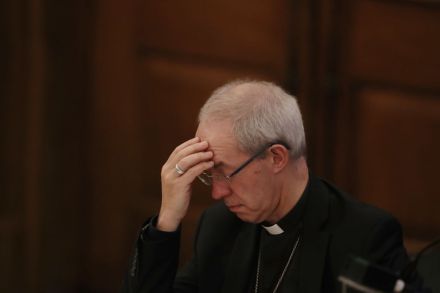
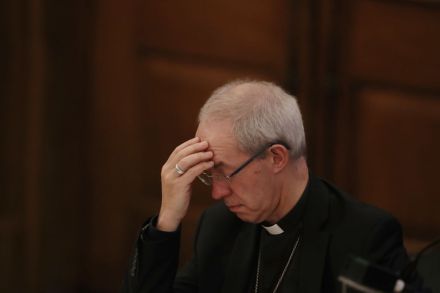
In this end-of-year episode of Holy Smoke, Damian Thompson discusses the abuse scandals that have forced the current Archbishop of Canterbury, Justin Welby, to resign his post, his predecessor Lord Carey to resign his ministry as a priest, and now threaten the survival of the Archbishop of York, Stephen Cotterill.  These developments are an unprecedented disaster for the Church of England – but how many Roman Catholics realise that Pope Francis would also be facing demands for his resignation if the details of various horrifying scandals were not being allegedly concealed by the Vatican and its media allies?