Damian Thompson

Damian Thompson

Damian Thompson is an associate editor of The Spectator and presenter of The Spectator’s Holy Smoke podcast

Pope used Argentinian ‘ghostwriter’ for controversial document on the family, claims Vatican expert

From our UK edition

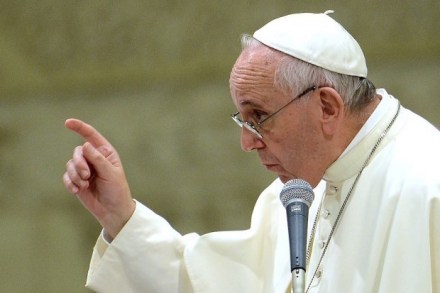
The leading Vatican commentator Sandro Magister – a conservative Catholic detested by the Pope's entourage – this morning published an article that will severely embarrass Francis as he tries to clear up confusion over the Church's teaching on Communion for the divorced and remarried. Magister, stripped of his Vatican accreditation last year after leaking a draft of the Pope's encyclical on the environment, claims that Francis employed a 'ghostwriter' for key sections of Amoris Laetitia, his 200-page official response to last year's Synod on the Family.
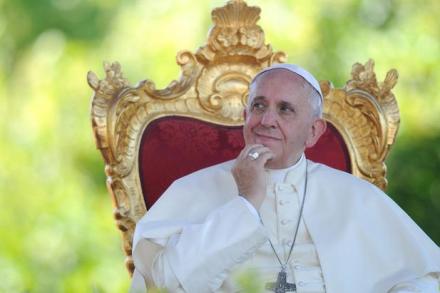
Catholic bishops split over Brexit as Archbishop accuses Osborne of ‘ludicrous’ scaremongering

From our UK edition

Archbishop Peter Smith, the Catholic Archbishop of Southwark – whose diocese covers all of London south of the Thames – has accused George Osborne of 'ludicrous' scaremongering in the EU referendum. The Archbishop, talking to Vatican radio, does not explicitly say that he supports Brexit. His line is that he is 'undecided how to vote'. But according to my sources, in private he has been telling 'anyone who cares to listen' that he favours the Out campaign. 'It seems that Peter Smith wants to leave the EU – he's made that very clear,' a Catholic bishop tells me. Here's an extract from the Catholic Herald report on Smith's interview.

Unsung hero | 12 May 2016

From our UK edition

One of the greatest choral symphonies of the 20th century, entitled Das Siegeslied (Psalm of Victory), has been heard only three times since it was composed in 1933. The last performance took place in Bratislava in 1997. The text is a German translation of words from Psalm 68: ‘...as wax melteth before the fire, so let the wicked perish at the presence of God’. One critic has described Das Siegeslied as ‘a shattering, armour-plated juggernaut of a symphony’, whose huge orchestra marches in a frenzy across ‘voice parts conceived wholly in terms of the harsh consonants and barking vowels of German’. Yet there is also captivating beauty: the lapping of harps and muted horns; a serene interlude for a capella choir.

Thetans under threat

From our UK edition

At last! It has taken over two years, but a British publisher has summoned up the nerve to bring out Going Clear, an astonishing exposé of the Church of Scientology by Lawrence Wright of the New Yorker. Wright — who won the Pulitzer Prize for The Looming Tower, his investigation of 9/11 — is the journalistic equivalent of a virtuoso musician: he can race us through the most complicated narrative because he has done unimaginable amounts of homework. Wright conducted hundreds of interviews for Going Clear, then had a team of fact-checkers crawl over the text. Even so, none of our big publishing houses would touch it.

The devil in footnote 351

From our UK edition

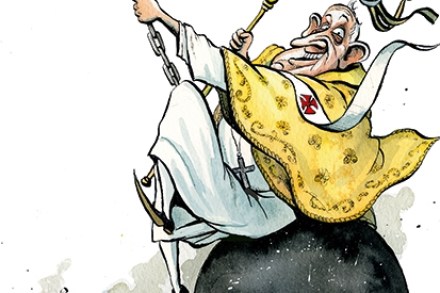
Last week we reached the beginning of the end of the pontificate of Jorge Bergoglio — the ‘great reformer’ of the Catholic church who, it appears, has been unable to deliver the reforms that he himself favours. This despite being Pope. On Friday, he published a 200-page ‘exhortation’ entitled Amoris Laetitia, ‘The Joy of Love’ (or ‘The Joy of Sex’, as English-speaking Catholics of a certain vintage immediately christened it). This was Francis’s long-awaited response to two Vatican synods on the family, in 2014 and last year, which descended into Anglican-style bickering between liberals and conservatives. At the heart of the disputes lay the question of whether divorced-and-remarried Catholics could receive Holy Communion.

Pope Francis’s revolution has been cancelled

From our UK edition

Here's the beginning of the Guardian's report on Amoris Laetitia (Joy of Love), Pope Francis's response to the Synod on the Family: Pope Francis has called for the Catholic church to revamp its response to modern family life, striking a delicate balance between a more accepting tone towards gay people and the defence of traditional church teachings on issues such as abortion. In a landmark papal document entitled Amoris Laetitia (Joy of Love), Francis outlined his vision for the church on family issues, urging priests to respond to their communities without mercilessly enforcing church rules: “Each country or region, moreover, can seek solutions better suited to its culture and sensitive to its traditions and local needs,” he wrote. Can you spot what's missing?

Sins of the fathers | 23 March 2016

From our UK edition

A feature film about priests who abuse children is being released on 25 March. Which happens to be Good Friday. Geddit? The sacrifice of the innocents. A conspiracy of religious hierarchs. Hand-washing by the secular authorities. I’m sure I can think of some more analogies if you give me time, but that’s enough to be going on with. Enough, certainly, for the distributors to boast that the movie is ‘controversially slated to be released on Easter [sic] Good Friday’. As publicity stunts go, this isn’t subtle. But the film is. The Club, directed by the Chilean Pablo Larraín, sets out to perplex us from the first frame until the last.

God’s messenger

From our UK edition

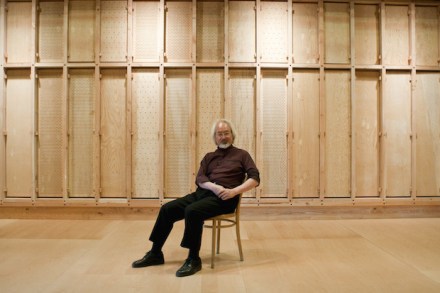
When the Japanese conductor Masaaki Suzuki leads his forces in a performance of a Bach cantata, does he worry that the non-Christians in his audience will face the fires of Hell? That seems a bizarre question to ask any conductor of Bach’s music, especially one from Japan, where only one per cent of the population is Christian. But when I met Suzuki in Copenhagen last Friday I asked it, because the 61-year-old founder of the Bach Collegium Japan (BCJ) is part of that one per cent. He’s an Evangelical Protestant, like Johann Sebastian Bach himself. Indeed, he adheres to an even fiercer interpretation of the Bible than the cantor of St Thomas’s.

Organic chemistry

From our UK edition

My old Oxford college, Mansfield, isn’t a famous establishment, though its current principal, ‘Baroness Helena Kennedy’, as she incorrectly styles herself, has raised its profile by lefty networking. (Owen Jones, no less, has lectured there.) The building is pretty, however, and its nonconformist chapel splendid, so long as you avert your eyes from the gruesome stained-glass Reformed divines. The organ was played by Albert Schweitzer and makes a mighty racket. This I know because in the 1980s the chapel was unlocked, which allowed me to creep in after a night on the sauce. I’d pull out all the stops, cackling like Vincent Price in The Abominable Dr Phibes. No pedals, though.

Will Catholic bishops try to scare their flocks into voting against Brexit?

From our UK edition

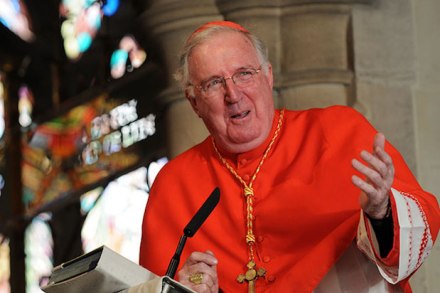
The Catholic bishops of England and Wales – and the separate hierarchy for Scotland, for that matter – have long been uncritical, even sycophantic, supporters of the European Union. The question isn't whether they will try to persuade Catholics to vote to stay in, but how they will go about it – and whether they will succeed. The campaign is already under way. It has been kicked off by Cardinal Cormac Murphy-O'Connor, the English churchman closest to Pope Francis and a genial fellow who never met a canapé he didn't like. He has already said... ... though Christian churches will not take position on the referendum vote, Catholics should vote for Europe... ... which sounds awfully like taking a position to me.

The bad book

From our UK edition

The decline of the Church of England has been one of the most astonishing trends in modern Britain. The pews of churches in this country are emptying fast. Next week, a book was to be published about this collapse entitled That Was The Church That Was: How the Church of England Lost the English People. But suddenly the publishers, Bloomsbury, decided to pull it. The book, it seemed, was a little too incendiary. Those reviewing the book received a panicky message: ‘Following the receipt of a legal complaint, Bloomsbury are recalling all review copies of this book and ask you to immediately return the copy received…’. Apparently there has been a legal action because of ‘a disputed passage about a Christian leader’. It sounded intriguing. But which leader?

Sir James MacMillan mourns the little granddaughter who brought ‘cosmic love’ to his family

From our UK edition

Just before Christmas, the Catholic Herald named the composer Sir James MacMillan as its first Catholic of the Year. The award recognised many things: masterly compositions such as the St John and St Luke Passions and the Fourth Symphony, the latter played at this year's Proms; his investiture as a knight in December; the setting up with his wife, Lynne, of a new music festival, the Cumnock Tryst; and his intellectually dazzling defence of orthodox Catholicism. What the magazine didn't tell its readers, or even James, was that we also wanted to honour the MacMillan family for its profoundly Catholic response to a family crisis. James and Lynne's daughter, Catherine, had a severely disabled daughter, Sara.

Age concern | 21 January 2016

From our UK edition

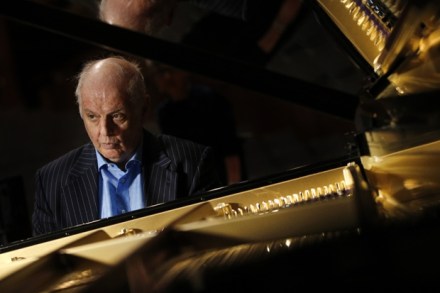
Daniel Barenboim back at the Festival Hall! Cue The Grand March of the Musical Luvvies Across Hungerford Bridge, a bustling overture by Karl Jenkins in which a trombone farts out the epigrams of Simon Callow and the violas mimic the gentle swing of David Mellor’s shoulder-length bob — modelled, I’m told, on Anna Ford’s barnet c.1982. Jolly fine it looked, too, on Sunday night. Barenboim doesn’t have much hair these days, but baldness suits him. Sixty years after his RFH debut, as a 13-year-old playing Mozart under Joseph Krips, he has the same baby-pink skin as Winston Churchill in old age. He also shares Churchill’s belief in his own indestructibility.

And the Holy Smoke Lefty Bore of the Year award goes to…

From our UK edition

.... Bonnie Greer. Which is a shame, because before Twitter she was feisty and thought-provoking. Just two years ago she came in to the Telegraph newsroom for one of our Telegram podcasts and was terrific value – just as I remember from the golden era of The Late Review (i.e. before Mark Lawson was replaced by right-on, pleased-with-herself socialist millionairess Kirsty Wark). But then Greer discovered Twitter and THIS happened: These are just from the last month or so. It's not exactly news that Greer, a Chicago-born playwright, is left-wing; but I remember her as a lefty with a sense of humour, not Private Eye's Deirdre Spart.

Pope Francis condemns Catholic ‘fundamentalists’ and hints at support for use of condoms against Aids

From our UK edition

Pope Francis has used another mid-flight press conference to make a statement of significance to millions of Catholics. Asked if the Church should drop its opposition to the use of condoms to stop the spread of Aids (a teaching already modified by Benedict XVI), he effectively declared that the debate was a waste of time. He referred to Jesus's practice – opposed by the Pharisees on legalistic grounds – of healing on the Sabbath. 'Healing is obligatory!' he said. Earlier in the interview, the Pope took aim at Catholic 'fundamentalists' whose attachment to rules was 'idolatrous'. Here's a transcript from RomeReports: Question: Aids is a serious problem in Africa, the epidemic continues.

Bored by Brahms

From our UK edition

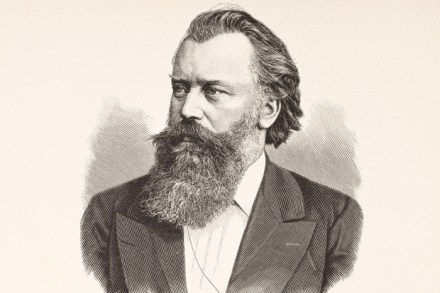
Brahms’s Clarinet Quintet begins, writes his biographer Jan Swafford, with ‘a gentle, dying-away roulade that raises a veil of autumnal melancholy over the whole piece: the evanescent sweet-sadness of autumn, beautiful in its dying’. This being late autumn, I listened to the quintet on Sunday to see if its ‘distillation of Brahmsian yearning’ still made an overwhelming impression on me. It did. I swear these are the most miserable 35 minutes in classical music. One critic refers admiringly to the display of ‘every super-refined shade of silver-grey regret’. But that’s the problem.

Exclusive translation: the Pope says Paris attacks are part of a Third World War

From our UK edition

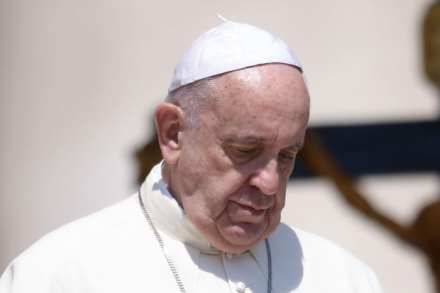
An Italian religious TV station, TV2000, has posted this audio clip of Pope Francis – sounding distressed and tearful – expressing his horror at the murders in Paris. The Pope says he's moved and saddened, and praying for every one of the victims and their families; he feels close to 'the beloved' French people. The Spectator has had it translated from the Italian:- Q: Holy Father, how do you feel about the tragedy of Paris? A: I feel deeply touched and grieved. I don’t understand. But these things are hard to understand; things done by human beings. That’s why I am deeply touched, grieved and I pray. I am very close to the beloved French people, I am close to the relatives of the victims and I pray for all of them.

Why is Pope Francis’s leadership such a confusing mess? This may be the answer…

From our UK edition

This week the Catholic Herald published a blog post by Dr Edward Condon, an American canon lawyer, that began with a description of the Holy Father's method of communicating his thoughts to the faithful: ... soundbites lifted from off-the-cuff remarks, second hand accounts of midnight phone calls, and semi-reliable digests of interviews with nonagenarian atheists all making the news, followed by a maelstrom of interpretation and counter-interpretation before an eventual 'clarification' comes out of the Vatican press office amounting to little more than 'We don’t think any of you have it quite right'. I've made the same observation myself (though not nearly so memorably). What I couldn't explain was why Francis was behaving in this erratic fashion.

Pope vs church

From our UK edition

[audioplayer src="http://rss.acast.com/viewfrom22/civilwarinthecatholicchurch/media.mp3" title="Damian Thompson and Fraser Nelson on civil war in the Catholic church" startat=30] Listen [/audioplayer]Last Sunday, the Italian newspaper La Repubblica carried an article by Eugenio Scalfari, one of the country’s most celebrated journalists, in which he claimed that Pope Francis had just told him that ‘at the end of faster or slower paths, all the divorced who ask [to receive Holy Communion] will be admitted’. Catholic opinion was stunned. The Pope had just presided over a three-week synod of bishops at the Vatican that was sharply divided over whether to allow divorced and remarried Catholics to receive the sacrament. In the end, it voted to say nothing much.

Has Pope Francis just said that ‘all the divorced who ask’ will receive Holy Communion?

From our UK edition

The aggressively traditionalist Catholic website Rorate Caeli is tonight announcing that Pope Francis has dropped a 'bombshell' in an interview with his favourite Italian journalist, Eugenio Scalfari of La Repubblica. Here's a PDF of the newspaper's article and here is Rorate Caeli's translation of Scalfari: It is true – Pope Francis answered – it is a truth and for that matter the family that is the basis of any society changes continuously, as all things change around us. We must not think that the family does not exist any longer, it will always exist, because ours is a social species, and the family is the support beam of sociability, but it cannot be avoided that the current family, open as you say, contains some positive aspects, and some negative ones ...