Damian Thompson

Damian Thompson

Damian Thompson is an associate editor of The Spectator

Why Queen Elizabeth was a Presbyterian when she died

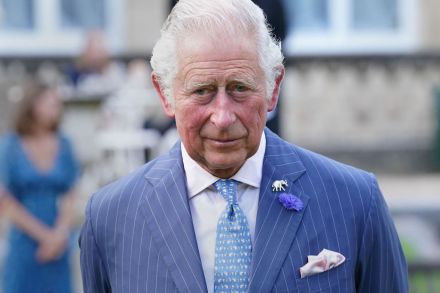
When the Queen died, she was actually a Presbyterian. That’s because she was in residence at Balmoral, and all British monarchs change their religious identity when they arrive in Scotland. They board the Royal Train at King’s Cross as Supreme Governor of the Church of England, responsible for appointing bishops whom it teaches are successors of the Apostles. By the time they arrive at Waverley they belong to a Church which has no bishops and whose only Supreme Governor is Jesus. King Charles, who succeeded to the throne in Scotland, did so as an ‘ordinary member’ of the Kirk – which, as the Royal Family’s website explains, is the only religious status that the sovereign enjoys north of the border.

BBC radio has excelled itself over the past week

Listening to BBC Radios 3 and 4 over the past week has been like meeting an old friend who, after decades of squeezing into age-inappropriate designer clothes, has suddenly reverted to a sensible wardrobe. It’s a pity that it took the death of our beloved Queen for this to happen, but I’ve been enjoying it while it lasts – because, like the miracle drug that Robin Williams gives his dementia patients in the film Awakenings, this dose of sanity will quickly wear off. Radio 4’s long-prepared tributes to Elizabeth II were, by the BBC’s standards, remarkably impartial. Even Saturday’s Today programme rose to the occasion.

Why has the West caved in to the progressive witch-finders?

34 min listen

Is western society in the grips of a progressive hysterical epidemic comparable to the Salem Witch Trials? My guest on Holy Smoke this week, Andrew Doyle, argues precisely that in his book The New Puritans. He suggests that gender ideology, and particularly the dogmas of trans activists, together with the fantasies of Critical Race Theory, are dragging society into an alternative reality that resembles a fanatical religion. But it's one that doesn't have to employ its own ideological police – because actual police forces, along with other powerful institutions including the churches, have signed up to the New Puritanism (usually without understanding it).

Is Pope Francis protecting a convicted sex abuser?

21 min listen

In this episode of Holy Smoke, I look at the ever-deepening mysteries surrounding Bishop Gustavo Zanchetta, who was given a job assessing Vatican finances after he was forced to resign from his diocese in Argentina following allegations of abusive behaviour and financial mismanagement. This year Zanchetta received a lengthy jail sentence for abusing seminarians. But he’s serving his time in a comfortable monastery, while the clergy who investigated him are the targets of a mysterious Vatican investigation. Now one of the abused seminarians has spoken out, accusing the Pope of protecting Zanchetta. This is potentially the biggest scandal involving a reigning pope for decades – and yet the mainstream media seems to be looking the other way. But I’m not.

Why the Pope’s ‘Synod on Synodality’ has become a joke

25 min listen

The Catholic Church is half way through a two-year consultation exercise that will culminate in a 'Synod on Synodality' in the Vatican next year. A synod on what? Don't worry if you're confused. No one in Rome seems to be able to define synodality, either. What will the world's bishops discuss? Probably not the figures revealing how many Catholics have taken part in this exercise, because they're acutely embarrassing. The English and Welsh bishops couldn't even get 10 per cent of Mass-goers to take part in a consultation process that many observers suspect has been shamelessly rigged by Pope Francis's bureaucrats. And in Belgium, a country where some six million people identify as Catholic, the number of participants is somewhere between 2,000 and 4,000.

Why the Tories should gamble on Kemi Badenoch

There's only one candidate for prime minister with the guts to dismantle the self-loathing culture of identity politics that is destroying Britain. She's uniquely qualified to take on the challenge because she's a black woman raised in Nigeria who studied for her A-levels while working in McDonald's. And she may succeed because, in addition to a passion for knocking heads together, she has a startlingly clear understanding of how our politics and culture are poisoning each other in a left-liberal suicide pact. As soon as I read Kemi Badenoch's article in this morning’s Times, I thought: this is a risk worth taking. The last gamble didn't pay off, but then Boris Johnson was always too distracted and self-absorbed to assemble his maverick ideas into a political philosophy.

An intimate, lucid and unforgettable new James MacMillan work

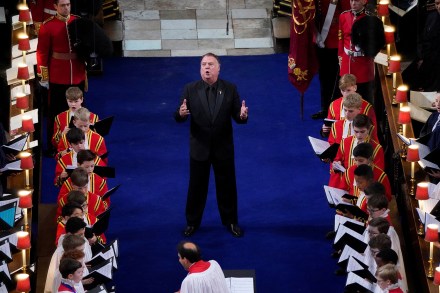
On Tuesday night I was at the world première of a motet by Sir James MacMillan and I don’t think I’ve ever heard a more haunting piece of music. It begins in half-light, with pinpricks from the organ so widely spaced that you could be listening to a forbidding tone row from the Second Viennese School. A four-part choir enters in close harmony and you realise that those apparently unrelated notes hint at austerely beautiful chords encircling the melody. In Carmel’s Shade is one of the smallest but brightest jewels in the MacMillan collection There are moments when we could be listening to Palestrina, to César Franck, to Benjamin Britten – a reminder that MacMillan is fluent in more musical languages than most living composers.

The Queen’s powerful Christian faith

12 min listen

In this week's Holy Smoke I offer some thoughts on the impressive and distinctive Christian faith of the Queen – impressive because it's so refreshingly direct compared to that of many of her politics-obsessed bishops, and distinctive because Elizabeth II is one of a dwindling band of Low Church but not Evangelical Anglicans whose favourite Sunday service is old-fashioned Matins. Questions of churchmanship aside, however, there is no doubting the intensity of her convictions, about which she has spoken with increasing candour and confidence in recent years. Will she turn out to be the United Kingdom's last robustly Christian monarch?

Why is the Church of England so obsessed with racism?

25 min listen

My guest on Holy Smoke this week is, many people believe, a victim of the intolerant progressive ideology currently gripping the Church of England. He's Calvin Robinson, a name possibly familiar to you from the row over the Diocese of London's decision not to ordain him.  Calvin is a young TV presenter with conservative Christian views that conflict with the liberal opinions of the hierarchy. He's been told they are too divisive – which is a bit rich coming from an organisation whose senior bishops routinely express opinions far to the left of those of the average churchgoer. Particular offence was caused by his insistence that the C of E isn't 'institutionally racist'.

Pope Francis has betrayed Cardinal Zen

When Cardinal Joseph Zen, the 90-year-old former Bishop of Hong Kong, was arrested by Chinese authorities on Wednesday and charged with ‘collusion with foreign forces’, the White House called for his immediate release. Lord Patten of Barnes, the last British governor of Hong Kong, said the arrest was ‘yet another outrageous example of how the Chinese Communist Party is hell-bent on turning Hong Kong into a police state.’ Human rights activists lined up to defend the cardinal, who although released on bail faces the prospect of spending his last years in a Chinese jail cell. You might expect the loudest protest of all to come from the Vatican. Not so. In fact, it didn't protest at all.

The Catholic Church’s muddle over Roe vs Wade

12 min listen

So Roe vs. Wade is as good as dead. Americans are about to lose their constitutional right to an abortion. Five out of the nine Supreme Court justices have drafted an opinion in their forthcoming ruling on a Mississippi abortion case which strikes down the 1973 Roe ruling as 'egregiously wrong from the start'. As we all know it’s been leaked – but it’s expected to be issued pretty much unchanged in the next few weeks because, even if they wanted to, the justices can't change their votes without appearing to succumb to political pressure.

A plan to rescue Christian art

24 min listen

Few things are more depressing than the art, architecture and furnishings of the average modern church. The glorious aesthetic of light and colour of the Middle Ages and Renaissance has been replaced with an infantile modernist decor more suited to a primary school than a place of worship. In the Catholic Church, especially, bishops who may privately have reasonably good taste happily commission cringeworthy 1970s-style art because they think it's demanded by 'the spirit of Vatican II'. Is there any way Christian art can escape from the grip of mediocrity? My guest on this episode of Holy Smoke thinks there is. She's the charismatic Rome-based art historian Dr Elizabeth Lev, whose TED talk about the ceiling of the Sistine Chapel is both erudite and, in places, hilarious.

Monsignor Michael Nazir-Ali on his first Easter as a Catholic

22 min listen

My guest on this episode of Holy Smoke was an Anglican bishop for 37 years – one of the Church of England's foremost scholars and its leading witness for persecuted Christians. He was also an evangelical who, as bishop of the ancient see of Rochester, ordained women priests. But, as of this month, his title is Monsignor. I am, of course, talking about the Pakistani-born Michael Nazir-Ali, whose decision to join the Ordinariate has come as an enormous, if surprising, boost to the fortunes of that small but dynamic organisation for ex-Anglicans set up by Pope Benedict XVI. This will be his first Easter not just as a monsignor – he has just been made a Prelate of Honour by Pope Francis – but as a Catholic.

It’s time the West saved Nigeria’s persecuted Christians

22 min listen

Did you know that in the last year more Christians have been killed for their faith in Nigeria than anywhere else in the world combined? In 2021, at least 6,000 Christians died for their faith, and 80 per cent of those were Nigerians. Their murderers were – you may not be too shocked to learn – almost to a man Islamists. But, this being Nigeria, a supposedly secular state where northern provinces impose Sharia on their populations, the situation is chaotic. Four different groups are implicated.

Male friendship is in crisis

Most of my women friends work hard to keep ancient friendships alive; the seasonal lunches, shopping trips and afternoon teas are observed as scrupulously as the feasts of the liturgical calendar. ‘Friends make all the difference in life,’ my mother used to say. In her late eighties, she would defy the wobbles of Parkinson’s and haul herself on to a bus for the all-important ‘Tea with Daisy’, inscribed with a shaky hand in her diary. My sister was the same. In September last year she marched her girlfriends off to Whitby for a week of what I assume was slightly manufactured jollity (she was dying of cancer), but you’d never tell from looking at the photographs.

Damian Thompson, Jade McGlynn and Nick Newman

24 min listen

On this week's episode, we'll hear from Damian Thompson on the Patriarch in league with Putin. (00:58)Next, Jade McGlynn on how Russian TV is presenting the war to its people. (08:46)And finally, Nick Newman asks how should cartoonists respond to war? (17:35)Produced and presented by Sam Holmes and Max JefferySubscribe to The Spectator today and get a £20 Amazon gift voucher.

Kirill, the Patriarch in league with Putin

Until very recently, Patriarch Kirill of Moscow, leader of the Russian Orthodox Church, was most famous for being the owner of a phantom wristwatch. It had the magical property of disappearing from sight, visible to onlookers only as a reflection. Don’t believe me? Google ‘Kirill’ and ‘watch’ and you’ll find a photo of the Patriarch of Moscow and All Rus’ meeting the Russian justice minister. It was taken in 2009, the year Kirill succeeded the late Patriarch Alexy II as spiritual leader of 110 million Russian Orthodox Christians. On his head Kirill is wearing a white koukoulion, the so-called ‘helmet of salvation’, with side flaps like the ears of a giant basset hound. But his cassock is plain black and his wrist is bare.

‘I don’t think we’ve gained anything’ – Cardinal Pell on the Vatican and China

19 min listen

Cardinal George Pell has given a wide-ranging interview to The Spectator's Holy Smoke podcast in which he criticises the Vatican's 2018 deal with Beijing and especially the secrecy surrounding it.  The unpublished pact allows the Chinese Communist Party to choose Catholic bishops, whose appointments are then rubber-stamped by Pope Francis. 'I know high-up people in the Vatican are very dissatisfied with the way things are going,' says Pell, the former Vatican Prefect for the Economy. 'The agreement is there to try to get a bit of space for the Catholics. Obviously that's praiseworthy. [But] I don't think we've gained anything. The persecutions seem to be continuing. In some places they've got worse.

In Ukraine and China, a power-obsessed Vatican is betraying heroic Catholics

24 min listen

Four million Christians in western Ukraine belong to the Ukrainian Greek Catholic Church, which since the end of the 16th century has adhered to a Byzantine rite while recognising the authority of the Pope. For this reason these Ukrainian Catholics are despised by the Russian Orthodox and its political masters: Stalin tried to force them to become Orthodox again and threw their leader, Cardinal Slipyi, into jail, where he remained from 1945 until 1963.  And how was his heroism rewarded? Pope Paul VI denied him the title of Patriarch and, after Vatican II, the Catholic Church set about Westernising their traditions – for example, discouraging them from having married priests.

Does Putin think he’s fighting a holy war to preserve Orthodox Russia?

15 min listen

Vladimir Putin's invasion of Ukraine is fundamentally inspired by his determination to preserve the Orthodox identity of Holy Mother Russia, according to the Rev Giles Fraser, writing for UnHerd today. That's not as preposterous a suggestion as you might think, given that the first mass baptisms in the ancient homeland of 'Rus' took place in Kiev – and that the Ukrainian Orthodox Church recently repudiated the authority of the Patriarch of Moscow. But does that mean that Putin's murderous behaviour should be seen in the context of a war of religion? Does the former KGB agent have a religious bone in his body? Is he secretly laughing at those Christian right-wingers who have cast him in the role of defender of Christendom?