Daisy Dunn

Saturday night telly worth staying in for

From our UK edition

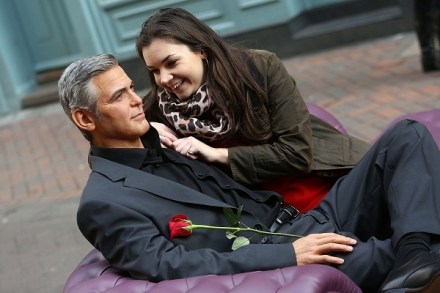
If you don’t go out on a Saturday night, you stay in and imagine what it would be like to be out. And if you do that, there’s a chance you’ll find yourself in front of Take Me Out, the dating programme that airs on the ITV primetime slot once enjoyed by Blind Date. Last Saturday, incredibly, it completed its sixth series. Such is the Tinder-like trend for having dates brought to you, rather than actually having to go out to get them yourself. And what an eye-opener it is. Thirty women, apparently tailored by the same outfitter, totter down a staircase, and take up position behind thirty electric lecterns. One single man is then lowered onto the stage in the ‘Love Lift’, presumably because his feet are his best feature, and merit being seen first.

A gap year isn’t the only way to see the world before university – a number of other options exist

From our UK edition

In the summer before university, I rode a minibus to Blandford Forum in Dorset to attend a Greek summer school. Sitting next to me was a boy with Scout badges pinned to his polo shirt. ‘I like your costume,’ he told me, eyeing my blouse. ‘You look just like an air hostess. Or a Barbie doll dressed as an air hostess. All my girlfriends look like air hostesses.’ Poor Sebastian. He didn’t need to tell me that he came from a boys’ school in a remote corner of Kent. It was painfully obvious that he had never spoken to a girl in his life. But the sad truth was, I wasn’t much more experienced. I’d just mastered the art of concealing it. I hadn’t taken a gap year.

What might link Cleopatra, Augustus, Constantine, Barbarossa, Tamerlane and the Farnese?

From our UK edition

The stone called sardonyx looks a lot more fragile than it actually is. It’s luminous like glass, but hard like steel, which explains why so much of it has survived from ancient times. Fame being a relative word, one might describe Medusa’s Gaze: The Extraordinary Journey of the Tazza Farnese by Marina Belozerskaya as a biography of the most famous sardonyx object in the world, the Tazza Farnese, an ancient libation bowl made to hold offerings to the gods. At least one of the many people who inherited it aimed to change that function. Around the time Romanos II, son of Constantine VII, was ruler over Byzantium, someone drilled through its middle to transform it into a Christian chalice.

Russia: A World Apart, by Simon Marsden – review

From our UK edition

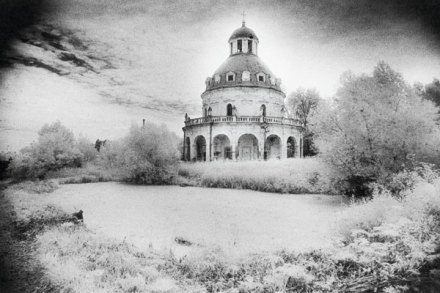
Here are acres of desolate countryside, pockmarked by once great estates, ravaged by rot. Could it be much bleaker? Many aristocrats  fled Russia during the Revolution. Even Tolstoy’s family were affected, and while his estate today survives intact, that of his daughter-in-law and countless other members of the 18th- and 19th-century nobility were left to ruin in overgrown fields across the entire country. This book, part travelogue (Duncan McLaren), part photography book (the late Simon Marsden), restores these buildings and their monuments to our consciousness. Or at least what’s left of them. Many of the estates which lie between Moscow and St Petersburg have been eaten away by fire or scavengers. Some are simply lost.

The Young Van Dyck edited by Alejandro Vergara and Friso Lammertse – review

From our UK edition

Precocious genius will never fail to impress. But it is also very hard to relate to. Aged 14, Anthony Van Dyck painted a Portrait of a Seventy-Year-Old man that looked like a portrait by a seventy-year-old man, signed it, and marked it with his age, the idea being that the younger you are, the more impressive you are. And Van Dyck was impressive. Looking at the work he produced in his teenage years, it’s hard not to think of Julius Caesar, sniveling before a statue of Alexander the Great because he achieved so much, so young. Frankly, I feel like a loser. Which is why The Young Van Dyck, edited by Alejandro Vergara and Friso Lammertse, is a welcome read.

The pleasure of reading Rumer Godden’s India

From our UK edition

Rumer Godden’s prose tugs two ways at once. It is subtle, descriptive, and light, but also direct and unashamed of being turned inside out until darkness consumes it, rendering what was beautiful irrelevant and suddenly opaque. There is also a lot of it. Rumer Godden OBE (1907-1998) wrote over sixty works of fiction and non-fiction over a lifetime divided between England, where she was born, India, where she spent much of her young adulthood, and Scotland, where she lived for the last twenty years of her life. Godden’s three best-known novels, Black Narcissus, Breakfast with the Nikolides, and Kingfishers Catch Fire are set in India.

The true romantic

From our UK edition

Schmaltz just doesn’t sit well with traditional English sensibilities. We spend hundreds of millions of pounds on Valentine’s Day each year whilst acknowledging that it’s a load of commercial tosh. There’s little point in wrapping love in a lace doily when at heart it’s a frill-free experience. Lovely as Elizabeth Barrett Browning’s How do I love thee? is, we’re more honest with ourselves if we savour particularly those great love poems which possess an anti-romantic streak. Direct, matter-of-fact verses will often chime better with our general disposition. That’s true today perhaps more than ever.

The Duchess of Cambridge, defining a portrait

From our UK edition

Poor Kate Middleton. In the royal tradition of artistic and literary representation, what defines her at this moment in time? The creepy feature on her wardrobe statistics in February’s Vogue? Or Paul Emsley’s even creepier official portrait revealed last week? Emsley’s Vaseline lens ‘Gaussian girl’ take on the future consort would have been appropriate had she the complexion of Doris Day, whose preference for the blurred lens was renowned. The fact we all know that Kate’s skin is like butter, her eyes sparkly, and demeanour jollier than her hockey stick makes her first official portrait instantly bewildering. Just imagine, though, if we didn’t know any of those things.

Crime and Guilt, by Ferdinand Von Schirach

From our UK edition

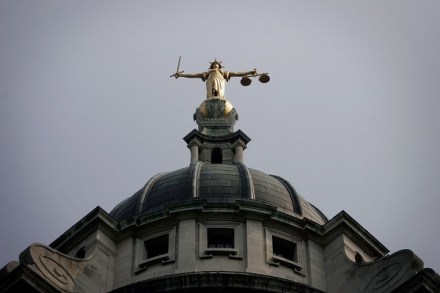
Tis the season for shopping mall scuffles. A man with a red face prized the last Magimix (steel, 600 rotations per minute) from my hands yesterday, citing ‘the stress of January sales’. I got an apology, but not the blender. What is it that makes us so quick to flip? In a far bleaker arena, this is a question that plagues Ferdinand von Schirach, the criminal defence lawyer whose most recent novel, The Collini Case, I reviewed here last year. Von Schirach’s earlier books, Crime and Guilt – both bestsellers in Germany - are compilations of stories derived from real life offences. Von Schirach has been involved in literally hundreds of criminal cases. In none of those he sets out in Crime was the guilty party ever convicted before a court of law.

Renaissance superwoman

From our UK edition

In 1471 Galeazzo Maria Sforza, Duke of Milan, led a brash entourage of wine-swilling, jewel-bedecked courtiers into Florence. It was Lent. This was not the most auspicious way to begin a diplomatic mission to settle the dispute over Imola, the tiny Romagna fiefdom that Galeazzo had offered to sell to Lorenzo de’Medici. Even Lorenzo, epitome of the parvenu, was stunned by the fanfare. But for all the wrangling, within two years the territory would fall into Papal hands with the dowry of Caterina Sforza. The Deadly Sisterhood is a wide-ranging historical narrative about the women and power struggles that dominated Italy in the late 15th and early 16th centuries.

The Way the World Works by Nicholson Baker – an ideal Christmas present

From our UK edition

Nicholson Baker is intensely interested. He looks at the world like he has never seen it before, fixating on the mundane and capitalizing upon the strange lacunae which exist between seeing and understanding. In the purist sense, his interest makes him interesting. The Way the World Works is a colourful digest of his essays, conference papers, feature articles, and observations, divided into five main sections: Life (his own, principally), Reading, Libraries and Newspapers, Technology, and War. Well over a decade’s worth of eloquent umming and ahhing is encased in a single volume, a follow-up to his first, The Size of Thoughts.

Review: The Collini Case, by Ferdinand von Schirach

From our UK edition

During the Second World War both Germans and Allies routinely shot civilians in reprisal for attacks on their armed forces. One shudders to think that a ratio could even be set at which such killings could be considered legitimate. In 1941 Hitler set the bar at 100 civilians per soldier. How high is too high? This question plagued the defence of an Italian man named Fabrizio Collini some sixty years later. Ferdinand von Schirach’s The Collini Case is based upon that historical trial. Collini, who has lived in Germany since the 1950s, enters the luxury hotel suite of a man named Hans Meyer. They are near the Brandenburg Gate. He shoots him from behind, repeatedly, and stamps in his skull until it no longer resembles a skull. He gets himself arrested, says that he did it.

Plein-air pleasures and the great indoors

From our UK edition

Some say it’s the walk there that does it. The promenade down a rambling city path and through a crowd of coffee-swigging commuters that fuels the inspiration that can only be spat out when one is positioned at a desk before a blank library wall. In the fourteenth century in Italy the poet Petrarch rekindled classical ideas about the merits of a space not so dissimilar to this in character. Best to make one’s desk in a room adjoining the bedroom, he said. That way, the writer need not leave his cell at all. In ancient Rome, even more so, nature was often considered a distraction. Both writers and artists since have honed the skill of mixing a little hibiscus with their hermitude.

What makes a man

From our UK edition

The Roman orator Quintilian offered some practical advice to the budding politician: don’t move too languidly, flick your fingers, or tilt your neck in a feminine way if you want to master the art of rhetoric. Doing all or any of these things could make you seem unmanly. You might have been born a man, but masculinity was definitely something you had to work at. I dare say little has changed there, though perhaps any decision to bolster one’s masculinity today comes less from the kind of external pressures put upon men by society in antiquity, than personal reactions to what is deemed a societal norm (to wax or not to wax that back?). Surprisingly, this sort of comparison between the ancient and modern world is not the type of legacy with which Brooke Holmes is concerned.

Outliving Ozymandias

From our UK edition

In 1842, a wealthy heiress called Sarah Losh built a church in Wreay (rhymes with ‘near’, apparently), close to Carlisle. Coupling carvings of caterpillars with turtle gargoyles and a spattering of pinecones, she was, stylistically, half a century before her time. As a female architect and builder, she was still more precocious. The Pinecone by Jenny Uglow is the true, largely forgotten story of one of nineteenth-century England’s most forward-looking architects and – paradox standing - antiquarians. Sarah and her sister Katharine inherited land from their parents when their brother transpired to be ‘slow’.

Unmastered: A book on desire, most difficult to tell (…or read)

From our UK edition

Among the new words which entered the English Dictionary last year was ‘overshare’, def: ‘to reveal an inappropriate amount of detail about one’s personal life’. If that detail pertains to common experience, though, is it inappropriate to share it, or just unnecessary? Unmastered, I think, will divide on that question. It will divide readers, in fact, quite generally. It presents itself as something more than a book, as a corporeal embodiment of an experience that, while common to most, is presented as peculiarly the author’s own. Katherine Angel essentially seeks to re-create in book form the sex she shared with a lover (‘The Man’). In it, she also discusses the aftermath of an abortion.

‘Story of O’ and the Oral Tradition

From our UK edition

A fascinating case was recently brought before the Italian courts. After six years of conjugal submission to her padrone (far better than master, give it that) a woman has filed for divorce with accusations of abuse. The slight snag is that prior to marriage she signed a contract with her lover agreeing to offer herself slavishly to his every whim, if not whip – some may be surprised to learn that physical marking and asphyxia were strictly forbidden. Tedious and predictable comparisons have been made with 50 Shades of hot air, but somewhat more interestingly, also, with Story of O (1954) by Pauline Réage (Anne Desclos). Réage’s novel is hugely erotic, but is all the more discomforting for being so.

Robert Hughes – The novelty of the shock

From our UK edition

The real shock of the new came in 1991. It was sobering, and it was reverent, which aren’t exactly the first words one would associate with The Shock of the New art critic Robert Hughes. No wonder it went largely unacknowledged when he passed away last month. While Hughes’ seminal art history series continues to re-run on BBC4, it’s not without irony that one recalls that in ’91, 11 years after it originally aired, Hughes panned the whole concept of the art documentary. Admittedly, he’d always been slightly sceptical. He opened the first edition of his book (originally a mere spin-off of the series; ultimately, as Hughes himself said, something that far outlived it) with the confession that television can be no substitute for the true experience of art.

The language of patronage

From our UK edition

Somehow, sex is less appealing when it’s characterised as ‘equitable return’. Though I’ve heard the phrase used in a similar context a dozen times since, I wasn’t quite sure what it meant when I first encountered it three years ago. I’d been drafted in to persuade a wealthy businessman at an art auction that taxidermy was a foolproof investment when I was informed that he wanted to invest in something a little livelier, in me. The intervener in this matter explained, with all the flamboyance of a Plautan pimp, that his client was willing to whisk me away to dinner and even pay my doctoral fees, but that after a certain time he’d expect an ‘equitable return’ on his investment. By this he meant sex, I checked.

China’s labours

From our UK edition

This review will not be kind. But let’s not start that way. Ground lies between. Rewind. Am I the only person to find being addressed like this intensely irritating? China Mieville’s new book Railsea is full of it. Some books are so wrought with references, intertext, allusion that can only manifest itself through repeated syntactical anomalies, that they earn themselves glowing reviews for being incomparable, perhaps perverse. Many will read Railsea and wax lyrical about it; to do otherwise could suggest that the cleverness of it all has simply washed right over. This is a risk I am willing to take. Railsea, I am informed, is a work of Weird Fiction. The story peters out in all directions; not a lot actually happens.