Daisy Dunn

Alpacas

From our UK edition

Of all the window displays in Amsterdam this spring there was just one that stopped me in my tracks. I had come for tulips, canals, the tremendous Van Gogh and Japan exhibition, but the unexpected highlight of my trip was the sight of a dozen alpacas beaming through the glass of a shop front off the Herengracht. Nothing could have made me forget the rain like this jubilant herd. I have long had a passion for alpacas but had never seen faux ones quite so lifelike. These were made from real alpaca fur — brown, white, chocolatey caramel — and were proportionally perfect, as though a craftsman had scaled a real one down in size and taken into consideration just how absurdly high its coat to body ratio is. Needless to say I bought one at once.

A vanished world

From our UK edition

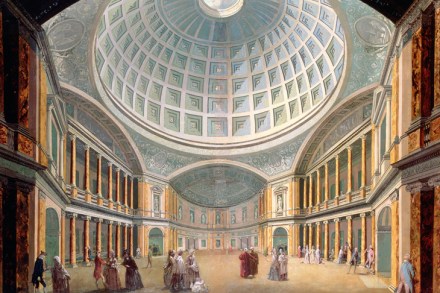
When the German novelist Sophie von La Roche visited Oxford Street in the 1780s she saw watchmakers and fan shops, silversmiths and spirit booths, and a Pantheon that rivalled the one in Rome. Edward Gibbon called the domed ballroom, which hosted glitzy concerts, ‘the wonder of the eighteenth century and of the British empire’, but Von La Roche could not agree. The Pantheon’s architect, she concluded, ‘only half knew what he was about’. The young James Wyatt, who went on to design some of the loveliest college buildings at Oxford University, had apparently given little consideration to the acoustics of his Pantheon, ‘as the sound becomes diffused’.

Sea fever

From our UK edition

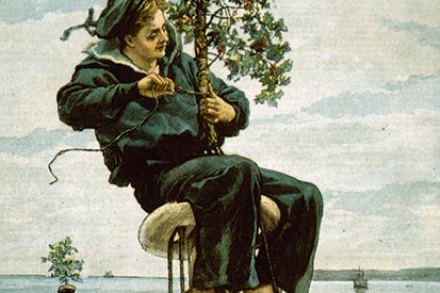
Looking at the sketchbook of William Whitelock Lloyd, a soldier-artist who joined a P&O liner after surviving the Anglo-Zulu War, I’m reminded why I avoid cruises. On board this India-bound ship were: a ‘man who talks a great deal of yachting shop and collapses at the first breeze of wind’, ‘a successful Colonist’, and ‘the victim of mal de mer who lives on smelling salts’. It would be just my luck to be stuck in the cabin between ‘One of our Flirts’, the busty lady with pretty eyes, and what Lloyd affectionately called ‘Our Foghorns (automatic)’ — two bawling babies. By the late 19th century, ocean liners attracted all sorts, from emigrants seeking a new life in the US to curious poseurs.

The icemen cometh

From our UK edition

You wouldn’t want to stumble upon the Scythians. Armed with battle-axes, bows and daggers, and covered in fearsome tattoos, the horse-mad nomads ranged the Russian steppe from around 900 to 200 BC, turning squirrels into fur coats and human teeth into earrings. At their mightiest, they controlled territory from the Black Sea to the north border of China. They left behind no written record, only enormous burial mounds, chiefly in the Altai mountains and plains of southern Siberia. Chambers that weren’t looted in antiquity were preserved in the permafrost only to be discovered millennia later. It is thanks to Peter the Great and the expeditions he launched that so many objects have now been retrieved from the ice.

Match made in heaven | 6 July 2017

From our UK edition

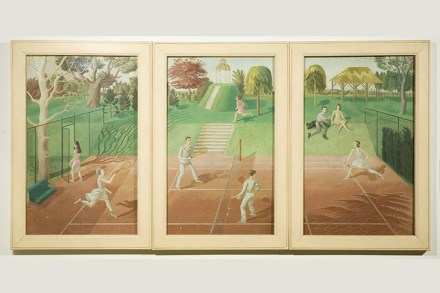
Tennis is best played with a wooden racket on a shady lawn somewhere close to Dorking. There is no need for trainers, an umpire, or a scoreboard. No need for rules at all. After Wimbledon, the tea-and-jam, grass-stained, Sunday-afternoon scenario from A Room with a View is the only one to emulate. In 1908, when E.M. Forster published his novel, lawn tennis was not yet 50 years old. Although the origins of the game reach back to the 12th century, the version played by Miss Honeychurch and Reverend Beebe and most of us today was said to have been pioneered on a croquet lawn in Edgbaston in 1859.

Pleasure boats

From our UK edition

There isn’t a luxury ship that wouldn’t look better for having sunk. Barnacles and rot bring such romance to the lines, like spider webs in the sea. Even the decay Damien Hirst has applied to his Treasures from the Wreck of the Unbelievable is quite appealing. It crawls over many of the objects that he claims to have salvaged from a shipwreck of the 1st or 2nd century ad. A mouldering Mickey Mouse. A bronze portrait of the artist encrusted in faux-coral. It’s Trimalchio meets Disneyland meets Twenty Thousand Leagues Under the Sea. It so happens that Hirst’s exhibition at the Punta della Dogana and Palazzo Grassi in Venice (until 3 December) coincides with a search for another wreckage, this one truly ancient.

Order, order | 10 November 2016

From our UK edition

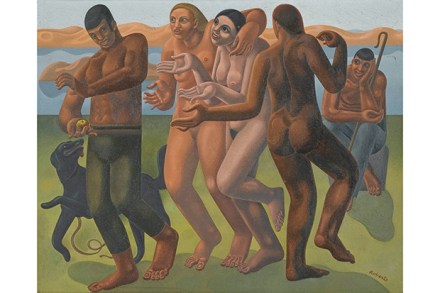
The catalogue to Pallant House Gallery’s latest exhibition features a favourite anecdote. It is 1924 and a competition is being held to find the woman with the most pleasing vital statistics. As a paradigm, the judges choose the Venus de Milo. Thousands of women queue up to find out whether their measurements — not only bust, waist and hips, but thighs, calves, neck, wrists even —approximate closely enough to those of the ancient sculpture to earn them the prize of £5. No one thinks to mention that the Venus is missing both arms. Classical myth was all the rage after the first world war. When the world felt like chaos, it was only logical to go back to the beginning.

Should we revive the Colosseum?

From our UK edition

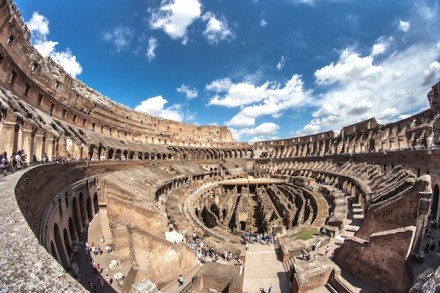
It occurs to me that Italy isn’t the best place to live if you’re an architect. Take a walk at random through Rome or Florence or Venice, and it is quite possible that you won’t pass a single building made in the last century, let alone the last decade. Certainly, no one needs a Cheesegrater grating bolts all over the place when there are so many historic monuments to preserve. But while Italy’s old buildings are nectar to tourists, they can prove a headache for those trying to adapt their cities to modern life. No surprise, then, that some Italians have come out in support last week of a proposal to restore the floor of the Colosseum in Rome.

From paper to the £5 polymer: the origins of the banknote

From our UK edition

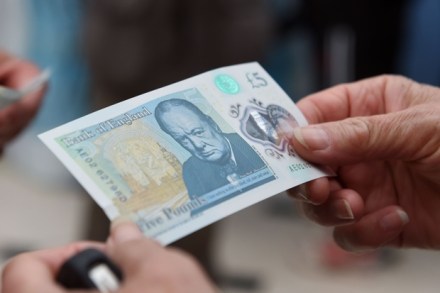
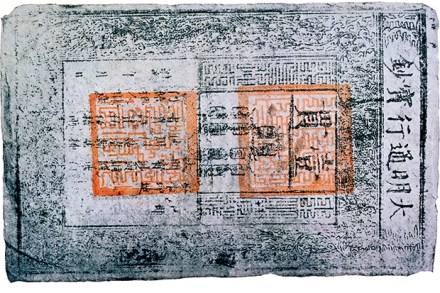
Kublai Khan, said Marco Polo, had ‘a more extensive command of treasure than any other sovereign in the universe’. There were no jangling pockets of coins in Kanbalu. Bark had been stripped from the mulberry trees and beaten into paper notes. The notes carried delicate little pictures of earlier currency — long, frayed ropes weighed down with coins. It was as though they were mocking the old ways. Paper money had been produced in China from as early as the 7th century, but that did not stop Marco Polo from gushing that the Great Khan had discovered ‘the secret of the alchemists’. Back home, there was much curiosity but apparently little urgency. Only in 1661 did the first banknotes circulate in Europe.

On the money | 8 September 2016

From our UK edition

Kublai Khan, said Marco Polo, had ‘a more extensive command of treasure than any other sovereign in the universe’. There were no jangling pockets of coins in Kanbalu. Bark had been stripped from the mulberry trees and beaten into paper notes. The notes carried delicate little pictures of earlier currency — long, frayed ropes weighed down with coins. It was as though they were mocking the old ways. Paper money had been produced in China from as early as the 7th century, but that did not stop Marco Polo from gushing that the Great Khan had discovered ‘the secret of the alchemists’. Back home, there was much curiosity but apparently little urgency. Only in 1661 did the first banknotes circulate in Europe.

Gatton Park

From our UK edition

Gatton Park is probably Lancelot ‘Capability’ Brown’s least famous landscape. It is tucked away near Reigate Hill, just beyond the M25, and even in the 300th anniversary year of Brown’s birth it is an unlikely place to visit. Because it shares its plot with a school and stables, you can only go on the first Sunday of the month or if you arrange a tour in advance. A bother, I grant you, when there are so many glorious landscapes to explore elsewhere. But Gatton Park has other attractions, too. For more than 50 years, from 1888, this was the estate of the ‘Mustard King’, Sir Jeremiah Colman.

It’s not child’s play

From our UK edition

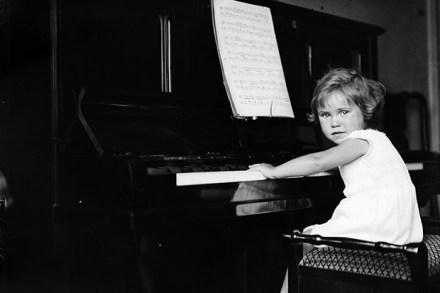
Aldous Huxley observed that ‘Where music is concerned, infant prodigies are almost the rule. In the world of literature, on the other hand, they remain the rarest exceptions.’ This, he believed, was because good literature could not be written without experience of the outside world, while music was the art least connected with reality. ‘Like mathematics,’ he said, ‘it is an almost unadulterated product of the inner world.’ Musicians may dispute the last point, but the fact remains that musical and artistic ability can emerge with dizzying speed. When it does, the question is how best — and how far — to nurture it?

Cirencester

From our UK edition

Everywhere you look in Cirencester there’s another animal: a cockerel, a hare, a sheep or a skulking lioness. I rather fancied the big beasts that chase each other lustily around the Roman mosaics in the Corinium Museum, home to one of the liveliest archaeological collections I’ve ever seen. The Romans of first-century Cirencester (Corinium) strike me as having been a fun-loving, optimistic bunch — so much of what they left behind honours Bacchus, the wine god, and Mercury, god of commerce. They made some fantastically modern things. One could easily mistake the model of Mercury’s cockerel (the herald of a new day), found in a Roman grave, for a Picasso. Beyond cockerels, historic Cirencester owed much of its success to its sheep.

Reading about your school is always a terrible idea

From our UK edition

Tom Brown’s Schooldays is a depressing book. It’s hard to see why anyone would encourage their child to read it before starting school, particularly Rugby, where the story is set. Tom Brown’s peers stand in the window near the school gates, surveying the town as if they own it. They fight behind the chapel, where the masters cannot see them, and bully and fag, day and night. Writing in The Spectator in 1956, Richard Usborne, the great scholar of P.G. Wodehouse, cursed the novel for inspiring fear in young boys. A present from his father, he read it shortly before starting prep school and, needless to say, understood why he’d been forced to take up boxing. With time he forgot how terrifying it was and, to his immense embarrassment, gave his own son a copy.

Writers, beware your mother-in-law

From our UK edition

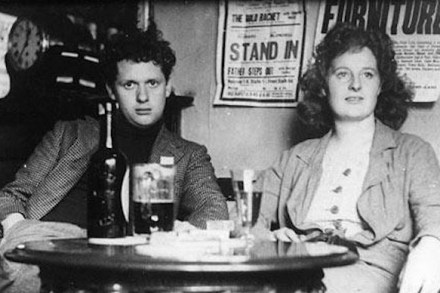
Last week it transpired that Dylan Thomas’s mother-in-law tried to have a notebook of his draft poems burned, but did not succeed, because one of her household staff secreted it away in a Tesco bag. The superstore may just see what a real profit looks like next month when the bag of papers goes up for auction at Sotheby’s. Some will scorn poor old Yvonne Macnamara for what might have been an innocent mistake – did she know that her son-in-law’s book was full of poetry and among the papers marked for burning? I reckon she did, but that doesn’t stop me from feeling sorry for her. Why, if I had a son-in-law like Dylan Thomas, I’d bloody well want his work on the fire, too. No ordinary hearth would suffice for this conflagration.

Cringe at the Fringe: are these really the ten funniest jokes from Edinburgh?

From our UK edition

According to a poll, the funniest one-liner at this year’s Edinburgh Fringe was a joke about a vacuum cleaner: ‘I’ve decided to sell my hoover… well, it was just collecting dust’. Tim Vine, the man responsible for this curious bit of word play, said he was surprised to have won the coveted award. Presumably he hadn’t seen the rest of the top ten jokes, which ranged from cliché (‘I wanted to do a show about feminism. But my husband wouldn’t let me’) to stereotyping (‘Scotland had oil, but it’s running out thanks to all that deep frying’) and risky (‘Always leave them wanting more, my uncle used to say to me. Which is why he lost his job in disaster relief’).

The repression, anger and bloodshed of our own Game of Thrones

From our UK edition

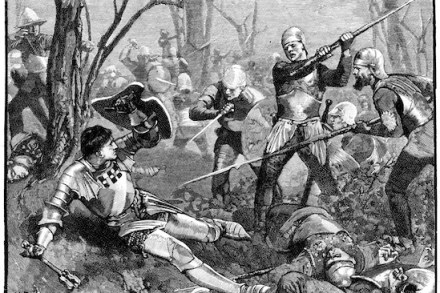
When I took up archery it was a relatively niche sport. Then Game of Thrones came along, and everyone wanted a longbow. Since the HBO series put the Wars of the Roses back on the map, we have had novels by Philippa Gregory and Conn Iggulden, and this autumn there will be a history of the wars by Dan Jones. Now comes the first of Toby Clements’s Kingmaker stories, set in the febrile age of mad King Henry VI of the House of Lancaster. Winter Pilgrims takes us to Lincoln, where Thomas, a 20-year-old monk and book illuminator, and Katherine, a young nun who has had enough of emptying her prioress’s chamber-pot, find themselves discharged from their respective cloisters and their duties to God.

In pictures: Fire engulfs Glasgow School of Art

From our UK edition

The footage of fire tearing through the Mackintosh building of the Glasgow School of Art on Renfrew Street is more than unnerving. [caption id="attachment_8786321" align="aligncenter" width="520"] The best known interior of the School of Art is the library[/caption] Though it’s too early to say how much damage has been caused to the building, it is evident that much of the original architecture has been destroyed. [caption id="attachment_878614" align="aligncenter" width="520"] (Photo: @STVGlasgow)[/caption] No building is replaceable, but this one is particularly precious. It is without doubt the most important building Charles Rennie Mackintosh (1868-1928) designed.

When it comes to childbirth, I’d rather be a sheep than a woman

From our UK edition

I know this because I have now sat through five series of One Born Every Minute (Channel 4) and three series of Lambing Live (BBC 2), and compounded it all with a weekend on a farm, watching teeming sheep deliver one, two, sometimes three lambs at a pop. Pop! Out tumbles the afterbirth. Shepherds let it trail. The lambs find their feet within a day of coming out, and gambol around it. They put our babies to shame. I’ve long thought the producers are missing a trick. Why not roll the two series into one, a sort of omnibus to redefine ‘mummy porn’ as a genre of becoming, rather than a genre of so-called literature (this currently includes the 50 Shades trilogy)?

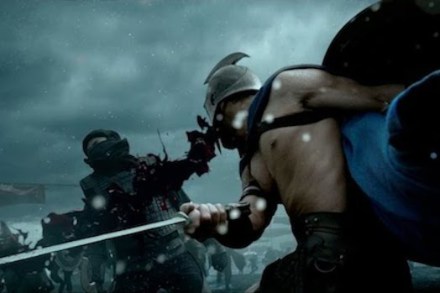
It was all going so well till the fishnet tights. A Classicist reviews 300: Rise of an Empire…

From our UK edition

It is 490 BC and it is raining. Themistocles, the Athenian general, is at Marathon, preparing to shoot an arrow at the great Persian King Darius I. Xerxes, Darius’ son, is there to witness the barb as it flies and strikes a blow that will be fatal and, presumably, deeply humiliating. The Persians prided themselves on their superiority at archery. The opening scenes of 300: Rise of an Empire are the most strained, and bizarre, in the whole film.