Craig Raine

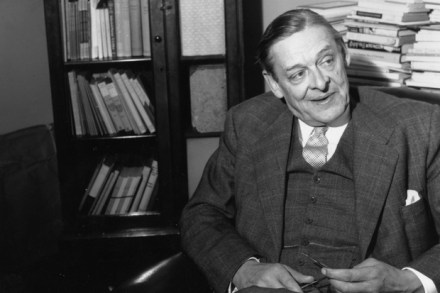
T.S. Eliot’s preoccupations in wartime Britain

In her essay ‘A House of One’s Own’, about Vanessa Bell, Janet Malcolm says memorably that Bloomsbury is a fiction, and that compared with letters and first-hand material, biography is like canned vegetables compared with fresh fruit. We read the letters of writers because they are informal, unguarded, unbuttoned, intimate and candid, revealing not only the secrets of composition but, we hope, glimpses of the writer in the flesh, with his trousers down. This is T.S. Eliot, on 26 December 1941, thanking the editor and critic John Hayward for a gift of toilet paper: BROMO is, as you know, and as the manufacturers state, so well known that lengthy description is not necessary...
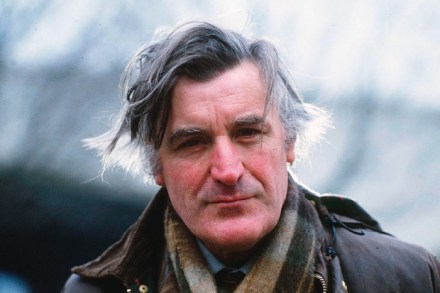
Poems are the Duracell batteries of language, says Simon Armitage

Ezra Pound in ABC of Reading: ‘Dichten = condensare.’ Meaning poetry is intensification, ‘the most concentrated form of verbal expression’. Simon Armitage saying the same thing, memorably, genially, metaphorically, democratically: ‘How much power and force could be stored in — and retransmitted by — such compact shapes. Poems as the Duracell batteries of language.’ Both poets go straight to the point. But a shift has taken place — in tone, in attack — which can be illustrated also by the photographs Armitage found as a ‘sleep-walking’ teenager leafing through Worlds, a sampler of seven contemporary poets, edited by Geoffrey Summerfield: ‘Norman MacCaig watched television and smoked fags.

Playwright at play

From our US edition

Gilbert in Oscar Wilde’s dialogue ‘The Critic as Artist’: ‘Every great man nowadays has his disciples, and it is always Judas who writes the biography.’ Not here. Hermione Lee’s immensely long Tom Stoppard: A Life is expert, engrossing, entertaining and sympathetic to its subject. At its heart is a writer steely in his determination to entertain, an inexhaustible mine of mots, a nonstop genius of jokes, capable of winning the Nobel Prize for the interview as an art form. It comprehensively replaces Ira Nadel’s Double Act (2002), a biography which Stoppard hoped would be ‘as inaccurate as possible’. (Indian Ink and Arcadia are both explicitly hostile to biography and its hubris.

stoppard

Epic of gossip

From our US edition

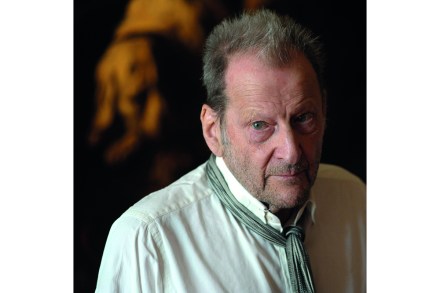
Staying with Peregrine Eliot (later 10th Earl of St Germans) at Port Eliot in Cornwall, Lucian Freud remembered that the Eliots ‘ate off solid silver plate, even shepherd’s pie’. In 1968, Freud was having an affair with Perry’s wife Jacquetta. According to her, it was an addiction: ‘Completely hooked, a dreadful drug.’ After two turbulent years, Jacquetta decided to have a baby by Lucian, ideally to be born on his birthday. Her husband agreed to bring up the child as his own, provided the matter was not mentioned again. The laissez aller attitude is partly accounted for (though not by William Feaver) by the 1960s, and the way the young aristocracy embraced the hippy-trippy counterculture. Jacquetta mentions smoking an opium spliff in Paris with Freud.

lucian freud

Ladies’ man: Tom Stoppard’s love life revealed

Gilbert in Oscar Wilde’s dialogue ‘The Critic as Artist’: ‘Every great man nowadays has his disciples, and it is always Judas who writes the biography.’ Not here. Hermione Lee’s immensely long Tom Stoppard: A Life is expert, engrossing, entertaining and sympathetic to its subject. At its heart is a writer steely in his determination to entertain, an inexhaustible mine of mots, a non-stop genius of jokes, capable of winning the Nobel Prize for the interview as an art form. It comprehensively replaces Ira Nadel’s Double Act (2002), a biography which Stoppard hoped would be ‘as inaccurate as possible’. (Indian Ink and Arcadia are both explicitly hostile to biography and its hubris.

As Lucian Freud’s fame increases his indiscretions multiply

Staying with Peregrine Eliot (later 10th Earl of St Germans) at Port Eliot in Cornwall, Lucian Freud remembered that the Eliots ‘ate off solid silver plate, even shepherd’s pie’. In 1968, Freud was having an affair with Perry’s wife Jacquetta. According to her, it was an addiction: ‘Completely hooked, a dreadful drug...’ After two turbulent years, she decided to have a baby by Lucian, ideally to be born on his birthday. Her husband agreed to bring up the child as his own, provided the matter was not mentioned again. The laissez-aller attitude is partly accounted for (though not by William Feaver) by the 1960s, and the way the young aristocracy embraced the hippy-trippy counter-culture. Jacquetta mentions smoking an opium spliff in Paris with Freud.

What made Lucian Freud so irresistible to women?

Amedeo Modigliani thought Nina Hamnett, muse, painter, memoirist, had ‘the best tits in Europe’. She fell 40 feet from a window and was impaled on the basement railings. Not suicide. She was peeing out of the window, the shared lodging-house lavatory being too distant. On her deathbed, her breathing was like a harmonica. The collector Roland Penrose liked being tied up by a dominatrix, a woman wrestler, whom he and his photographer wife, Lee Miller, brought to England and shared. The busy philosopher A. J. Ayer was known as Juan Don. When Isabel Rawsthorne finally had sex with the persistent, overweight sculptor Eduardo Paolozzi, she reported that it was ‘exhausting’. She had to do all the work.

Keeping it real | 4 July 2019

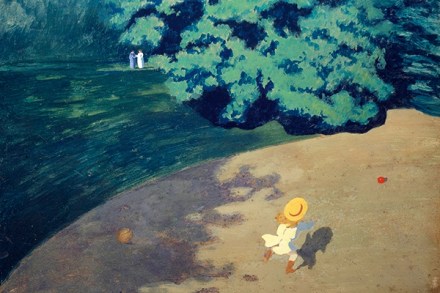
Félix Vallotton (1865–1925) was a member of the Nabis (the Prophets), a problematically loose agglomeration of painters, inspired by Gauguin and Émile Bernard, the school of Pont-Aven. Broadly speaking, this entailed an alleged allegiance to spirituality and anti-naturalistic flat colour. The Nabis — a secret group moniker —were heterogeneous, a broad church that seldom sang from the same hymn sheet. As we can see from Vallotton’s inadvertently emblematic ‘The Five Painters’ (1902–3): Vallotton stands to the left and Ker-Xavier Roussel stands to the right. Below, seated, are Bonnard, Vuillard and Charles Cottet.  Like many group paintings, it is an identity parade of posed and wooden mugshots. It is formally incoherent.

‘Search me, squire’

I think everyone was a little nervous of Harold. Including Harold, sometimes. He was affable, warm, generous, impulsive — and unpredictable. Like his plays, where the hyper-banal surfaces — the synthetic memories and false nostalgia of Old Times, the aural drivel of Rose in The Room, the bogus familial warmth of The Homecoming — are fragile and about to be displaced by something ugly and authentic, something obscure and violent. Plays where on countless occasions — think of Lenny in The Homecoming or the alcoholic Hirst in No Man’s Land — a speech will take off into dramatic Tourette’s, unstoppable and at the edge of sense. The plays are edgy, alert to something sinister at the periphery.

A recitation of wrongs

In 1923, a Frenchman, Emile Coué, persuaded millions of Americans to finger a piece of string with exactly 20 knots. It was an exercise in auto-suggestion. At each knot of this secular rosary, the user intoned: ‘Every day, in every way, I am getting better and better.’ Sylvia Plath’s letters — until they implode on p.790 when she discovers the affair between Ted Hughes and Assia Wevill — are a similar numbing iteration of optimism and self-improvement. Thereafter, the story changes, darkens. Up until then, her story is cropped for improvement: she takes her finals at Cambridge but the letters are silent on her degree result (II: i). She explains to her brother Warren that she doesn’t write when her moods are black.

Searching high and low

In the Moderna Museet in Stockholm there is a sculpture by Katharina Fritsch, which references Chekhov’s famous story ‘Lady with a Dog’. It was part of a Jeff Koons mini-show. At the time (2014), I thought it was by Koons. The postcard disabused me. It shows a woman in unapologetic Barbara Cartland pink, with a parasol, accompanied by a white fighting Pekinese. Both are constructed entirely from shells — she mainly scallop shells, her ample bust the bulging hinge of a clam, her arms fashioned from auger shells like mini-whelks. We have seen this ‘art’ before in a thousand evening classes for housewives who couldn’t get into the over-subscribed flower-arranging or macramé.

Keeping up with the Joneses

To bleak, boarded-up Margate — and a salt-and-vinegar wind that leaves my face looking like Andy Warhol’s botched 1958 nose-peel — to see Journeys with ‘The Waste Land’ at Turner Contemporary. The exhibition has been organised by a group of local residents, who selected the exhibits, designed the layout, and wrote the exhibition texts. In ‘The Waste Land’, some of it written in the Nayland Rock seafront shelter, Eliot writes: ‘On Margate Sands./ I can connect/ Nothing with nothing.’ The local research group have connected Eliot’s text with everything — some duds, some successes.

Sappho in America

We are gripped by gossip. Curiosity is a tenacious emotion. In her essay on Push Comes to Shove, the autobiography of the choreographer Twyla Tharp, Joan Acocella acknowledges this in an untroubled way. If you want to know what Baryshnikov was like in bed, she advises, look at p. 208 in a bookshop: ‘Tharp gives him better marks than [Gelsey] Kirkland’ in her 1986 autobiography Dancing on my Grave. On the other hand, we have our settled idea about Elizabeth Bishop, a famously unconfessional poet, marked out from Lowell, Sexton and Berryman by her continence, her wry tone, her meticulous descriptive accuracy and her beautiful containment.

Worthy, but wordy

Milan Kundera’s novel Immortality wryly depicts Goethe preparing for immortality — neatly laying out his life in Dichtung und Warheit and arranging for Johann Eckermann to record his conversation. He is, says Kundera, designing a handsome smoking jacket, posing for posterity. He wants to look his best. Then along comes the young Bettina von Arnim, a platonic flirtation from his past, with an alternative, memorably ridiculous version, ostensibly admiring, in which Goethe’s wife Christiane is portrayed as ‘the crazy, fat sausage’. There is immortal egg on the facings of that smoking jacket. In the case of Czesław Miłosz, we have a variant on this paradigm.

Boxing clever

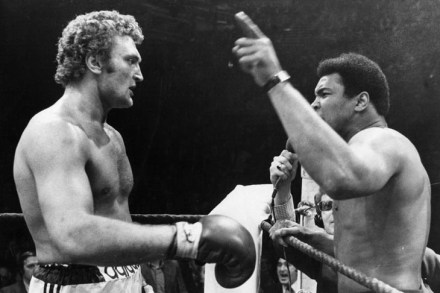
Thirty years ago, Russell Davies wrote a weekly sporting column in the New Statesman. It proved unsustainable and was soon discontinued, but not before Davies had described a boxer ‘genuflecting through the ropes’ — an image I have coveted ever since. Boxing is ‘a standing challenge to [a writer’s] powers of description’, according to Carlo Rotella and Michael Ezra in their preface to The Bittersweet Science. They are right. All physical action is a challenge to writers: YouTube can repair deficiencies, and is invoked several times in this anthology; but it is no substitute for writing, because writing adds focus to reality.

The nature of genius

On 21 December 1945, Ezra Pound was confined to St Elizabeths hospital in Washington DC. He had broadcast for Rome Radio from 29 January 1942 to July 1943. To avoid his almost certain conviction for treason (and the death penalty visited on William Joyce, Lord Haw-Haw), the superintendent Winfred Overholser testified that Pound was insane and unfit to stand trial. Overholser connived with Julien Cornell, Pound’s lawyer. He elided the testimony of six psychiatrists, whose verdict was more equivocal. He concentrated instead on Pound’s brief, understandable breakdown after being kept in a cage at the Disciplinary Training Centre’s stockade in Pisa. A.

Spectator Books of the Year: Craig Raine on poems from the world of work

Philip Hancock’s pamphlet of poems Just Help Yourself (Smiths Knoll, £5): charming, authentic, trim reports from the world of work — City and Guilds, pilfering, how to carry a ladder, sex in a van (‘From the dust-sheet, wood slivers/ and flecks of paint stick to her arse’). One poem is called ‘Knowing One’s Place’; these poems know the workplace. Nutshell by Ian McEwan (Cape, £16.99) was hilarious and compelling. The Pier Falls by Mark Haddon (Cape, £16.99) was grim and compelling. Both books are ripping, gripping yarns — narrative Velcro.

Rich and fruity

F.R. Leavis once denounced the Twickenham edition of Pope’s Dunciad for producing a meagre trickle of text through a desert of apparatus, the trickle sometimes disappearing altogether. In this volume of T. S. Eliot’s letters, from 1932–1933, the footnotes, the infantry and the grunts, are the stars — shooting stars, flares with flair, illuminating apparently unpromising basic materials. For example, this is a letter to Auden in April 1932 in all its Spartan amplitude: Dear Auden, The modifications of the few passages which I discussed with you the other day have been agreed upon.

Poet as predator

In Testaments Betrayed, Milan Kundera says: ‘Biographers know nothing about the intimate sex lives of their own wives, but they think they know all about Stendhal’s or Faulkner’s.’ In The Silent Woman: Sylvia Plath and Ted Hughes, Janet Malcolm says: ‘The transgressive nature of biography is rarely acknowledged, but it is the only explanation for biography’s status as a popular genre.’ She also shrewdly remarks on the ‘mantle of judiciousness’ that biographers are forced to deploy. Jonathan Bate informs us that over a period of five years he has read and taken notes on nearly 100,000 pages of Ted Hughes manuscripts.

The raw material of fiction

Saul Bellow died in 2005. He won the Nobel Prize for Literature in 1976. The first installment of Zachary Leader’s exemplary, scrupulous, dispassionate, detailed, well-read, enthralling biography runs to over 800 pages and takes us only as far as 1964. The length is important. It allows Leader to adjudicate calmly, weigh the evidence — sometimes remaining undecided — and quote Bellow freely, so that the biographical narrative is enlivened by Bellow’s prodigally gifted prose, little injections of bliss.